
The Last Days of Socrates gathers four dialogues by Plato that together tell the story of Socrates' trial and death in Athens in 399 BCE: the Euthyphro, the Apology, the Crito and the Phaedo. In the Euthyphro, Socrates meets Euthyphro outside the court where Socrates must answer an indictment for impiety and corrupting the young.
Author
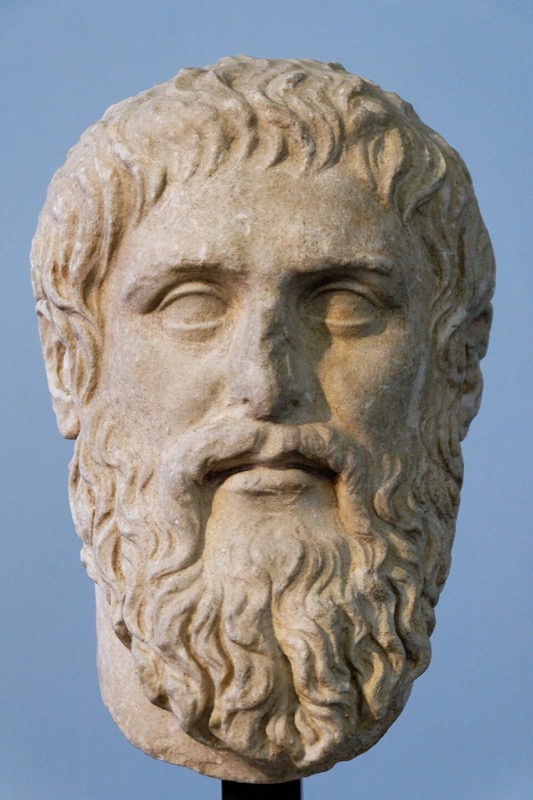
Plato
Frequently Cited
“the unexamined life is not worth living”
“Crito, I owe a cock to Asclepius; will you remember to pay the debt”
“Until philosophers are kings, or the kings and princes of this world have the spirit and power of philosophy, and political greatness and wisdom meet in one, and those commoner natures who pursue either to the exclusion of the other are compelled to stand aside, cities will never have rest from their evils”
“He who has been instructed thus far in the things of love, and who has learned to see the beautiful in due order and succession, when he comes toward the end will suddenly perceive a nature of wondrous beauty”
The Symposium is a framed dialogue about eros, memory and ascent. Apollodorus repeats what Aristodemus told him about a banquet at Agathon’s house after the poet’s tragic victory.
The Republic begins with a question that never stays small: what is justice, and is the just life happier than the unjust? Socrates meets Cephalus, Polemarchus, Thrasymachus, Glaucon and Adeimantus in the Piraeus.
This volume pairs one of Plato's most literary dialogues with two letters attributed to him. The Phaedrus takes place outside the walls of Athens, where Socrates, who rarely leaves the city, walks with the young Phaedrus along the river Ilissus and sits under a plane tree on a hot summer day.
Timaeus offers Plato's most elaborate cosmological account, framed by Socrates' wish to see the ideal city in motion and Critias's story of ancient Athens and Atlantis. Timaeus then delivers a likely story about the cosmos, not a demonstration with mathematical certainty.