
Kant's first Critique asks whether metaphysics is possible as a science, and answers by examining reason's own powers before trusting any of its claims about God, the soul or the world as a whole. The first-edition preface describes human reason as burdened by questions it cannot dismiss and cannot answer, and the second-edition preface proposes a Copernican experiment: instead of assuming that knowledge must conform to objects, suppose that objects must conform to the forms of our knowing.
Author
Immanuel Kant
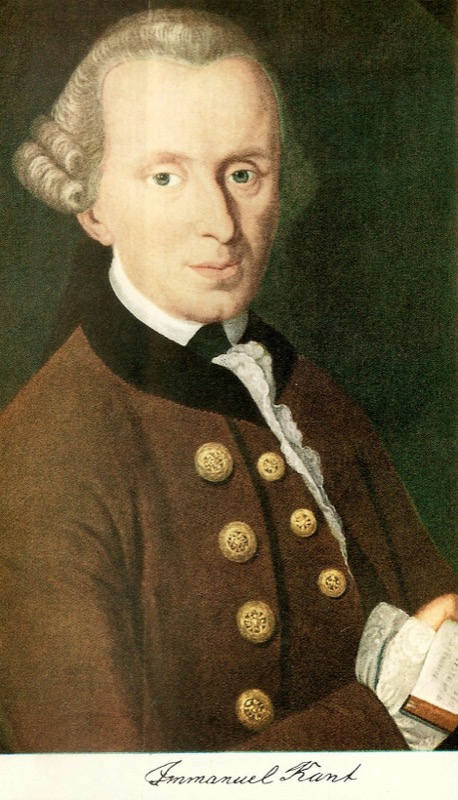
Frequently Cited
“I must, therefore, abolish _knowledge_, to make room for _belief”
“But, though all our knowledge begins with experience, it by no means follows that all arises out of experience”
“Thoughts without content are void; intuitions without conceptions, blind”
“Nothing can possibly be conceived in the world, or even out of it, which can be called good, without qualification, except a good will”
“Act only on that maxim whereby thou canst at the same time will that it should become a universal law”
“So act as to treat humanity, whether in thine own person or in that of any other, in every case as an end withal, never as means only”
Kant's Grundlegung zur Metaphysik der Sitten (1785), translated by Abbott as Fundamental Principles of the Metaphysic of Morals, is a short book with a narrow and ambitious aim: to identify and establish the supreme principle of morality. It does not offer a full ethical system, which Kant postponed to the Metaphysics of Morals of 1797, but clears the ground by asking what must be true of moral obligation if it is to bind every rational being without exception.