Work record
Critique of Pure Reason
1781 (revised 1787) · 18th Century · Philosophy · German
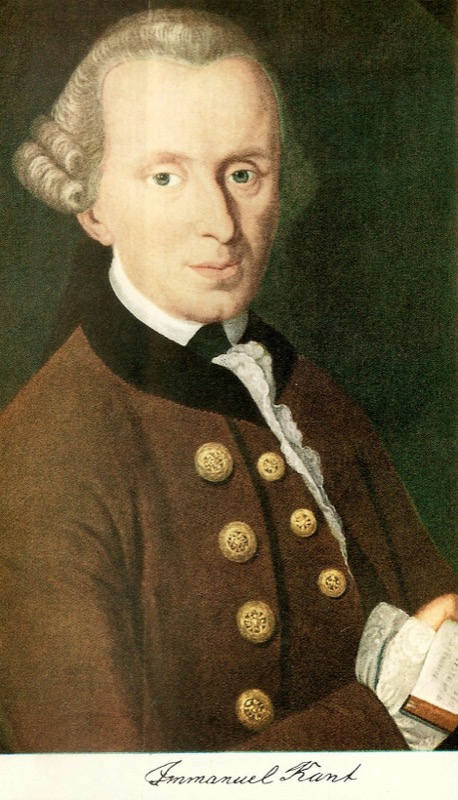

Summary
Kant's first Critique asks whether metaphysics is possible as a science, and answers by examining reason's own powers before trusting any of its claims about God, the soul or the world as a whole. The first-edition preface describes human reason as burdened by questions it cannot dismiss and cannot answer, and the second-edition preface proposes a Copernican experiment: instead of assuming that knowledge must conform to objects, suppose that objects must conform to the forms of our knowing. The guiding question is how synthetic judgments a priori are possible, judgments such as those of geometry, arithmetic and the basic principles of natural science that extend our knowledge yet hold with necessity. The Transcendental Aesthetic argues that space and time are not properties of things in themselves but forms of human sensible intuition; this is why geometry applies to every possible object of experience, and also why we know things only as they appear to us. The Transcendental Analytic turns to the understanding. Thoughts without content are empty and intuitions without concepts are blind, so knowledge requires both. Kant derives twelve categories, including substance and causality, from the forms of logical judgment, and in the Transcendental Deduction argues that they are valid of experience because the unity of self-consciousness, the 'I think' that must be able to accompany all my representations, is possible only through them. The Schematism connects categories to time, and the Analogies of Experience defend the permanence of substance and the universal law of causality against Hume, while a Refutation of Idealism argues that inner experience presupposes outer objects. The understanding thus gives laws to nature, but only to nature as appearance; things in themselves remain unknowable, and the Analytic ends with the image of an island of truth surrounded by a stormy ocean of illusion. The Transcendental Dialectic explores that ocean. Reason, seeking the unconditioned, generates ideas of the soul, the world-whole and God. Rational psychology commits paralogisms when it infers a simple, immortal soul-substance from the bare 'I think'. Rational cosmology falls into four antinomies, pairs of equally provable theses and antitheses about the world's beginning, divisibility, freedom and a necessary being, which Kant resolves by distinguishing appearances from things in themselves. Rational theology's ontological, cosmological and physico-theological proofs of God all fail; existence is not a predicate, as a hundred real dollars show. These ideas are not useless: they serve as regulative principles that guide inquiry. The Doctrine of Method disciplines reason's ambitions and, in the Canon, gathers reason's interests into three questions, what can I know, what ought I to do, what may I hope, preparing the ground for a morality and faith that knowledge has made room for.
Plot or Argument
- Prefaces: the Copernican experiment
Metaphysics has been a battlefield of endless disputes. Kant proposes that objects conform to our cognition, and limits knowledge to appearances in order to make room for practical belief in God, freedom and immortality.
- Introduction: synthetic judgments a priori
Knowledge begins with experience but does not all arise from it. Analytic judgments explicate concepts; synthetic judgments extend them. The task is to explain how mathematics and natural science contain synthetic a priori truths and whether metaphysics can.
- Transcendental Aesthetic: space and time
Space and time are pure forms of intuition, not concepts derived from experience or properties of things in themselves. They are empirically real and transcendentally ideal.
- Analytic of Concepts: categories and the Deduction
Twelve categories correspond to the forms of judgment. The Transcendental Deduction argues that the unity of apperception requires synthesis under the categories, which are therefore valid for all objects of possible experience.
- Analytic of Principles: schematism, causality, refutation of idealism
Categories are applied to experience through temporal schemata. The Axioms, Anticipations, Analogies and Postulates give the a priori principles of nature, including the permanence of substance and the causal law; inner experience requires something permanent outside us.
- Phenomena and noumena: the island of truth
The understanding can be used only empirically. Noumena can be thought but not known; the land of truth is an island surrounded by an ocean of illusion.
- Dialectic I: the paralogisms of the soul
Rational psychology mistakes the formal unity of the 'I think' for knowledge of a simple, substantial, personal and immaterial soul; none of these conclusions follows.
- Dialectic II: the antinomies
Reason proves both that the world has a beginning and that it has none, that matter is simple and that it is infinitely divisible, that there is freedom and that all is nature, that a necessary being exists and that none does. Transcendental idealism defuses the conflicts and leaves freedom thinkable.
- Dialectic III: the ideal and the proofs of God
The ontological proof fails because being is not a real predicate; the cosmological proof depends on it; the physico-theological proof can at most show an architect. Ideas of reason have legitimate regulative use.
- Doctrine of Method: discipline, canon, architectonic, history
Reason must not imitate mathematics in philosophy or use dogmatic polemic. Its practical interest yields three questions; morality grounds rational hope. Philosophy is mapped as a system, and the critical path is the only one still open.
Characters
- David Hume, provocation
Praised as the ablest sceptic, whose doubts about causation Kant sets out to answer by showing why the causal law holds for experience.
- Nicolaus Copernicus, model
The astronomer whose reversal of observer and observed Kant takes as the model for his own experiment in metaphysics.
- Plato, foil
Compared to a dove that imagines it would fly better without air: he left the world of sense for pure ideas and found no footing.
- Leibniz and Wolff, dogmatic tradition
The rationalist metaphysics in which Kant was trained and whose claims to know the soul, world and God the Dialectic dismantles.
- Moses Mendelssohn, target
His proof of the soul's permanence is refuted in the second-edition Paralogisms.
Lessons
The mind shapes what it can experience
Kant argues that space, time and the categories are conditions under which anything can appear to us. Knowledge is real but always of things as they appear, never as they are in themselves.
- Does Kant's view make the world less real, or only our access to it more structured?
- How might modern perceptual science support or complicate the idea that experience is constructed?
- What does Kant mean by calling space 'empirically real' but 'transcendentally ideal'?
Concepts and sensations need each other
Thoughts without content are empty and intuitions without concepts are blind. Neither pure reasoning nor raw data alone gives knowledge; understanding is the joint work of both.
- Give an example of a 'blind' intuition and an 'empty' thought from your own experience.
- How does this principle answer both the rationalists and Hume?
Reason produces illusions it cannot simply switch off
The Dialectic shows that reason naturally overreaches when it asks about the soul, the world-whole and God. Kant calls this transcendental illusion: like an optical illusion, it persists even after it is diagnosed.
- Why does Kant think metaphysical illusion is natural rather than a simple mistake?
- What is the value of an idea that can guide inquiry but never be known to correspond to anything?
A unified self is a condition of thinking, not a known thing
The 'I think' must be able to accompany all my representations, but this formal unity does not prove a simple, immortal soul. Kant separates the necessary unity of consciousness from claims about what the self is made of.
- How does Kant's 'I think' differ from Descartes's cogito?
- What might Kant's distinction suggest about experiences in which the unity of consciousness seems to break down?
Context
Kant wrote at the height of the German Enlightenment under Frederick the Great, whose relative tolerance allowed critical writing on religion. The book confronts the Leibniz-Wolff school metaphysics taught in German universities, British empiricism (especially Hume, known to Kant through translations), and Newtonian physics, whose success raised the question why mathematics and natural law are certain.
Composition
After his 1770 Inaugural Dissertation, Kant spent eleven years of near silence working out the critical philosophy, describing the problem in a 1772 letter to Marcus Herz. He wrote the final text quickly in 1780. It was published by Hartknoch in Riga in 1781 (the A edition). Kant issued the Prolegomena (1783) to clarify it and a substantially revised second edition (B, 1787), with a new preface, rewritten Deduction and Paralogisms and an added Refutation of Idealism. J. M. D. Meiklejohn's English translation appeared in 1855.
Reception
Early readers found the book obscure; the anonymous Garve–Feder review (1782) compared it to Berkeley's idealism, prompting Kant's replies. Through Reinhold's popularizing letters the critical philosophy came to dominate German thought by the 1790s, and Fichte, Schelling and Hegel developed German Idealism from it. Neo-Kantianism shaped nineteenth-century philosophy of science, physiology (Helmholtz) and psychology, and the work remains a fixed point of modern philosophy.
Comparisons
- an-enquiry-concerning-human-understanding
Hume's claim that causal necessity is only a felt habit is the challenge Kant answers in the Second Analogy by making causality a condition of any objective time-order.
- meditations-on-first-philosophy
Descartes infers a thinking substance from 'I think'; Kant's Paralogisms argue that this inference confuses the logical unity of consciousness with knowledge of a soul, and the Refutation of Idealism turns Descartes's doubt about outer things around.
- groundwork-of-the-metaphysics-of-morals
The Critique leaves freedom thinkable but unknowable; the Groundwork four years later builds morality on that space, answering the question 'what ought I to do?'.
- the-republic
Kant admires Plato's ideas as archetypes of reason but uses the dove image to criticize his flight from sense; the divided line and the cave are the ancestors of Kant's appearance and thing-in-itself.
- the-world-as-will-and-representation
Schopenhauer accepts Kant's world as representation and transcendental idealism, but claims to know the thing in itself directly as will through the body, which Kant would call a paralogism of its own.
- the-principles-of-psychology
James treats Kant's transcendental ego as an unnecessary postulate and prefers an empirical, stream-like account of the unity of consciousness.
Quotes
Frequently cited
“I must, therefore, abolish _knowledge_, to make room for _belief”
Frequently cited
“But, though all our knowledge begins with experience, it by no means follows that all arises out of experience”
Frequently cited
“Thoughts without content are void; intuitions without conceptions, blind”
“Human reason, in one sphere of its cognition, is called upon to consider questions, which it cannot decline, as they are presented by its own nature, but which it cannot answer, as they transcend every faculty of the mind”
“Our age is the age of criticism, to which everything must be subjected”
“We here propose to do just what COPERNICUS did in attempting to explain the celestial movements”
“The light dove cleaving in free flight the thin air, whose resistance it feels, might imagine that her movements would be far more free and rapid in airless space”
“The “I think” must accompany all my representations, for otherwise something would be represented in me which could not be thought”
“their representations may very well be the mere products of the imagination (in dreams as well as in madness”
“But this land is an island, and enclosed by nature herself within unchangeable limits. It is the land of truth (an attractive word), surrounded by a wide and stormy ocean, the region of illusion”
“A hundred real dollars contain no more than a hundred possible dollars”
“scepticism is merely a means of awakening reason from its dogmatic dreams and exciting it to a more careful investigation into its own powers and pretensions”
“1. WHAT CAN I KNOW? 2. WHAT OUGHT I TO DO? 3. WHAT MAY I HOPE”
For Students
A reading companion for classical Christian high school students. See the student guide.
Reading Guide
Watch for
- The Copernican experiment in the Preface to the Second Edition: instead of assuming our knowledge must conform to objects, Kant tries supposing that objects must conform to our ways of knowing, just as Copernicus tried moving the observer instead of the stars.
- The sentence in the same preface where Kant says he must abolish knowledge to make room for belief. Watch how the whole book limits speculative reason in order to protect God, freedom, and immortality as matters of practical faith.
- The image of the light dove in the Introduction, who thinks she would fly better in airless space. Kant uses it against Plato, and it sums up his warning that concepts without the resistance of experience go nowhere.
- The island of truth surrounded by a stormy ocean of illusion at the close of the Analytic. It marks the turn from what reason can know to the Dialectic's survey of what it only seems to know.
- The antinomies in the Dialectic, printed with thesis and antithesis side by side, each with its own proof: the world has a beginning and has none, there is freedom and all is nature.
Key terms and names
- Synthetic a priori judgment
- A judgment that adds something not contained in its subject concept, yet is known independently of experience and holds necessarily. Kant thinks geometry, arithmetic, and the causal law are such judgments, and the whole Critique asks how they are possible.
- Transcendental idealism
- Kant's doctrine that space, time, and the categories are forms of our knowing, not features of things in themselves. Objects are empirically real, really there in experience, yet known only as they appear to us.
- Thing in itself (noumenon)
- A thing as it is apart from how it appears to our senses. Kant holds that we can think such things but never know them, and this boundary is what keeps room open for freedom and God.
- Categories
- The twelve pure concepts of the understanding, such as substance, cause, and unity, which Kant derives from the forms of logical judgment. The Transcendental Deduction argues that every possible experience must fall under them.
- Transcendental unity of apperception
- The unity of self-consciousness expressed in the I think that must be able to accompany all my representations. It holds experience together, but the Paralogisms argue it does not reveal what kind of thing the self is.
- Antinomy
- A pair of contradictory claims about the world as a whole, each of which reason seems able to prove. Kant treats the four antinomies as evidence that reason has strayed beyond experience and resolves them by distinguishing appearances from things in themselves.
- Regulative idea
- An idea of reason, such as God, the soul, or the world as a whole, that cannot be known to correspond to an object but legitimately guides inquiry toward ever greater unity and completeness.
Seminar Questions
- Comprehension What does Kant mean by his Copernican experiment, and what problem in metaphysics is it meant to solve?
- Comprehension What is the difference between analytic and synthetic judgments, and why does Kant think 7 + 5 = 12 is synthetic?
- Comprehension What are the three traditional proofs of God's existence Kant examines in the Ideal of Pure Reason, and why does he think the ontological proof fails?
- Interpretation Kant says thoughts without content are void and intuitions without conceptions are blind. How does this one sentence answer both the rationalists, who trust pure concepts, and Hume, who trusts only sense impressions?
- Interpretation Why does Kant think reason's illusions about the soul, the world, and God are natural and persistent rather than simple mistakes that careful thinkers avoid?
- Interpretation In the third antinomy reason proves both that there is freedom and that everything happens by natural law. How does Kant's distinction between appearances and things in themselves let both be true, and what does he gain for morality by it?
- Big Question Kant limits knowledge of God in order to make room for belief. Is a faith that reason can neither prove nor disprove stronger or weaker than one that rests on demonstration?
Faith Connections
- Romans 1:19-20 (Scripture)
Paul says God's invisible things are clearly seen from the things that are made. Kant treats the physico-theological proof from the order of nature with more respect than the others, yet argues it can show at most a great architect, not a Creator; Paul's words and Kant's critique make a sharp pair for discussion.
- Hebrews 11:1-3 (Scripture)
Faith is the substance of things hoped for, the evidence of things not seen. Kant's decision to abolish knowledge to make room for belief places God, freedom, and immortality in just this region of things not seen, though he grounds belief in moral reason rather than in revelation.
- Anselm, Proslogion 2-3 (Church Fathers)
Anselm argued that God is that than which nothing greater can be conceived, and so must exist in reality as well as in the mind. Kant aims his reply at later rationalist versions of this argument, and his claim that being is not a real predicate, illustrated by the hundred dollars, is still the standard objection to it.
- Thomas Aquinas, Summa Theologiae I, q. 2, a. 1-3 (Church Fathers)
Aquinas denied that God's existence is self-evident to us and argued instead from motion, causation, and order in the world. Kant's critique of the cosmological and design proofs is a direct challenge to this tradition of reasoning from effects to their first cause.
Logic and Rhetoric
Central argument: Knowledge requires both intuitions, which give objects, and concepts, which think them. Our only intuitions are sensible, given in space and time, which are forms of our own sensibility. So the categories yield knowledge only when applied to objects of possible experience. God, the soul as a substance, and the world as a whole can never be objects of experience. Therefore speculative reason cannot know them, though it can think them without contradiction, and practical reason may rightly believe in them.
Rhetorical device: extended metaphor. At the close of the Analytic (A 235-236 / B 294-295), Kant pictures the understanding's territory as an island, the land of truth, surrounded by a wide and stormy ocean, the region of illusion. The image gathers the Analytic's results into one picture and sets up the Dialectic as a voyage of warning onto the ocean.
Debate: Resolved: Kant's limits on knowledge serve Christian faith better than the rational proofs of God he rejects.
Memory Work
Thoughts without content are void; intuitions without conceptions, blind
1. WHAT CAN I KNOW? 2. WHAT OUGHT I TO DO? 3. WHAT MAY I HOPE
Writing Prompts
Essay: Kant writes that he must abolish knowledge to make room for belief. Using the Preface to the Second Edition and the critique of the proofs of God in the Ideal of Pure Reason, argue what Kant takes away from natural theology, what he leaves standing, and whether the trade is a gain or a loss for religious faith.
Comparison with An Enquiry Concerning Human Understanding: Hume argues that our belief in necessary connection between cause and effect is only a habit formed by repeated experience. Compare Hume's account of causation with Kant's Second Analogy, and argue whether Kant succeeds in answering the scepticism he credited with waking him from dogmatic slumber.
Medical Lens
The Critique is not a medical book, but it shaped psychology and psychiatry indirectly. Kant's distinction between a formal unity of consciousness and claims about a substantial soul influenced later accounts of the self, and his idea that experience is actively synthesized fed into Helmholtz's physiology of perception and into phenomenological psychiatry (Jaspers trained in this tradition). The Refutation of Idealism briefly addresses dreams and madness as cases in which representations do not correspond to objects. Kant's own writings on mental illness (Essay on the Maladies of the Head, 1764; Anthropology from a Pragmatic Point of View, 1798) and on mastering his hypochondria by resolution (The Conflict of the Faculties, 1798) lie outside this book and are context, not content.
- Transcendental Deduction (A 98–130; B 129–169)
Synthesis of apprehension, reproduction and recognition; the unity of apperception as the condition of any coherent experience.
- Refutation of Idealism (B 274–279)
Inner experience requires outer objects; representations in dreams and madness are acknowledged but said to derive from earlier real perceptions.
- Paralogisms of Pure Reason (A 341–405; B 399–432)
Critique of rational psychology's claims that the soul is a simple, persisting, immaterial substance, including a response to Mendelssohn on the soul's gradual extinction.
Creative Prompts
- Dialogue
Write a dialogue in which Hume visits Königsberg and Kant tries to persuade him, using a single example of a ship moving downstream, that causality is not mere habit.
- Essay
Compare Kant's claim that the 'I think' must be able to accompany all representations with first-person accounts of depersonalization. Does the clinical experience test or illustrate Kant's thesis?
- Classroom
Divide the class into thesis and antithesis teams for the third antinomy (freedom versus natural causality) and have each prove its side before reading Kant's resolution.
- Fiction
Write a short story narrated by the light dove of Kant's introduction, discovering what happens when it reaches airless space.
Further Reading
- Prolegomena to Any Future Metaphysics, Immanuel Kant
Kant's own shorter guide to the Critique.
- Kant's Transcendental Idealism, Henry E. Allison
- The Bounds of Sense, P. F. Strawson
- Kant: A Biography, Manfred Kuehn
- Anthropology from a Pragmatic Point of View, Immanuel Kant
Kant's lectures, including his classification of mental disorders.
Verification notes
Structure, arguments and publication history are well established. All quotes were located verbatim by hand in the stored Meiklejohn translation (Project Gutenberg #4280) and have not yet been run through scripts/verify-quotes.mjs. Meiklejohn's wording differs from modern translations (e.g. 'belief' for Glaube, 'void' for leer); Meiklejohn's section numbering in the Deduction differs from the standard. A/B page references are standard but should be checked for passages near section boundaries.
- A/B pagination for the dove passage, the island passage and the 'dogmatic dreams' passage in the Discipline of Pure Reason.
- Date and authorship details of the Garve–Feder review (Göttingische Anzeigen, January 1782).