Work record
The Principles of Psychology
1890 · 19th Century · Philosophy · English
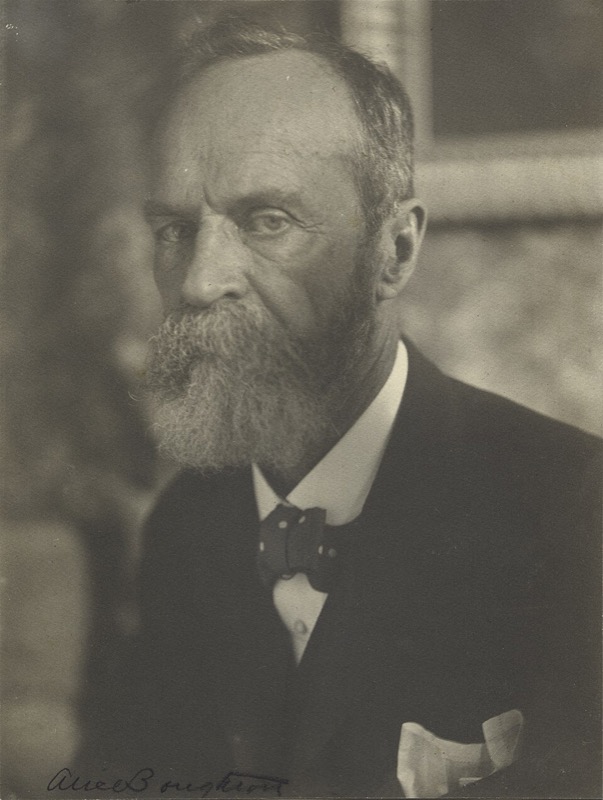
.jpg)
Summary
The Principles of Psychology is a two-volume, 1,400-page textbook that William James spent twelve years writing for Henry Holt's American Science Series. It sets out to treat psychology as a natural science of mental life, studying feelings, desires, cognitions and decisions together with their bodily conditions, while refusing to reduce the mind to physiology or to dissolve it into atoms of sensation. The first chapters build the biological foundation. James reviews the functions of the brain, from frog experiments and the localisation of motor and sensory centres to aphasia, and the general conditions of nervous activity such as summation and reaction time. The chapter on habit, which became his most widely read, describes the nervous system as plastic tissue in which repeated actions carve paths, and draws ethical maxims from the physiology: habit is the flywheel of society, and young people should realise how soon they will become walking bundles of habits. James then criticises the automaton theory, which treats consciousness as a useless by-product, and the mind-stuff theory, which builds consciousness out of elementary units. After a chapter on the methods and snares of psychology, including the 'psychologist's fallacy', and one on the relations of minds to other things, which surveys hysterical anaesthesia, automatic writing and divided consciousness, come the book's most celebrated chapters. The Stream of Thought argues that consciousness is personal, always changing, sensibly continuous and selective, so that it should be described not as a chain or train but as a stream, with substantive resting places and transitive flights. The Consciousness of Self distinguishes the material, social and spiritual selves and the pure Ego, and discusses alterations of personality, including the fugue of the Rev. Ansel Bourne and mediumistic trances. Further chapters on attention, conception, discrimination, association, the perception of time and memory complete the first volume, which is the volume stored in this library. The second volume covers sensation, imagination, perception of things and of space, reasoning, instinct, the emotions, will, hypnotism and necessary truths. It contains the James-Lange theory that bodily changes follow directly on perception of an exciting fact and that our feeling of those changes is the emotion, so that we feel sorry because we cry. Throughout, James writes with vivid examples and personal asides, and is openly willing to leave questions unresolved. The work made him the leading American psychologist and remains a source for cognitive science, phenomenology and clinical psychology.
Plot or Argument
- Scope, brain and nervous activity (Ch. I–III)
Psychology is defined as the science of mental life. James surveys brain function through animal experiment, clinical lesions and aphasia, and the general conditions of brain activity such as summation, reaction time and cerebral blood supply.
- Habit (Ch. IV)
Plasticity of nervous matter explains habit; habit simplifies movement, reduces fatigue and diminishes conscious attention. Practical maxims follow for forming good habits and avoiding bad ones.
- Against automatism and mind-stuff (Ch. V–VI)
Consciousness is not an inert epiphenomenon but a selecting agency with survival value; nor can it be composed from atoms of feeling, since many feelings do not add up to a feeling of many things.
- Methods and the divided mind (Ch. VII–VIII)
Introspection, experiment and comparison, with warnings about the psychologist's fallacy. Evidence from hysteria, hypnotism and automatic writing shows that consciousness may split into parts that coexist without knowing each other.
- The stream of thought (Ch. IX)
Five characters of thought: it belongs to a personal consciousness, is always changing, is sensibly continuous, deals with objects independent of itself, and chooses among them. Fringes, feelings of relation and tendency, and the 'transitive parts' of thought.
- The self (Ch. X)
The empirical self in its material, social and spiritual forms; self-feeling and self-seeking; the sense of personal identity; and mutations of the self in insanity, alternating personality, mediumship and fugue.
- Attention, conception, discrimination, association (Ch. XI–XIV)
Selective interest shapes experience; concepts are fixed meanings; discrimination develops out of the infant's 'blooming, buzzing confusion'; association is explained by habits of brain paths rather than by bonds between ideas.
- Time and memory (Ch. XV–XVI)
The perception of duration and the 'specious present'; memory as retention and recall dependent on brain paths, with notes on forgetting, amnesia and the improvement of memory.
- Volume II: perception, emotion, will
Sensation, imagination, the perception of things and of space, reasoning, instinct, the James-Lange theory of emotion, the will and ideo-motor action, hypnotism, and the origins of necessary truths.
Characters
- The Rev. Ansel Bourne, case study
Rhode Island preacher who disappeared in 1887 and lived for two months as a shopkeeper named A. J. Brown in Norristown, Pennsylvania, with no memory of his former self; a classic case of dissociative fugue.
- Pierre Janet, authority cited
French psychologist whose experiments on hysterical patients such as Lucie supply James's evidence of split consciousness.
- Mary Reynolds and Léonie, cases of alternating personality
Historical subjects whose alternating states James uses to discuss mutations of the self.
- Louis V., case of alternating personality
Young hysterical patient described by Bourru and Burot whose successive personalities each came with their own paralyses and anaesthesias.
Lessons
Consciousness flows rather than links
James's chapter on the stream of thought replaced the image of the mind as a chain of discrete ideas with that of a continuous stream with resting places and flights. The image changed psychology and literature alike. It also teaches attention to the vague fringes of thought, feelings of 'and', 'if' and 'but', that atomistic theories ignored.
- What does James mean by the 'transitive parts' of thought, and why are they hard to observe?
- How did the 'stream of consciousness' move from psychology into the modernist novel?
Habit as the body's ethics
Because nervous tissue is plastic, every repetition makes the next easier. James turns this into moral advice: launch new habits strongly, permit no exceptions, act on resolutions at the first opportunity. The chapter anticipates later work on habit formation, addiction and neuroplasticity while remaining frankly hortatory.
- Is James right that 'every smallest stroke of virtue or of vice leaves its never so little scar'?
- What social conservatism is hidden in his praise of habit as the flywheel of society?
- How does the Rip Van Winkle example bear on modern views of alcohol dependence?
Many selves, one person
A man has as many social selves as there are people who recognise him. James's layered account of the self, from body and clothes to reputation to inner activity, and his cases of fugue and alternating personality, make identity something constructed and fragile rather than a given.
- How does the Ansel Bourne case test ordinary assumptions about personal identity?
- Does social media multiply our 'social selves' in the way James describes?
Experience is shaped by what we attend to
James argues that without selective interest experience would be utter chaos. Attention is active and costly; it implies withdrawal from some things to deal with others. This places choice at the root of perception and links psychology with his later pragmatism.
- What does James mean by saying 'My experience is what I agree to attend to'?
- How does his description of distraction compare with modern accounts of attentional disorders?
Context
James wrote as psychology was separating from philosophy and physiology. Wilhelm Wundt had opened his Leipzig laboratory in 1879; British associationism, German psychophysics, French clinical psychology (Charcot, Janet, Binet) and research into hypnotism and psychical phenomena were all active. James absorbed these currents while resisting both strict materialism and idealist philosophy, aiming for a 'natural science' of mind that took experience seriously.
Composition
Henry Holt commissioned the book in 1878, expecting it in two years. James worked on it for twelve, publishing many chapters as journal articles first, and complained to Holt of a 'loathsome, distended, tumefied, bloated, dropsical mass'. It was published in two volumes in September 1890. In 1892 James issued a one-volume abridgement, Psychology: Briefer Course, which students nicknamed 'Jimmy' as opposed to the full 'James'. The stored text is Volume I.
Reception
The Principles was widely praised for its style and range and became a standard text in American and British universities. Wundt reportedly called it literature rather than psychology. Its ideas on habit, attention, the self and the stream of consciousness influenced Dewey, Husserl, Bergson and modernist writers such as Gertrude Stein, James's student, while the James-Lange theory of emotion provoked a debate with Walter Cannon in the 1920s that continues in affective neuroscience.
Comparisons
- the-varieties-of-religious-experience
The Principles studies the normal mind with occasional pathology; the Varieties turns the same empirical method to conversion, mysticism and the sick soul, and uses the subconscious self that Volume I treats under divided consciousness.
- an-essay-concerning-human-understanding
Locke's association of ideas and his account of personal identity as continuity of consciousness are the starting points that James revises, replacing discrete ideas with a stream and treating identity as a felt continuity rather than a substance.
- a-treatise-of-human-nature
Hume found only a bundle of perceptions when he looked for a self; James agrees there is no soul-substance on view but argues that thoughts are felt as warmly and intimately belonging together in one personal stream.
- meditations-on-first-philosophy
Descartes's thinking thing is a substance known with certainty; James keeps consciousness at the centre but treats it as a function with biological purposes, open to experiment and selective in what it notices.
- the-interpretation-of-dreams
Nine years later Freud builds a theory of unconscious wishes; James, though interested in subconscious selves from Janet's cases, is wary of unconscious ideas and prefers to speak of brain processes and split-off consciousness.
- the-passions-of-the-soul
Descartes explains emotions as motions of animal spirits that the soul perceives; James's theory in Volume II also makes bodily changes primary, though he reverses common sense by making the feeling of those changes the emotion itself.
Quotes
Frequently cited
“Psychology is the Science of Mental Life, both of its phenomena and of their conditions”
Frequently cited
“Habit is thus the enormous fly-wheel of society, its most precious conservative agent”
Frequently cited
“The baby, assailed by eyes, ears, nose, skin, and entrails at once, feels it all as one great blooming, buzzing confusion”
“Could the young but realize how soon they will become mere walking bundles of habits, they would give more heed to their conduct while in the plastic state”
“Every smallest stroke of virtue or of vice leaves its never so little scar”
“An hysterical woman abandons part of her consciousness because she is too weak nervously to hold it together”
“It is nothing jointed; it flows. A 'river' or a 'stream' are the metaphors by which it is most naturally described”
“a man has as many social selves as there are individuals who recognize him_ and carry an image of him in their mind”
“Every one knows what attention is. It is the taking possession by the mind, in clear and vivid form, of one out of what seem several simultaneously possible objects or trains of thought”
“My experience is what I agree to attend to”
For Students
A reading companion for classical Christian high school students. See the student guide.
Reading Guide
Watch for
- The opening definition in Chapter I, where psychology is the science of mental life together with its conditions. Notice how often James returns to the brain without ever letting the mind collapse into it.
- The moral turn at the end of Chapter IV, where a physiology of nerve paths becomes a set of maxims for the young, and the drunken Rip Van Winkle who tells himself this time will not count.
- The arguments in Chapters V and VI against the automaton theory and the mind-stuff theory. Track how James argues that consciousness must do something if it has survival value.
- The shift in Chapter IX from the image of a chain or train of ideas to the image of a stream, and the distinction between substantive resting places and transitive flights of thought.
- The case of the Rev. Ansel Bourne in Chapter X, who lived two months as A. J. Brown. Ask what the case does to James's account of a single personal self.
Key terms and names
- Plasticity
- James's word in Chapter IV for nervous matter that is weak enough to yield to an influence but strong enough not to yield all at once. It is the physical basis of habit.
- Automaton theory
- The view, attacked in Chapter V, that consciousness is an inert by-product of brain activity with no effect on behaviour. James answers that a mind which selects and steers must have earned its place in evolution.
- Psychologist's fallacy
- The error, named in Chapter VII, of confusing the psychologist's own standpoint with the mental state he is describing, as when he reads his own analysis into the experience of the person he studies.
- Stream of thought
- James's image in Chapter IX for consciousness as personal, always changing, sensibly continuous, and selective. It replaces the older picture of thought as a sequence of separate ideas linked together.
- Fringe
- The halo of faint relations and tendencies around each definite thought in Chapter IX, such as the feeling of a word on the tip of the tongue or the sense of where a sentence is going.
- Material, social and spiritual self
- The three layers of the empirical self in Chapter X: the body, clothes, family and property; the recognition a man receives from others; and his inner faculties and dispositions.
- Pure Ego
- The thinker that seems to own all one's thoughts, discussed at length in Chapter X. James finds that the passing thought itself, inheriting its predecessors, does the work that philosophers assigned to a soul-substance.
- Ansel Bourne
- The Rhode Island preacher of Chapter X who vanished in 1887 and lived as a shopkeeper in Norristown with no memory of his earlier life. James uses him to show how far the self can be divided.
Seminar Questions
- Comprehension According to Chapter IV, what does habit do to movement, fatigue, and conscious attention, and what practical maxims does James draw for someone trying to form a new habit?
- Comprehension What are the five characters of thought that James lists in Chapter IX, and why does he say a stream is a better image than a chain?
- Comprehension How does Chapter X distinguish the material, social, and spiritual selves, and what does James mean when he says a man has many social selves?
- Interpretation James calls habit the flywheel of society and its most precious conservative agent. Is he praising habit, warning against it, or both?
- Interpretation In Chapter XI James says his experience is what he agrees to attend to. If attention shapes experience, how much responsibility does a person bear for the world he perceives?
- Interpretation After reviewing the cases of divided consciousness in Chapters VIII and X, James still speaks of a personal self. What holds that self together in his account, and is it enough?
- Big Question If every small act of virtue or vice leaves its mark on the nervous system, is character something we choose or something that happens to us?
- Big Question Can a science of the mind that studies the brain closely still leave room for a soul, or must it eventually replace the soul?
Faith Connections
- Galatians 6:7-9 (Scripture)
Paul warns that whatever a man sows he will reap, and urges believers not to grow weary in well-doing. James's habit chapter gives a physiological version of the same law, in which no lapse goes uncounted by the nerve cells and every repetition makes the next easier.
- Philippians 4:8 (Scripture)
Paul tells the Philippians to think on whatever is true, honest, just, pure, lovely, and of good report. Chapter XI's argument that attention is selective and that experience follows what we attend to makes Paul's command a matter of how a mind is actually built.
- Augustine, Confessions VIII.5 (Church Fathers)
Augustine describes how a perverse will became lust, lust served became custom, and custom not resisted became necessity, so that he was bound by a chain of his own forging. It is the same mechanism James describes in Chapter IV, seen from inside a soul struggling toward conversion.
- Aristotle, Nicomachean Ethics II.1 (Great Conversation)
Aristotle teaches that moral virtue comes about by habit, so that we become just by doing just acts. James's maxims for the young in Chapter IV restate this conviction in the language of nerve paths and plastic tissue.
Logic and Rhetoric
Central argument: Mental life has bodily conditions that can be studied scientifically, but the evidence of experience shows that consciousness is continuous, personal, and selective rather than a chain of separate ideas. A consciousness that selects and steers must make a difference to behaviour, so it cannot be an idle by-product of the brain. Because nervous tissue is plastic, the choices this selecting mind makes are worn into habits. Therefore psychology must be a natural science that takes both brain and experience seriously, and the conduct of life depends on what we repeatedly attend to and do.
Rhetorical device: governing metaphor. In Chapter IX James rejects the images of a chain and a train and declares that thought is nothing jointed; it flows, like a river or stream. The metaphor carries the argument: it makes continuity and change seem obvious and turns the older associationist picture into something visibly artificial.
Debate: Resolved: A person's character is formed more by habit than by deliberate choice.
Memory Work
Every smallest stroke of virtue or of vice leaves its never so little scar
My experience is what I agree to attend to
Writing Prompts
Essay: James begins with the brain in Chapters II and III but ends Volume I describing a stream of thought and a personal self that the brain alone does not seem to explain. Using Chapters IV, IX, and X, argue whether James succeeds in holding together a science of the body and an account of the free, attending person.
Comparison with Confessions: Augustine in Confessions VIII describes being bound by a chain of habit, and in Book X explores the vast halls of memory. James in Chapters IV and XVI studies habit and memory as functions of brain paths. Compare the two accounts of how habit takes hold of a person and how it can be broken, and argue which better explains why changing one's life is so hard.
Medical Lens
James was a physician, and the Principles is a landmark between neurology and psychiatry. Chapter II reviews cerebral localisation, aphasia (Broca's and Wernicke's work) and the effects of brain lesions. The habit chapter gives a physiological theory of addiction and its ethics, with drunkenness as a recurrent example. Chapter VIII and Chapter X bring Janet's hysterical anaesthesia, automatic writing, alternating personality and dissociative fugue (the Ansel Bourne case, which James himself investigated under hypnosis in 1890) into general psychology. James also discusses gaps in consciousness under nitrous oxide, chloroform, epilepsy and fainting, and in Chapter XVI amnesia and memory disorders. Volume II, not stored here, contains the James-Lange theory of emotion, which has had lasting influence on psychosomatic medicine and theories of anxiety and panic. James's own depressive crisis of 1869–70 is sometimes read into his emphasis on will and habit; that is biography, not a claim the book makes.
- Vol. I, Chapter II: The Functions of the Brain
Motor and sensory aphasia, cerebral localisation, lesion studies and the cases in which patients recognise and suffer from their speech errors.
- Vol. I, Chapter IV: Habit
Plasticity of nervous tissue, practical maxims for breaking bad habits, and the drunkard who excuses each lapse though his nerve cells register it.
- Vol. I, Chapter VIII: The Relations of Minds to Other Things
Hysterical anaesthesia and blindness, Janet's and Binet's experiments, automatic writing and the secondary or subconscious self.
- Vol. I, Chapter IX: The Stream of Thought
Interruptions of consciousness under nitrous oxide and other anaesthetics, in epilepsy and fainting, and how the edges of experience merge across the gap.
- Vol. I, Chapter X: The Consciousness of Self
Mutations of the self: insane delusions, alternating personalities, Janet's patient Lucie, the boy Louis V., the fugue of the Rev. Ansel Bourne, and mediumship.
- Vol. I, Chapter XI: Attention
The definition of attention and its opposite, the dazed scatter-brained state of distraction; discussion of effort and fatigue.
- Vol. I, Chapter XVI: Memory
Retention as a matter of brain paths, the conditions of good memory, forgetting, and pathological losses of memory.
Creative Prompts
- Fiction
Write the morning in March 1887 when Ansel Bourne wakes in Norristown as himself, with two months of life as 'A. J. Brown' missing, using James's stream-of-consciousness technique.
- Dialogue
Stage a conversation between William James and Henry James about whether the stream of consciousness belongs to the psychologist or to the novelist.
- Essay
Evaluate James's habit maxims against modern evidence on habit formation and relapse in substance use disorders. Which have survived, and which reflect Victorian moralism?
- Classroom
Ask students to spend ten minutes recording their own stream of thought in writing, then analyse the result using James's distinctions between substantive and transitive parts and the fringe.
Further Reading
- Psychology: Briefer Course, William James
James's 1892 abridgement.
- The Varieties of Religious Experience, William James
- William James: In the Maelstrom of American Modernism, Robert D. Richardson
- The Thought and Character of William James, Ralph Barton Perry
- Genuine Reality: A Life of William James, Linda Simon
Verification notes
Volume I chapter titles and content were checked against the stored Project Gutenberg #57628 text, which contains only Volume I; all quotes come from that volume. Volume II content (emotion, will, hypnotism, the 'we feel sorry because we cry' formulation) is summarised from general knowledge and not quoted.
- Wundt's remark that the book is 'literature' is reported second-hand.
- The phrase 'specious present' (Ch. XV) was not located in the stored Volume I text by a simple search; confirm against a printed edition before citing.