Work record
Passages from the Life of a Philosopher
1864 · Computing · Memoir · English

Summary
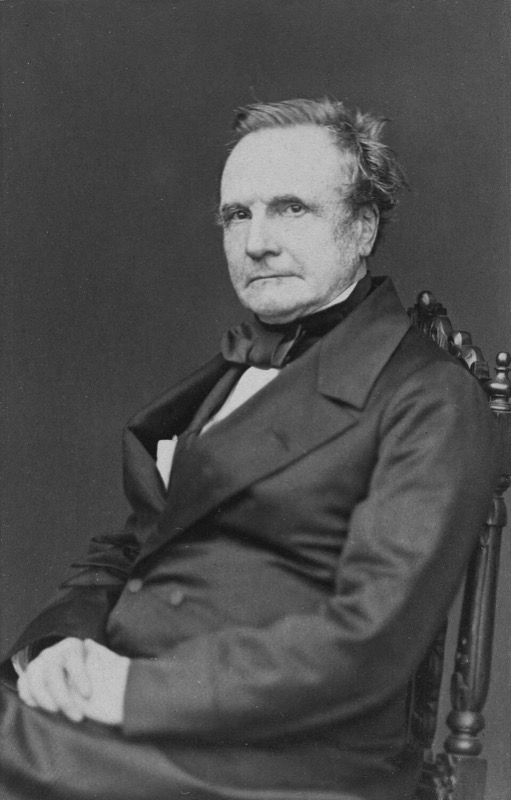
Passages from the Life of a Philosopher is Charles Babbage's late memoir of invention, public controversy, and scientific administration. It is not a continuous autobiography so much as a set of argued recollections. Babbage begins with childhood curiosity, mathematical education, and the habits of exact observation that shaped his career. He then turns to the Difference Engine, the government-supported machine designed to calculate and print mathematical tables without human arithmetical error. The book explains the need for such a machine, describes the engineering problems of precision parts and coordinated motion, and defends Babbage's conduct during the collapse of official support. From there the memoir moves to the Analytical Engine, a more general machine with a store, a mill, and punched-card control. Babbage presents it as the culmination of his life's work, even though it remained unrealized. Around these central chapters he arranges accounts of scientific societies, cryptography, street nuisances, miracles, statistics, exhibitions, and reform projects. The tone is often combative. Babbage names obstruction, incompetence, wasted money, and public misunderstanding with a bitterness that can feel inseparable from his genius. He is also funny, exact, and oddly practical, turning anecdotes into evidence about how knowledge is made or spoiled. The memoir asks readers to see calculation as public infrastructure rather than private cleverness. Bad tables wreck navigation, commerce, astronomy, and engineering; better machines promise not only speed but trust. Yet the memoir is also a remarkable document of technological imagination before electronics. Babbage sees that reliable knowledge depends on instruments, standards, skilled labor, and institutions willing to sustain projects longer than public novelty lasts. The book therefore matters not simply because it describes proto-computers, but because it records the social ecology required for large technical systems to exist. Its unfinished engines become evidence of both visionary design and the fragility of innovation when machinery, politics, and personality fail to align.
Plot or Argument
- Formation of a mechanical thinker
Babbage recalls childhood experiments, schooling, mathematical friendships, and the early habits of measurement and skepticism that gave shape to his inventive work.
- The Difference Engine dispute
Several chapters explain the purpose of automated tables, the government's support, the engineering obstacles, and Babbage's defense against charges of mismanagement.
- The Analytical Engine imagined
Babbage describes the more general machine that would separate storage from operation and use cards to direct sequences more flexibly than the Difference Engine.
- Science among institutions
The memoir widens into reform of scientific societies, public exhibitions, statistics, notation, and the social conditions that either nourish or exhaust invention.
Characters
- Charles Babbage, memoirist and inventor
Designer of calculating engines whose narrative joins self-defense, technical explanation, and institutional criticism.
- Ada Lovelace, mathematical interpreter
Babbage's collaborator and the most famous early commentator on the Analytical Engine.
- Joseph Clement, engineer
Skilled machinist associated with the construction and breakdown of work on the Difference Engine.
Lessons
Invention depends on institutions
Babbage's engines fail to become public machines partly because design brilliance cannot substitute for stable funding, management, and trust. The memoir teaches that technology is never only an idea; it is also contracts, workshops, tolerances, and sponsors.
- Where does Babbage make a technical problem sound like a political problem?
- How much responsibility should the inventor bear for institutional failure?
- What modern research projects share this dependence on long patience?
Precision is a moral habit
The book treats error in tables, instruments, administration, and public argument as related failures of care. Babbage's anger can be excessive, but his standard is clear: civilization advances when it refuses to tolerate avoidable inaccuracy.
- Is Babbage's intolerance of error admirable, destructive, or both?
- How does mechanical precision become a public good in the memoir?
- What kinds of error does automation fail to remove?
A memoir can be a technical archive
Babbage uses autobiography to preserve details of machines that did not exist in completed form. The work shows how personal narrative can keep a technological future alive when hardware has stalled.
- Which chapters feel like self-defense rather than remembrance?
- Does Babbage's personality clarify or obscure the machines?
- How should historians read an inventor's account of his own failure?
Context
The memoir belongs to Victorian Britain's culture of industrial precision, imperial administration, and mathematical table-making. Navigation, insurance, astronomy, and engineering all depended on reliable numbers, and human computers introduced costly errors.
Composition
Babbage published the book in 1864, late in life, after decades of frustration over the Difference Engine and after the Analytical Engine had become a design rather than a completed machine. It gathers recollection, polemic, and explanation rather than following a strict chronology.
Reception
The book preserved Babbage's claims for later historians even though his engines were not completed in his lifetime. Twentieth-century computing made the Analytical Engine chapters central to the prehistory of programmable machinery.
Comparisons
- notes-on-menabreas-sketch-of-the-analytical-engine
Lovelace abstracts the Analytical Engine into a theory of symbolic operation, while Babbage gives the inventor's record of machinery, labor, and disappointment.
- novum-organum
Bacon's program for organized inquiry anticipates Babbage's belief that knowledge advances through method, instruments, and institutional reform.
- as-we-may-think
Bush later imagines information machinery as an aid to memory and research; Babbage focuses on numerical reliability and mechanical execution.
- personal-memoirs
Grant and Babbage both use memoir to defend a life's campaign, but Grant narrates military action where Babbage narrates technological noncompletion.
Quotes
For Students
A reading companion for classical Christian high school students. See the student guide.
Reading Guide
Watch for
- The early chapters on childhood and Cambridge, where Babbage pulls apart toys to see how they work and tests claims for himself. Ask how much of the later inventor he is placing there on purpose.
- The chapters on the Difference Engine, which move back and forth between technical explanation and self-defense. Notice when Babbage stops describing gears and starts answering accusations about money and the quarrel with Joseph Clement.
- Babbage's description of the Analytical Engine as two parts, a store that holds numbers and a mill that operates on them, directed by punched cards borrowed from the Jacquard loom.
- The story of the member of Parliament who asked whether the machine would give right answers if wrong figures were put into it, and what Babbage's reaction reveals about the gap between inventor and public.
- The chapter on street nuisances and organ-grinders, where the same exactness Babbage brings to tables turns into a campaign against noise in his London neighborhood.
Key terms and names
- Difference Engine
- Babbage's first calculating machine, begun with government support in the 1820s, designed to compute mathematical tables by the method of finite differences and print them without human error. Only a portion was ever assembled.
- Method of differences
- The mathematical principle behind the Difference Engine: many tables can be built up by repeated addition of constant differences, so a machine that only adds can produce them.
- Analytical Engine
- The more general machine Babbage designed after the Difference Engine stalled. It could in principle carry out any sequence of operations directed by cards, which is why it is remembered as a forerunner of the programmable computer.
- Store and mill
- Babbage's names for the two main parts of the Analytical Engine: the store, where numbers wait, and the mill, where operations are performed on them. The separation of memory from processing is the heart of his design.
- Jacquard cards
- Punched cards used in the silk looms of Joseph-Marie Jacquard to weave complex patterns. Babbage adapted them to tell the Analytical Engine which operations to perform and in what order.
- Joseph Clement
- The skilled London machinist who built parts of the Difference Engine. A dispute over payment and ownership of his tools halted work in the 1830s, and Babbage's memoir gives his side of it.
- Ada Lovelace
- Mathematician and Babbage's ally who translated and annotated an Italian account of the Analytical Engine in 1843. Her notes describe what the machine might do beyond arithmetic.
Seminar Questions
- Comprehension Why did Babbage think tables of numbers needed to be calculated and printed by machine, and what kinds of work in Victorian Britain depended on such tables?
- Comprehension What is the difference between the Difference Engine and the Analytical Engine as Babbage describes them, and why did he turn from the first to the second?
- Comprehension According to Babbage, why did work on the Difference Engine stop, and whom does he hold responsible?
- Interpretation Babbage calls himself a philosopher in his title, not an inventor or engineer. What does he mean by philosopher, and how do chapters on locks, ciphers, noise and miracles fit that description?
- Interpretation When Babbage tells the story of the member of Parliament asking about wrong figures put into the machine, is he mocking the questioner, explaining his machine, or both? What does the story show about how new technology is understood?
- Interpretation The memoir is often angry at officials, scientific societies and street musicians. Does Babbage's combativeness weaken his case, or is it part of his argument that a nation must care about accuracy?
- Big Question Babbage's engines were never finished in his lifetime, yet they are remembered as the beginning of computing. Is a great design that is never built a success or a failure, and who decides?
Faith Connections
- Proverbs 11:1 (Scripture)
A false balance is an abomination to the Lord, but a just weight is his delight. Babbage's campaign against errors in printed tables treats accurate numbers the way the proverb treats honest weights, as a public trust on which sailors, merchants and astronomers rely.
- Luke 14:28-30 (Scripture)
Jesus asks who would begin a tower without first counting the cost, lest onlookers mock the unfinished foundation. The memoir's long defense of the stalled Difference Engine is Babbage's reply to exactly that charge, and readers can judge whether he counted the cost or whether the cost could not be known in advance.
- Augustine, On Free Choice of the Will II (Church Fathers)
Augustine argues that the truths of number are the same for every mind and belong to no one privately, which points beyond the mind to an unchanging Truth. Babbage's conviction that correct tables are shared public goods, which any error spoils for everyone, rests on the same fixed character of number.
- David Hume, An Enquiry Concerning Human Understanding, Section X (Great Conversation)
Hume argued that no testimony could establish a miracle against uniform experience. Babbage, in his Ninth Bridgewater Treatise and in the memoir's discussion of miracles, answered that a calculating engine can be set to follow one law for millions of steps and then change once, so an apparent exception may itself belong to a higher law set by the Designer.
Logic and Rhetoric
Central argument: Navigation, commerce, astronomy and engineering depend on numerical tables, and tables computed and copied by human hands contain errors. A machine that calculates and prints its own results would remove those errors. Babbage designed such machines, and their failure to be completed came from institutional neglect, disputes and misunderstanding rather than from any flaw in the principle. Therefore a nation that wants reliable knowledge must sustain long technical projects and honor exact thinking rather than obstruct it.
Rhetorical device: exemplum (illustrative anecdote). In recounting his efforts to explain the Difference Engine, Babbage tells of being asked by members of Parliament whether wrong figures put into the machine would yield right answers. He uses the brief story as evidence for a larger claim about public confusion over machinery, letting the absurdity of the question make his case without further argument.
Debate: Resolved: The British government was right to withdraw its support from Babbage's Difference Engine.
Writing Prompts
Essay: Babbage's memoir is partly a technical record and partly a defense of his own conduct. Using the chapters on the Difference Engine, the Analytical Engine and the dispute with Joseph Clement, argue whether the book is more reliable as history of technology or as self-portrait, and what a reader should trust in it.
Comparison with Notes on Menabrea's Sketch of the Analytical Engine: Babbage describes the Analytical Engine as an inventor defending a machine he could not finish, while Ada Lovelace's notes describe what the same machine might do in principle, including operating on symbols other than numbers. Compare the two accounts and argue which better grasps the significance of the Analytical Engine.
Medical Lens
The medical lens is mainly psychological and historical. Babbage's fixation on noise, error, obstruction, and institutional stupidity can be read as temperament rather than diagnosis; the safer use is to discuss how sustained technical frustration shapes attention, irritability, and public self-presentation. His machines also stand in the background of later mind-as-machine analogies.
- Chapters on street nuisances
Babbage's intense campaign against organ-grinders and urban noise shows the bodily strain of attention in a city environment.
- Chapters on the Analytical Engine
The explanation of mechanical memory and operation offers a nineteenth-century source for later analogies between mechanism and thought.
Creative Prompts
- Essay
Use Babbage's memoir to examine why unfinished machines can be more historically powerful than completed tools.
- Fiction
Write a scene in a Victorian workshop where a machinist understands the Engine's practical limits better than its designer does.
- Classroom
Ask students to map one failed invention into technical, financial, interpersonal, and political causes using Babbage as the model.
Further Reading
- The Cogwheel Brain, Doron Swade
Detailed history of Babbage's engines and their modern reconstruction.
- Charles Babbage: Pioneer of the Computer, Anthony Hyman
A major biography of Babbage's scientific and public career.
- The Computer from Pascal to von Neumann, Herman H. Goldstine
Places Babbage in a longer genealogy of calculating machines.
Verification notes
The account of the Difference Engine, Analytical Engine, Clement dispute, and publication date is secure. No quotations are included until a full text is attached and checked.
- Attach a public-domain full text and verify selected quotations from the 1864 memoir.
- Check chapter labels for the street-nuisance and Analytical Engine passages against the stored edition.