Work record
Notes on Menabrea's Sketch of the Analytical Engine
1843 · Computing · Computing · English
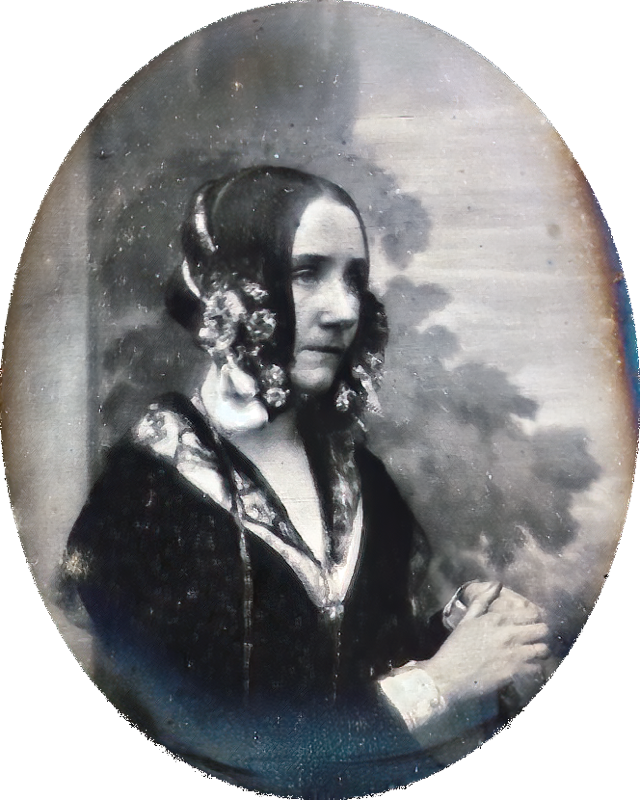

Summary
Ada Lovelace's Notes on Menabrea's Sketch of the Analytical Engine begin as an act of translation and become a theory of computation. Luigi Menabrea had published a French account of Charles Babbage's proposed Analytical Engine after hearing Babbage lecture in Turin. Lovelace translated that article into English, then added notes that run far beyond the original in length and ambition. She explains the Engine not as a faster calculating table, but as a general symbolic machine: a device whose operations could act on numbers representing any relation that could be expressed according to rules. The notes describe how the Engine would store numbers, use punched cards inspired by the Jacquard loom, repeat operations, and separate the machine's hardware from the instructions that governed it. Lovelace's famous example, Note G, lays out a procedure for computing Bernoulli numbers and is often treated as an early published computer program, though it emerged in close conversation with Babbage's designs. She also imagines musical and algebraic uses, provided the relevant relations can be stated for the machine. The intellectual force of the work lies less in priority debates than in its conceptual reach. Lovelace understands that calculation can be generalized into manipulation of symbols, that machinery can execute a chain of operations chosen in advance, and that such execution is not the same as originating thought. She repeatedly balances imagination with restraint. The Analytical Engine might compose elaborate results when supplied with the right rules and materials, but it has no autonomous power to invent those rules. That boundary between automatic execution and creative intelligence makes the Notes a crucial bridge between nineteenth-century mathematics, industrial mechanism, and later arguments about artificial intelligence. The work therefore belongs both to Victorian scientific prose and to the prehistory of programming, where abstraction, notation, and machinery first become one problem.
Plot or Argument
- Translation becomes interpretation
Lovelace presents Menabrea's article to an English audience, but the accompanying notes transform the piece into a guided tour of the Analytical Engine's purpose, mechanisms, and intellectual stakes.
- The Engine as symbolic operator
The notes distinguish the Analytical Engine from ordinary calculating machines by emphasizing stored operations, conditional processes, and the use of cards to direct the order of work.
- Note G and Bernoulli numbers
Lovelace gives a tabular plan for computing Bernoulli numbers, showing how a sequence of instructions could be organized for mechanical execution.
- Limits of mechanism
The essay closes its largest claim by setting a limit: the machine follows analysis supplied by human beings and does not originate independent knowledge or intention.
Characters
- Ada Lovelace, translator and commentator
Mathematician whose notes make the Analytical Engine legible as a general symbolic machine.
- Charles Babbage, inventor
Designer of the Difference Engine and Analytical Engine, whose machinery Lovelace interprets.
- Luigi Menabrea, original essayist
Italian mathematician and engineer whose French article supplied Lovelace's starting text.
Lessons
Abstraction changes what machinery can mean
Lovelace sees that a machine handling numbers might also handle symbols when those symbols are governed by formal relations. The lesson is that the decisive innovation is often a change in level: from tool, to process, to representation.
- Where does Lovelace move beyond Menabrea's practical description?
- Why does symbolic interpretation matter more than faster arithmetic?
- What modern systems depend on this same separation between data and meaning?
Programming is argument made operational
Note G turns mathematical reasoning into a sequence that a machine could follow. The note teaches that a program is not merely a command list; it is a disciplined explanation of how a result comes to exist.
- What makes Note G more than a worked example?
- How does a table of operations persuade differently from prose?
- When does an algorithm become a form of authorship?
Imagination needs exact boundaries
The Notes are visionary because they are careful about what the Engine cannot do. Lovelace's refusal to ascribe independent thought to the machine gives her speculation unusual durability.
- Does Lovelace understate or clarify machine intelligence?
- How should a reader balance her enthusiasm with her caution?
- What current claims about artificial intelligence would benefit from similar boundary-setting?
Context
The Notes belong to the world of Victorian mathematics, textile automation, astronomical tables, and government interest in reliable calculation. Babbage had failed to complete his Difference Engine, but the more ambitious Analytical Engine imagined memory, a mill, and punched-card control long before electronic computers.
Composition
Menabrea published his account in 1842 after Babbage's Turin presentation. Lovelace translated it for Scientific Memoirs in 1843 and, with Babbage's encouragement and correction on technical details, added notes labeled A through G.
Reception
The Engine was never built in Lovelace's lifetime, and the Notes remained a specialized document until twentieth-century computing gave them new prominence. Later readers have debated the division of credit between Lovelace and Babbage, but the text's conceptual breadth is central to histories of programming.
Comparisons
- passages-from-the-life-of-a-philosopher
Babbage's memoir supplies the inventor's grievances and mechanical history, while Lovelace's Notes give the Analytical Engine its most expansive theory of symbolic operation.
- laws-of-thought
Boole formalizes logic in algebraic terms; Lovelace imagines a machine that could act on formal relations once they are expressed in operational form.
- computable-numbers-and-computing-machinery
Turing later names and challenges the Lovelace objection, making her boundary between execution and origination a live problem for machine intelligence.
- frankenstein
Shelley and Lovelace both ask what human creators owe to artificial power, but Lovelace's machine remains bounded by formal instruction rather than Gothic animation.
Quotes
For Students
A reading companion for classical Christian high school students. See the student guide.
Reading Guide
Watch for
- The proportions of the work: Menabrea's article is short, while Lovelace's Notes A through G run roughly three times its length. Ask why a translator would add so much, and signed only with her initials A. A. L.
- Note A, where Lovelace distinguishes the Analytical Engine from Babbage's earlier Difference Engine and compares its punched cards to those of the Jacquard loom, which weaves patterns of flowers and leaves.
- The division between the store, which holds numbers, and the mill, which operates on them, and between operation cards and variable cards. This is the separation of a machine from the instructions it follows.
- Lovelace's suggestion that the Engine might act on things other than numbers, including the composition of music, if their relations could be expressed in the Engine's notation.
- Note G, which contains both the table of steps for computing the Bernoulli numbers and Lovelace's warning that the Engine has no power to originate anything, but can only do what we know how to order it to do.
Key terms and names
- Analytical Engine
- Charles Babbage's design for a general-purpose calculating machine, never completed. Lovelace argues it differs in kind from earlier calculators because it can be directed to carry out any sequence of operations.
- Difference Engine
- Babbage's earlier machine, designed to compute mathematical tables by the method of finite differences. Lovelace uses it in Note A as a contrast: it can do only one kind of work.
- Jacquard loom
- A weaving loom controlled by chains of punched cards that set the pattern. Babbage borrowed the idea for the Analytical Engine, and Lovelace makes it her central comparison.
- Store and mill
- The two main parts of the Analytical Engine: the store holds the numbers, and the mill performs the operations on them. They correspond roughly to what we now call memory and processor.
- Operation cards and variable cards
- The two sets of punched cards that direct the Engine. Operation cards say what to do; variable cards say which numbers in the store to do it to.
- Bernoulli numbers
- A sequence of numbers important in mathematical analysis. In Note G Lovelace sets out in a table how the Engine would compute them step by step, often called the first published computer program.
- Science of operations
- Lovelace's name for the study of operations in general, apart from the objects they act on. She argues that the Engine embodies this science and could in principle act on symbols of any kind.
Seminar Questions
- Comprehension According to Note A, what makes the Analytical Engine different from the Difference Engine?
- Comprehension What are the store and the mill, and what roles do the operation cards and variable cards play?
- Comprehension What does Note G set out to compute, and how does Lovelace arrange the steps so that a machine could follow them?
- Interpretation Why is the Jacquard loom such a fitting comparison for the Analytical Engine? What does it show about the relation between a pattern and the machine that produces it?
- Interpretation Lovelace imagines the Engine composing music and in the same set of notes denies that it can originate anything. How can both claims be true?
- Interpretation Why does Lovelace take such care to warn against exaggerating the Engine's powers? What would be lost if readers believed the machine could think?
- Big Question If a machine could do everything we know how to order it to do, would there be anything left that only a person can do? What is the difference between following a rule and understanding it?
Faith Connections
- Genesis 1:26-28 and 2:7 (Scripture)
Man is made in God's image, receives the breath of life, and is given dominion over the created order. Lovelace's distinction between the Engine that executes and the human mind that originates the rules corresponds to the biblical distinction between a made thing and a maker who bears the image of the Creator.
- Psalm 139:13-16 (Scripture)
The psalmist praises God for being fearfully and wonderfully made, known before any of his days were written. Lovelace's careful limits on the machine leave room for this sense that the human mind is not simply another mechanism.
- Pascal, Pensées (on the arithmetical machine) (Great Conversation)
Pascal, who built a calculating machine himself, observed that it produces effects nearer to thought than anything animals do, but nothing to show that it has a will as animals have. Two centuries later Lovelace drew a similar line between the machine's operations and the origination of thought.
Logic and Rhetoric
Central argument: Earlier calculating machines could perform only one kind of computation. The Analytical Engine separates the machine from the instructions given to it on punched cards, so it can carry out any sequence of operations that can be stated. Operations can act on symbols of any kind whose relations can be expressed, not only on numbers. Therefore the Engine is a general symbolic machine of immense power. Yet it can only perform what human analysis orders it to perform, so it has no power to originate anything, and its achievements remain the extension of human thought.
Rhetorical device: analogy. In Note A Lovelace compares the Analytical Engine to the Jacquard loom, saying the Engine weaves algebraic patterns as the loom weaves flowers and leaves. The analogy makes an abstract machine imaginable by pointing to a familiar industrial one, and it quietly teaches that the pattern lies in the cards, not the loom.
Debate: Resolved: Lovelace was right that a machine can never originate anything.
Writing Prompts
Essay: Lovelace both expands and limits the claims made for Babbage's machine. Using Note A on the Jacquard loom, her remarks on music and symbols, and the warning in Note G, argue what Lovelace believed a machine could and could not do, and why she thought the line mattered.
Comparison with On Computable Numbers and Computing Machinery: In Computing Machinery and Intelligence, Alan Turing names Lady Lovelace's Objection and tries to answer it. Compare Lovelace's claim in Note G with Turing's reply, and argue which of them better understands the difference between executing instructions and originating thought.
Medical Lens
The medical relevance is indirect but real for readers interested in later psychiatry and neuroscience. Lovelace's distinction between rule-governed execution and original mental agency anticipates later debates about whether cognition can be modeled as formal procedure. Her caution also offers an ethics of interpretation: do not attribute mind, intention, or creativity to a mechanism without specifying the operations and evidence.
- Note A
Lovelace explains the distinction between the Difference Engine's numerical table-making and the Analytical Engine's broader command of operations.
- Note G
The Bernoulli-number procedure converts reasoning into executable steps, a key precursor for computational models of cognition.
- Concluding reflections on the Engine
The statement that the machine cannot originate anything frames the ethical boundary around claims made for artificial minds.
Creative Prompts
- Essay
Write about Lovelace's Notes as a document where translation becomes invention without ceasing to be accountable to another text.
- Dialogue
Stage a conversation between Lovelace and a modern clinician about whether a diagnostic algorithm reasons or only follows structured instructions.
Further Reading
- Ada, the Enchantress of Numbers, Betty Alexandra Toole
A detailed modern biography centered on Lovelace's mathematics and correspondence.
- The Cogwheel Brain, Doron Swade
A history of Babbage's engines and their later reconstruction.
- The Computer from Pascal to von Neumann, Herman H. Goldstine
Classic history linking early calculating machines to twentieth-century computing.
Verification notes
Core publication facts, the Menabrea relationship, punched-card control, and the Bernoulli-number example are secure. No verbatim quotations are included until a local public-domain text is attached and checked.
- Attach a verified public-domain full text and then select quotations from the 1843 Notes.
- Check exact wording and location labels for the passage traditionally called the Lovelace objection.