Work record
Early Franciscan Sources
c. 1209-1390 · Medieval · Hagiography · Italian and Latin

Summary
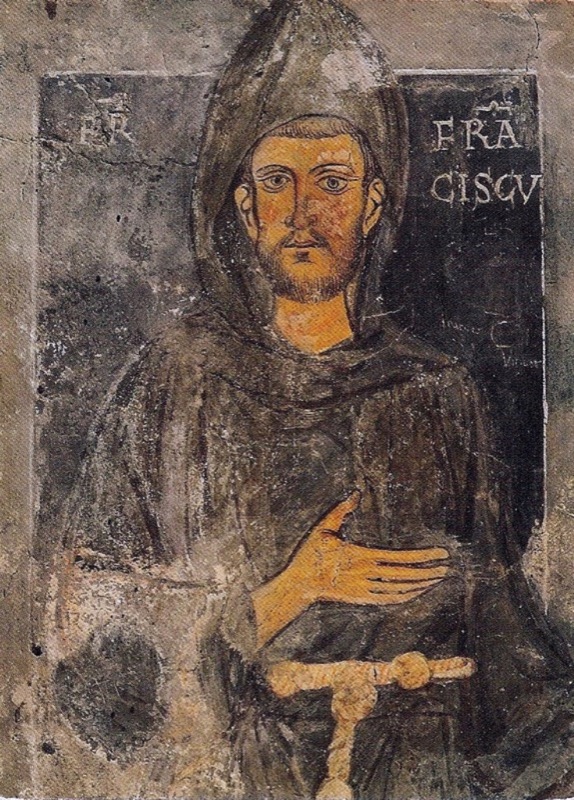
Francis of Assisi reaches modern popular culture through birds, wolves, poverty, brown robes, garden statues, animal blessings, Christmas cribs, and an almost ecological tenderness. The early sources are more demanding. Francis's own writings, including the Rule and Canticle of the Sun, present obedience, poverty, praise, bodily humility, and a severe imitation of Christ. Thomas of Celano's lives, written close to canonization and then revised within Franciscan politics, preserve vivid memories of conversion, preaching, illness, stigmata, and death while already making Francis useful to the order's identity. Bonaventure's official life gives the movement a more theologically ordered saint and eventually overshadows competing memories. The Little Flowers, later and more folkloric, supplies the Francis who preaches to birds, befriends creatures, and charms readers with miniature parables of simplicity. Popular culture often prefers that last Francis, but the older dossier also contains pain. Near the end of his life he suffered eye disease, weakness, and medical cautery; the tradition remembers doctors drawing hot iron across his forehead. The stigmata, whether read devotionally, historically, psychologically, or medically, became one of medieval Christianity's strongest signs of bodily imitation. Greccio links Francis to the live nativity scene, turning Christmas into an embodied visual devotion. Animals matter, but they are not merely cute companions. They mark a sacramental imagination in which sun, water, fire, earth, illness, and death can all become kin within praise. That is why Francis can become at once a saint for ecology, a Christmas innovator, a model for voluntary poverty, and a case study in sanctified suffering. The source trail also helps resist a single decorative Francis. The entry therefore treats Francis as a source cluster: own voice, early biography, official legend, popular Fioretti, and modern afterlife. Holding those source layers apart for readers makes the familiar saint more useful, not less lovable.
Plot or Argument
- Francis's own voice
The Rule, Testament, letters, prayers, and Canticle emphasize poverty, obedience, penitence, Eucharistic reverence, and praise. These texts are less sweet than the modern saint image and more concerned with disciplined imitation of Christ.
- Thomas of Celano's lives
Celano writes near the first construction of the cult, preserving conversion scenes, public preaching, Greccio, stigmata, illness, and death. His accounts are primary for seeing how Francis became a canonized model almost immediately.
- Bonaventure's official synthesis
Bonaventure's Legenda maior orders Francis into a theological ascent and a stable Franciscan identity. It clarifies the saint for the order but narrows the unruly plurality of earlier memory.
- The Little Flowers
The Fioretti tradition offers beloved tales of humility, preaching to birds, Brother Wolf, and the companions. Its charm is real, but it is later folklore rather than the whole historical Francis.
- Greccio and the Christmas crib
The Greccio episode links Francis to the live nativity scene, a devotional technology that lets viewers see, touch, and emotionally inhabit the poverty of Bethlehem.
- Illness, stigmata, and death
The final sources present Francis as weak, nearly blind, marked by wounds, treated by cautery, and still singing. Bodily suffering is not incidental; it is part of the saint's authority.
Characters
- Francis of Assisi, founder and saint
Umbrian preacher of poverty whose life generated competing memories: apostolic reformer, stigmatic, singer, patient, and friend of creatures.
- Clare of Assisi, companion reformer
Founder of the Poor Clares and essential witness to the Franciscan experiment in poverty and enclosure.
- Thomas of Celano, early biographer
Franciscan writer whose lives preserve early institutional and devotional memory of Francis.
- Bonaventure, minister general and theologian
Author of the official major life that shaped later orthodox Franciscan memory.
- Brother Leo, companion and witness
Close associate linked with Francis's final years, writings, and memories of La Verna.
- Brother Ugolino, Fioretti compiler-tradition
Name associated with the later Little Flowers tradition, where Franciscan memory becomes short exemplary tale.
Lessons
Sweetness should not erase severity
The Francis of bird sermons and garden statues descends from real source traditions, but his own writings insist on obedience, poverty, penance, and bodily discipline. A careful reader keeps the tenderness without sanding away the ascetic edge.
- Which part of Francis is easiest for modern culture to domesticate?
- How does the Rule alter the mood created by the Little Flowers?
A movement edits its founder
Celano, Bonaventure, and the Fioretti do not simply repeat one Francis. Each source answers a different institutional or devotional need, showing how communities preserve founders by reshaping them.
- What does Bonaventure gain by giving Francis a more ordered theological form?
- Which source seems most interested in the companions rather than Francis alone?
The saint's body becomes a theological document
Stigmata, eye disease, cautery, weakness, and final nakedness all make Francis's body part of the argument. The sources use illness not merely as background but as a way to display imitation, patience, and authority.
- How should medical history discuss the stigmata without reducing the entire tradition to pathology?
- What does the cautery episode reveal about medieval treatment and sanctity?
Embodied devotion changes culture
Greccio's nativity scene and the Canticle's kinship language make doctrine visible and sensory. Franciscan devotion moves through staging, song, touch, and creaturely attention, which helps explain its durability.
- Why might seeing a manger alter Christmas devotion more than hearing a sermon?
- How does the Canticle change the emotional relation between body and environment?
Context
Francis lived amid the urban, commercial, and ecclesiastical tensions of thirteenth-century Italy. Lay penitential movements, crusade preaching, poverty debates, and church reform shaped the space in which his fraternity emerged.
Composition
Francis's own writings arose from practical governance and devotion. Thomas of Celano wrote after Francis's canonization; Bonaventure's official life came as the order sought unity; the Little Flowers developed from later memories and exempla in the Franciscan family.
Reception
Francis became one of Christianity's most recognizable saints. His afterlives include mendicant reform, Renaissance and modern art, animal blessing rites, environmental spirituality, Christmas crib traditions, film, children's books, and secular admiration for simplicity.
Comparisons
- the-rule-of-st-benedict
Benedict's stability and measured moderation contrast with Franciscan itinerancy, poverty, and improvisational preaching.
- early-christian-lives
Athanasius and Jerome help frame ascetic holiness before Francis; the Franciscan sources move that holiness into cities, markets, roads, and public preaching.
- a-christmas-carol
Greccio and Dickens both remake Christmas through embodied feeling, but Francis stages poverty and incarnation where Dickens stages memory, charity, and social conscience.
- the-varieties-of-religious-experience
James is useful for discussing conversion, saintliness, and bodily marks, but the Franciscan sources require theological and communal categories alongside psychology.
- galen-selected-works
Galen's learned medicine clarifies how distant Francis's cautery episode is from modern treatment; the scene belongs to a world where pain, heat, and humoral assumptions shaped care.
- hippocratic-writings
The Hippocratic corpus offers clinical observation and regimen, while Franciscan illness narratives turn treatment, pain, and endurance into signs of sanctity.
Quotes
“Praised be my Lord for our sister water, who is very serviceable unto us and humble and precious and clean”
“Praised be my Lord for our sister, the death of the body, from which no man escapeth”
“The doctors, having exhausted the therapeutic arsenal of the time, decided to resort to cauterization; it was decided to draw a rod of white-hot iron across his forehead”
“Brother fire," he said, "you are beautiful above all creatures; be favorable to me in this hour; you know how much I have always loved you; be then courteous to-day”
For Students
A reading companion for classical Christian high school students. See the student guide.
Reading Guide
Watch for
- The conversion scenes in Thomas of Celano's lives: Francis's encounter with the leper, the crucifix at San Damiano, and the scene before the bishop of Assisi in which Francis strips off his clothes and gives them back to his father, Pietro Bernardone.
- The difference in voice between Francis's own writings, such as the Rule, the Testament, and the Canticle of the Sun, and the biographies written about him by Celano and Bonaventure. Notice what Francis stresses about himself and what others stress about him.
- The Christmas at Greccio in 1223, when Francis has a manger, an ox, and an ass brought into the woods so that the people may see with their own eyes the poverty of Bethlehem.
- The stigmata received on La Verna in 1224, and the different ways the sources describe and interpret them.
- The final illness: the eye disease, the cautery with a white-hot iron in which Francis greets Brother Fire, and the addition of a stanza praising Sister Death to the Canticle as he nears his end.
Key terms and names
- Friars Minor
- The name Francis gave his brotherhood, meaning the lesser brothers. It names the order's ideal of humility, poverty, and service at the bottom of society rather than above it.
- Canticle of the Sun
- Francis's hymn of praise in the Umbrian vernacular, calling sun, moon, wind, water, fire, and earth his brothers and sisters. It is one of the earliest major poems in Italian, and Francis added the stanza on Sister Death near the end of his life.
- Greccio
- The Italian town where Francis staged the Christmas crib in 1223, with a living ox and ass and Mass celebrated over the manger. Celano's account is the source of the later tradition of nativity scenes.
- Stigmata
- Marks corresponding to the wounds of the crucified Christ, which the sources say appeared on Francis's hands, feet, and side after his vision of a six-winged seraph on La Verna in 1224.
- La Verna
- The mountain in Tuscany where Francis went to pray and fast in 1224 and where he received the stigmata. Bonaventure later began his Journey of the Mind into God after praying there.
- Legenda maior
- Bonaventure's major life of Francis, completed in the 1260s and adopted by the order as its official account, with earlier lives meant to give way to it. It shaped later memory of Francis.
- Fioretti
- The Little Flowers of St Francis, a fourteenth-century Italian collection of tales about Francis and his companions, including the sermon to the birds and the wolf of Gubbio. It is beloved but later and more legendary than Celano.
- Cautery
- The medical practice of burning tissue with hot iron, used in Francis's time for eye disease. Celano records that Francis spoke to the fire as a brother before the iron was drawn across his forehead.
Seminar Questions
- Comprehension What happens in the scene before the bishop of Assisi, and what does Francis's act there mean for his relationship with his father and his inheritance?
- Comprehension What does Francis arrange at Greccio, and what does Celano say Francis wanted the people to see?
- Comprehension Which creatures and elements does the Canticle of the Sun praise, and how does Francis address each one?
- Interpretation Before the cautery, Francis addresses fire as his brother and asks it to be courteous to him. What does this scene reveal about how he understood suffering, creation, and his own body?
- Interpretation The Canticle calls death a sister. Is this a denial of death's terror, or a way of facing it? Consider that Francis added the stanza while he was dying.
- Interpretation Compare the Francis of his own Rule and Testament with the Francis of the Little Flowers. Which details does each source emphasise, and why might the later tales have softened his severity?
- Interpretation Celano and Bonaventure both wrote with the needs of the Franciscan order in view. How should a reader weigh a biography written partly to shape an institution's identity?
- Big Question Francis chose poverty not as a misfortune but as a way of following Christ. Can voluntary poverty be a form of freedom, and what would the sources say to a person who owns much?
Faith Connections
- Matthew 10:7-10 (Scripture)
Jesus sends out his disciples to preach without gold, bag, or spare tunic. Celano records that hearing this Gospel read led Francis to take up the barefoot, possessionless preaching life, so this passage is the charter of the Friars Minor.
- Psalm 148 (Scripture)
The psalmist calls on sun, moon, stars, fire, hail, snow, and wind to praise the Lord. The Canticle of the Sun stands in this line of creation's praise, adding the intimate names of brother and sister.
- Galatians 6:17 (Scripture)
Paul writes that he bears in his body the marks of the Lord Jesus. The early sources read Francis's stigmata on La Verna as a literal fulfilment of this verse, the outward sign of a life conformed to Christ.
- Bonaventure, The Journey of the Mind into God, Prologue (Great Conversation)
Bonaventure explains that he wrote the work after going to La Verna and meditating on Francis's vision of the six-winged seraph, whose wings he made the six stages of the soul's ascent to God. The same writer who gave the order its official life thus turned the stigmata into a theology of contemplation.
Logic and Rhetoric
Central argument: Christ became poor and suffered for humanity; to follow him fully is to share his poverty, humility, and suffering; creation, made by the same Father, is family rather than property and should be met with praise rather than possession. Therefore Francis renounces his inheritance, preaches without possessions, honours creatures as brothers and sisters, and receives even illness and death as kin, so that his whole life, marked at last by the stigmata, becomes an image of Christ.
Rhetorical device: anaphora. The Canticle of the Sun begins stanza after stanza with the same words of praise, as in the lines for Sister Water and Sister Death. The repeated opening turns the poem into a litany in which every creature, and finally death itself, is gathered into one act of worship.
Debate: Resolved: The Francis of the Little Flowers is truer to the historical Francis than the Francis of Bonaventure's official life.
Memory Work
Praised be my Lord for our sister, the death of the body, from which no man escapeth
Praised be my Lord for our sister water, who is very serviceable unto us and humble and precious and clean
Writing Prompts
Essay: The early Franciscan sources present several different Francises: the severe author of the Rule, Celano's convert and stigmatic, Bonaventure's theological saint, and the gentle friend of creatures in the Little Flowers. Choose two of these portraits and argue what each source most wants its readers to imitate.
Comparison with Early Christian Lives: Antony flees to the desert to fight demons in solitude, while Francis takes his poverty into the towns and roads of Italy and calls creatures his brothers and sisters. Compare how the Life of Antony and the Franciscan sources understand renunciation, and argue what changes when holiness moves from the desert to the city.
Medical Lens
Francis is central for a medical-humanities reading of sanctity. The sources connect eye disease, cautery, weakness, stigmata, final illness, and death with holiness. The stigmata should be presented critically and historically: medical hypotheses exist, but the source tradition understands the wounds as devotional participation in Christ. The cautery episode is especially useful for discussing pain, premodern treatment, and consent under spiritualized suffering.
- Life of St. Francis, Ch. XVII
The stigmata at La Verna are the major medieval case of sanctity written onto the body.
- Life of St. Francis, Ch. XIX
Doctors use cautery for Francis's eye disease, providing a vivid premodern treatment scene.
- Canticle of the Sun
Praise of bodily death gives end-of-life suffering a devotional vocabulary.
- Death narratives
Francis's final weakness, song, and ritual gestures make dying a communal and liturgical event.
Creative Prompts
- Essay
Trace the movement from Rule to Canticle to Fioretti and show how modern culture selected the gentlest Francis.
- Adaptation
Create a short scene at Greccio where a child, a friar, and a skeptical townsman each understand the manger differently.
- Classroom
Give students three Francis passages and ask them to identify which belongs to own writing, official biography, or later folklore.
Further Reading
- Francis of Assisi: Early Documents, Regis J. Armstrong, J. A. Wayne Hellmann, and William J. Short, editors
Modern scholarly translations; copyrighted, so use for study rather than stored full text.
- The Life of St. Francis of Assisi, Paul Sabatier
- The Little Flowers of St. Francis, Brother Ugolino tradition
- Francis of Assisi: A New Biography, Augustine Thompson
Verification notes
The entry is source-conscious but partial. Francis's own writings, Celano, Bonaventure, and the Fioretti should eventually be represented with fuller source packets. The medical claims are framed as historical readings of source traditions, not diagnoses.
- Before publication, verify all Francis quotations against a preferred public-domain page image or text.
- Add clean public-domain excerpts from Thomas of Celano and Bonaventure if suitable translations are selected.