Work record
Life of St. Martin
c. 397; Roberts translation 1894 · Ancient · Hagiography · Latin
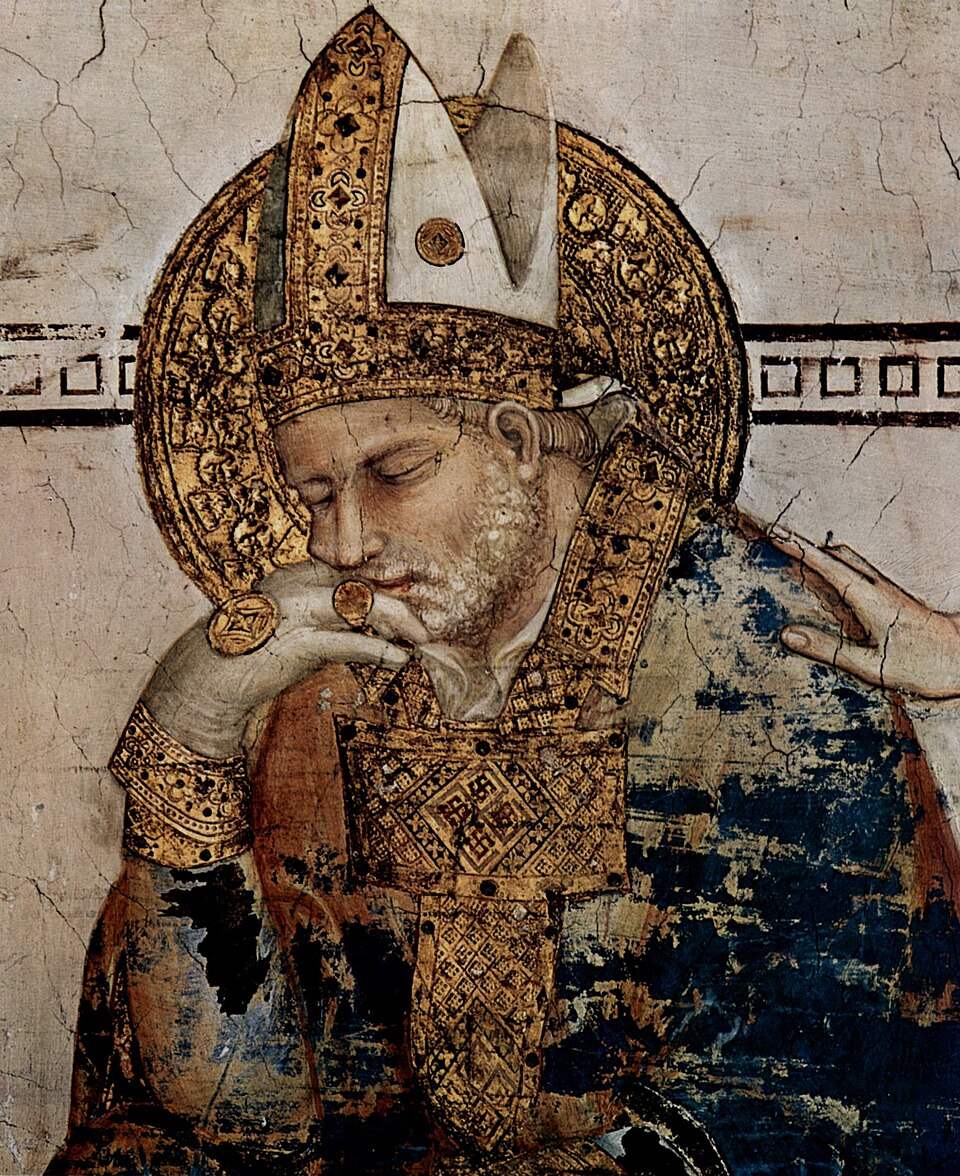

Summary
Sulpitius Severus's Life of St. Martin made Martin of Tours one of the defining saints of the Latin West. The narrative begins with Martin's birth in Pannonia, upbringing in Italy, and reluctant military service. Even before baptism he lives like a monk among soldiers, giving away his pay and serving his servant. The cloak episode at Amiens supplies the enduring image: Martin divides his cloak for a freezing beggar and later sees Christ wearing the given half. After leaving the army, he attaches himself to Hilary of Poitiers, resists Arian pressure, becomes an ascetic founder, and is drawn unwillingly into the episcopate at Tours. Sulpitius then presents a cascade of wonders: conversions of robbers and peasants, destruction of pagan shrines, healings, resurrections, exorcisms, prophetic insight, and confrontations with demons in visible form. The Dialogues and Letters extend the image, including Martin's compassion for the sick, his death from fever, and traditions such as kissing a leper at Paris. For modern readers, the medical interest is not whether the miracles can be turned into diagnoses. It is how late antique Christianity organized illness through sanctity. Fever, poison, strangulation, apparent death, leprosy, demonic possession, melancholy vision, and end-of-life care all appear as occasions for prayer, touch, authority, and narrative proof. Martin's body matters too: he rejects comfort, sleeps on sackcloth, fasts, ages, burns, and dies among ashes while still responsible for his flock. The Life makes holiness clinically visible by showing what happens around bodies in extremis. It is also a document of power. Martin's healing competes with pagan shrines, physicians, imperial authority, and local rumor. Sulpitius wants readers to believe he records only what he knows, yet he writes in a genre where miracle demonstrates truth. A medical lens should therefore treat the text as historical evidence for caregiving, leprosy stigma, possession language, and death practice, not as a modern casebook.
Plot or Argument
- Soldier before monk
Martin is compelled into military service but lives with ascetic restraint, humility, and generosity. The cloak episode turns military equipment into a sign of charity.
- Renunciation and Hilary
After baptism and withdrawal from arms, Martin seeks Hilary of Poitiers, endures conflict around Arianism, and begins the monastic life that will shape his authority.
- Miracles at Liguge and Tours
The Life presents revivals of the dead, healing from poison, and cures of sickness as evidence that Martin's sanctity acts through prayer and bodily proximity.
- Bishop against shrines and demons
As bishop, Martin destroys pagan sites, exposes false cults, and confronts demons. The text makes pastoral authority visible through conflict over bodies, places, and spirits.
- Letters and final fever
Sulpitius's letters narrate Martin's death, his fever, his refusal of comfort, and his prayerful readiness either to die or continue laboring for his people.
Characters
- Martin of Tours, monk-bishop and saint
Former soldier, ascetic founder, bishop, healer, exorcist, and central subject of Sulpitius's hagiography.
- Sulpitius Severus, author and witness
Aristocratic Christian writer who knew Martin and shaped his memory for Latin readers.
- Hilary of Poitiers, mentor bishop
Orthodox bishop associated with Martin's early ascetic and ecclesiastical formation.
- The beggar at Amiens, recipient of charity
Poor man whose nakedness elicits the cloak division and whose image is identified with Christ in Martin's dream.
- The catechumen, revived sick man
Unbaptized disciple who dies of fever and is restored in the Life's first major resurrection miracle.
Lessons
Charity begins before office
Martin's defining act occurs before he is bishop, monk, or famous miracle worker. The cloak story teaches that sanctity begins in ordinary bodily need: cold, exposure, and the willingness to lose half one's covering.
- Why does the cloak episode remain more memorable than many later miracles?
- How does Martin's soldier identity sharpen the act of charity?
Illness becomes a test of presence
Sulpitius repeatedly places Martin near fever, poison, death, leprosy, and possession. The saint's authority appears through touch, prayer, staying near the frightening body, and refusing to abandon sufferers.
- Which illness episode most depends on bodily proximity?
- How does Martin's presence differ from medical technique?
Possession language has social work to do
Demon stories are not simply failed psychiatry. They assign agency, danger, moral conflict, and pastoral authority in a world where mental and spiritual disturbance were not cleanly separated.
- What can a medical historian learn from possession narratives without diagnosing them?
- How does exorcism reinforce Martin's episcopal authority?
A deathbed can become a final teaching
Martin's fever, sackcloth, ashes, and prayerful indecision between death and service turn dying into pastoral instruction. The body at its weakest becomes the saint's last argument.
- What does Martin's refusal of comfort communicate to his followers?
- How does the death scene balance desire for heaven with duty to patients and flock?
Context
Martin lived in the fourth-century Roman West, when asceticism, episcopal power, anti-pagan campaigns, and Nicene-Arian conflict shaped Christian identity. Sulpitius's Life helped define what a western holy man could look like: monk, bishop, wonder-worker, and opponent of demons and temples.
Composition
The Life was written while Martin's memory was still fresh and probably before his death; the Letters and Dialogues supplement the portrait. Roberts's 1894 NPNF translation made the text widely available in English.
Reception
Martin became one of medieval Europe's great saints. His cloak, feast, shrine at Tours, monastic associations, and healing reputation influenced art, pilgrimage, kingship, military chaplaincy, and popular devotion.
Comparisons
- early-christian-lives
Athanasius's Antony and Jerome's desert saints help frame ascetic authority; Martin transfers that authority into Gaul as a bishop moving among soldiers, villages, temples, and sickrooms.
- golden-legend-popular-saints
The Golden Legend popularizes saints for feast-day preaching, while Sulpitius gives an earlier, more concentrated literary construction of one saint's charisma.
- city-of-god
Augustine reflects on miracles, demons, and earthly power philosophically; Sulpitius narrates those same tensions through vivid episodes around Martin's body and authority.
- confessions
Augustine turns inward toward memory and desire, whereas Sulpitius makes holiness visible through public encounters, healing scenes, and conflicts with spirits.
- the-varieties-of-religious-experience
James offers psychological categories for saintliness and conversion, but Martin's Life shows how a community reads bodily signs and miracles as public proof.
Quotes
“Taking, therefore, his sword with which he was girt, he divided his cloak into two equal parts, and gave one part to the poor man, while he again clothed himself with the remainder”
“Here he subsisted for some time on the roots of plants; and, while doing so, he took for food hellebore, which is, as people say, a poisonous kind of grass”
“But, after the lapse only of a few days, the catechumen, seized with a languor, began to suffer from a violent fever”
“O Lord, if I am still necessary to your people, I do not shrink from toil: your will be done”
For Students
A reading companion for classical Christian high school students. See the student guide.
Reading Guide
Watch for
- The cloak at Amiens in Chapter 3: Martin, still unbaptized, cuts his military cloak with his sword for a freezing beggar, and later in a dream sees Christ wearing the given half. Notice how a soldier's equipment becomes the sign of charity.
- Martin's life in the army before baptism, when he serves his own servant and gives away his pay. Sulpitius wants the reader to see the monk already present inside the soldier.
- Martin's attachment to Hilary of Poitiers and his resistance to Arian pressure, which ties his personal holiness to the defence of Nicene faith.
- The cascade of wonders after Martin becomes bishop of Tours: the catechumen raised after a violent fever in Chapter 7, pagan shrines destroyed, demons confronted in visible form. Ask what each miracle is meant to prove.
- Martin's death in Sulpitius's Letter 3, where he lies on sackcloth and ashes and prays that he will not refuse labour if his people still need him.
Key terms and names
- Hagiography
- A written life of a saint, meant to show holiness and to move readers to imitate it. Sulpitius insists he records only what he knows, yet he writes in a genre where wonders serve as proof of truth.
- Catechumen
- A person receiving instruction before baptism. Martin himself is a catechumen at Amiens, and an unbaptized disciple who dies of fever at Liguge is restored in the Life's first resurrection miracle.
- Amiens
- The city in northern Gaul at whose gate Martin, a young soldier, divides his cloak for a naked beggar in the depth of winter. The scene became the most widely remembered image of the saint.
- Hilary of Poitiers
- The orthodox bishop to whom Martin attaches himself after leaving the army. Through Hilary, Martin is drawn into the struggle against Arianism and into the ascetic life.
- Arianism
- The teaching, condemned at Nicaea in 325, that the Son is a created being and not of one substance with the Father. Martin's opposition to it places him on the Nicene side in the fourth-century conflict.
- Liguge
- The place near Poitiers where Martin founded a community of monks, one of the earliest monasteries in Gaul. Several of the Life's early miracles happen there.
- Asceticism
- The disciplined denial of bodily comfort for the sake of prayer and holiness. Martin's fasting, sackcloth, and refusal of comfort even as a bishop are presented as the source of his spiritual authority.
Seminar Questions
- Comprehension What does Martin do for the beggar at the gate of Amiens in Chapter 3, and what does he see in his dream the following night?
- Comprehension How does Martin live while he is still a soldier, and why does he eventually leave the army?
- Comprehension How does Martin become bishop of Tours, and how does he continue to live after he is made bishop?
- Interpretation Martin is not yet baptized when he divides his cloak. Why might Sulpitius place this act of charity before Martin's baptism and before any miracle?
- Interpretation Sulpitius says he records only what he knows, yet the Life is full of resurrections, exorcisms, and destroyed shrines. How do the miracles function in his argument for Martin's holiness?
- Interpretation In Letter 3 Martin prays that if he is still necessary to his people he will not shrink from toil. What does this prayer show about how Martin understands his own death and his office as bishop?
- Interpretation Martin is soldier, monk, and bishop in turn. Which of these roles does Sulpitius treat as Martin's truest identity, and what in the text shows it?
- Big Question The Life suggests that a holy person's authority comes from renouncing power rather than seeking it. Is that true in the Church, and can it be true in political life as well?
Faith Connections
- Matthew 25:31-46 (Scripture)
Christ tells the righteous that when they clothed the naked they clothed him. Martin's dream after Amiens, in which Christ appears wearing the half cloak given to the beggar, is a direct narrative enactment of this passage.
- Philippians 1:21-26 (Scripture)
Paul says that to depart and be with Christ is far better, yet to remain is more needful for the churches. Martin's dying prayer in Letter 3, ready either to die or to keep labouring for his people, echoes Paul's choice almost exactly.
- Athanasius, Life of Antony (Church Fathers)
Athanasius's life of the Egyptian desert father, written around 360, taught the Latin West what a holy man looked like: renunciation, combat with demons, and miracles. Sulpitius presents Martin as a Gallic counterpart who carries the desert pattern into the office of bishop.
- Gregory the Great, Pastoral Rule (Great Conversation)
Gregory warns against seeking the office of pastor out of ambition, while urging those truly fit not to refuse it stubbornly, and asks a pastor to join contemplation with care for his flock. Martin, drawn unwillingly to Tours and still living as a monk, is the kind of pastor Gregory describes.
Logic and Rhetoric
Central argument: True holiness shows itself first in humble charity, as when the unbaptized soldier clothes Christ in the beggar at Amiens. God confirms such holiness by acting through the saint's prayer and presence: the sick are healed, the dead raised, demons and false shrines overthrown. A man so confirmed is fit to rule the Church, even, and especially, if he never sought the office. Therefore Martin, soldier turned monk turned bishop, is a model for Christians in Gaul and a witness to the truth of the faith he defended.
Rhetorical device: typology. In Chapter 3 the beggar at Amiens is later revealed in Martin's dream to have been Christ, so the narrative reads the event through Matthew 25. Throughout the Life, Sulpitius shapes Martin's raisings of the dead and healings to echo the deeds of Christ and the apostles, inviting readers to see the Gospel pattern renewed in fourth-century Gaul.
Debate: Resolved: Sulpitius's account of miracles strengthens rather than weakens his portrait of Martin's holiness.
Memory Work
O Lord, if I am still necessary to your people, I do not shrink from toil: your will be done
Taking, therefore, his sword with which he was girt, he divided his cloak into two equal parts, and gave one part to the poor man, while he again clothed himself with the remainder
Writing Prompts
Essay: Martin begins as a soldier and ends as a bishop who destroys pagan shrines and confronts demons. Using the cloak at Amiens, his departure from the army, and his conflicts as bishop, argue whether Sulpitius presents Martin's life as a break with soldiering or as a new kind of warfare.
Comparison with Early Franciscan Sources: Martin divides his cloak for a beggar, and Francis of Assisi kisses a leper and strips himself of his clothes before the bishop. Compare how each life uses an act toward the poor or sick to begin a saint's story, and argue what each tells us about the holiness it praises.
Medical Lens
Martin's dossier is rich for the history of healing miracles, possession narratives, leprosy stigma, poison lore, ascetic embodiment, fever, and deathbed care. It should be read historically, not diagnostically: possession is a late antique explanatory and pastoral category, while miracle healing organizes social trust around the saint.
- Life, Ch. 3: cloak at Amiens
Martin responds to exposure and cold by sharing clothing, an act of basic bodily care before formal office.
- Life, Ch. 6: hellebore
The poisonous plant episode links ascetic foraging to ancient pharmacology and the dangers of diet.
- Life, Ch. 7: fever and apparent death
The catechumen's fever and death become the first major healing miracle, blending sickroom detail with resurrection narrative.
- Dialogue tradition: leper at Paris
Martin's kiss of a leper reverses stigma through touch, making the leper's isolation and bodily revulsion part of the healing scene.
- Life and Dialogues: demons and possession
Demonic encounters frame mental and behavioral disturbance through spiritual agency and episcopal authority rather than modern psychiatric categories.
Creative Prompts
- Essay
Compare Martin's healing miracles with modern clinical case reports, focusing on what each genre treats as evidence.
- Dialogue
Write a conversation between Sulpitius Severus and William James about whether saintliness is proven by inward experience or public healing.
Further Reading
- Life of St. Martin, Sulpitius Severus
Core hagiographic text in Roberts's public-domain translation.
- Dialogues, Sulpitius Severus
Supplementary miracle and conversation material on Martin.
- Letters, Sulpitius Severus
Includes the public-domain death narrative.
- Soldiers of Christ, Thomas F. X. Noble and Thomas Head
Useful anthology and contextual guide to saints' lives and late antique/medieval holiness.
Verification notes
The Roberts translation and broad Sulpitius tradition are secure. Some dialogue material, including the leper at Paris, is represented only in a partial packet here; a future full-text expansion could attach complete Dialogues.
No verification flags recorded.