Work record
The Underdogs
1915 · Early 20th Century · Novel · Spanish

Summary
The Underdogs follows Demetrio Macias, a peasant from Juchipila who joins the Mexican Revolution after conflict with federal soldiers makes ordinary life impossible. At first Demetrio's rebellion is local and personal: he flees with a band of men into the hills, fights effectively and becomes a leader because of courage, terrain knowledge and charisma. Luis Cervantes, a former medical student and journalist who has deserted the federal side, joins the group and supplies ideological language about the Revolution. Yet Azuela steadily undercuts heroic explanation. The fighters rarely understand national politics clearly; motives shift among survival, revenge, masculinity, loot, resentment and momentum. Victories bring promotion but not clarity. Characters such as Anastasio Montanes, Pancracio, La Pintada and War Paint create a mobile world of violence, boasting, hunger, drinking and sudden death. Camila's tragic involvement with Demetrio and Luis Cervantes exposes gendered vulnerability in the revolutionary camp. As the movement advances, the line between revolutionary cause and banditry blurs. The men who began as burdened peasants become agents of destruction, and Demetrio continues fighting because the current of war carries him forward. The novel ends cyclically, with Demetrio in a mountain fight like the one that began his career, suggesting revolution as a force that consumes its own meanings. Azuela writes with brevity, irony and medical coolness, preferring sharp scenes to speeches. His fragmented episodes make the war feel improvised, local and bodily rather than programmatic. Even victories feel temporary and feverish. The Underdogs is not anti-revolutionary in a simple conservative sense; it is anti-illusion. It shows how just grievances can enter a war machine that damages bodies, language and moral judgment. Its medical lens is unusually direct because Azuela was a doctor: wounds, field care, exhaustion, alcohol, hunger, trauma, sexual danger and the physician-intellectual figure of Cervantes are central to the book's revolutionary realism.
Plot or Argument
- Demetrio takes to the hills
Federal harassment forces Demetrio Macias from his home. He gathers men and begins fighting from the mountains.
- Early victories
Demetrio's band defeats federal troops through local knowledge and daring, gaining reputation without a clear political program.
- Luis Cervantes joins
A deserter with education and medical training enters the group, interpreting the Revolution in language the fighters themselves often do not use.
- Expansion and moral drift
The band grows and moves through towns, victories, drinking, looting and rivalries as revolutionary purpose becomes harder to distinguish from appetite.
- Camila and La Pintada
Women's presence in the camp reveals desire, jealousy, exploitation and the vulnerability hidden by masculine revolutionary myth.
- Disillusion
The fighters' cause becomes increasingly opaque. Cervantes seeks advantage, while Demetrio remains caught in the momentum of war.
- Circular ending
Demetrio returns to mountain combat in an ending that echoes the beginning, suggesting that revolutionary violence has become self-perpetuating.
Characters
- Demetrio Macias, protagonist
A peasant fighter whose courage and local grievance make him a revolutionary leader without giving him ideological clarity.
- Luis Cervantes, intellectual and former medical student
A deserter who joins Demetrio's band, supplies revolutionary rhetoric and looks for personal advancement.
- Anastasio Montanes, fighter
A loyal member of Demetrio's band, part of the novel's rough masculine collective.
- Pancracio, fighter
A violent revolutionary whose brutality helps blur the line between revolt and predation.
- Camila, young woman
A woman drawn into Demetrio's orbit and damaged by the sexual politics of the camp.
- La Pintada, camp follower
A fierce woman associated with jealousy, violence and the harsh freedoms of war.
- Venancio, barber-surgeon figure
A man with rough healing knowledge who reflects the improvised medical world of the revolutionary band.
Lessons
Revolution needs more than grievance
Demetrio's reasons for rebellion are real, but the movement around him lacks durable moral direction. The novel teaches that just anger can be absorbed by violence unless political purpose remains accountable.
- Why does Demetrio join the Revolution?
- When does his cause become unclear?
- Does Azuela condemn the Revolution or its degeneration?
Ideology can arrive after action
Luis Cervantes gives eloquent explanations for what others are already doing. Azuela shows how educated language can dignify, distort or exploit popular struggle.
- What does Cervantes understand that Demetrio does not?
- What does Demetrio understand that Cervantes does not?
War damages moral perception
Repeated violence changes what characters notice, excuse and desire. The book's brevity intensifies its sense that people become accustomed to brutality before they can interpret it.
- Which scene most clearly shows moral numbness?
- How does Azuela's spare style shape the reader's judgment?
Women reveal the cost of masculine myth
Camila and La Pintada expose the sexual vulnerability, jealousy and coercion inside revolutionary camaraderie. Their scenes prevent the war story from remaining purely heroic.
- How does the camp treat women as symbols or spoils?
- What does Camila's fate reveal about revolutionary power?
Context
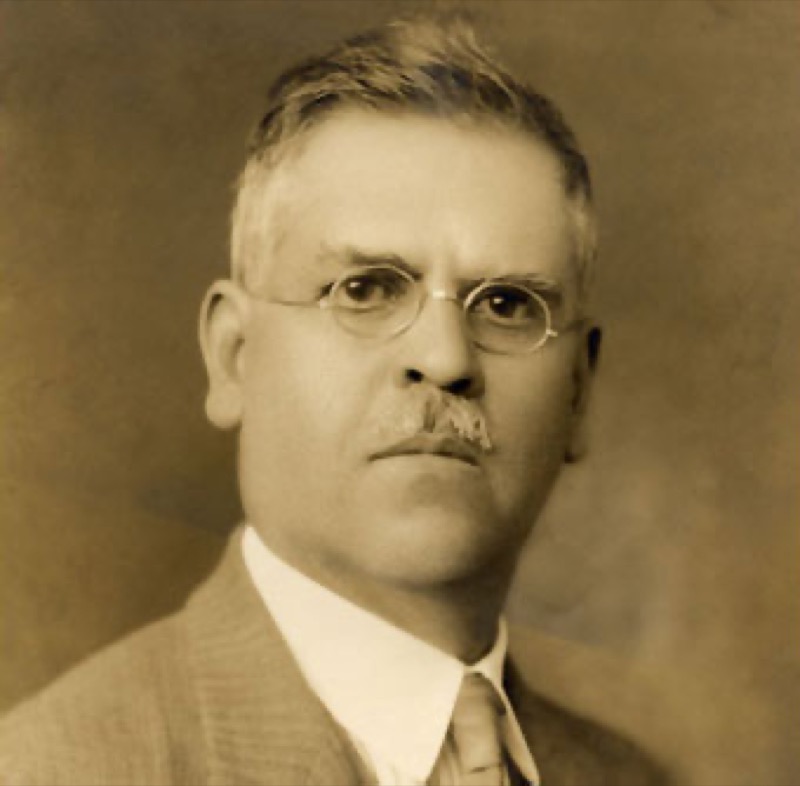
The novel arises directly from the Mexican Revolution, a complex struggle against the dictatorship of Porfirio Diaz and among competing revolutionary factions. Azuela witnessed the conflict as a doctor with forces associated with Pancho Villa, giving the book its terse, disillusioned realism.
Composition
The Underdogs was first published in 1915, initially with limited attention, and later recognized as the classic novel of the Mexican Revolution. Azuela's medical background and wartime experience shaped its unsentimental treatment of bodies and motives.
Reception
The novel became central to Mexican and Latin American literature, valued for refusing both official heroic myth and reactionary dismissal. It remains a key example of revolutionary fiction as disillusioned witness.
Comparisons
- the-quiet-american
Both novels puncture political abstraction by showing bodies injured by theories and movements that claim to liberate.
- heart-of-darkness
Both depict moral disintegration amid violence, though Azuela writes from within revolutionary upheaval rather than imperial expedition.
- testament-of-youth
Brittain's memoir and Azuela's novel share attention to bodily cost, disillusion and the failure of heroic language in war.
- the-power-and-the-glory
Greene and Azuela both write Mexico as a place where political violence tests faith, motive and bodily endurance.
- the-iliad
Azuela strips martial glory down to recurring violence and exhaustion, almost an anti-epic answer to heroic war tradition.
Quotes
For Students
A reading companion for classical Christian high school students. See the student guide.
Reading Guide
Watch for
- The opening of Part One, when federal soldiers come to Demetrio's house in the Juchipila country and he flees to the hills, and the house is burned behind him. Keep this beginning in mind when you reach the last chapter.
- The arrival of Luis Cervantes, whom the band first suspects as a spy, and his speeches telling Demetrio's men that they are fighting for great ideals. Compare what he says about the Revolution with what the men actually do.
- Alberto Solis on the hill above Zacatecas, admiring the beauty of the Revolution even in its barbarity, then lamenting that it may end only in robbery and murder, moments before a bullet strikes him.
- The looting of houses in Part Two and the rivalry between War Paint and Camilla, which ends when War Paint stabs Camilla and Demetrio cannot bring himself to kill her in return.
- Part Three: Cervantes' letter from El Paso, the poet Valderrama's cry that he loves the Revolution as one loves a volcano, Demetrio's answer to his wife when he throws a stone into the canyon, and the final ambush in the same sierra.
Key terms and names
- Demetrio Macias
- A peasant of the Juchipila canyon who becomes a revolutionary leader after the federal soldiers drive him from his home. He is brave and a deadly marksman, but he can never say clearly what the war is for.
- Federals
- The government soldiers of Victoriano Huerta, whom Demetrio's band fights in Part One. After Huerta falls, the revolutionaries begin fighting each other.
- Luis Cervantes
- A former medical student and journalist who deserts the Federals and joins Demetrio. He supplies the language of ideals, pockets loot quietly, and ends Part Three as a newly graduated doctor in El Paso.
- Villa and Carranza
- Pancho Villa and Venustiano Carranza, revolutionary leaders whose split divided the revolutionaries. When Villa is beaten at Celaya, Demetrio's men find themselves on the losing side of a quarrel they never fully understood.
- Venancio
- The band's barber, who pulls teeth, treats wounds with rough remedies, and is admired for having read a novel called The Wandering Jew. He represents the improvised medicine of the camp.
- War Paint
- La Pintada, a fierce camp woman who joins the band in Part Two. Her jealousy and violence toward Camilla expose the cruelty that has grown inside the movement.
- Juchipila
- Demetrio's home canyon, where the novel begins and ends. Its return at the close makes the story circle back on itself.
Seminar Questions
- Comprehension Why does Demetrio leave his home and take up arms in Part One, and how does his small band win its first victories against the Federals?
- Comprehension How does Luis Cervantes come to join Demetrio's men, and how does he win Demetrio's trust after first being suspected as a spy?
- Interpretation Cervantes tells the men they are fighting for noble ideals, while they seem to fight for revenge, loot, and loyalty to Demetrio. Which account of their motives does Azuela's narration support, and how can you tell?
- Interpretation Alberto Solis calls the Revolution beautiful and then fears it will end in robbery and murder. Why does Azuela give this speech to a man who is killed moments later?
- Interpretation When War Paint kills Camilla, Demetrio cannot strike her down and lets her go. What does this scene show about Demetrio and about what the band has become?
- Interpretation When his wife asks why he keeps fighting, Demetrio throws a stone into the canyon and tells her to watch how it keeps going. What does the image say about the Revolution, and what does it say about Demetrio himself?
- Big Question Can a just cause be carried forward by men who no longer know or care what it is, and at what point does a rebellion against injustice become an injustice itself?
Faith Connections
- Luke 3:14 (Scripture)
When soldiers ask John the Baptist what they should do, he tells them to do violence to no one, accuse no one falsely, and be content with their wages. Demetrio's men, who loot houses and extort villagers, live out the opposite of each command.
- James 4:1-2 (Scripture)
James asks where wars and fightings come from and answers that they come from desires at war within us. Azuela's portrait of a revolution driven by appetite, envy, and revenge reads like a long illustration of the passage.
- Matthew 26:52 (Scripture)
Jesus tells Peter that all who take the sword will perish by the sword. Nearly every major fighter in the band, from Solis to Anastasio and Venancio, dies by violence, and the last chapter leaves Demetrio firing alone among the rocks.
- Augustine, City of God IV.4 (Church Fathers)
Augustine asks what kingdoms are without justice but great robberies, and tells of the pirate who told Alexander that he was called a robber only because he had one ship. Azuela's revolutionaries, sliding from rebels into bandits, give the question a modern Mexican setting.
Logic and Rhetoric
Central argument: Demetrio's band takes up arms because of real wrongs, but its men do not know or share any clear political aim. Without a purpose to govern it, violence feeds on revenge, plunder, and its own momentum, while educated men like Cervantes supply grand words and look after themselves. Therefore the Revolution, as Azuela depicts it, consumes the very people who fought it and returns them to where they began, poorer and fewer.
Rhetorical device: ring composition. The novel opens with Demetrio fighting Federals from the rocks of the Juchipila sierra and closes with him again in the same sierra, after his boast that he once killed hundreds there with only twenty men, now alone behind a stone and still aiming. The return to the starting place turns the whole story into a circle and makes the stone he throws into the canyon in Part Three an emblem of motion without purpose.
Debate: Resolved: Demetrio Macias is more admirable than Luis Cervantes.
Writing Prompts
Essay: Azuela gives the most eloquent words about the Revolution to Cervantes, Solis, and Valderrama, and almost none to Demetrio. Argue what Azuela suggests about the relation between the men who talk about the Revolution and the men who fight it.
Comparison with The Power and the Glory: Azuela and Graham Greene both set their novels in revolutionary Mexico and follow a hunted man through its villages and mountains. Compare Demetrio, who fights without knowing why, with Greene's whisky priest, who keeps his vocation while doubting himself, and argue what each book suggests sustains a person through a time of violence.
Medical Lens
Azuela's medical background makes the novel especially relevant: wounds, improvised treatment, exhaustion, hunger and the doctor's ambiguous social role recur throughout. Luis Cervantes's medical training does not make him morally reliable, while rough healers and battlefield necessity show medicine under revolutionary scarcity. The book also captures what would now be called trauma and moral injury, though its own language is stoic, ironic and political.
- Opening mountain fighting
Demetrio's band fights from rough terrain, foregrounding gunshot wounds, flight and bodily endurance.
- Luis Cervantes joins the band
A former medical student enters the revolutionary group, linking educated medicine to political opportunism.
- Camp and march episodes
The fighters' drinking, hunger, fatigue and casual violence create a field medicine atmosphere without stable institutions.
- Camila and La Pintada episodes
Sexual jealousy and coercion reveal gendered vulnerability in the revolutionary camp.
- Final battle
The circular return to combat emphasizes death, repetition and the exhaustion of revolutionary purpose.
Creative Prompts
- Essay
Analyze The Underdogs as a physician's anti-epic of revolution.
- Fiction
Write Luis Cervantes's medical notes after a battle, allowing political rhetoric to break down under the list of wounds.
- Dialogue
Stage Demetrio Macias and Fowler from The Quiet American debating whether outsiders ever understand a war.
Further Reading
- The Underdogs, Mariano Azuela
- The Old Gringo, Carlos Fuentes
- The Wind That Swept Mexico, Anita Brenner
- The Life and Times of Pancho Villa, Friedrich Katz
Verification notes
Main plot, Azuela's medical background and revolutionary context are secure. Quotations are omitted because the manifest specifies a translation issue and exact public-domain wording should be checked.
- Exact chapter locators in the E. Munguia translation for Camila, La Pintada and the final battle.
- Whether the reference edition uses a copyrighted Waisman translation; if so, treat all quotes as copyrighted.
- Precise spelling of translator E. Munguia Jr. and publication year in the available public-domain text.