Work record
12 Years a Slave
1853 · 19th Century · Memoir · English
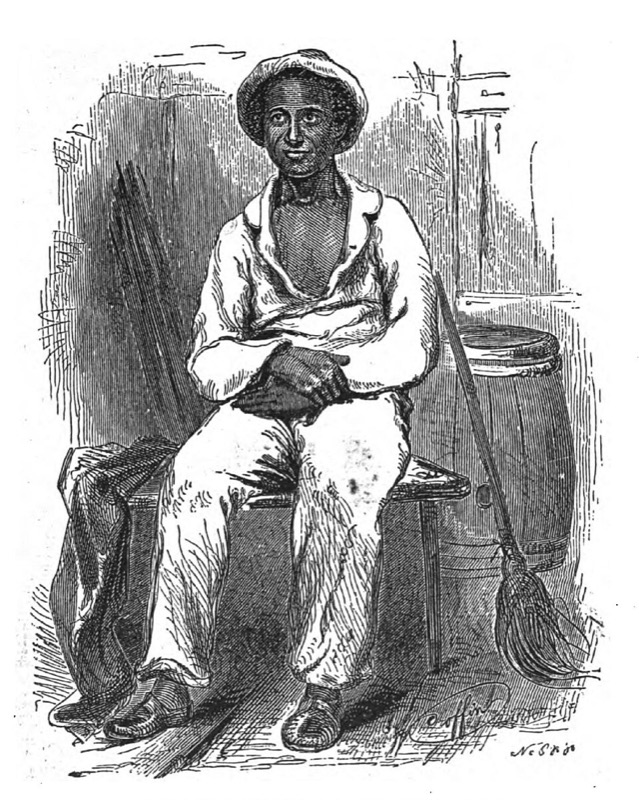
.jpg)
Summary
12 Years a Slave narrates Solomon Northup's kidnapping from freedom into slavery and his eventual restoration to his family. Northup is a literate, skilled violinist and laborer living as a free Black man in Saratoga Springs, New York. Two white men lure him to Washington, D.C., with the promise of work, drug him, and sell him under the name Platt after he wakes in chains. When he insists he is free, he is beaten into silence. Transported south, he is sold first to William Ford, whom Northup presents as comparatively humane within an inhuman system, and then through debt to the brutal John Tibeats. After conflict with Tibeats nearly leads to lynching, Northup passes into the ownership of Edwin Epps in Louisiana. Epps is violent, jealous and sadistic, especially toward Patsey, an enslaved woman whose skill in cotton picking and sexual exploitation by Epps make her a target of Mistress Epps's hatred. Northup describes labor regimes, food, cabins, whippings, surveillance, music, masters' use of scripture to justify the lash, illness, fear and the constant danger of speech. He survives by skill, caution, temporary gives priority to and luck, while never abandoning the hope of communicating with the North. Finally he confides in Samuel Bass, a Canadian carpenter opposed to slavery, who sends letters that lead to Northup's rescue through legal intervention. The memoir's force lies in its precise witness: slavery appears as theft, torture, economic system, sexual violence, legal fraud and psychological terror. Northup's violin playing also shows how skill can provide temporary value without producing safety or freedom. His return home is joyful but cannot undo the stolen years. Its medical relevance is profound: drugging, whipping, near hanging, exhaustion, malnutrition, trauma, childbirth and reproductive coercion, infectious risk, pain and the ethics of testimony are central. Northup insists on names, places and verifiable details because the narrative itself must heal a record that slavery tried to erase.
Plot or Argument
- Free life in New York
Northup establishes his identity as a free husband, father, worker and musician before the kidnapping.
- Kidnapping and sale
He is deceived, drugged, imprisoned, beaten for asserting freedom and sold south under the name Platt.
- Ford and Tibeats
Northup's first plantation experiences include relative kindness under Ford and mortal danger under Tibeats.
- Epps's plantation
The longest section documents cotton labor, whipping, hunger, surveillance, music, religion and Epps's violence.
- Patsey
Patsey's suffering exposes the intersection of sexual exploitation, jealousy, labor extraction and torture.
- Bass and rescue
Northup trusts Samuel Bass, whose letters bring legal help from New York and restore Northup to freedom.
- Aftermath and testimony
Northup returns to his family and gives a detailed public account designed to prove both identity and atrocity.
Characters
- Solomon Northup, narrator
A free Black man kidnapped into slavery, renamed Platt and forced to survive twelve years in Louisiana.
- Anne Northup, wife
Northup's wife in Saratoga Springs, from whom he is violently separated.
- William Ford, enslaver
A Baptist preacher and owner whom Northup depicts as personally kind but still implicated in slavery.
- John Tibeats, enslaver
A violent carpenter whose conflict with Northup nearly results in Northup's lynching.
- Edwin Epps, enslaver
A brutal Louisiana planter who whips, terrorizes and exploits the people he enslaves.
- Patsey, enslaved woman
An extraordinarily productive cotton picker subjected to Epps's sexual coercion and Mistress Epps's violence.
- Mistress Epps, plantation mistress
Epps's wife, whose jealousy intensifies Patsey's suffering.
- Samuel Bass, ally
A Canadian carpenter whose antislavery convictions lead him to send the letters that secure Northup's rescue.
Lessons
Slavery is bodily theft
Northup's freedom is stolen through drugging, chains, beatings and legal fraud. The memoir insists that slavery is not an abstraction but control of bodies, names, movement and pain.
- Why does Northup begin with his free identity?
- How does renaming function as violence?
- What details make the testimony legally forceful?
Kindness inside injustice does not redeem the system
Ford may be personally humane, but he remains an enslaver. Northup's nuance prevents readers from confusing individual temperament with institutional morality.
- How should we read Northup's portrait of Ford?
- Why does personal kindness not alter the structure of slavery?
Sexual violence is central, not incidental
Patsey's story shows slavery's sexual coercion and gendered torture with devastating clarity. The memoir teaches that any account of slavery that omits sexual violence is incomplete.
- How does Patsey's skill make her more vulnerable?
- How do Epps and Mistress Epps both participate in her suffering?
Testimony fights erasure
Northup names places, people and procedures because slavery depends on making the enslaved legally and socially unbelievable. The memoir's precision is an act of restoration.
- Why does documentation matter so much?
- How does Northup balance personal feeling and evidentiary detail?
Context
Published in 1853, the memoir entered the antebellum antislavery movement at a moment of fierce conflict over fugitive slave law, expansion of slavery and the credibility of enslaved people's testimony. Its kidnapping narrative exposed the vulnerability of free Black people to the slave system.
Composition
Northup dictated or collaborated on the narrative with David Wilson after his rescue. The book appeared quickly, using legal documents, names and places to support its truth claims.
Reception
The memoir sold widely in the 1850s and later became a central slave narrative for scholars and general readers. Its modern reputation grew further after the 2013 film adaptation.
Comparisons
- the-portable-faulkner
Northup gives direct testimony to the institution whose afterlife Faulkner later explores through family, land and racial memory.
- passing
Both works show how race is enforced through law, perception and social danger, though Northup writes direct enslavement testimony.
- the-scarlet-letter
Both involve public stigma and legal identity, but Northup's memoir documents racialized bodily coercion rather than symbolic punishment.
- black-beauty
Sewell and Northup both use first-person suffering to awaken moral perception, though Northup testifies to human enslavement.
Quotes
For Students
A reading companion for classical Christian high school students. See the student guide.
Reading Guide
Watch for
- The opening chapters in Saratoga Springs, where Northup sets down his family, his work on the canals and roads, and his violin before anything is taken from him.
- His waking in chains in Williams' slave pen in Washington, within sight of the Capitol, and the beating James Burch gives him for saying he is a free man.
- The Tibeats episode at Ford's plantation: the fight over the nails, the noose, and the long hours Northup stands bound in the sun while the overseer Chapin keeps the hangmen off.
- The weighing of cotton at the gin-house each evening on Epps's plantation, and the punishments that follow a light basket.
- Northup's quiet conversations with Samuel Bass while they build Epps's house, and the letters that finally bring Henry B. Northup to Bayou Boeuf.
Key terms and names
- Platt
- The name forced on Northup by his kidnappers and sellers. To answer to it is survival; to say his real name aloud is to risk death, so the book's very title page is an act of reclaiming his identity.
- Williams' slave pen
- The holding place in Washington, D.C., where Northup is first imprisoned. Its location near the seat of the national government is a point Northup makes deliberately.
- Bayou Boeuf
- The Louisiana region of plantations where Northup spends most of his twelve years, under Ford, Tibeats, and Epps.
- William Ford
- Northup's first owner, a Baptist preacher whom Northup describes as kind and pious. Northup notes that Ford's surroundings had shaped his conscience so that he did not see the wrong in owning men.
- Patsey
- A young woman on Epps's plantation, the fastest cotton picker on the bayou, whose suffering under Epps and his wife is the heaviest burden of the book's middle chapters.
- Samuel Bass
- A Canadian carpenter working for Epps who argues openly that slavery is wrong. He risks his own safety to write the letters to Northup's friends in New York.
- Free papers
- Documents proving a Black person's free status, which Northup does not have with him when he is taken. His rescue depends on legal proof sent from New York under the authority of the governor.
Seminar Questions
- Comprehension How do Brown and Hamilton persuade Northup to leave Saratoga, and what happens to him in Washington before he wakes in the slave pen?
- Comprehension What happens to Eliza and her children Randall and Emily in the New Orleans pen, and why does Northup give their story so much space?
- Comprehension Describe the two attacks Tibeats makes on Northup and how Northup survives each one.
- Interpretation Northup praises William Ford's character while plainly showing that Ford holds him as property. Why does Northup refuse to make Ford either a villain or a hero?
- Interpretation Northup's violin earns him small sums and a measure of favor at plantation balls. What does the violin mean to him over the twelve years, and why does he describe it with such affection?
- Interpretation Northup names people, places, dates, and sums of money with unusual precision. How does this exactness serve both his legal purpose and his moral one?
- Interpretation Why must Northup hide his ability to read and write for twelve years, and how does the betrayal of his letter by Armsby show what literacy meant on the bayou?
- Big Question Burch is tried in Washington and goes free because Northup's own testimony cannot be heard against him. What does this ending suggest about the relation between law and justice, and what should a just law do when a whole class of witnesses is silenced?
Faith Connections
- Exodus 21:16 (Scripture)
The law of Moses names manstealing, kidnapping a man and selling him, as a capital crime. Northup's case is exactly this crime, and his narrative's patient proof of identity reads like a petition for the justice the law demands.
- Genesis 37 and 39-41 (Scripture)
Joseph is sold by his brothers to traders, carried to Egypt, given a new name, and raised from bondage after many years. Northup's story follows the same arc of sale, renaming, long servitude, and restoration, though without the reconciliation that ends Joseph's.
- Luke 12:47-48 (Scripture)
Northup records an enslaver, Peter Tanner, reading this passage about the servant beaten with many stripes as a warning to the people he held. Reading the verse in its setting, a parable about stewards accountable to their own master, shows how far that Sunday reading bent it.
- Gregory of Nyssa, Homilies on Ecclesiastes, Homily 4 (Church Fathers)
Commenting on the Preacher's boast of buying slaves, Gregory asks what price could buy a being made in the image of God. His argument meets Northup's narrative at its center: a man who can be renamed Platt and sold has not thereby ceased to be Solomon.
Logic and Rhetoric
Central argument: Solomon Northup was a free citizen of New York, with a home, a family, and a name. He was kidnapped and sold under a false name, and for twelve years the system of Louisiana slavery treated him exactly as it treated those born into it: as property to be worked, whipped, and sold. Since a free man could vanish into that system with no legal protection, and since his own testimony could not convict his kidnapper, the institution itself, not merely a few cruel masters like Epps or Tibeats, is shown to be built on the denial of personhood.
Rhetorical device: testimonial accumulation (evidentia). Throughout the Epps chapters Northup piles up verifiable particulars: names of plantations and neighbors, the weight of a day's cotton, the hours of labor, the number of lashes. The cumulative detail turns personal memory into evidence a reader could check.
Debate: Resolved: William Ford's personal kindness made him a better man but not a better master.
Writing Prompts
Essay: Northup is renamed Platt in the Washington pen and reclaims Solomon only when Henry B. Northup arrives on Epps's plantation. Using the scenes of renaming, concealment of his literacy, and recognition, argue what Northup shows about the connection between a name, a self, and freedom.
Comparison with Narrative of the Life and What to the Slave Is the Fourth of July?: Frederick Douglass was born enslaved and wrote his way to freedom; Solomon Northup was born free and was stolen into slavery. Compare how each narrator uses literacy, religion, and the reader's own sense of law to build his case, and argue which perspective exposes the institution more sharply.
Medical Lens
This is a crucial medical-humanities text: drugging enables kidnapping; whipping, hanging, exhaustion, hunger and sexual violence structure plantation life; trauma is both acute and prolonged. Patsey's suffering foregrounds reproductive and sexual coercion. The medical lens should center slavery as a health catastrophe and an ethical crime, not merely a background condition.
- Ch. 2-3
Northup is drugged, imprisoned and beaten when he asserts that he is free.
- Tibeats episode
Northup is nearly hanged and left in prolonged bodily torment after resisting Tibeats.
- Epps plantation chapters
Cotton labor, quotas, whippings, hunger and surveillance show slavery as chronic bodily extraction.
- Patsey chapters
Patsey's sexual exploitation and whipping expose gendered torture and reproductive vulnerability under slavery.
Creative Prompts
- Essay
Analyze Northup's memoir as testimony to slavery as a public-health and bodily catastrophe.
- Fiction
Write a scene from the point of view of an object Northup uses to preserve identity after being renamed Platt.
- Classroom
Ask students to map how law, medicine, violence and documentation interact in Northup's account.
Further Reading
- Narrative of the Life of Frederick Douglass, an American Slave, Frederick Douglass
- Incidents in the Life of a Slave Girl, Harriet Jacobs
- Soul by Soul, Walter Johnson
- Medical Apartheid, Harriet A. Washington
Verification notes
Major events, characters and historical context are secure. Quotes are omitted pending exact checking against the 1853 text.
- Exact chapter locators for Northup's drugging, Tibeats hanging and Patsey's whipping.
- Details of David Wilson's editorial role if expanded.
- Wording of any future quotation from the 1853 public-domain text.