Work record
Narrative of the Life and What to the Slave Is the Fourth of July?
1845 / 1852 · 19th Century · Memoir · English
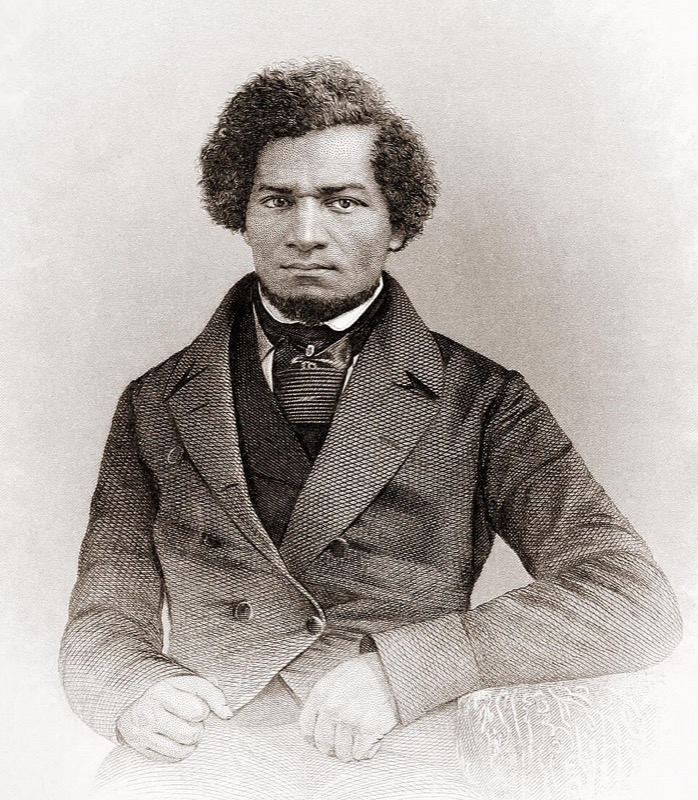

Summary
This Douglass entry pairs the 1845 Narrative of the Life of Frederick Douglass with the 1852 speech commonly known as What to the Slave Is the Fourth of July? The Narrative tells Douglass's movement from enslaved childhood in Maryland through violence, literacy, skilled labor, resistance, escape, and public abolitionist identity. It exposes slavery as a system that attacks bodies, families, memory, language, religion, and moral perception. Learning to read becomes a turning point because literacy both opens political consciousness and deepens the pain of bondage. Douglass's fight with Covey marks a bodily and psychological refusal of enslavement, while his critique of slaveholding Christianity separates genuine religion from pious cruelty. The Fourth of July speech shifts from autobiography to an address to the nation. Speaking to a white audience, Douglass measures American celebration against enslaved people's reality and turns founding language into accusation. He uses the Declaration, the Bible, law, irony, and prophetic rhetoric to argue that national liberty is a sham while slavery persists. The medical lens is high because Douglass records trauma, whipping, hunger, family separation, exhaustion, surveillance, and the psychic injuries of enslavement. He also shows literacy and speech as forms of survival and self-reconstruction. Historically, the Narrative appeared when fugitive testimony carried legal and personal risk; the 1852 speech belongs to a sharpening antebellum abolitionist movement after the Fugitive Slave Act. Read beside the founding documents, Jefferson, Paine, and King, Douglass is the indispensable counter-reader of American freedom. He does not reject the founding ideals; he reads the Constitution as a liberty document and demands that its principles reach the enslaved. His work remains central because it joins narrative evidence with rhetorical judgment: the enslaved person becomes author, witness, analyst, and prosecutor. The pairing also shows how autobiography can grow into national critique without losing its bodily specificity. Douglass makes freedom a question of language, law, and injured flesh.
Plot or Argument
- Enslaved childhood is made legible
The Narrative begins with family separation, uncertain birth date, violence, and the denial of knowledge that structures slavery.
- Literacy deepens consciousness
Reading and writing give Douglass tools for freedom while intensifying his awareness of bondage's injustice.
- Resistance restores personhood
The fight with Covey and later escape mark bodily and psychological refusals of enslavement.
- The Fourth seen from the slave's side
The 1852 speech exposes the contradiction between national celebration and enslaved suffering.
Characters
- Frederick Douglass, memoirist, speaker, and protagonist
Escaped enslaved man who becomes author, abolitionist, and orator against slavery.
- Edward Covey, slave breaker
Brutal overseer whose fight with Douglass becomes a turning point in the Narrative.
- Sophia Auld, enslaver and early teacher
Initially teaches Douglass letters before slavery's power transforms her conduct.
Lessons
Testimony can become prosecution
Douglass does not merely tell what happened to him. He turns personal experience into evidence against a national system.
- How does Douglass balance narrative and argument?
- Why is first-person testimony politically powerful?
Literacy can wound and liberate
Reading gives Douglass tools of thought and escape, but it also makes bondage more painful. Consciousness is not easy consolation.
- Why does literacy both help and torment Douglass?
- What does slavery fear about reading?
National ideals need hostile readers
The Fourth of July speech shows that founding language can be used against the nation that celebrates it falsely. Criticism becomes fidelity to justice.
- Does Douglass reject or reclaim the founding?
- What makes his irony morally forceful?
Context
The Narrative appeared in the antebellum abolitionist movement, when fugitive testimony challenged proslavery ideology and slave law. The Fourth of July speech followed the Fugitive Slave Act of 1850.
Composition
The Narrative was published in 1845, establishing Douglass's authorship and risking exposure. The speech was delivered in Rochester, New York, in 1852.
Reception
Both works became classics of abolitionist literature and American rhetoric, central to later civil-rights, literary, and political thought.
Comparisons
- the-founding-documents
Douglass uses the founding principles as a measuring rod for the nation's treatment of the enslaved.
- jefferson-selected-writings
Jefferson's liberty language and slaveholding contradictions become the kind of founding doubleness Douglass exposes.
- sermons-and-letter-from-birmingham-jail
King inherits Douglass's prophetic strategy of forcing America to answer its own stated ideals.
Quotes
For Students
A reading companion for classical Christian high school students. See the student guide.
Reading Guide
Watch for
- The opening chapter of the Narrative, where Douglass says he does not know his age, saw his mother only a few times at night, and witnessed the whipping of his Aunt Hester. Notice how he presents slavery first as a theft of knowledge and family.
- Chapters 6 and 7, where Sophia Auld begins teaching him the alphabet, Hugh Auld forbids it, and Douglass learns from white boys in the Baltimore streets and from The Columbian Orator. Watch how a prohibition becomes his motive.
- The fight with Edward Covey in Chapter 10, which Douglass presents as the turning point of his life. Note what changes in him afterward even though he remains enslaved.
- The Appendix to the Narrative, where Douglass distinguishes the Christianity of Christ from the slaveholding religion he has criticized, so that readers will not mistake his meaning.
- In the 1852 speech in Rochester, the shift from honoring the founders as brave and great men to asking what the Fourth of July means to the enslaved. Track the pronouns your, our, and my.
Key terms and names
- Edward Covey
- The farmer known as a slave-breaker, to whom Douglass is hired out for a year in Chapter 10. After months of whippings, Douglass fights back, and Covey never touches him again.
- Sophia Auld
- The Baltimore mistress who at first treats Douglass kindly and begins teaching him to read. Douglass describes how the power of a slaveholder gradually changed her tender heart.
- The Columbian Orator
- A schoolbook of speeches Douglass bought as a boy in Baltimore. Its dialogue between a master and a slave and its speeches on liberty gave him words for what he felt.
- Sandy Jenkins
- An enslaved man who gives Douglass a root to carry for protection before his fight with Covey. Douglass leaves the reader to weigh whether the root or his own resolve made the difference.
- Rochester Ladies' Anti-Slavery Society
- The group that invited Douglass to speak in Corinthian Hall, Rochester, New York, on July 5, 1852, the occasion of the Fourth of July speech.
- Fugitive Slave Act of 1850
- The federal law requiring the return of escaped slaves from free states. Douglass attacks it in the 1852 speech for making the free states and their citizens party to the recapture of fugitives.
- Liberty document
- Douglass's description, near the end of the 1852 speech, of the Constitution rightly read. He argues that its text contains no warrant for slavery and that its principles condemn it.
Seminar Questions
- Comprehension What does Douglass tell us in Chapter 1 about his birthday, his mother, and his father, and why does he begin his life story with what he does not know?
- Comprehension Why does Hugh Auld forbid his wife to teach Douglass to read, and how does Douglass go on learning anyway?
- Comprehension In the 1852 speech, what does Douglass say about the signers of the Declaration of Independence before he turns to slavery?
- Interpretation In Chapter 7 Douglass says that reading about liberty sometimes made him envy his fellow slaves their ignorance. Why would knowledge increase his suffering, and why does he still count it a gain?
- Interpretation Why does Douglass present the fight with Covey, rather than his escape to the North, as the turning point of his life?
- Interpretation In the speech Douglass says he will not argue that the slave is a man, because no one truly doubts it. Why does he refuse to argue, and what does he use instead of argument?
- Interpretation Douglass condemns the religion of slaveholders in the Narrative and in the speech, yet his writing is full of Scripture. How does he use the Bible against those who claimed it?
- Big Question Douglass praises the founders and the Constitution while condemning the nation that honors them. Is the strongest criticism of a people the one that holds them to their own best principles?
Faith Connections
- Psalm 137 (Scripture)
In the Fourth of July speech Douglass compares himself to the exiles by the rivers of Babylon, asked by their captors to sing the songs of Zion. The psalm lets him explain why a celebration of liberty is a mockery to those still in bondage.
- Isaiah 1:11-17 (Scripture)
Douglass's attack on American churches echoes Isaiah's word that God hates solemn feasts and prayers offered by hands full of blood, and wants instead that his people seek judgment and relieve the fatherless and the widow. Like Isaiah, he criticizes religious practice in the name of the God it claims to serve.
- Gregory of Nyssa, Homilies on Ecclesiastes IV (Church Fathers)
Commenting on Ecclesiastes 2:7, Gregory asks the slaveowner what price he could possibly set on a being made in the image of God, and declares that no one can own another human being. Douglass's Narrative makes Gregory's argument from the inside, showing what it means for a person bearing God's image to be priced and sold.
- Exodus 3 and Exodus 14 (Scripture)
God hears the cry of Israel in Egypt and brings them out through the sea. The Exodus was the central story of enslaved Christians in America, and Douglass's escape north and his hope for national deliverance draw on it.
Logic and Rhetoric
Central argument: The Declaration of Independence holds that all men are created equal with an unalienable right to liberty, and Americans celebrate this on the Fourth of July. The enslaved are men, as the very laws that punish them admit. Yet the nation holds millions in bondage, hunts fugitives under federal law, and blesses the practice from its pulpits. Therefore the celebration is, to the slave, a hollow show, and the nation must either abandon its principles or abolish slavery. Since the Constitution rightly read is a liberty document, Douglass concludes in hope that the principles will prevail.
Rhetorical device: antithesis. In the 1852 speech Douglass sets the pronouns of his audience against his own, contrasting their fathers and their independence with his position as one outside the celebration. The sharp division between your festival and my bondage forces the audience to see the holiday from the other side.
Debate: Resolved: The founding principles of the United States condemned slavery from the beginning, as Douglass argued in 1852.
Writing Prompts
Essay: Douglass treats literacy as the pathway from slavery to freedom. Using Hugh Auld's prohibition in Chapter 6, Douglass's lessons in the streets and with The Columbian Orator in Chapter 7, and his later work as an orator, argue how reading and speaking make Douglass free before he ever leaves Maryland.
Comparison with Sermons and Letter from Birmingham Jail: Douglass in 1852 and Martin Luther King Jr. in the Letter from Birmingham Jail both appeal to the nation's founding documents and to Scripture against the injustice of their day, and both rebuke the churches. Compare their arguments and tone, and argue which makes the more persuasive case to readers who do not yet agree.
Medical Lens
Douglass is central for understanding slavery's bodily and psychological violence: whipping, hunger, family separation, sleep deprivation, surveillance, and the reconstruction of self through literacy and speech.
- Narrative, childhood and plantation violence
Family separation, whipping, hunger, and terror show slavery as chronic bodily and psychological injury.
- Narrative, literacy and Covey episodes
Reading and bodily resistance become mechanisms of self-recovery under domination.
Creative Prompts
- Essay
Read Douglass's Narrative as a trauma testimony that also refuses to be reduced to victimhood.
- Dialogue
Let Douglass and Jefferson debate the medical and moral consequences of racial classification.
Further Reading
Verification notes
The publication dates, Narrative arc, Covey and literacy episodes, and 1852 speech context are secure. Quotes are omitted pending exact edition verification.
- Verify exact speech title and edition before adding direct quotations.