Work record
The Conquest of Gaul
58-50 BCE · Ancient · History · Latin
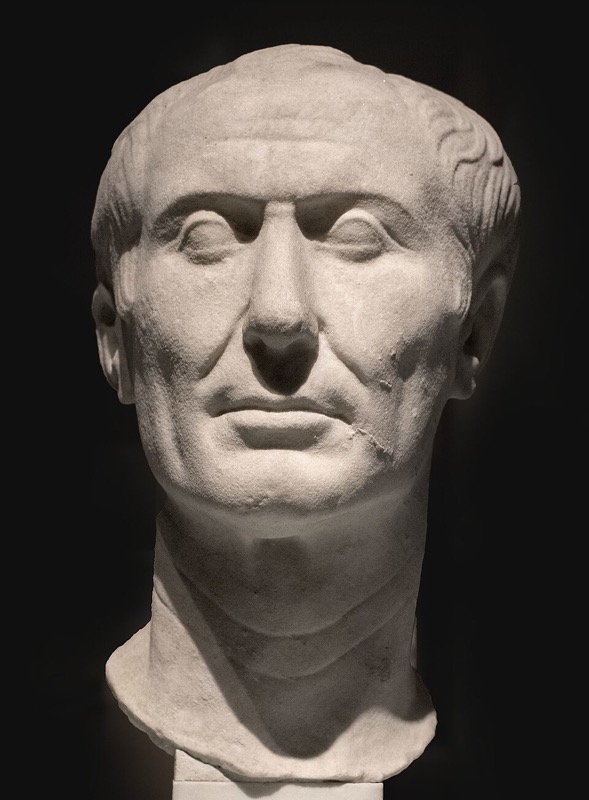
_(cropped).jpg)
Summary
The Conquest of Gaul is a common English title for Caesar's Commentarii de Bello Gallico, seven books narrating his campaigns of 58 to 52 BCE, completed by an eighth book written after his death by his officer Aulus Hirtius. Each book covers one campaigning year, and Caesar speaks of himself throughout in the third person, a device that makes political self-advertisement read like a dispatch. The famous opening sentence divides Gaul into three parts, inhabited by Belgae, Aquitani and Celts, and the first book sets the pattern: the Helvetii attempt to migrate across Roman-allied territory, Caesar blocks and destroys them, and he then drives the German king Ariovistus back across the Rhine. Book II subdues the Belgic tribes, including the Nervii, who nearly overwhelm him on the Sambre until he takes a shield and fights in the front line. Book III records the naval war against the Veneti of Brittany and campaigns in Aquitania. In Book IV Caesar massacres the migrating Usipetes and Tencteri, bridges the Rhine in ten days, and makes his first landing in Britain, where the eagle-bearer of the tenth legion shames hesitant troops into leaping into the surf. Book V brings the second British expedition, the description of the island's peoples, and a winter disaster in which Ambiorix of the Eburones destroys the legion and a half under Sabinus and Cotta, while Quintus Cicero, ill and sleepless, holds his besieged camp until relief arrives. Book VI pauses for the celebrated ethnography of Gauls and Germans: Druids who teach the transmigration of souls and memorise their lore rather than write it, human sacrifice in wicker figures, and the German forests with their fabulous elk. Book VII is the climax. Vercingetorix of the Arverni unites most of Gaul in a scorched-earth revolt; the Romans take Avaricum and kill nearly all its inhabitants, are repulsed at Gergovia, and then trap Vercingetorix in Alesia within a ring of siege works facing both inward and outward. Inside the starving town Critognatus proposes living on the bodies of those too old to fight; the Mandubii, expelled with their wives and children, beg at the Roman lines for food and are refused. A vast relieving army fails, and Vercingetorix surrenders. Hirtius's eighth book narrates the mopping-up of 51 and 50 BCE, including the cutting off of the hands of the defenders of Uxellodunum. The Commentaries were written to influence opinion in Rome while Caesar's enemies sought to recall and prosecute him. Their plain, lucid Latin made them the first prose text of generations of schoolchildren; their numbers of the slain, perhaps a million by ancient estimates, make them also a record of what Romans regarded as glory.
Plot or Argument
- Book I (58 BCE): Helvetii and Ariovistus
The geography of Gaul, the migration of the Helvetii and their defeat at Bibracte, and the campaign against the Suebian king Ariovistus, preceded by a panic among Caesar's officers that he quells with a speech.
- Book II (57 BCE): the Belgae and the Nervii
A coalition of northern tribes is broken; on the Sambre the Nervii surprise the legions while they fortify camp, and Caesar's personal intervention saves the day. The Atuatuci are sold into slavery.
- Books III–IV (56–55 BCE): the Atlantic coast, the Rhine and Britain
Sea war against the Veneti, Crassus in Aquitania, the slaughter of the Usipetes and Tencteri, the Rhine bridge, and the first, nearly disastrous crossing to Britain.
- Book V (54 BCE): Britain again and the winter risings
The second British campaign against Cassivellaunus, then the destruction of Sabinus and Cotta's force by Ambiorix and the defence of Quintus Cicero's camp against the Nervii.
- Book VI (53 BCE): reprisals and ethnography
Punitive campaigns against the Eburones frame long digressions on Gallic society, the Druids and their sacrifices, the gods of the Gauls, and the customs, cattle and forests of the Germans.
- Book VII (52 BCE): Vercingetorix
The great revolt: scorched earth, the massacre at Avaricum, defeat at Gergovia, the double circumvallation of Alesia, the speech of Critognatus, the expulsion of the Mandubii, the defeat of the relieving army and Vercingetorix's surrender.
- Book VIII (51–50 BCE, by Hirtius): the last resistance
Hirtius explains why he completed the work, then narrates the suppression of the Bellovaci and the siege of Uxellodunum, where Caesar cuts off the hands of those who bore arms as an example.
Characters
- Julius Caesar, proconsul and narrator (in the third person)
Commander whose speed, engineering and political calculation drive the narrative, presented with studied modesty.
- Vercingetorix, Arvernian leader of the great revolt
Charismatic young noble who unites Gaul in 52 BCE, adopts scorched-earth strategy and surrenders at Alesia.
- Ariovistus, Germanic king
Former 'friend of the Roman people' whose settlement in Gaul Caesar ends in Book I.
- Divitiacus and Dumnorix, Aeduan brothers
One Rome's loyal ally and Druid, the other an ambitious intriguer who is killed trying to escape Caesar.
- Ambiorix, king of the Eburones
Lures Sabinus and Cotta out of winter quarters and destroys their force; hunted but never caught.
- Critognatus, Arvernian noble at Alesia
Proposes that the besieged eat the bodies of those useless for war rather than surrender.
- Quintus Tullius Cicero, Caesar's legate, brother of the orator
Defends his besieged winter camp in Book V while seriously ill.
- Titus Labienus, Caesar's senior legate
Ablest of Caesar's lieutenants in Gaul; he later joins Pompey in the civil war.
- Cassivellaunus, British war leader
Commands resistance to the second invasion of Britain with chariots and guerrilla tactics.
- Aulus Hirtius, author of Book VIII
Caesar's officer who completes the Gallic narrative and bridges it to the Civil War.
Lessons
The third person as a weapon of persuasion
Caesar never says 'I'. By narrating himself as 'Caesar', he makes self-interested reports look like neutral record, and the restraint of the style becomes evidence of the author's reliability. The Commentaries teach readers to notice how plainness can be the most effective rhetoric.
- Where does the plain style hide a judgment that a reader might dispute?
- How would the massacre of the Usipetes read if narrated in the first person?
- What audience in Rome was Caesar writing for in 52–51 BCE?
Ethnography in the service of conquest
The Book VI digressions on Druids and Germans are among the earliest accounts of these peoples, but they also justify Roman intervention by presenting Gauls as divided and superstitious and Germans as wild. Knowledge of the other and domination of the other proceed together.
- Which details in the Druid chapters seem observed, and which seem conventional or polemical?
- Why might Caesar emphasise human sacrifice at this point in the narrative?
Siege as a contest of endurance and hunger
Alesia shows war reduced to the question of who starves first. The Gauls debate cannibalism and expel non-combatants; the Romans refuse to feed them. Caesar narrates both decisions without comment, leaving the moral weight to the reader.
- What does Caesar mean to convey by calling Critognatus's speech singular and detestable while reporting it at length?
- Who bears responsibility for the Mandubii trapped between the lines?
- How does the siege of Alesia compare with modern sieges and humanitarian law?
Clemency and terror as alternating policies
Caesar pardons some enemies and sells, kills or mutilates others, explaining each choice in terms of example and deterrence. The book shows how a reputation for mercy and a willingness to be cruel can be parts of a single calculated strategy.
- How does Hirtius justify the mutilation at Uxellodunum?
- Does Caesar's clemency in Gaul look different from his clemency toward Romans in the civil war?
Context
Rome had held Transalpine Gaul (Provence) since the 120s BCE. Caesar received his Gallic provinces through the political alliance with Pompey and Crassus and used the Helvetian migration of 58 BCE as a pretext for campaigns that went far beyond defending the province. The wars made him immensely rich and popular with his army while his enemies in the Senate, led by Cato, sought to prosecute him on his return. The conquest brought Gaul into the Roman world for five centuries, at a cost that ancient writers such as Plutarch and Pliny put at about a million dead and a million enslaved.
Composition
Scholars debate whether the seven books were written year by year as dispatches or composed together, probably in the winter of 52–51 BCE after Alesia. Cicero praised them as bare and graceful, stripped of ornament, and Hirtius's preface to Book VIII remarks on how quickly Caesar wrote. Hirtius added Book VIII after Caesar's death to connect the Gallic narrative with the Civil War. The McDevitte and Bohn translation of 1869 used in this library is a literal Victorian version later reissued in Everyman's Library with an introduction by Thomas De Quincey.
Reception
From antiquity the work was admired for style rather than candour; Asinius Pollio thought Caesar careless or dishonest with facts. It became the standard first Latin prose text in European schools. Napoleon III sponsored excavations at Alesia and wrote a history of Caesar; French nationalism turned Vercingetorix into a national hero, with a statue at Alise-Sainte-Reine (1865). Modern historians use the Commentaries as the main source for Iron Age Gaul while reading them as political propaganda.
Comparisons
- the-civil-war
Caesar's second set of commentaries turns the same detached third-person manner against Roman opponents; the brutality permitted toward Gauls gives way to a carefully advertised clemency toward fellow citizens.
- the-agricola-and-the-germania
Tacitus revisits Britain and the Germans 150 years later; his Calgacus, who says the Romans make a desert and call it peace, gives the conquered the eloquent voice that Caesar grants only once, to Critognatus at Alesia.
- the-history-of-the-peloponnesian-war
Thucydides invents speeches to expose the logic of empire, while Caesar suppresses his own reasoning beneath bare narrative; both write as generals with reputations to defend.
- the-histories
Herodotus's ethnographies of Scythians and Egyptians are the model behind Caesar's excursus on Gauls and Germans, though Caesar's curiosity is tightly bound to military use.
- the-twelve-caesars
Suetonius's Life of Julius gives the gossip, epilepsy and appetites that the Commentaries omit, and records the ancient judgment on their style and accuracy.
- the-fall-of-the-roman-republic
Plutarch's Life of Caesar sets the Gallic campaigns inside the political struggle at Rome and supplies the casualty figures that Caesar's own account leaves scattered.
- shermans-memoirs
Both commanders destroy the economic base of a resisting population and write the record themselves; Sherman argues openly with critics, while Caesar persuades by appearing to have nothing to argue about.
Quotes
“All Gaul is divided into three parts, one of which the Belgae inhabit, the Aquitani another, those who in their own language are called Celts, in ours Gauls, the third”
“in most cases men willingly believe what they wish”
“Leap, fellow soldiers, unless you wish to betray your eagle to the enemy. I, for my part, will perform my duty to the commonwealth and my general”
“Cicero himself, though he was in very weak health, did not leave himself the night-time for repose, so that he was forced to spare himself by the spontaneous movement and entreaties of the soldiers”
“They wish to inculcate this as one of their leading tenets, that souls do not become extinct, but pass after death from one body to another, and they think that men by this tenet are in a great degree excited to valour, the fear of death being disregarded”
“they who are troubled with unusually severe diseases and they who are engaged in battles and dangers, either sacrifice men as victims, or vow that they will sacrifice them, and employ the Druids as the performers of those sacrifices”
“Thus, being excited by the massacre at Genabum and the fatigue of the siege, they spared neither those worn out with years, women, or children”
“To be unable to bear privation for a short time is disgraceful cowardice, not true valour. Those who voluntarily offer themselves to death are more easily found than those who would calmly endure distress”
“supported life by the corpses of those who appeared useless for war on account of their age, and did not surrender to the enemy”
“When these came to the Roman fortifications, weeping, they begged of the soldiers by every entreaty to receive them as slaves and relieve them with food. But Caesar, placing guards on the rampart, forbade them to be admitted”
“Accordingly he cut off the hands of those who had borne arms against him. Their lives he spared, that the punishment of their rebellion might be the more conspicuous”
For Students
A reading companion for classical Christian high school students. See the student guide.
Reading Guide
Watch for
- The opening division of Gaul into three parts in Book I.1, which sets the tone of cool, orderly survey for everything that follows.
- The battle on the Sambre in Book II, where the Nervii surprise the legions and Caesar seizes a shield and goes to the front line himself.
- The eagle-bearer of the tenth legion leaping into the surf off Britain in Book IV.25, and Caesar's ten-day bridge over the Rhine earlier in the same book.
- The ethnographic digressions of Book VI on Druids, Gallic gods, human sacrifice, and German customs. Ask why Caesar pauses the war to describe them.
- The double ring of siege works at Alesia in Book VII, the speech of Critognatus inside the town, and the Mandubii turned away at the Roman lines.
Key terms and names
- Commentarii
- Field notes or memoranda meant as raw material for a historian. Caesar's choice of the plain form, with himself in the third person, made political advocacy read like a factual report.
- Druids
- The Gallic learned class described in Book VI, who judged disputes, led sacrifices, and taught that souls pass after death into other bodies. Caesar says they committed their lore to memory rather than to writing.
- Vercingetorix
- The young Arvernian noble who united most of Gaul against Caesar in 52 BCE, adopted a scorched-earth strategy, won at Gergovia, and surrendered at Alesia.
- Alesia
- The hill town where Caesar trapped Vercingetorix in 52 BCE inside one line of fortifications facing inward and another facing outward against the relieving army.
- Aedui
- The Gallic people allied with Rome whose appeals gave Caesar reasons to intervene in Book I. Their nobles Divitiacus and Dumnorix, brothers on opposite sides, show the divided loyalties among the Gauls.
- Helvetii
- The people of the Swiss plateau whose attempted migration through Gaul in 58 BCE opened Caesar's campaigns. Their defeat near Bibracte is the first great battle of Book I.
- Aulus Hirtius
- Caesar's officer who wrote Book VIII after Caesar's death, covering 51 and 50 BCE, including the punishment of the defenders of Uxellodunum.
Seminar Questions
- Comprehension Why does Caesar block the migration of the Helvetii in Book I, and what reasons does he give for then marching against Ariovistus?
- Comprehension What does Caesar report about the Druids, their teaching on the soul, and their sacrifices in Book VI?
- Comprehension Describe the Roman siege works at Alesia. What happens to the Mandubii, and how does the siege end?
- Interpretation Caesar remarks in Book III that men generally believe willingly what they wish. Where in his narrative does he exploit this tendency in his enemies, and where might he be counting on it in his Roman readers?
- Interpretation Critognatus argues at Alesia that enduring hunger is harder and nobler than dying in battle. Why does Caesar give an enemy such a powerful speech, and what does it add to the account of Vercingetorix's revolt?
- Interpretation Caesar records the massacre at Avaricum and the refusal of the Mandubii in the same level tone he uses for building a bridge. What does this plain style hide, and what does it reveal?
- Big Question When is a war of conquest just? Using Caesar's own stated reasons for each campaign, decide whether any of them meets that standard.
Faith Connections
- Psalm 33:16-17 (Scripture)
The psalmist says no king is saved by the multitude of an army and a horse is a vain hope for safety. Alesia, where a vast relieving army fails against Caesar's lines, tests that claim against the Gauls, and Caesar's own later fate tests it against him.
- Psalm 20:7 (Scripture)
Some trust in chariots and some in horses. The British chariots of Cassivellaunus in Book V, which Caesar describes with a soldier's professional interest, give the verse a concrete picture.
- Augustine, City of God IV.4 (Church Fathers)
Augustine asks what kingdoms are without justice but great robberies, and tells of the pirate who answered Alexander that he was called a robber only because he had one ship. The question presses on every pretext Caesar gives for crossing a new border.
- Augustine, City of God XIX.7 (Church Fathers)
Augustine argues that even a wise man waging a just war must grieve at its necessity, since the misery of war is great. Caesar's calm report of Avaricum, where neither the old nor women nor children were spared, shows what a narrative without such grief looks like.
Logic and Rhetoric
Central argument: Rome's province and allies in Gaul were threatened by migrating Helvetii, German invaders under Ariovistus, and repeated Gallic conspiracies. Each campaign answered such a threat or a breach of faith, and each was won by Roman speed, engineering, discipline, and the courage of Caesar and his men. Since the commander acted in defence of Rome and her allies and brought all Gaul under Roman order, the conquest was necessary and glorious, and Caesar deserved the honour of the Roman people rather than the prosecution his enemies planned.
Rhetorical device: divisio (partition). The opening sentence of Book I divides Gaul into three parts inhabited by Belgae, Aquitani, and Celts. By beginning with a clean partition of the whole country, Caesar presents Gaul as already mapped and orderly, a single object ready for a Roman commander to take in hand.
Debate: Resolved: Caesar was justified in refusing to let the Mandubii pass through his lines at Alesia.
Memory Work
All Gaul is divided into three parts, one of which the Belgae inhabit, the Aquitani another, those who in their own language are called Celts, in ours Gauls, the third
in most cases men willingly believe what they wish
Writing Prompts
Essay: Caesar wrote the Commentaries to influence opinion in Rome while his enemies sought to recall and prosecute him. Choose two episodes, such as the Sambre, the British landings, or Alesia, and analyse how Caesar shapes them to present himself to a Roman audience.
Comparison with The Agricola and the Germania: Tacitus's Agricola describes the conquest of Britain a century and a half after Caesar's landings and gives the Caledonian chief Calgacus a speech against Rome. Compare Calgacus with Critognatus at Alesia, and argue whether Tacitus and Caesar use these enemy speeches for the same purpose.
Medical Lens
The Commentaries say little about doctors, but much about bodies under military pressure. Siege warfare makes hunger the decisive weapon, culminating in the Alesia debate over cannibalism and the expulsion of non-combatants, a classic case for discussions of famine and of medical ethics in siege. Wounds are reported tactically, with officers wounded in the mouth by a sling or carried from the field. The Book VI ethnography links severe illness to vows of human sacrifice, an important if hostile source for Gallic healing religion. Hirtius's account of the hands cut off at Uxellodunum records deliberate mutilation as policy. Readers sometimes connect the Commentaries with the tradition, found in Suetonius and Plutarch rather than here, that Caesar suffered from epilepsy; the Commentaries are silent on it.
- Book I.39–41
Panic spreads through Caesar's army before facing Ariovistus, with soldiers making wills and weeping in their tents; Caesar restores morale by a speech.
- Book V.35–40
Cotta wounded in the face by a sling during the ambush; in Cicero's besieged camp even the sick and wounded get no rest, and the ill commander works through the nights.
- Book VI.13–16
Druid teaching on memory and the soul's survival; those suffering severe diseases vow human sacrifices to win back the gods' favour.
- Book VII.17
The Roman army before Avaricum goes days without corn, living on cattle driven in from distant villages.
- Book VII.77–78
Critognatus's speech proposing cannibalism, and the Mandubii, including old and sick people unfit for war, expelled from Alesia and refused food at the Roman lines.
- Book VIII.44
Defenders of Uxellodunum have their hands cut off; the captive Drappes starves himself to death.
Creative Prompts
- Fiction
Narrate the days between the lines at Alesia from the viewpoint of a Mandubian woman refused by both her own side and the Romans.
- Adaptation
Rewrite the Book IV massacre of the Usipetes and Tencteri as Cato might have presented it in the Senate when he proposed handing Caesar over to the Germans.
- Essay
Compare the siege of Alesia with a modern siege, examining how starvation of civilians was justified then and how international humanitarian law treats it now.
- Classroom
Give students the Book VI chapters on Druids and ask them to sort each claim into observation, hearsay, Greek ethnographic convention, or political motive.
Further Reading
- The Civil War, Julius Caesar
The companion commentaries on the war against Pompey.
- Caesar: Life of a Colossus, Adrian Goldsworthy
- Caesar: Politician and Statesman, Matthias Gelzer
Classic political biography.
- Julius Caesar as Artful Reporter, Kathryn Welch and Anton Powell (eds.)
Essays on the Commentaries as political communication.
- Germania, Tacitus
The fuller later ethnography of the Germans.
Verification notes
Narrative content and chapter numbers for quotations were checked against the stored McDevitte and Bohn text (Project Gutenberg #10657); the quotations are copied from it with line breaks normalized and have not yet been run through scripts/verify-quotes.mjs. The stored file also contains the Civil War, so locators are by Gallic War book and chapter. Ancient casualty estimates (about a million killed) come from Plutarch and Pliny and are not reliable.
- Chapter references for passage pointers not quoted (I.39–41 panic, V.35 Cotta's wound, VII.17 hunger before Avaricum).
- Date of composition of Books I–VII (single composition in 52–51 BCE versus annual dispatches) is debated.
- Year of the Alise-Sainte-Reine statue of Vercingetorix (given as 1865).