Work record
The Art of War
1521 · Renaissance Early Modern · Political Theory · Italian
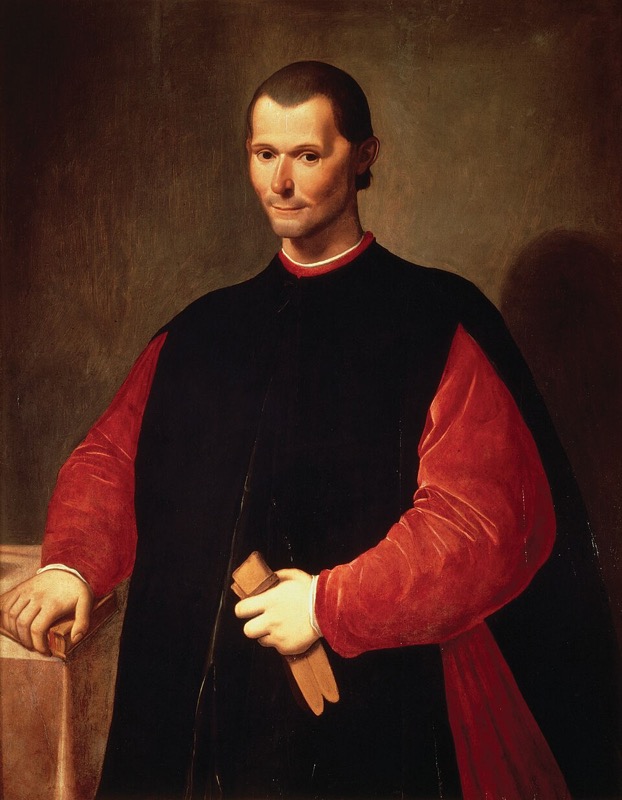

Summary
Dell'arte della guerra, printed in Florence in 1521, is the only one of Machiavelli's political works published in his lifetime. It is a dialogue in seven books, set in 1516 in the Orti Oricellari, the shaded garden of Cosimo Rucellai, where the humanist circle that Machiavelli frequented met to discuss Livy and republican government. The dedication to Lorenzo di Filippo Strozzi argues that civil and military life, now thought to be opposites, were in antiquity closely united, since all the good laws of a state are vain without arms to defend them. The opening of Book I is a memorial to Cosimo, who had died young, and introduces the principal speaker, the condottiere Fabrizio Colonna, returning from service to the Spanish king in Lombardy. Sitting in the shade, Fabrizio remarks that his Roman ancestors should be imitated in hard and manly things rather than in soft and delicate ones. Questioned by Cosimo and later by the young men Zanobi Buondelmonti, Battista della Palla and Luigi Alamanni, he sets out a complete reform of warfare on Roman lines. The first book is the political heart of the work. No good man should make war his private profession, because a soldier who lives by war must want war to continue and will plunder friend and enemy alike; Italy's mercenary captains prove the point. Arms should be borne by a state's own citizens or subjects, chosen from the countryside, drilled on holidays, and returned to their trades in peace. Infantry, not cavalry, is the strength of an army. The following books build the model in detail: arms and training, combining Roman shields and swords with Swiss pikes (Book II); the order of battle, with an imaginary battle narrated as it unfolds and a dismissive account of artillery (Book III); the conduct of a general before and during battle, including the power of speeches to soldiers (Book IV); marching through hostile country, the use of signals, and the claim that modern wars impoverish victors as much as the vanquished (Book V); the Roman-style camp, discipline, health and stratagems (Book VI); and fortification and siege, followed by a celebrated list of general rules of war (Book VII). The dialogue ends with Fabrizio's lament that the Italian princes of 1494 lived in idleness and luxury and were swept away by the French invasion, and with his hope that Italy, which has revived poetry, painting and sculpture, might also raise dead military virtue. Machiavelli's confidence in Roman infantry and his scepticism about artillery look misplaced in hindsight, but the book's central argument, that the military organisation of a state reflects and shapes its political health, influenced writers from the Elizabethans to the authors of modern citizen armies.
Plot or Argument
- Dedication and memorial to Cosimo Rucellai
The proheme to Lorenzo Strozzi joins civil and military virtue; Book I opens with a tribute to the dead Cosimo and sets the dialogue in his garden with the condottiere Fabrizio Colonna.
- Book I: against professional soldiers, for a citizen militia
Why no good man should make war his trade, the danger of mercenaries and standing armies, choosing soldiers from one's own subjects and from rural labourers, and defending Florence's militia against its critics.
- Book II: arms, exercise and the legion
Ancient and modern weapons compared; why disciplined infantry can beat cavalry; Roman physical training; the structure of the legion and the Swiss battalion; signals and baggage.
- Book III: the imagined battle
Roman ordering in hastati, principes and triarii; Fabrizio describes a battle as if it were happening before the listeners; artillery dismissed as less decisive than its reputation.
- Books IV–V: the general in battle and on the march
Choosing ground, using stratagem, fighting only with advantage, addressing troops; marching through suspect country, keeping plans secret, and why modern wars ruin winner and loser.
- Book VI: the camp
Laying out a Roman-style camp, guards and punishments, keeping women and games out of the army, preserving health by site, shelter, water and exercise, and a catalogue of ancient stratagems.
- Book VII: fortification, general rules and lament for Italy
Natural and artificial strength of towns, defence of breaches, a list of maxims of war, and Fabrizio's rebuke of Italian princes and hope for a revival of ancient military virtue.
Characters
- Fabrizio Colonna, principal speaker
Roman nobleman and mercenary captain (d. 1520) made, with irony, the spokesman for abolishing mercenary warfare.
- Cosimo Rucellai, host and first interlocutor
Young Florentine patron of the Orti Oricellari circle, recently dead when the book was written; Machiavelli's friend.
- Zanobi Buondelmonti, interlocutor
Member of the Orti circle and dedicatee, with Cosimo, of Machiavelli's Discourses on Livy.
- Battista della Palla, interlocutor
Florentine humanist who questions Fabrizio in the later books.
- Luigi Alamanni, interlocutor
Young poet of the circle, later exiled after the 1522 plot against Cardinal Giulio de' Medici.
- Lorenzo di Filippo Strozzi, dedicatee
Florentine nobleman and Medici ally praised in the dedication for wealth, wisdom and liberality.
Lessons
Whoever lives by war needs war to continue
Fabrizio's first argument is that a professional soldier must either wish for perpetual war or plunder in peace, and that mercenary captains prolong wars to keep their pay. Military organisation is a question of incentives, and a state that hires violence buys a permanent interest in disorder.
- Why does Machiavelli give this argument to a lifelong mercenary captain?
- Does the incentive argument apply to modern private military contractors or standing armies?
- What does Fabrizio mean by saying war cannot be a good man's art?
Imitate antiquity in hard things, not soft
Sitting under the trees of a Renaissance garden, Fabrizio criticises those who copy the Romans in pleasant tastes rather than in discipline and civic sacrifice. The whole book is a programme for a selective, strenuous classicism aimed at institutions, not ornaments.
- How does the garden setting comment on the argument made in it?
- Which parts of Roman practice does Fabrizio think can be revived, and which not?
Health is a matter of command
In Book VI the captain is responsible for siting camps away from marshes, providing shade, tents, fuel and clean water, timing marches to avoid heat and frost, and keeping soldiers exercised. A general who must fight disease and the enemy at once, Fabrizio says, has no remedy.
- How did the Romans, according to Fabrizio, judge the healthiness of a site?
- Why does he rank exercise above all other means of keeping an army healthy?
Getting the future wrong for the right reasons
Machiavelli underrated artillery and overrated the Roman legion, and within decades gunpowder and fortification transformed war. Yet his insistence that armies reflect the political order that raises them proved durable. The book shows how a sound principle can coexist with mistaken predictions.
- Why might Machiavelli have been reluctant to grant artillery decisive importance?
- Which of the general rules in Book VII still seem valid?
- How should we read a theorist whose specific predictions failed?
Context
From the French invasion of 1494 Italy was a battlefield for France, Spain and the Empire, and the Italian states relied heavily on condottieri and foreign mercenaries such as the Swiss and German landsknechts. Machiavelli blamed this dependence for Italy's humiliation. As secretary he created the Florentine ordinanza (1506), a militia of rural subjects, which helped recover Pisa in 1509 but broke at Prato in 1512, bringing down the republic. The Art of War is in part his defence of that experiment.
Composition
Written around 1519–1520, after The Prince and the Discourses, the dialogue reflects the conversations of the Orti Oricellari, where Machiavelli read Livy with young republicans. It was printed by the Giunti press in Florence in 1521, the only one of his major political works published in his lifetime, with woodcut diagrams of battle formations and camps. Peter Whitehorne's English translation (1560, dedicated to Elizabeth I) was among the earliest English versions of any Machiavelli work and was reprinted in the Tudor Translations series in 1905.
Reception
The book was widely read in the sixteenth century, translated into French, Spanish, German and English, and praised by military writers more than The Prince was. Its reputation declined as gunpowder warfare outran its assumptions, but historians of military thought, notably Felix Gilbert, have seen it as an origin of the idea of the citizen army, and it influenced republican writers from Harrington to the American founders who distrusted standing armies.
Comparisons
- the-prince
The Prince's chapters 12–14 compress the argument against mercenaries and auxiliaries that The Art of War develops at length; reading them together shows the military foundation beneath Machiavelli's famous political realism.
- the-art-of-war
Sun Tzu prizes deception and victory without battle; Machiavelli's Fabrizio also lists stratagems, but his deeper interest is in the social composition and discipline of armies, which Sun Tzu largely takes for granted.
- on-war
Clausewitz shares Machiavelli's view that war cannot be understood apart from politics, and also wrote admiringly of him; both see the character of an army as an expression of the state that raises it.
- the-conquest-of-gaul
Caesar's legions are Fabrizio's ideal: drilled infantry who dig camps nightly and win by order; Machiavelli constantly mines Roman authors for examples of the discipline Caesar records.
- the-republic
Plato's guardian class, a separate professional military caste, is the opposite of Fabrizio's citizen-soldiers who return to their trades in peace; the two books offer rival answers to who should bear arms in a just city.
- the-history-of-the-peloponnesian-war
Pericles' Funeral Oration praises Athenian citizens as soldiers who need no Spartan drill, a contrasting ideal of the civic army that Machiavelli's Roman model answers with relentless discipline.
Quotes
“There have Laurence, many helde, and do holde this opinion, that there is no maner of thing, whiche lesse agreeth the one with the other, nor that is so much unlike, as the civil life to the Souldiours”
“for as muche as the errours that I maie happen to make by writing, may be without harme to any man corrected: but those the whiche of them be made in doyng cannot be knowen without the ruine of Empires”
“How much better thei should have doen (be it spoken without displeasure to any man) to have sought to been like the antiquitie in thinges strong, and sharpe, not in the delicate and softe: and in those that thei did in the Sunne, not in the shadowe”
“good he shall never bee judged, whom maketh an excersise thereof, where purposing alwaies to gaine thereby, it is requisite for hym to be ravenyng, deceiptfull, violente, and to have many qualities, the whiche of necessitie maketh hym not good”
“the whiche thinges thei overcame, with accustomyng the body to diseases, and with hardenyng it, to bee able to indure labour. And you knowe, how that in thinges accustomed, men suffer no grief”
“Then for to avoide infirmitie, thei did flie from places Fennie, or subjecte to hurtfull windes: whiche thei knewe not so well, by the qualitie of the situacion, as by the face of the inhabitours: for when thei sawe theim evill coloured, or swollen, or full of other infeccion, thei would not lodge there”
“those that fall sicke by chaunce, make them to bee cured of Phisicions: bicause a capitain hath no reamedie, when he hath to faight with sicknesse, and with an enemie: but nothing is so profitable, to maintaine the armie in health, as is the exercise”
“It is better to conquere the enemie with faminne, then with yron: in the victorie of which, fortune maie doe much more then valiantnesse”
“Nature breedeth few stronge menne, the industrie and the exercise maketh manie”
“Discipline maie doe more in warre, then furie”
“their studies wer, to prepare the body to diseases, and the minde not to feare perilles”
“bicause this Province seemes to bee altogether given, to raise up againe the thynges dedde, as is seen by the perfeccion that poesie, paintyng, and writing, is now brought unto”
For Students
A reading companion for classical Christian high school students. See the student guide.
Reading Guide
Watch for
- The opening of Book I in the shade of Cosimo Rucellai's garden, where Fabrizio Colonna criticizes those who imitate the Romans in delicate things rather than hard ones. Notice how the shaded setting comments on his words.
- The irony that Fabrizio, a lifelong mercenary captain, delivers the book's case against making war a private trade.
- Fabrizio's narration in Book III of an imaginary battle as if it were happening before his listeners, and his low estimate of artillery.
- Book VI's instructions for a healthy camp: avoiding fens, reading the faces of local people, providing water and shade, and keeping the soldiers exercised.
- The list of general rules of war near the end of Book VII and the closing lament for the Italian princes swept away by the French invasion of 1494.
Key terms and names
- Orti Oricellari
- The Rucellai gardens in Florence where young humanists met to discuss Livy and republican government. The whole dialogue is set there, among Machiavelli's friends.
- Condottiere
- A captain who contracted with Italian states to supply and lead hired troops. Fabrizio Colonna was one, and Book I argues that such men profit from war and have no reason to end it.
- Ordinanza
- The Florentine citizen militia Machiavelli organized in 1506 from rural subjects. It helped recover Pisa in 1509 but broke at Prato in 1512, and Book I defends the idea against its critics.
- Legion
- The Roman infantry formation that Fabrizio takes as his model in Books II and III, with its ranks of hastati, principes, and triarii. He combines it with the Swiss use of the pike.
- Virtù
- Machiavelli's word for the strength, skill, and discipline that let men and states master fortune. Fabrizio hopes Italy can revive military virtù as it has revived poetry and painting.
- Fortune
- The chance that governs events beyond human control. In Book VII Fabrizio prefers starving an enemy to fighting him because in battle fortune can do more than valor.
Seminar Questions
- Comprehension According to Fabrizio in Book I, why can no good man make war his private profession?
- Comprehension Whom does Fabrizio want a state to arm, how should they be chosen, and what should they do in peacetime?
- Comprehension What steps does Book VI recommend for keeping an army healthy, and which does Fabrizio rank above all others?
- Interpretation Why might Machiavelli have chosen a famous mercenary captain to argue against mercenaries? Does the choice strengthen Fabrizio's argument or quietly undercut it?
- Interpretation In the dedication Machiavelli says the civil life and the soldier's life are thought to be utterly unlike. How does the rest of the book try to join them, and what does a citizen gain or lose by also being a soldier?
- Interpretation Fabrizio closes by blaming the Italian princes of 1494 for idleness and luxury. Is he describing a military failure, a moral failure, or both?
- Big Question Should the defense of a country be the duty of all its citizens or the work of trained professionals? What does each choice do to the character of a people?
Faith Connections
- Luke 3:14 (Scripture)
When soldiers ask John the Baptist what they should do, he tells them to do violence to no one, accuse no one falsely, and be content with their wages. Fabrizio's mercenaries are the soldiers who never learned that contentment, and his whole case against them turns on pay and plunder.
- Romans 13:1-4 (Scripture)
Paul says the ruler does not bear the sword in vain but as God's minister to punish wrongdoing. Machiavelli's dedication argues something parallel on the human level: good laws are vain without arms to defend them, so the sword belongs to public authority and not to private contractors.
- Augustine, Against Faustus XXII.74 (Church Fathers)
Augustine names the real evils in war as the love of violence, revengeful cruelty, and the lust of power, rather than the deaths of those who would die anyway. Fabrizio's portrait of the professional soldier as ravening and violent describes exactly the dispositions Augustine condemned.
- Aquinas, Summa Theologiae II-II, q. 40 (Great Conversation)
Aquinas holds that a just war requires the authority of the sovereign, a just cause, and a right intention. His first condition matches Fabrizio's insistence that arms belong to the state and its citizens, though Machiavelli rarely speaks of intention.
Logic and Rhetoric
Central argument: Good laws are vain without arms to defend them, so civil and military life must be united. A man who makes war his private trade must want war to continue and must be rapacious in peace, so mercenaries endanger the states that hire them. Citizens and subjects, trained in the disciplined Roman manner and returned to their trades in peace, fight for their own country and have no interest in endless war. Therefore a state should arm its own people and restore ancient military discipline, as Italy's ruin in 1494 proves.
Rhetorical device: antithesis. In Book I Fabrizio says the Romans should be imitated "in thinges strong, and sharpe, not in the delicate and softe: and in those that thei did in the Sunne, not in the shadowe." The paired contrasts carry the book's thesis, and because he speaks them while sitting in a shaded garden, they also rebuke his hosts.
Debate: Resolved: A free nation should rely on citizen soldiers rather than a professional army.
Memory Work
Discipline maie doe more in warre, then furie
Nature breedeth few stronge menne, the industrie and the exercise maketh manie
Writing Prompts
Essay: Machiavelli gave the argument against mercenary soldiers to Fabrizio Colonna, himself a mercenary captain. Analyze Book I and the closing speech of Book VII to argue whether this choice is ironic, persuasive, or both, and what it reveals about Machiavelli's view of virtue.
Comparison with The Prince: The Prince, chapters 12 through 14, argues briefly that a prince must rely on his own arms and study war above all; The Art of War develops the same claim at length in a dialogue among friends. Compare how the two works present the relation between arms and good government, and argue what the longer dialogue form adds.
Medical Lens
Book VI contains a compact Renaissance programme of military hygiene drawn from Roman authors such as Vegetius: avoid fens and unhealthy winds, judge a site by the complexion of its inhabitants, provide tents, shade, fuel and good water, march before dawn in summer, keep physicians for the sick, and above all exercise the troops. This reflects the miasmatic and environmental medicine of the period, in which marshes bred fevers, and anticipates later army sanitary reform. Elsewhere the dialogue treats habituation to hardship as a form of training of body and mind; Whitehorne's 'diseases' in these passages usually means discomforts rather than illnesses, a useful example of shifting medical vocabulary.
- Book II
Roman soldiers made the weight of armour bearable by habituating their bodies to hardship; accustomed pains cease to be felt.
- Book VI
How Roman generals avoided disease: fleeing fens and injurious winds, reading local inhabitants' complexions, shelter, shade, water, timing of marches, physicians, and daily exercise.
- Book VII (General rules of war)
The maxim preferring to defeat an enemy by famine rather than by the sword.
Creative Prompts
- Fiction
Write the evening after the dialogue in the Orti Oricellari, as Luigi Alamanni and Zanobi Buondelmonti walk home debating whether a mercenary captain can be trusted to preach against mercenaries.
- Dialogue
Bring Fabrizio Colonna forward to 1859 to debate Florence Nightingale on whether exercise or sanitation matters more for an army's health.
- Essay
Assess Machiavelli's dismissal of artillery in Book III. Was it a failure of observation, of imagination, or a deliberate rhetorical choice in favour of the Roman model?
- Classroom
Have students read The Prince chapters 12–14 and Book I of The Art of War side by side and chart what the longer dialogue adds to the argument against mercenaries.
Further Reading
- The Prince, Niccolò Machiavelli
Chapters 12–14 on mercenaries and the prince's duty to study war.
- Discourses on Livy, Niccolò Machiavelli
Written for the same Orti Oricellari circle.
- Makers of Modern Strategy, Peter Paret (ed.)
Includes Felix Gilbert's essay on Machiavelli and the renaissance of the art of war.
- Niccolò's Smile, Maurizio Viroli
- Epitome of Military Science, Vegetius
Late Roman manual and Machiavelli's main ancient source on drill, camps and health.
Verification notes
Quotations are copied from Peter Whitehorne's 1560 translation in the stored Project Gutenberg #15772 text, keeping Tudor spelling, with line breaks normalized; they have not yet been run through scripts/verify-quotes.mjs. The stored text has no chapter numbers within books, so locators are by book. Biographical and publication facts are well established.
- Year of the dramatic setting (commonly given as 1516) and the date of Cosimo Rucellai's death (1519).
- Whether Whitehorne translated from the Italian directly (generally accepted) and the dedication to Elizabeth I.
- Book III's treatment of artillery is summarized from the table of contents ('How the Artillerie is unprofitable') and general knowledge; the passage itself was not quoted.