Work record
Troilus and Criseyde
c. 1380s · Medieval · Poetry · Middle English
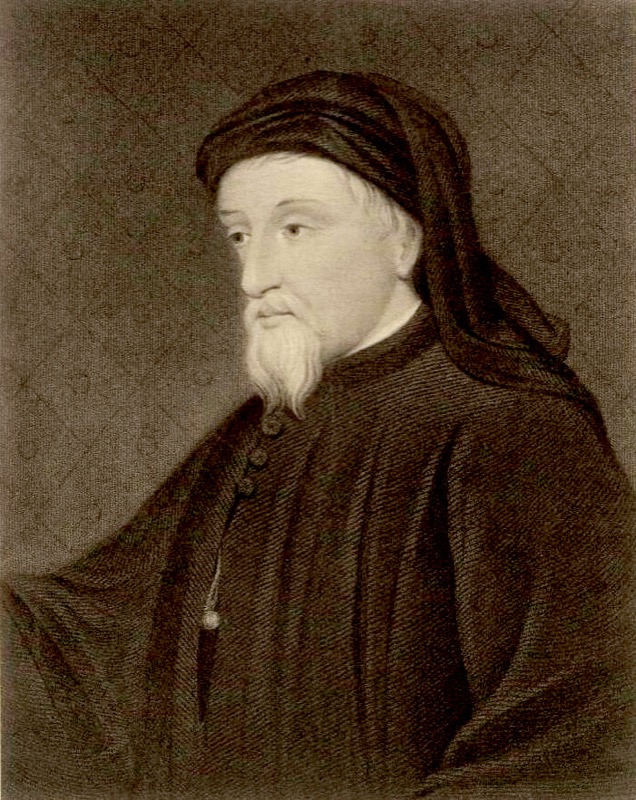
_(cropped)_02.jpg)
Summary
Troilus and Criseyde retells a story from the Trojan War tradition, but its real subject is erotic psychology under the pressure of fortune, language and time. Troilus, a Trojan prince and son of Priam, initially mocks lovers until he sees Criseyde in the temple and is struck by desire. His lovesickness makes him pale, sleepless, withdrawn and rhetorically helpless. Pandarus, Criseyde's uncle and Troilus's friend, undertakes to bring the two together through persuasion, secrecy and manipulation. Criseyde is a widow living under social vulnerability because her father Calchas has defected to the Greeks. Pandarus gradually moves her from caution to pity to reciprocal desire, and eventually arranges the lovers' consummation. For a time their love seems intensely mutual, private and absolute. But the public world interrupts. A prisoner exchange sends Criseyde to the Greek camp in return for Antenor. She promises to return to Troy, but once among the Greeks she is courted by Diomede and gradually yields to a new attachment. Troilus waits, interprets signs, suffers and refuses to accept what has happened until evidence confirms Criseyde's betrayal. He dies in battle, and the poem ends with his soul rising above the mutable world, looking down on earthly vanity before Chaucer turns toward Christian moral reflection. The poem is compassionate and ironic at once. Chaucer does not reduce Criseyde to faithlessness or Troilus to foolishness; he shows how desire depends on circumstances, speech, social vulnerability and self-deception. The narrator's interruptions, invocations and hesitations make storytelling itself part of the moral problem, as if no account of love can be innocent. The war outside Troy matters because it keeps reminding readers that private passion survives only briefly inside public catastrophe. Its medical relevance lies in medieval lovesickness: pallor, insomnia, appetite loss, melancholia, obsessive thought, erotic fixation, shame and the therapeutic role of friends, counsel and poetry.
Plot or Argument
- Book I: Love wound
Troilus mocks love until he sees Criseyde and is suddenly afflicted by desire, becoming pale, sleepless and inwardly divided.
- Book II: Pandarus persuades
Pandarus discovers Troilus's suffering and begins persuading Criseyde to pity and eventually love him.
- Book III: Union
Pandarus arranges the lovers' meeting and consummation, and the poem reaches its highest point of erotic fulfillment.
- Book IV: Exchange
Calchas secures Criseyde's exchange to the Greek camp, forcing the lovers to confront political reality and separation.
- Book V: Betrayal and death
Criseyde yields to Diomede, Troilus waits in anguish, and after confirmation of betrayal he dies in battle before the poem's celestial close.
Characters
- Troilus, Trojan prince and lover
A proud warrior transformed by love into a suffering, eloquent and finally doomed figure.
- Criseyde, beloved
A vulnerable Trojan widow whose desire and later betrayal are treated with psychological nuance.
- Pandarus, go-between
Criseyde's uncle and Troilus's friend, comic, manipulative and indispensable to the love plot.
- Diomede, Greek suitor
A Greek warrior who courts Criseyde after her exchange from Troy.
- Calchas, Criseyde's father
A Trojan prophet who defects to the Greeks and arranges Criseyde's removal from Troy.
- Priam, king of Troy
Troilus's father, part of the political world that frames the romance.
Lessons
Love is bodily and rhetorical
Troilus's desire appears as physical illness and as a crisis of speech. Chaucer teaches that erotic experience is at once somatic, social and literary.
- How does Troilus's body reveal love before he can speak it?
- Does poetry help him understand love or intensify it?
- What does Pandarus treat as curable?
Pity can become persuasion
Pandarus turns compassion into pressure, making Criseyde's consent difficult to evaluate simply. The poem asks how much manipulation can hide inside helpful friendship.
- Is Pandarus comic, predatory or both?
- How free is Criseyde's choice in Troy?
Private love depends on public circumstance
The lovers imagine an enclosed world, but war, kinship and exchange determine their fate. Chaucer shows intimacy as vulnerable to politics and time.
- What destroys the affair: Criseyde, fortune, war or Troilus's expectations?
- How does the prisoner exchange change the poem's moral field?
Judgment should be slow
Chaucer inherits a story of female betrayal but complicates blame. The poem teaches readers to see desire, fear and dependency before condemning.
- Does the narrator judge Criseyde?
- How does the ending change our view of earthly love?
Context
The poem belongs to late medieval English court culture and draws on Boccaccio's Il Filostrato, classical Trojan matter and Boethian philosophy. Chaucer transforms inherited material into a psychologically subtle English romance of fortune and desire.
Composition
Probably written in the 1380s, Troilus and Criseyde is composed in rhyme royal stanzas. Chaucer adapts Boccaccio freely, expanding Criseyde's psychology, Pandarus's role and the philosophical frame.
Reception
The poem was admired by later medieval and Renaissance readers and became a central example of Chaucer's narrative art. It influenced later treatments of the Troilus story, including Shakespeare's Troilus and Cressida.
Comparisons
- the-iliad
Chaucer uses the Trojan War as background for interior romance, whereas the Iliad makes war, honor and mortality central.
- the-nibelungenlied
Both medieval works reshape older heroic material through courtly values, but Chaucer turns catastrophe inward toward desire and interpretation.
- wuthering-heights
Both works present love as bodily disturbance and metaphysical longing, though Chaucer's mode is courtly and philosophical.
- the-lais-of-marie-de-france
Marie and Chaucer both explore secrecy, desire and social constraint in medieval love narratives.
- twenty-love-poems-and-a-song-of-despair
Both works lyricize erotic longing and abandonment, though Chaucer embeds desire in narrative and philosophical fortune.
Quotes
Frequently cited
“The double sorwe of Troilus to tellen”
For Students
A reading companion for classical Christian high school students. See the student guide.
Reading Guide
Watch for
- The opening stanza, where the narrator announces the double sorrow of Troilus and calls on the Fury Tisiphone to help him write, and his repeated claims that he is only following his old author.
- Troilus scoffing at lovers in the temple during the feast of the Palladium, and his sudden wound of love when he sees Criseyde.
- Criseyde in Book II weighing Pandarus's proposal in private, hearing Antigone's song in the garden, and dreaming of an eagle that exchanges its heart with hers.
- Troilus's long speech on predestination and free will in Book IV, drawn from Boethius, as he waits in the temple after hearing that Criseyde will be exchanged.
- Troilus's ascent after death in Book V, when he laughs at those who weep for him, and the narrator's closing appeal to young people to turn their love to Christ.
Key terms and names
- Pandarus
- Criseyde's uncle and Troilus's friend, a talkative and inventive go-between who arranges every meeting of the lovers. His name later gave English the word pander.
- Calchas
- Criseyde's father, a Trojan seer who foresees Troy's fall and defects to the Greeks. His request to have his daughter sent to him drives the tragedy of Books IV and V.
- Diomede
- The Greek warrior who escorts Criseyde to the Greek camp and woos her there. Troilus finds proof of her new love in a brooch he once gave her, now on Diomede's captured coat-armor.
- Fortune
- The goddess whose turning wheel raises and lowers human beings. Chaucer, drawing on Boethius, makes Fortune the force that first unites and then separates the lovers.
- Rhyme royal
- The seven-line stanza rhyming ababbcc in which Chaucer wrote the poem. Its length allows both narrative movement and lyrical pause.
- Courtly love
- The medieval literary ideal of a lover who serves his lady with devotion and secrecy and is ennobled by his suffering. Troilus embodies it, and the poem tests it against time and change.
- Eighth sphere
- The heaven of the fixed stars to which Troilus's soul rises after death. From there he sees the littleness of the earth and the vanity of the love he wept over.
Seminar Questions
- Comprehension How does Troilus first fall in love with Criseyde, and how does love change his behavior in Book I?
- Comprehension Why must Criseyde leave Troy in Book IV, and what does she promise Troilus before she goes?
- Comprehension What happens to Troilus after his death at the end of Book V, and what does he see from the eighth sphere?
- Interpretation The narrator says he follows an old author and often claims he does not know Criseyde's motives. Why might Chaucer make his narrator so hesitant and sympathetic toward Criseyde?
- Interpretation Pandarus is both a loyal friend and a manipulator. Is he the hero or the villain of Books II and III?
- Interpretation Troilus's predestination speech in Book IV argues that everything happens by necessity. How does this speech reveal both his grief and his failure to act?
- Interpretation From the eighth sphere Troilus laughs at those who weep for his death. Does the poem's ending condemn the love it has celebrated, or place it in a larger order?
- Big Question Is any love that depends on circumstances truly faithful, or must true love be able to outlast every change of fortune?
Faith Connections
- 1 John 2:15-17 (Scripture)
John warns against loving the world, which passes away with its desires, and promises that whoever does God's will abides for ever. The narrator's closing stanzas, where he urges young people to turn from worldly vanity to the love of Christ, echo this contrast between passing and lasting love.
- Song of Songs 8:6-7 (Scripture)
The Song praises a love strong as death that many waters cannot quench. Troilus's love for Criseyde aims at that kind of faithfulness, and the poem tests whether human love can achieve it under the pressures of war and separation.
- Augustine, Confessions IV.10-12 (Church Fathers)
Augustine teaches that created beauties are good but pass away, and that the soul should love them in God rather than resting in them. Troilus's final vision from the eighth sphere follows this teaching, seeing earthly love as real but fleeting.
- Boethius, The Consolation of Philosophy II and V (Great Conversation)
Chaucer translated Boethius and drew on him for the poem's speeches on Fortune and on predestination. Book II of the Consolation teaches that Fortune's gifts are never truly ours, and Book V reconciles God's foreknowledge with human freedom, the very problem Troilus fails to solve.
Logic and Rhetoric
Central argument: Earthly love is subject to Fortune, which gives and takes away. Troilus and Criseyde love truly for a time, but war, politics, and Criseyde's vulnerability separate them, and her love changes. No earthly love can be secured against such changes. Therefore, as Troilus sees from the eighth sphere and the narrator urges at the end, the soul should place its final love in God, who does not change.
Rhetorical device: invocation (apostrophe). The poem's first line announces the double sorrow of Troilus, and the narrator at once calls on Tisiphone, one of the Furies, to help him write a tragic tale, rather than on a gentle Muse. The invocation signals from the outset that this love story will end in grief.
Debate: Resolved: Criseyde is more a victim of Fortune than a betrayer of Troilus.
Memory Work
The double sorwe of Troilus to tellen
Writing Prompts
Essay: Chaucer ends a story of earthly love with Troilus laughing from the eighth sphere and a prayer to the Trinity. Argue whether this ending fulfills the poem or overturns it, drawing on at least one scene from Book III and one from Book V.
Comparison with The Consolation of Philosophy: Chaucer translated Boethius's Consolation of Philosophy and gave Troilus speeches drawn from it on Fortune and predestination. Compare how Boethius and Troilus each respond to the loss of what they loved, and argue why Boethius finds consolation where Troilus, until his death, does not.
Medical Lens
Troilus and Criseyde is a classic text for medieval lovesickness, a condition understood through humoral and psychological frameworks: pallor, insomnia, appetite loss, sighing, fixation and melancholy. Pandarus acts almost as informal therapist and manipulator, while Boethian reflection offers philosophical therapy for mutability. The medical reading should emphasize historical lovesickness rather than modern diagnosis.
- Book I
Troilus is struck by love and displays classic lovesickness: pallor, secrecy, sighing, sleeplessness and obsessive thought.
- Book II
Pandarus interprets Troilus's symptoms and treats persuasion of Criseyde as the remedy.
- Book IV
Separation intensifies Troilus's despair, appetite loss and fixation on Criseyde's return.
- Book V
Troilus's grief after Criseyde's betrayal turns toward battlefield death and the poem's philosophical release.
Creative Prompts
- Essay
Analyze Troilus's lovesickness as a medieval medical and poetic condition.
- Poetry
Write a rhyme-royal stanza in which Pandarus describes love as a disease he is too eager to treat.
- Dialogue
Stage Criseyde and Isabel Archer discussing how social vulnerability shapes romantic choice.
Further Reading
- The Canterbury Tales, Geoffrey Chaucer
- Il Filostrato, Giovanni Boccaccio
- Chaucer: His Life, His Works, His World, Donald R. Howard
- Chaucer and the Fictions of Gender, Elaine Tuttle Hansen
Verification notes
Plot, source relation and medical lovesickness reading are secure. Middle English quotations are omitted until exact line references and spelling are checked.
- Exact Book.line locators for Troilus's first lovesickness symptoms and Criseyde's exchange.
- Correct manifest comparison slug for Marie de France if using it; the current slug should be checked.
- Any Middle English quotation against a scholarly text.