Work record
Two Lives of Charlemagne
c. 830 / c. 885 · Medieval · Biography · Latin

Summary
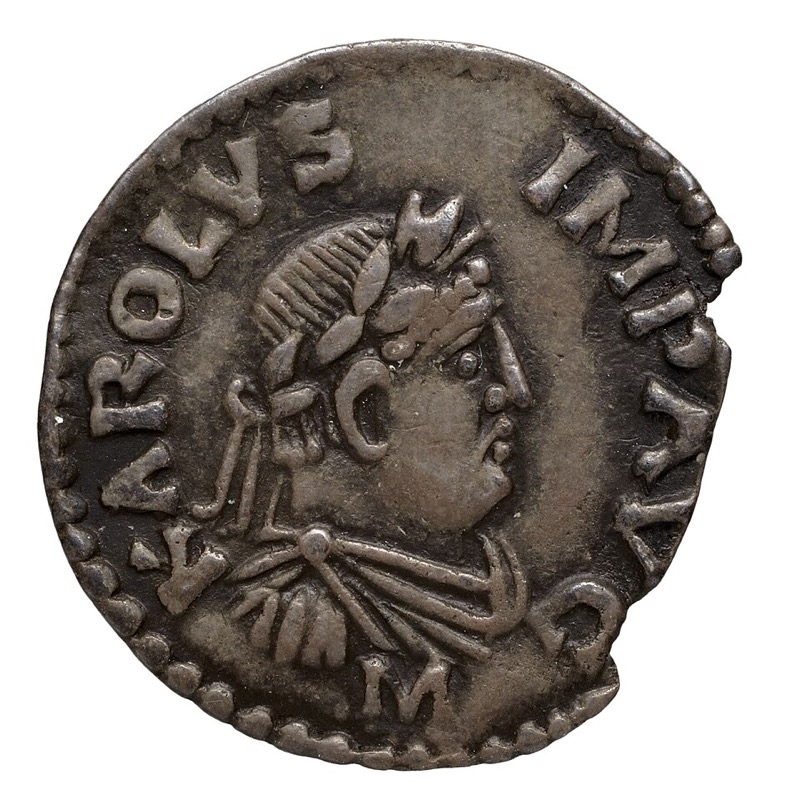
Two Lives of Charlemagne pairs Einhard's Life of Charlemagne with Notker the Stammerer's later anecdotes about the emperor. Einhard writes as a court insider shaped by classical biography, especially Suetonius. His Charlemagne is a ruler of energy, military success, administrative intelligence, religious duty, family feeling and bodily presence. Einhard describes the king's campaigns against Saxons, Lombards, Avars and others; his imperial coronation in Rome in 800; his building projects, reforms, education, worship, household, dress, eating, exercise and death. He is especially interested in Charlemagne's physical body and daily habits: height, gait, health, swimming, moderation, sleep, fevers and final illness. Notker writes later and more loosely, presenting Charlemagne through exemplary stories that emphasize justice, wit, discipline, piety and dramatic encounters with bishops, monks, courtiers and enemies. His Charlemagne is less a classical subject than a moralized ruler moving through memorable scenes. The two works together show how medieval biography turns a historical monarch into an ideal, a memory system and a teaching instrument. They also reveal different kinds of truth: Einhard's ordered portrait seeks credibility and proportion, while Notker's anecdotes preserve legend, humor and monastic values. The contrast helps readers see how quickly political memory becomes exemplary storytelling. Charlemagne appears as emperor, father, judge, warrior, patron of learning and Christian ruler, but never outside the needs of the communities remembering him. Read together, the lives are also a lesson in source criticism. Their differences are as important as their shared admiration across time and genre. Medically, the volume is useful because rulership is embodied. Charlemagne's diet, exercise, bathing, aging, fevers, death and concern for order make health part of governance. The biographies also invite discussion of disability and speech in Notker's own authorial identity, monastic care, war wounds, public punishment and the moral interpretation of bodies in medieval political writing overall.
Plot or Argument
- Einhard's preface and model
Einhard justifies writing from personal knowledge and organizes Charlemagne's life in a classical biographical pattern.
- Wars and expansion
Charlemagne's campaigns against Saxons, Lombards, Avars and others establish his power and Christian kingship.
- Rule and reform
Einhard describes administration, education, religious practice, building and imperial coronation.
- Body and habits
The Life details Charlemagne's appearance, clothing, diet, exercise, swimming, sleep and health.
- Death and succession
Einhard narrates Charlemagne's final illness, death and burial as the close of exemplary rule.
- Notker's anecdotes
Notker presents memorable episodes of justice, discipline, piety and wit, turning Charlemagne into moral legend.
Characters
- Charlemagne, subject
King of the Franks and emperor, represented as conqueror, reformer, Christian ruler and embodied model of authority.
- Einhard, biographer
Court insider whose orderly Life draws on personal memory and classical biography.
- Notker the Stammerer, biographer
Monk of St Gall whose anecdotal account turns Charlemagne into moral and monastic exemplum.
- Louis the Pious, son and successor
Charlemagne's surviving legitimate son, associated with succession and the empire's future.
- Pope Leo III, pope
The pope who crowned Charlemagne emperor in Rome in 800.
- Alcuin, scholar
A leading intellectual in Charlemagne's educational and religious reform circle.
Lessons
Rulers are built from habits
Einhard treats diet, exercise, dress, study and worship as part of kingship. The biography teaches that political authority is represented through daily discipline as well as public acts.
- Why does Einhard describe Charlemagne's body and habits?
- What makes a habit politically meaningful?
- How does this compare with Suetonius?
Biography can become legend
Notker's Charlemagne is not simply less factual; he serves a different function as moral memory. The volume teaches readers to distinguish archival portrait from exemplary anecdote.
- What kinds of truth do anecdotes preserve?
- Where does Notker feel least historical and most revealing?
Christian empire joins care and coercion
Charlemagne's reforms, learning and piety coexist with war, forced conversion and punishment. The lives present exemplary Christian rulership together with conquest and coercive power.
- How do the authors justify conquest?
- Can an exemplary ruler be separated from coercive power?
Memory serves institutions
Einhard and Notker write for communities that need Charlemagne to mean something after his death. Biography becomes a tool for preserving institutional identity.
- What does each author need Charlemagne to be?
- How does memory change across the two lives?
Context
The lives look back on the Carolingian empire, a major early medieval project of conquest, Christian reform, education and administration. Einhard writes close to Charlemagne's court; Notker writes later from monastic memory at St Gall.
Composition
Einhard's Life was written around 830 after Charlemagne's death in 814. Notker's Deeds of Charlemagne was composed around 885 for Charles the Fat, using anecdote, memory and moral storytelling.
Reception
Einhard became the foundational biography of Charlemagne, while Notker preserved a more legendary and monastic Charlemagne. Together they shaped medieval and modern images of the emperor.
Comparisons
- the-twelve-caesars
Einhard adapts Suetonian biography for a Christian emperor, especially in attention to habits, body and public virtues.
- the-age-of-alexander
Plutarch and Einhard both make rulers exemplary, but Charlemagne's portrait is Christian and administrative rather than classical heroic.
- the-fall-of-the-roman-republic
Both collections explore leadership and power through biography, with different assumptions about empire and virtue.
- the-nibelungenlied
The epic and the biographies offer contrasting medieval models of heroic rulership: legendary catastrophe versus exemplary imperial memory.
Quotes
For Students
A reading companion for classical Christian high school students. See the student guide.
Reading Guide
Watch for
- Einhard's opening picture of the last Merovingian kings, who hold the royal name but ride to assembly in an ox-cart while the mayors of the palace hold real power, and how this sets up the rise of Charlemagne's family.
- The brief account of the ambush in the Pyrenees, where the rearguard is cut down by Basques and Roland, prefect of the Breton March, is among the dead. Compare its few lines with the epic the event later became.
- Einhard's chapters on Charlemagne's person and habits: his height and bearing, his love of swimming at the hot springs of Aachen, his preference for roast meat over his physicians' advice, and the books read aloud at his table, including Augustine's City of God.
- The imperial coronation in Rome in 800, where Einhard claims Charlemagne would not have entered the church that day had he known what the pope intended.
- Notker's schoolroom scene, in which Charlemagne praises the diligent poor boys and rebukes the idle sons of nobles, and his later scene of the iron Charles approaching Pavia as watchers on the tower despair.
Key terms and names
- Einhard
- A scholar and administrator at Charlemagne's court who wrote the Life about fifteen years after the emperor's death. He claims the authority of a close eyewitness and models his book on Suetonius's lives of the Caesars.
- Notker the Stammerer
- A monk of St Gall who wrote the Deeds of Charlemagne around 885 for the emperor Charles the Fat. He relies on stories told by old informants and arranges them in two books, on the church and on war.
- Mayor of the palace
- The chief officer of the Merovingian court, who by the eighth century held the real power of the Frankish kingdom. Charlemagne's father Pepin was a mayor of the palace before he took the crown.
- The Saxon war
- Charlemagne's longest and hardest campaign, which Einhard says lasted more than thirty years and ended with the Saxons accepting Christianity and union with the Franks.
- Aachen
- The site of Charlemagne's favorite palace and church, chosen partly for its warm springs. Einhard describes the emperor swimming there with his sons, nobles, and guards.
- Alcuin
- The English scholar from York whom Charlemagne made his teacher and chief adviser on learning. Einhard names him as the king's instructor in rhetoric, dialectic, and astronomy.
- Exemplum
- A short story told to teach a moral lesson. Notker's anecdotes, such as the boys in the palace school or the vain bishop deceived by a merchant, work as exempla more than as chronicle.
Seminar Questions
- Comprehension According to Einhard's preface, why is he the right person to write this life, and why does he think it must be written now?
- Comprehension What does Einhard tell us about Charlemagne's attempts to learn to read and write, and what does the detail of the tablets kept under his pillow suggest?
- Comprehension In Notker's schoolroom story, how does Charlemagne treat the poor boys and the noble boys, and what reason does he give?
- Interpretation Einhard says Charlemagne disliked the title of emperor at first and would have stayed away from St Peter's had he known the pope's plan. Why might Einhard include this claim, and how should a careful reader weigh it?
- Interpretation Einhard describes Charlemagne's body, clothes, diet, and exercise in close detail, following Suetonius. What picture of a good ruler do these habits create, and how is it different from a Roman Caesar?
- Interpretation Notker's Charlemagne often appears as a judge who exposes vanity in bishops and courtiers. What does this emphasis tell us about the concerns of a monk at St Gall seventy years after the emperor's death?
- Interpretation Einhard gives the defeat in the Pyrenees only a few sentences. Why might a court biographer keep it so brief, and what did later poets find in it that he did not?
- Big Question Can a ruler extend the Christian faith by war, as Charlemagne did among the Saxons, or does faith by its nature have to be freely received?
Faith Connections
- Deuteronomy 17:14-20 (Scripture)
The law of the king requires Israel's ruler to keep a copy of the law beside him and read it all his days so that his heart is not lifted above his brothers. Einhard's Charlemagne, who has histories and Augustine read at table and labors at his letters late in life, is drawn as a ruler shaped by this ideal of the reading king.
- 1 Samuel 8 (Scripture)
Samuel warns Israel that a king will take their sons for his chariots and their fields for his servants. Einhard's catalogue of campaigns and Notker's stories of levies and tribute show the costs of kingship alongside its glory.
- Augustine, City of God V.24 (Church Fathers)
Augustine describes the happy Christian emperor as one who rules justly, is slow to punish and quick to pardon, and governs his own desires before governing nations. Since Einhard says Charlemagne loved the City of God, this chapter offers the standard by which his own biographer invites us to measure him.
- Alcuin, letters to Charlemagne on the Saxon mission (796) (Great Conversation)
Charlemagne's own teacher urged him that faith is a matter of the will and cannot be compelled, and that the Saxons should be taught before they were baptized. His counsel shows that the question of conversion by force was argued within Charlemagne's court itself.
Logic and Rhetoric
Central argument: Einhard argues by portrait: Charlemagne conquered the Saxons, Lombards, and Avars, reformed learning and worship, governed his household and his own body with discipline, and was crowned emperor without seeking it. A ruler who unites strength in war with piety, learning, and self-control is the model of Christian kingship. Therefore his life deserves to be recorded and imitated by his successors. Notker reaches a similar conclusion by a different road, using memorable stories to show that a just king humbles the proud, raises the diligent, and terrifies his enemies.
Rhetorical device: affected modesty (captatio benevolentiae). In his preface Einhard apologizes for his rough Latin and his barbarian origins while insisting that no one else could write the life as truthfully. The show of humility strengthens his claim to be a trustworthy witness.
Debate: Resolved: Notker's legendary anecdotes tell us more about Charlemagne's true character than Einhard's orderly biography.
Writing Prompts
Essay: Einhard and Notker both admire Charlemagne, but they build different kinds of truth: Einhard's classical portrait and Notker's moral anecdotes. Choose one scene from each author and argue what each kind of biography can preserve that the other cannot.
Comparison with The Song of Roland: Einhard reports the ambush in the Pyrenees in a few sober lines; the Song of Roland turns it into a holy war epic with an aged emperor who weeps for his nephew. Compare the two Charlemagnes and argue what the legend added to the historical king, and why later Christian readers needed that addition.
Medical Lens
The medical value lies in embodied rulership: Einhard reports Charlemagne's physique, exercise, swimming, diet, sleep, fevers, aging and death. Such details show how medieval biography uses health as evidence of virtue and capacity. Notker's own epithet, the Stammerer, also prompts cautious attention to disability and authorship, though the volume should not be reduced to that label.
- Einhard, personal habits section
Charlemagne's clothing, diet, moderation, exercise and swimming present health as part of royal discipline.
- Einhard, health and death
Charlemagne's fevers, aging and final illness make the emperor's body a political and moral subject.
- Campaign narratives
Wars and punishments imply wounds, pain and coercive bodily discipline at the edge of exemplary kingship.
- Notker's authorial tradition
Notker's remembered identity as the Stammerer raises questions about disability, voice and monastic authorship.
Creative Prompts
- Essay
Compare Einhard and Suetonius on why a ruler's body matters.
- Dialogue
Stage Einhard and Notker debating whether anecdotes or orderly biography better preserve a ruler.
- Classroom
Ask students to mark which details in the two lives are historical record, moral example and bodily characterization.
Further Reading
- Charlemagne: Father of a Continent, Alessandro Barbero
- Charlemagne, Johannes Fried
- The Carolingian World, Marios Costambeys, Matthew Innes, and Simon MacLean
- The Inheritance of Rome, Chris Wickham
Verification notes
Broad structure, authorship and historical context are secure. Quotations are omitted because public-domain translation wording and section numbers should be checked.
- Exact section locators for Charlemagne's body, habits and final illness in Einhard.
- Public-domain translation details for Notker if quotes are added.
- Whether Notker's disability label should be discussed more fully or left minimal.