Work record
The History of the Peloponnesian War
c. 431–411 BCE · Ancient · History · Greek
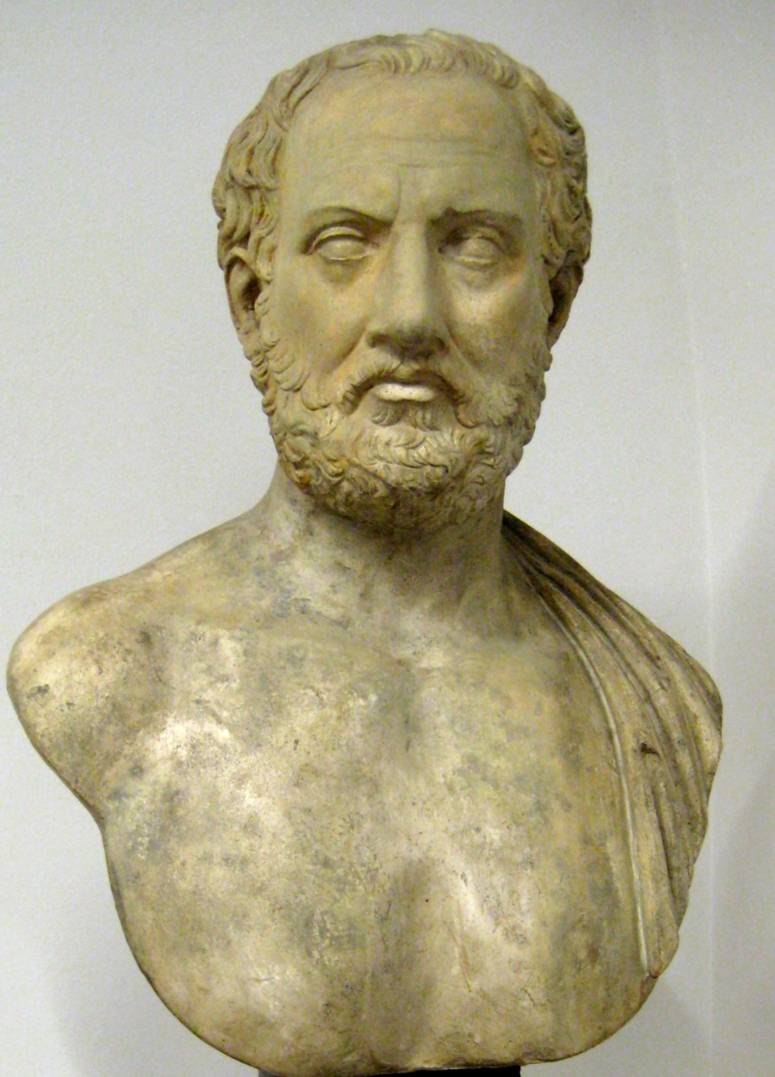

Summary
The History of the Peloponnesian War is Thucydides’ unfinished account of the war between Athens and Sparta from 431 to 411 BCE. Unlike Herodotus’ broad storytelling, Thucydides narrows his gaze to power, fear, interest, decision and the deterioration of civic language under pressure. He begins by arguing that the war was the greatest yet because of the scale of Greek resources and the growth of Athenian power, which made Sparta afraid. The early books describe alliances, grievances and Pericles’ strategy: Athens will avoid land battle, rely on walls and navy, and outlast Spartan invasions. Then plague strikes crowded Athens. Thucydides, himself infected and recovered, describes fever, thirst, ulcers, diarrhea, despair, social collapse and the failure of ritual and medicine. Pericles dies, and the democracy becomes more volatile. The narrative tracks revolt at Mytilene, civil war at Corcyra, the brutal Melian Dialogue, and the Sicilian Expedition, where Athenian ambition expands beyond prudence and ends in annihilation. Speeches reveal how cities justify necessity as justice. The famous Funeral Oration praises Athens as open, daring and beautiful; the plague narrative immediately tests that ideal. The later books show a world of coups, shifting alliances and exhausted calculation, breaking off before the war’s final end. Medically, the plague is one of the most important epidemic narratives in antiquity. Politically, the history shows how fear and suffering transform institutions and moral vocabulary. Thucydides writes for future readers who want clarity when crisis strips away comforting stories. The work’s austerity should not be mistaken for lack of feeling. Thucydides often suppresses overt lament, but the accumulation of speeches, reversals and ruined expeditions produces a severe tragic pressure. His claim to offer a possession for all time depends on the belief that human beings under fear, ambition and suffering will behave recognizably again. That promise gives the work its strange intimacy. Thucydides rarely confesses emotion, yet he assumes readers will recognize themselves in plague panic, imperial temptation and the temptation to call necessity justice.
Plot or Argument
- Causes and method
Thucydides distinguishes immediate grievances from the deeper cause: Spartan fear of growing Athenian power.
- Periclean strategy
Athens withdraws behind walls, trusts sea power and hears Pericles define the city’s ideals.
- Plague and instability
Epidemic disease devastates Athens physically, morally and politically, and Pericles dies.
- Empire under pressure
Mytilene, Corcyra and Melos reveal increasingly ruthless arguments about power, justice and survival.
- Sicilian disaster
Athenian ambition launches the expedition to Sicily, ending in military catastrophe and mass suffering.
- Unfinished war
The narrative breaks off in 411 BCE amid coups, naval maneuvers and a fractured Greek world.
Lessons
Crisis tests political ideals
The Funeral Oration and plague stand side by side. Thucydides teaches that a city’s values are known by what survives fear, crowding and death.
- How does the plague answer Pericles’ speech?
- Which Athenian ideals remain credible?
Power changes language
In civil war, words like courage, moderation and loyalty shift meaning. Political collapse begins partly as semantic collapse.
- Where do speakers redefine justice?
- What modern crises change vocabulary?
Ambition needs limits
The Sicilian Expedition shows strategic imagination turning into fantasy. Collective confidence can become a form of blindness.
- Who bears responsibility for Sicily?
- What warnings are ignored?
Context
The work arose from the Peloponnesian War between the Athenian empire and the Spartan-led Peloponnesian League, a conflict that reshaped the Greek world.
Composition
Thucydides wrote during and after the war, revising parts but leaving the history unfinished in 411 BCE. His exile gave him access to both sides, by his own account.
Reception
The history became a foundational text for political realism, military history, international relations and epidemic narrative.
Comparisons
- the-histories
Herodotus ranges across cultures and wonders; Thucydides compresses inquiry into war, power and political causation.
- the-annals-of-imperial-rome
Tacitus shares Thucydides’ dark interest in fear, power and public speech under pressure.
- testament-of-youth
Brittain supplies the intimate cost of war that Thucydides often subordinates to civic and strategic analysis.
Quotes
For Students
A reading companion for classical Christian high school students. See the student guide.
Reading Guide
Watch for
- Book 1.22-23, where Thucydides explains how he composed speeches and checked reports, and names the truest cause of the war as the growth of Athenian power and the fear it caused in Sparta.
- The Funeral Oration of Pericles in Book 2.35-46, followed immediately by the plague in Book 2.47-54. Read them as a pair.
- The Mytilenean Debate in Book 3.36-49, where Cleon argues for killing the whole male population of the rebel city and Diodotus argues for mercy on grounds of interest rather than justice.
- The civil war at Corcyra in Book 3.82-84, where Thucydides observes that words changed their ordinary meanings to suit the deeds of faction.
- The Melian Dialogue in Book 5.84-116 and the Sicilian Expedition in Books 6 and 7, ending with the Athenian prisoners in the quarries of Syracuse.
Key terms and names
- Truest cause
- Thucydides' distinction in Book 1.23 between the stated grievances over Corcyra and Potidaea and the real cause, Spartan fear of growing Athenian power. It is one of the first attempts to separate underlying causes from occasions.
- Possession for all time
- Thucydides' description of his history in Book 1.22, contrasted with a prize composition for a single hearing. He expects that events will recur in similar form while human nature remains the same.
- Pericles
- The leading Athenian statesman at the war's start, whose strategy of avoiding land battles and relying on the navy and Long Walls shapes Book 2. Thucydides judges in Book 2.65 that his successors abandoned his restraint.
- Stasis
- Civil strife within a city between factions. Thucydides' analysis of stasis at Corcyra in Book 3.82 is the work's most concentrated study of moral collapse.
- Melian Dialogue
- The exchange in Book 5 between Athenian envoys and the leaders of neutral Melos, in which the Athenians set aside appeals to justice and argue from power alone. The Melians refuse to submit, and the city is destroyed.
- Alcibiades
- The brilliant and ambitious Athenian who champions the Sicilian Expedition in Book 6, is recalled to face charges of impiety, and defects to Sparta. His career shows the danger of private ambition in public policy.
- Nicias
- The cautious general who argues against the Sicilian Expedition, is forced to lead it, and dies after its defeat in Book 7. Thucydides notes his lifelong devotion to virtue in his final judgment of him.
Seminar Questions
- Comprehension In Book 1.22, how does Thucydides say he wrote the speeches, and how does he say he checked the facts of what happened?
- Comprehension What symptoms of the plague does Thucydides record in Book 2.49, and why does he say he is describing them?
- Interpretation Pericles praises Athens for its openness, its laws, and its care for the dead, and then the plague breaks burial customs and respect for law. Is the plague a refutation of the Funeral Oration or a test that shows what the speech depended on?
- Interpretation Diodotus wins the Mytilenean Debate by arguing that mercy serves Athenian interest, not that it is just. Why does he avoid the argument from justice, and what does that tell you about the Athenian assembly?
- Interpretation At Corcyra, reckless daring came to be called loyal courage and moderation was called cowardice. Why does Thucydides treat this change in language as a cause of disaster and not only a symptom?
- Interpretation Thucydides places the destruction of Melos at the end of Book 5 and the launching of the Sicilian Expedition at the start of Book 6. What does this arrangement suggest without his saying it directly?
- Big Question The Athenians at Melos say that the strong do what they can and the weak suffer what they must. Is this a true description of how nations behave, a false one, or a true description of a corruption? What would it take to refute them?
Faith Connections
- James 4:1-2 (Scripture)
James asks where wars and fightings come from and answers that they arise from desires that war within. The Athenian envoys at Sparta in Book 1 name fear, honor, and interest as their motives, a diagnosis Thucydides and James share, though James locates the cure in humility before God.
- Isaiah 5:20 (Scripture)
Isaiah pronounces woe on those who call evil good and good evil, who put darkness for light. Thucydides' account of Corcyra in Book 3.82 describes the same inversion of moral language as the mark of a society in collapse.
- Augustine, City of God IV.4 (Church Fathers)
Augustine asks what kingdoms are without justice but great robberies, and tells of the pirate who told Alexander he did with one ship what the emperor did with a fleet. His argument answers the Athenians at Melos, who claim that between unequal powers justice does not enter the question.
Logic and Rhetoric
Central argument: Human nature remains constant, and under pressure of fear, honor, and interest, people and cities act in recognizable ways. The growth of Athenian power made Sparta afraid, and fear made war necessary. War, plague, and civil strife then stripped away restraint, so that cities came to call necessity justice and redefined their moral words to suit their deeds. Athens' overreach, from Melos to Sicily, led to its ruin. Therefore an exact account of this war will be useful to anyone who wants to understand future events, which will resemble these.
Rhetorical device: antithesis by juxtaposition. In Book 2 Thucydides sets the Funeral Oration, with its praise of Athenian freedom, law, and honor for the dead, directly beside the plague narrative, where the dead lie unburied and no one fears law or gods. He makes no comment, but the arrangement itself forms the argument.
Debate: Resolved: In relations between nations, the Athenians at Melos were right that justice applies only between equals in power.
Writing Prompts
Essay: Thucydides rarely tells readers what to think, yet he arranges his material to teach. Using the pairing of the Funeral Oration and the plague in Book 2 and the pairing of Melos and Sicily in Books 5 and 6, argue what Thucydides believes about the relation between power and moral restraint.
Comparison with Leviathan: Thomas Hobbes published an English translation of Thucydides in 1629, and his Leviathan describes life outside a commonwealth as a war of every man against every man. Compare Hobbes's state of nature with Thucydides' account of stasis at Corcyra in Book 3.82-84 and argue whether Thucydides supports Hobbes's conclusion that only an absolute sovereign can prevent such collapse.
Medical Lens
The Athenian plague narrative is essential for medical humanities. Thucydides describes symptoms, contagion-like clustering, caregiver mortality, failed treatments, religious breakdown and social despair. The precise disease remains debated, and retrospective diagnosis should be presented cautiously. The Sicilian retreat adds starvation, thirst, wounds and mass psychological collapse. The work is also a study of civic trauma: epidemic and war erode norms, burial customs and trust.
- Book 2.47–54
The plague enters Athens and produces fever, inflamed eyes, throat distress, ulcers, thirst, diarrhea and high mortality.
- Book 2.51–53
Caregivers die, laws lose force, burial customs collapse and despair spreads through the crowded city.
- Book 3.82–84
Civil war at Corcyra transforms language and behavior under fear and factional hatred.
- Book 7.75–87
The Sicilian retreat culminates in thirst, slaughter, imprisonment in quarries and catastrophic defeat.
Creative Prompts
- Essay
Compare Pericles’ Funeral Oration with the plague narrative as paired tests of civic resilience.
- Classroom
Have students track every explanation for war: grievance, fear, honor, interest, chance and speech.
Further Reading
- Thucydides, W. Robert Connor
- The Landmark Thucydides, Robert B. Strassler (ed.)
- A War Like No Other, Victor Davis Hanson
Verification notes
Historical arc and plague details are secure. Disease identification is intentionally left open.
- Verify Crawley wording before adding plague quotations.
- Check book/chapter ranges for the Sicilian retreat in the selected translation.