Work record
Autobiography and Poor Richard's Almanack
1732-1790 · 18th Century · Memoir · English
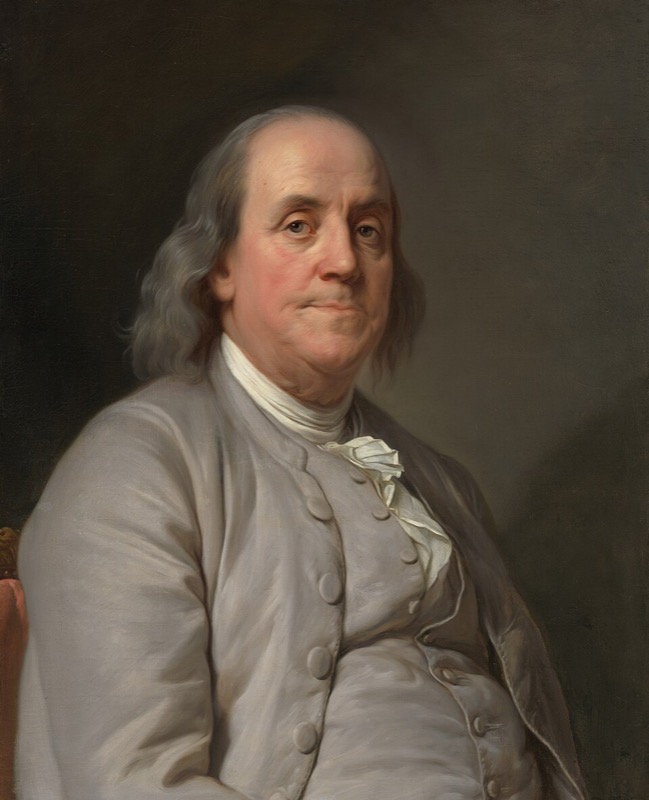

Summary
Franklin's Autobiography and Poor Richard's Almanack present the founding era through self-fashioning, practical wisdom, and the culture of improvement. The Autobiography narrates Franklin's movement from Boston apprentice to Philadelphia printer, civic organizer, scientist, and public man. It is not a full life story; it breaks off before the Revolution and is shaped by retrospective self-presentation. Franklin emphasizes reading, frugality, industry, sociability, credit, useful knowledge, and the formation of habits. His famous moral improvement scheme treats virtue as something that can be tracked, practiced, and corrected. Poor Richard's Almanack, published annually under the persona Richard Saunders, offers weather, calendars, jokes, proverbs, maxims, and economic advice. Its wit helped popularize an ethic of thrift, labor, caution, and worldly prudence. Read together, the works show Franklin making character into a technology. He does not simply praise virtue; he designs routines, clubs, ledgers, sayings, and institutions that might produce it. The medical lens is moderate because Franklin was a major public-health and science figure even when these texts are not primarily medical. His concern with cleanliness, civic institutions, hospitals, inoculation debates, electricity, and practical improvement belongs to the history of Enlightenment health. The Autobiography also invites comparison with behavioral self-monitoring, though its moral bookkeeping should not be mistaken for modern psychology. Historically, Franklin's writings arise from imperial print culture, Atlantic Enlightenment networks, urban associational life, and the social mobility of British America. The Autobiography was written in four parts between 1771 and 1790, the first addressed to his son William, and it first appeared in a French translation in 1791. His enduring interest lies in the mixture of charm and calculation. He shows how a person can invent himself through habits, print, friendship, and public usefulness, while making that invention look like common sense. The result became one of the founding portraits of American self-improvement, imitated in success manuals for two centuries.
Plot or Argument
- A printer invents a public self
The Autobiography traces Franklin's youth, work, reading, mistakes, and rise in Philadelphia.
- Virtue becomes a trackable habit
Franklin's improvement plan turns moral aspiration into a routine of measurement and correction.
- Poor Richard packages prudence
The Almanack spreads advice, jokes, and maxims in an entertaining commercial format.
Characters
- Benjamin Franklin, memoirist and public persona
Printer, writer, scientist, and civic organizer presenting his own formation.
Lessons
Character can be engineered
Franklin treats virtue as habit formation. The method is practical and revealing, though it risks reducing moral life to self-management.
- What does Franklin's virtue chart make possible?
- What parts of character resist measurement?
Usefulness becomes a civic ideal
Franklin prizes knowledge that builds libraries, fire companies, hospitals, and public trust. Practical intelligence becomes a public virtue.
- How does Franklin define usefulness?
- What are the limits of pragmatic virtue?
Self-making is never solitary
The Autobiography celebrates individual industry, but Franklin rises through print networks, clubs, patrons, cities, and institutions. Self-improvement depends on social worlds.
- Who helps Franklin become Franklin?
- What does his story leave outside the frame?
Context
Franklin's writings belong to imperial print culture, Enlightenment science, urban associational life, and the social mobility of eighteenth-century British America.
Composition
Poor Richard's Almanack ran from 1732 to 1758; the Autobiography was written in parts from 1771 onward and published posthumously.
Reception
Franklin became a model of American practicality and self-improvement; his maxims passed into proverbs and schoolbooks, and writers from Mark Twain to D. H. Lawrence parodied or argued with the Franklin persona.
Comparisons
- the-founding-documents
Franklin's practical civic habits complement the founding documents' institutional language.
- the-principles-of-psychology
Franklin's habit tracking anticipates later psychological interest in habit, attention, and self-regulation.
- medical-inquiries-and-observations-upon-diseases-of-the-mind
Franklin's civic improvement and Rush's medical reform both belong to Philadelphia Enlightenment institution-building.
Quotes
Frequently cited
“early to bed, and early to rise, makes a man healthy, wealthy, and wise”
For Students
A reading companion for classical Christian high school students. See the student guide.
Reading Guide
Watch for
- The printer's metaphor at the start of Part One, where Franklin says he would gladly live his life over if, like an author, he could correct the faults of the first edition in a second. Keep track of every mistake he later calls an erratum.
- Seventeen-year-old Franklin's arrival in Philadelphia, walking up Market Street eating one great puffy roll and carrying two more under his arms, while his future wife Deborah Read watches from her doorway and thinks he cuts a ridiculous figure. He tells it so readers can measure how far he has come.
- The founding of the Junto, his club for mutual improvement, and the projects that grow out of it, beginning with the subscription library. Notice how often Franklin's private self-improvement becomes a public institution.
- The plan for moral perfection in Part Two: thirteen virtues, a little book with a page for each, and a week of strict attention given to one virtue at a time. Watch what happens to the virtue of Order and how Humility comes to be added to the list.
- The Way to Wealth, in which old Father Abraham answers a crowd at an auction by stringing together Poor Richard's sayings on industry and frugality, and the crowd approves his speech and then goes on buying extravagantly.
Key terms and names
- Errata
- A printer's term for mistakes corrected in a list at the end of a book. Franklin uses it for his own moral and practical failures, such as breaking his apprenticeship to his brother James and spending money entrusted to him by a friend.
- Junto
- The club of young tradesmen Franklin formed in Philadelphia in 1727 to debate questions of morals, politics, and natural philosophy. It became the seedbed for many of his civic projects.
- The thirteen virtues
- Temperance, Silence, Order, Resolution, Frugality, Industry, Sincerity, Justice, Moderation, Cleanliness, Tranquility, Chastity, and Humility, each with a short precept. Franklin tracked his faults against them in a ruled notebook.
- Richard Saunders
- The fictional, henpecked astrologer who signs Poor Richard's Almanack. The persona lets Franklin joke, moralize, and sell almanacs while keeping a comic distance from his own advice.
- Father Abraham
- The old man in The Way to Wealth, Franklin's 1758 preface to the almanac, who gathers decades of Poor Richard's proverbs into one sermon on thrift and diligence.
- Deism
- The belief in a Creator known by reason who does not reveal himself through miracles or scripture. In Part One Franklin says that books written against deism made him a deist, and he later came to suspect that the doctrine, even if true, was not very useful, since the friends he had persuaded of it treated him badly.
- Pennsylvania Hospital
- The hospital Franklin helped Dr. Thomas Bond establish, described in Part Three. Franklin secured public money on the condition that private donors first raise a matching sum, a scheme he was proud of.
Seminar Questions
- Comprehension Why does Franklin leave his brother's printing shop in Boston, and how does he describe that decision later in the Autobiography?
- Comprehension How does Franklin's notebook for the thirteen virtues work, and which virtue does he say gave him the most trouble?
- Comprehension What happens when Franklin goes to hear George Whitefield preach for an orphan house he disapproves of, having resolved to give nothing?
- Interpretation Franklin adds Humility to his list after a Quaker friend tells him he is proud, and he admits he gained the appearance of it more than the reality. What does this admission say about the strengths and limits of his method?
- Interpretation Franklin calls his faults errata, a printer's word for correctable mistakes. What does this metaphor capture well about moral failure, and what might it leave out?
- Interpretation In The Way to Wealth the crowd listens to Father Abraham, approves, and then does the opposite. Is Franklin mocking his audience, his own proverbs, or the gap between knowing and doing?
- Big Question Can good character be built by method and habit alone, or does real virtue require a change of heart that no system of self-improvement can produce?
Faith Connections
- Proverbs 22:29 (Scripture)
Franklin recalls in Part Two that his father often repeated the proverb that a man diligent in his business shall stand before kings. He adds, with evident satisfaction, that he has since stood before five kings, which shows how deeply biblical wisdom literature shaped the ethic of industry he later passed on through Poor Richard.
- Philippians 4:8 (Scripture)
Franklin reports going to hear a Philadelphia minister preach on this verse about whatever is true, honest, just, pure, lovely, and of good report, and being disappointed when the sermon reduced it to five points of church observance. His own list of virtues can be read as his attempt to give the verse the practical content he missed.
- Augustine, Confessions I-IX (Church Fathers)
Augustine's account of his early life is addressed to God and confesses his sins as wounds that only grace can heal. Franklin's account is addressed to his son and treats his faults as errata to be corrected, and setting the two side by side shows two very different ideas of what it means to tell the story of one's own life.
- Cotton Mather, Bonifacius: Essays to Do Good (1710) (Great Conversation)
Franklin writes in Part One that Mather's book gave him a turn of thinking that influenced some of the principal later events of his life. Mather, a Boston Puritan minister, urged readers to organize societies and form deliberate plans for doing good, which Franklin carried into the Junto and his civic projects.
Logic and Rhetoric
Central argument: Character is made of habits; habits can be deliberately acquired through method, record, and repetition, and are strengthened by friends and associations; a person of humble birth who forms such habits can rise in fortune and serve the public good; therefore virtue, prudence, and usefulness are learnable arts, and Franklin offers his own life, mistakes included, as evidence and model.
Rhetorical device: extended metaphor. From the opening pages of Part One Franklin describes his life as a book in print and his faults as errata that a second edition could correct. The metaphor runs through the Autobiography, turning moral failure into something a careful craftsman can identify and amend.
Debate: Resolved: Franklin's method of tracking the thirteen virtues can make a person genuinely good, not merely well-behaved.
Memory Work
early to bed, and early to rise, makes a man healthy, wealthy, and wise
Writing Prompts
Essay: Franklin presents the Autobiography as a guide his son and others might imitate. Using the errata, the thirteen virtues, and his civic projects, argue whether the book is chiefly a manual of self-improvement, a portrait of public service, or a careful piece of self-presentation, and what each reading teaches.
Comparison with Selected Sermons: Franklin printed George Whitefield's sermons, admired his voice and sincerity, and remained his friend, yet he notes in Part Three that Whitefield prayed for his conversion without seeing the prayer answered. Compare Whitefield's preaching of the new birth with Franklin's plan for moral perfection, and argue what each man thought must change in a person for that person to become good.
Medical Lens
Franklin's medical relevance comes through civic improvement, hospitals, cleanliness, inoculation debates, and self-regulation. The Autobiography's virtue plan is useful for thinking about habit and behavior before psychology professionalized.
- Autobiography, moral improvement plan
Franklin's charted virtues resemble an early behavioral self-monitoring program.
- Civic institution passages
Franklin's public projects belong to the history of urban improvement and health infrastructure.
Creative Prompts
- Essay
Compare Franklin's virtue chart with modern mood, habit, or medication tracking.
- Dialogue
Let Franklin and William James discuss whether habit can make a self.
Further Reading
Verification notes
The autobiographical arc, Almanack dates, and civic-improvement themes are secure. Quotations are omitted pending exact edition selection.
- Verify exact Poor Richard maxims before quoting; many circulate in altered forms.