Work record
Selected Sermons
1548-1552 · Renaissance Early Modern · Sermons · English
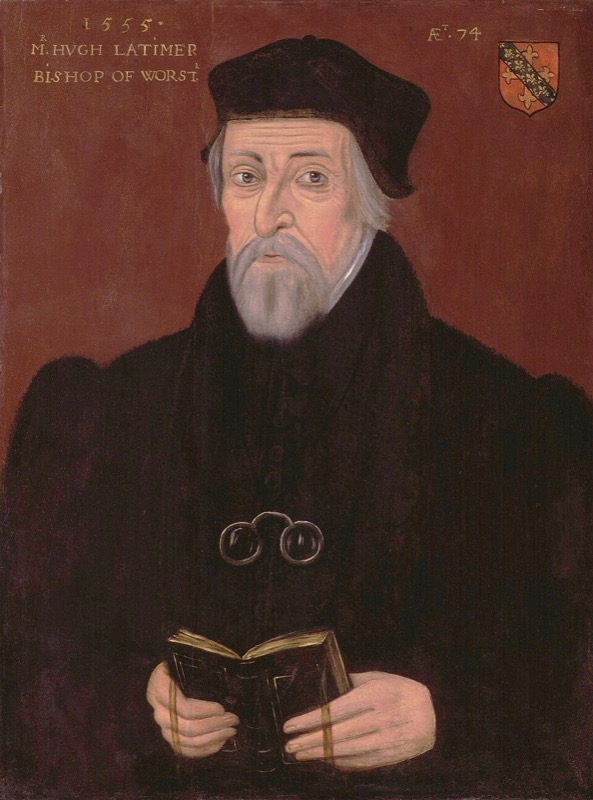

Summary
Latimer's Selected Sermons bring the English Reformation into a rough, vivid, public idiom. Unlike a systematic theologian, Latimer often sounds like a moral witness standing before court and commons at once. His famous preaching before Edward VI denounces corrupt landlords, negligent clergy, greedy officials, false religion, and social exploitation. In the Sermon of the Plough and related sermons, he turns ordinary labor into a moral image: good preachers plough hearts, while idle shepherds abandon the flock. His language is direct, proverbial, earthy, and theatrical, designed for hearers who need to be struck awake. The sermons reveal a Reformation entangled with enclosure, poverty, court politics, biblical translation, anti-Catholic polemic, and the unstable religious policy of Tudor England. Latimer preaches reform not only as a change in doctrine but as a demand for public righteousness. His medical relevance is modest but present. He treats corrupt institutions as diseased bodies, bad clergy as negligent caregivers, and the preacher as one who wounds in order to heal. The sermons also show how public shame, fear of judgment, and social distress were managed by early modern preaching. The Sermon of the Plough, preached at Paul's Cross in 1548, asks who is the most diligent prelate in England and answers that it is the devil. Latimer's later martyrdom under Mary I gave his sermons retrospective Protestant authority, but the sermons themselves already dramatize risk: to preach honestly before power is to place speech in danger. Read beside Luther and Calvin, Latimer is less architect than alarm bell. He translates reform into English moral theater, where doctrine, satire, and social criticism meet. The result is preaching that still feels unusually audible: one hears not just ideas, but a voice pressing a nation to repent in public. His plainness is crafted art, not lack of learning, and its roughness is part of its authority in crisis and reform across public life.
Plot or Argument
- Ploughing becomes a preaching image
Latimer uses agricultural labor to describe the hard work of preaching, repentance, and moral cultivation.
- Court sermons indict public sin
Speaking before power, he attacks greed, enclosure, neglect of preaching, and outward religion without amendment of life as national dangers.
- Plain English sharpens reform
His style relies on everyday images, satire, and direct address rather than scholastic abstraction.
Lessons
Plain speech can be dangerous
Latimer's sermons show that clarity before power is not a neutral style choice. Direct language can expose injustice and expose the preacher to retaliation.
- Why does Latimer choose homely images?
- What risks follow from preaching before rulers?
Reform includes economic conduct
Latimer refuses to confine religion to ritual disputes. Greed, rent, labor, and neglect become religious matters because they injure neighbors.
- How does Latimer connect doctrine and economics?
- Where does his social criticism still bite?
Satire can awaken conscience
His ridicule is not decorative; it is meant to shame unpreaching prelates and covetous officials into recognition. Homely stories, proverbs, and mockery are his chosen instruments of persuasion.
- When does satire serve reform?
- Can shaming produce genuine repentance?
Context
Latimer preached in Tudor England during the volatile English Reformation, especially under Edward VI, when Protestant reform advanced through court, pulpit, and statute.
Composition
The sermons were delivered orally, often before elite audiences, and circulated in print. Their early modern English preserves much of their spoken force.
Reception
After Latimer's execution under Mary I, Protestant memory treated him as a martyr-preacher. His sermons remained important examples of English reforming plain style.
Comparisons
- luther-selected-sermons-and-treatises
Both preachers attack corrupt religion, but Latimer's English sermons place social injustice and court accountability at the center.
- The Canterbury Tales (Geoffrey Chaucer)
Chaucer's satire of clergy and Latimer's reforming attacks share an English habit of mocking idle, worldly, or venal clergy, one in verse fiction and the other from the pulpit.
- the-prince
Machiavelli analyzes rulers' power; Latimer risks addressing rulers' consciences from a biblical pulpit.
Quotes
For Students
A reading companion for classical Christian high school students. See the student guide.
Reading Guide
Watch for
- The Sermons on the Card, preached at Cambridge at Christmas 1529, where Latimer takes the popular card game of triumph and makes hearts the winning suit of a Christian life.
- The Sermon of the Plough, preached at Paul's Cross in January 1548 on Romans 15:4, and its long comparison of the preacher's labour to the ploughman's ploughing, sowing, harrowing and weeding.
- The turn in the same sermon where Latimer asks who is the most diligent bishop and prelate in all England and answers that it is the devil, who is never out of his diocese.
- In the first sermon before King Edward VI in 1549, the story of Latimer's own father, a yeoman who rented a farm, served the king in harness with his horse, and still put his son to school; Latimer uses it against rising rents.
- The tale of the Persian king Cambyses, who had a corrupt judge flayed and his skin laid on the judgment seat, told before the boy king and his court as a warning to officials who take bribes.
Key terms and names
- Paul's Cross
- The open-air pulpit in the churchyard of St Paul's Cathedral in London, where the Sermon of the Plough was preached to a large public crowd.
- Unpreaching prelate
- Latimer's name for a bishop who holds the office and its income but does not preach. He pairs it with lording loiterers, clergy who act as lords and leave their flocks unfed.
- Sermons before Edward VI
- The seven sermons Latimer preached at court during Lent 1549 before the young king. They combine exposition of Scripture with direct rebukes of covetous landlords, corrupt judges and negligent clergy.
- Yeoman
- A farmer of middling rank who worked his own or rented land. Latimer, a yeoman's son, argues that rising rents are ruining the class that had supplied England's soldiers and scholars.
- Enclosure
- The fencing of open fields and common land, often for sheep pasture, which displaced tenants and raised rents. It stands behind much of Latimer's preaching against covetousness in the 1549 sermons.
- Sermons on the Card
- Latimer's two Cambridge sermons of 1529, which turned the card game of triumph into an allegory of the Christian life. They made him famous and drew answering sermons from his opponents.
- Oxford martyrdom
- Latimer was burned at Oxford with Nicholas Ridley in October 1555 under Mary I. Later Protestant memory read his earlier sermons in the light of that death.
Seminar Questions
- Comprehension In the Sermon of the Plough, what tasks does Latimer assign to the preacher as a ploughman of souls?
- Comprehension Whom does Latimer name as the most diligent prelate in England, and what makes him so diligent?
- Comprehension What does Latimer tell King Edward's court about his father's farm, and what has changed for yeomen between his father's day and his own?
- Interpretation Why does Latimer praise the devil's diligence rather than simply condemning it? What does the ironic praise accomplish with an audience that includes bishops?
- Interpretation Latimer treats rents, enclosure and bribed judges as matters for the pulpit. How does he connect these to the preaching of the Gospel rather than treating them as politics alone?
- Interpretation Why tell the story of Cambyses and the flayed judge before a royal court full of officials, and what does Latimer expect his hearers to do with it?
- Big Question Latimer was later burned for his convictions. Does a preacher owe his hearers plain speech even when it may cost him his office or his life?
- Big Question When should the church speak about economic conduct such as rents and wages, and when should it keep to doctrine and leave such matters to rulers?
Faith Connections
- Romans 15:4 (Scripture)
This is the text of the Sermon of the Plough: whatever was written beforehand was written for our learning. Latimer takes it as a charge that Scripture must be opened to the people, which is why a bishop who does not preach fails at the heart of his office.
- Ezekiel 34:1-10 (Scripture)
God condemns the shepherds of Israel who feed themselves and not the flock. Latimer's unpreaching prelates and lording loiterers are Ezekiel's shepherds in Tudor dress.
- Isaiah 5:8 (Scripture)
Isaiah pronounces woe on those who join house to house and field to field until there is no room left. The prophet's charge lies close to Latimer's complaint in 1549 that landlords and graziers were swallowing farms and pricing out the yeomanry.
- Gregory the Great, Pastoral Rule (Great Conversation)
Gregory's sixth-century handbook for bishops insists that the shepherd must preach and must fit his admonition to each kind of hearer. Latimer stands in this line when he makes preaching, not lordship, the measure of a bishop.
Logic and Rhetoric
Central argument: The chief office of a bishop is to preach, as the chief work of a ploughman is to plough. England's bishops have left the plough for lordship and court business, while the devil works in his diocese without rest. Where preaching is neglected, the people are left ignorant, and ignorance lets covetous landlords, bribed judges and false religion flourish. Therefore the reform of the realm requires bishops who preach and rulers who punish covetousness, or God's judgment will fall on the whole nation.
Rhetorical device: irony. In the Sermon of the Plough Latimer praises the devil as the most diligent prelate in England, always at home and always at his plough. The ironic praise shames the bishops in his audience more sharply than direct rebuke, since even the enemy outworks them.
Debate: Resolved: A preacher should address the economic conduct of his hearers, such as rents and enclosure, from the pulpit.
Writing Prompts
Essay: Latimer builds the Sermon of the Plough on a single image drawn from farm labour. Analyze how he extends the image of the plough through the sermon, and argue whether it makes his case against negligent bishops stronger than plain argument would.
Comparison with Lectures on Revivals of Religion: Latimer's Sermon of the Plough and Finney's third lecture, on breaking up the fallow ground of the heart from Hosea 10:12, both take the farmer's labour as an image of spiritual work. Compare who does the ploughing in each, the preacher, the hearer or God, and argue what the difference reveals about how each man expected reform or revival to come.
Medical Lens
Latimer is not a medical writer, but his sermons use cure, wounding, shepherding, and bodily metaphors for public reform. They are useful for the moral medicine of early modern preaching.
- Sermon of the Plough
The preacher's labor is imagined as cultivation of resistant hearts, an agricultural therapy of conscience.
- Court sermons on negligent officials
Social disorder is treated as a public disease requiring correction by rulers and clergy.
Creative Prompts
- Essay
Study Latimer's plough image as a model for preaching that turns labor into moral diagnosis.
- Dialogue
Set Latimer before a modern health-policy committee and let him preach against negligent care.
Further Reading
Verification notes
The Tudor context, plough-sermon theme, and martyrdom are secure. Quotations are omitted despite English original to avoid unverified early modern wording.
- Verify sermon titles and spelling from a public-domain edition before quoting.