Work record
Common Sense, Rights of Man, The Age of Reason, and The American Crisis
1776-1794 · 18th Century · Political Theory · English
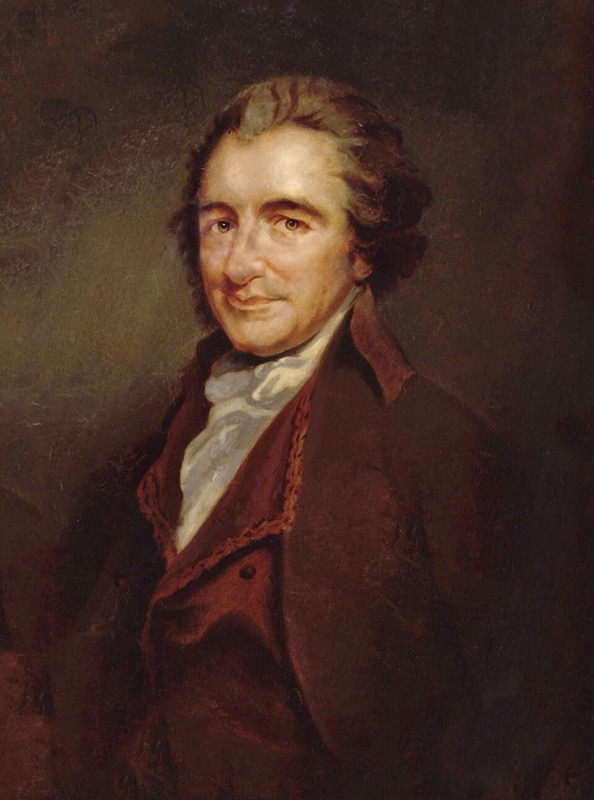

Summary
This Paine anthology gathers the pamphlets that made revolutionary argument feel urgent, portable, and democratic. Common Sense, published in January 1776, attacks monarchy, hereditary succession, reconciliation with Britain, and political hesitation. Its plain language helped shift American debate toward independence by making separation seem not only justified but obvious. The American Crisis essays sustained morale during war, turning military danger into tests of civic character. Rights of Man answers Edmund Burke's criticism of the French Revolution and defends popular sovereignty, natural rights, written constitutions, and social reforms. The Age of Reason then turns Paine's polemical method against revealed religion, advocating deism and attacking priestcraft, miracles, and biblical authority. Across these works, Paine's central talent is compression: he makes large political and religious controversies sound like matters of common judgment. He distrusts inherited power, aristocratic mystification, and institutions that demand reverence without reason. The medical lens is indirect but useful. Paine often writes as if political coercion is a disease and common sense a remedy; Rights of Man also proposes social measures for poverty, old age, and public welfare that anticipate later debates about social medicine. Historically, Paine belongs to the Atlantic revolutions, print radicalism, transnational republicanism, and the dangerous border between liberty and terror in the 1790s. He inspired enormous enthusiasm and fierce backlash; The Age of Reason damaged his reputation among many religious Americans. Read beside the founding documents, Paine supplies insurgent pressure rather than institutional design. Read beside Burke, he is the revolutionary pamphleteer against inherited continuity. His greatness lies in giving political abstraction a popular voice. He made ordinary readers feel that monarchy, poverty, and priestly authority were not ancient necessities but human arrangements open to judgment and change. His prose is democratic because it invites readers to trust their own reasoning against inherited power and hierarchy.
Plot or Argument
- Independence becomes common sense
Common Sense reframes separation from Britain as rational, necessary, and morally clearer than reconciliation.
- Crisis writing sustains morale
The American Crisis essays turn military danger into a test of public virtue and revolutionary commitment.
- Rights expand beyond America
Rights of Man defends the French Revolution and argues for democratic legitimacy, constitutions, and social provision.
- Reason challenges revelation
The Age of Reason attacks clerical authority and revealed religion from a deist standpoint.
Lessons
Plain style can radicalize politics
Paine's genius is making complicated grievances sound legible to ordinary readers. Accessibility becomes a revolutionary force.
- How does Paine's style create authority?
- What does plainness hide as well as reveal?
Inherited power needs justification
Paine refuses to treat monarchy, aristocracy, or priestly authority as self-evident. Institutions must answer reason and public good.
- Why does Paine despise hereditary rule?
- What modern institutions rely on inherited reverence?
Revolutionary confidence can outrun complexity
Paine's clarity is exhilarating, but it can simplify the difficulty of building stable institutions after revolt. He is strongest as spark, not architect.
- Where does Paine persuade by simplifying?
- What must follow pamphlet politics?
Context
Paine wrote across the American and French revolutions, when pamphlets, newspapers, and public controversy reshaped political authority.
Composition
Common Sense and The American Crisis belong to the American Revolution; Rights of Man to the French Revolution debate; The Age of Reason to Paine's later radical deism.
Reception
Paine became a revolutionary hero and later a religious scandal. His political prose remained foundational for democratic radicalism.
Comparisons
- the-founding-documents
Paine agitates for independence and rights in popular prose, while the founding documents institutionalize selected revolutionary claims.
- second-treatise-of-government
Locke supplies philosophical foundations for consent and resistance; Paine turns similar principles into mass pamphlet force.
- the-social-contract
Rousseau and Paine share hostility to inherited legitimacy but differ in tone, metaphysics, and institutional imagination.
Quotes
For Students
A reading companion for classical Christian high school students. See the student guide.
Reading Guide
Watch for
- The opening of Common Sense, where Paine separates society, which arises from human needs, from government, which he treats as a remedy made necessary by human vice. Everything later in the pamphlet leans on that distinction.
- The section Of Monarchy and Hereditary Succession, where Paine retells Israel's request for a king in 1 Samuel and Gideon's refusal of the crown to argue that scripture itself stands against kingship.
- The first American Crisis essay, written in December 1776 during Washington's retreat across New Jersey. Notice how Paine turns a military low point into a test that sorts true patriots from those who serve only in good weather.
- Rights of Man's attack on Edmund Burke's claim that the settlement of 1688 binds the English people forever. Watch for Paine's insistence that the living, not the dead, hold authority over their own government.
- The opening of The Age of Reason, where Paine states his own creed in one God and a hope of happiness after this life, then argues that a revelation given to one person is only hearsay to everyone else.
Key terms and names
- Hereditary succession
- The passing of a crown by birth. Paine argues it is absurd because wisdom and virtue are not inherited, and he claims that even a first king chosen by merit cannot rightly bind his descendants' subjects.
- Reconciliation
- The policy, popular in early 1776, of seeking redress within the British Empire rather than independence. Common Sense attacks it as a delay that only postpones a separation Paine thinks inevitable.
- The American Crisis
- A series of sixteen essays Paine issued between 1776 and 1783 to steady the army and public through the war. The first was read aloud to Washington's troops before the crossing of the Delaware.
- Edmund Burke
- The Irish-born statesman whose Reflections on the Revolution in France (1790) defended inherited institutions and prudence. Rights of Man is written as a point-by-point reply to him.
- Natural and civil rights
- In Rights of Man, natural rights are those a person holds by existing, such as freedom of thought; civil rights are those a person deposits in the common stock of society because he cannot secure them alone.
- Deism
- Belief in one Creator known through reason and nature, without revealed scripture, miracles, or church authority. The Age of Reason is Paine's popular defense of it and his attack on the Bible's authority.
- Rights of Man, Part II
- The 1792 continuation, where Paine proposes tax-funded relief for the poor, support for the schooling of poor children, and pensions for the aged, paid for by cutting the costs of court and war.
Seminar Questions
- Comprehension In Common Sense, how does Paine distinguish society from government, and why does he call government at best a necessary evil?
- Comprehension What does Paine take from 1 Samuel 8 and the story of Gideon, and what conclusion about monarchy does he draw from them?
- Comprehension What claim of Burke's does Rights of Man most directly attack, and what does Paine say about the authority of one generation over the next?
- Interpretation Paine uses scripture to attack kingship in Common Sense and then rejects the authority of scripture in The Age of Reason. Is this inconsistency, strategy, or a change of mind over eighteen years?
- Interpretation The first Crisis essay was written for soldiers in retreat. How does Paine's language turn hardship into a reason for confidence rather than despair?
- Interpretation Paine says he writes plainly so that ordinary readers can judge for themselves. What does his plain style gain in force, and what complexities of the British constitution does it leave out?
- Big Question Burke says a nation is a partnership between the dead, the living, and the unborn; Paine says the living are free to remake their government. Which account better describes what citizens owe to the institutions they inherit?
Faith Connections
- 1 Samuel 8; Judges 8:22-23 (Scripture)
Paine builds his scriptural case against monarchy on these passages: Gideon refuses to rule because the Lord shall rule over Israel, and Samuel warns the people what a king will take from them. Reading the chapters whole lets students test whether Paine has used them fairly.
- Romans 13:1-7 (Scripture)
Loyalist preachers in the 1770s pressed Paul's command to be subject to the governing authorities against independence. Paine never answers this text directly, which makes it the strongest scriptural question to put to Common Sense.
- Psalm 19 (Scripture)
The Age of Reason holds that creation is the only true word of God. Psalm 19 agrees that the heavens declare God's glory, but then turns in verse 7 to the law of the Lord as a second, written witness, which is exactly the step Paine refuses.
- Edmund Burke, Reflections on the Revolution in France (1790) (Great Conversation)
Burke defends inherited institutions as the stored wisdom of generations and warns that abstract rights can unravel a society. Rights of Man answers him directly, so the two books form one of the great debates of modern political thought.
Logic and Rhetoric
Central argument: Government exists only to secure freedom and security, and its form must answer to reason and the common good. Hereditary monarchy has no ground in nature, reason, or scripture, and Britain governs America for Britain's interest across an ocean. Reconciliation would only restore that dependence and postpone the conflict. Therefore Americans should declare independence now and frame a republican government of their own.
Rhetorical device: argument from analogy. In the section of Common Sense on the present state of American affairs, Paine argues that it is absurd for an island to govern a continent forever, and he answers the claim that America has thrived under Britain by saying one might as well argue that a child who thrived on milk should never be given meat. The homely comparisons make a contested constitutional question feel like a matter of plain sense.
Debate: Resolved: Paine is right against Burke that no generation has authority to bind its successors to a form of government.
Writing Prompts
Essay: Paine claims in Common Sense to offer nothing more than simple facts, plain arguments, and common sense. Analyze two passages, one from Common Sense and one from Rights of Man or The Age of Reason, and argue whether his plain style is a form of honesty or a form of persuasion that hides its own assumptions.
Comparison with The Federalist Papers: Paine wrote to break the bond with Britain; Hamilton, Madison, and Jay wrote to persuade New Yorkers to ratify a new and stronger government. Compare how Paine and Publius treat human nature, the dangers of power, and the role of the ordinary reader, and argue which better understands what a free people needs after a revolution.
Medical Lens
Paine is medically relevant mainly through social welfare proposals and the therapeutic rhetoric of common sense against political disease. Rights of Man touches poverty, old age, and social provision.
- Rights of Man, social welfare proposals
Paine proposes public measures for poverty and old age, anticipating later welfare and public-health arguments.
Creative Prompts
- Essay
Compare Paine's common sense to public-health messaging: clarity, urgency, and the risk of oversimplification.
- Dialogue
Let Paine and Madison debate whether revolution needs pamphleteers or architects more.
Further Reading
Verification notes
The anthology components, dates, revolutionary contexts, and reputation arc are secure. Quotations are omitted pending exact source selection.
- Verify public-domain edition and exact wording before adding quotes.