Work record
Selected Sermons
1739-1770 · 18th Century · Sermons · English
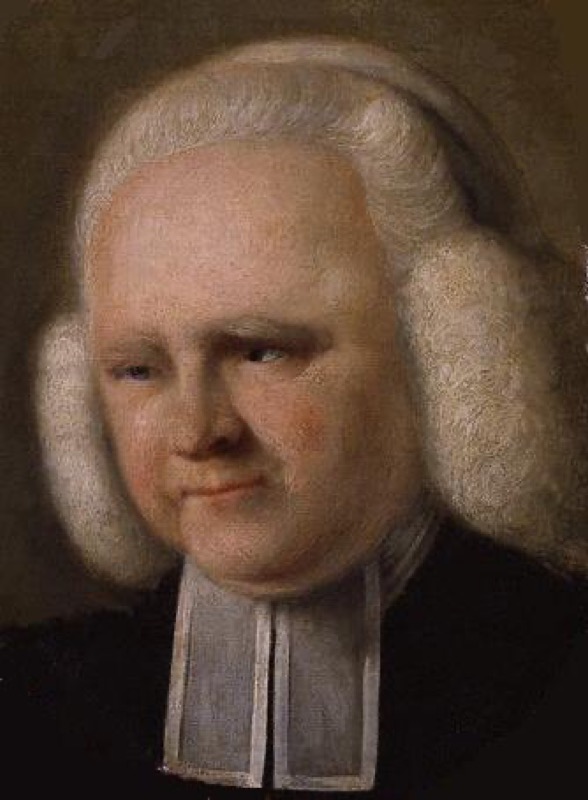
.jpg)
Summary
Whitefield's Selected Sermons preserve the voice of the eighteenth century's most famous evangelical itinerant. His preaching emphasized new birth, heartfelt conversion, human sin, Christ's mercy, and the immediate demand that hearers respond. What made Whitefield extraordinary was not doctrinal originality but delivery, mobility, and scale. He preached outdoors to enormous crowds, crossed the Atlantic repeatedly, and helped create a transatlantic evangelical public. The sermons often move quickly from biblical text to direct address: hearers are sinners, sleepers, hypocrites, mourners, or seekers standing before urgent grace. Whitefield's theatrical training mattered. Admirers described tears, trembling, silence, and mass attention; critics accused him of enthusiasm and manipulation. That controversy is central to the medical lens. Revival preaching raised questions about nervous susceptibility, crowd emotion, religious ecstasy, and bodily signs of conviction. Whitefield defended awakening as spiritual work, but the physical and social effects of his preaching made him a central figure in debates about emotion and religion. Historically, he belongs to the Great Awakening, early Methodism, print celebrity, imperial travel, and the rise of evangelical identity. His support for enslaved labor in Georgia also belongs to the historical record, alongside his evangelical language of compassion. Printed sermons, newspaper circulation, and reports of mass response show how spoken urgency could awaken conscience, create controversy, and travel through Atlantic Protestant networks. Compared with Edwards, Whitefield is less analytical and more performative; compared with Wesley, less organizationally systematic and more meteor-like. His importance lies in showing preaching as event. The sermon is not only text on a page but breath, crowd, weather, rumor, newspaper, body, and memory. To read him is to reconstruct the age when evangelical religion learned to move through mass attention and celebrity. His appeal made conversion feel public, portable, and immediate across the Atlantic world. The selection is therefore a source for sermon form, revival practice and the bodily drama of eighteenth-century conversion.
Plot or Argument
- New birth becomes the central summons
Whitefield repeatedly presses hearers toward conversion as an immediate and experiential transformation.
- Outdoor preaching creates a public
The sermons belong to fields, streets, and large crowds as much as to churches, making delivery part of meaning.
- Awakening divides observers
Supporters see conviction and grace; critics see theatrical enthusiasm, nervous agitation, and social disorder.
Lessons
Delivery changes doctrine's force
Whitefield shows that the same teaching can become a mass event through voice, timing, and presence. Performance is not separate from persuasion.
- What happens when a sermon becomes an event?
- How should readers study delivery from printed texts?
Awakening can travel through media
Whitefield's ministry depended on roads, ships, newspapers, published sermons, and reputation. Revival was a communications network as well as a religious movement.
- How did print amplify preaching?
- What modern media patterns resemble revival networks?
Evangelical appeal and slavery share the record
Whitefield's defense of slavery belongs to the same historical record as his evangelical appeal. The pairing helps readers study revival preaching within the Atlantic world that sustained it.
- How did revival preaching travel through Atlantic institutions?
- How do Whitefield's sermons read beside his Georgia advocacy?
Context
Whitefield preached during the First Great Awakening, when evangelical conversionism, itinerancy, and print culture transformed Protestant life across the Atlantic.
Composition
The sermons were delivered across decades in Britain and America, often before large outdoor audiences, and circulated through print.
Reception
He drew enormous crowds and fierce criticism. Later evangelicalism remembered him as a model of revival preaching while historians also examine his defense of slavery in Georgia.
Comparisons
- sinners-and-the-surprising-work-of-god
Edwards interprets revival with analytic caution, while Whitefield embodies revival as mobile, theatrical proclamation.
- early-black-church-sermons
Whitefield's evangelical appeal can be compared with Black Christian traditions formed in the same Atlantic Protestant world.
- lectures-on-revivals-of-religion
Finney systematizes revival measures, whereas Whitefield relies on itinerant charisma and repeated conversion appeal.
Quotes
For Students
A reading companion for classical Christian high school students. See the student guide.
Reading Guide
Watch for
- Sermon XLIII, The Almost Christian, on King Agrippa's reply to Paul in Acts 26:28, where Whitefield sorts his hearers into kinds of almost-Christians and presses each kind in turn.
- Sermon XLIX, On Regeneration, on 2 Corinthians 5:17, where Whitefield explains what it means to be a new creature and why outward reformation is not enough.
- Sermon III, Abraham's offering up his Son Isaac, where Whitefield retells Genesis 22 scene by scene, imagining Abraham's thoughts on the road to Moriah before turning the story toward God's gift of his own Son.
- Sermon XXVII, Blind Bartimeus, where the blind beggar of Mark 10 becomes a picture of every spiritually blind hearer, and the crowd that tells him to be quiet becomes the voice of discouraging friends.
- Sermon XXVIII, Directions how to hear Sermons, on Luke 8:18, where Whitefield turns from preacher to coach and tells the audience how to listen.
Key terms and names
- New birth
- The inward work of the Holy Spirit by which a person becomes a new creature in Christ, the center of Whitefield's preaching. He insists that baptism, church attendance, and a moral life cannot substitute for it.
- The almost Christian
- Whitefield's term in Sermon XLIII for a person who has the forms and some of the feelings of religion but has not given the whole heart to Christ. He treats this as a more dangerous state than open unbelief because it feels safe.
- Field preaching
- Preaching outdoors to crowds who would not or could not fit into churches, which Whitefield began near Bristol in 1739. It allowed him to reach colliers, laborers, and townspeople by the thousands.
- Itinerancy
- Travelling from place to place to preach rather than serving one parish. Whitefield crossed the Atlantic many times and preached from Georgia to New England, which made him a figure known throughout the British Atlantic world.
- The Great Awakening
- The wave of revival that swept Britain's American provinces in the late 1730s and 1740s, in which Whitefield's 1739-1740 tour was a central event. It produced many conversions and sharp disputes over emotion in religion.
- Enthusiasm
- The charge, common among Whitefield's critics, that revival preachers claimed private inspiration and stirred up dangerous passions. Whitefield answered that the Holy Spirit's work in the heart is the ordinary teaching of Scripture and the Church of England's own articles.
- Imputed righteousness
- The teaching, in Sermon XIV, The Lord our Righteousness, on Jeremiah 23:6, that the believer is accepted before God by Christ's righteousness counted as his own. Whitefield sets it against every attempt to earn salvation by moral effort.
Seminar Questions
- Comprehension In The Almost Christian, who is King Agrippa, what did he say to Paul, and what kinds of people does Whitefield count as almost Christians?
- Comprehension In On Regeneration, what does Whitefield say it means to be a new creature, and what does he say it does not mean?
- Comprehension What practical rules does Whitefield give his audience in Directions how to hear Sermons?
- Interpretation In Abraham's offering up his Son Isaac, Whitefield spends a long time imagining Abraham's feelings and the boy's questions on the road. Why does a doctrinal preacher linger on scene and feeling, and how does the sermon's ending change the meaning of the story?
- Interpretation In Blind Bartimeus, the crowd rebukes the beggar for crying out. Whom does Whitefield make the crowd stand for, and why would that image matter to hearers at an open-air revival?
- Interpretation Critics accused Whitefield of working on the passions rather than the understanding. Reading a printed sermon such as The Almost Christian, where do you find appeals to reason, and where to feeling?
- Big Question Whitefield urged his hearers to be converted now, not later. Can a conversion be both sudden and genuine, and how could anyone tell the difference between real conversion and a passing emotion?
Faith Connections
- John 3:1-8 (Scripture)
Jesus tells Nicodemus, a respected teacher of Israel, that he must be born again. Whitefield preached this to respectable church members again and again, casting them in Nicodemus's place as people who knew religion but had not been made new.
- Genesis 22:1-19 and Romans 8:32 (Scripture)
Whitefield's sermon on Abraham and Isaac follows Genesis closely and then reads the father who did not withhold his son as a figure of the God who did not spare his own Son, the link Paul makes in Romans 8:32.
- Augustine, Confessions VIII (Church Fathers)
Augustine's conversion in the Milanese garden comes suddenly, after years of delay, when he hears a child's voice and reads Romans 13. Whitefield's insistence that hearers stop delaying echoes Augustine's own account of saying tomorrow, tomorrow, until grace broke the habit.
- Jonathan Edwards, A Treatise Concerning Religious Affections (1746) (Great Conversation)
Edwards, who welcomed Whitefield to Northampton in 1740, later wrote that strong bodily effects and intense feelings neither prove nor disprove a true work of grace, which must be judged by its fruit in holy practice. The treatise is the most careful answer to the question Whitefield's preaching raised.
Logic and Rhetoric
Central argument: All people are born in sin and cannot be made right with God by outward morality, church membership, or good works. Only the new birth, the work of the Holy Spirit that unites the soul to Christ and clothes it in his righteousness, makes a person a Christian. This new birth is offered now and may be lost through delay. Therefore every hearer, respectable or disreputable, must seek it at once and must not rest content with being almost a Christian.
Rhetorical device: apostrophe. Near the close of Blind Bartimeus and The Almost Christian, Whitefield stops explaining the text and turns to address particular groups in the audience directly, the young, the old, the self-righteous, the despairing, as if each were standing before him. The shift from exposition to address is the moment the printed sermon still shows what made the preaching an event.
Debate: Resolved: Whitefield's dramatic delivery served the gospel more than it distracted from it.
Writing Prompts
Essay: Using The Almost Christian and On Regeneration, argue what Whitefield thinks separates a real Christian from a respectable one, and assess whether his test could be applied by anyone other than God.
Comparison with Sinners in the Hands of an Angry God and A Faithful Narrative: Whitefield preached for immediate conversion, while Edwards, in his narratives of the Northampton revival and his sermons, observed and analyzed conversions with a pastor's caution. Compare how each man understands the signs of a genuine work of God, and argue which approach better serves a congregation in the middle of a revival.
Medical Lens
Whitefield is important for the history of religious emotion, crowd response, and medicalized criticism of enthusiasm. His sermons and reception show how bodily signs were used to debate spiritual authenticity.
- Conversion sermons
The direct address to unconverted hearers aims to produce conviction, fear, and emotional crisis.
- Reports around outdoor preaching
Crowd tears, trembling, and silence became contested evidence for revival or enthusiasm.
Creative Prompts
- Essay
Study Whitefield as a preacher whose medium was not only print but crowd physiology.
- Dialogue
Put Whitefield before an abolitionist Black preacher and let the sermon become a trial of conscience.
Further Reading
Verification notes
The Great Awakening role, itinerancy, outdoor preaching, and slavery contradiction are secure. No quotations are included pending edition verification.
- Verify individual sermon titles before adding direct quotations.