Work record
Sinners in the Hands of an Angry God and A Faithful Narrative
1737 / 1741 · 18th Century · Sermons · English
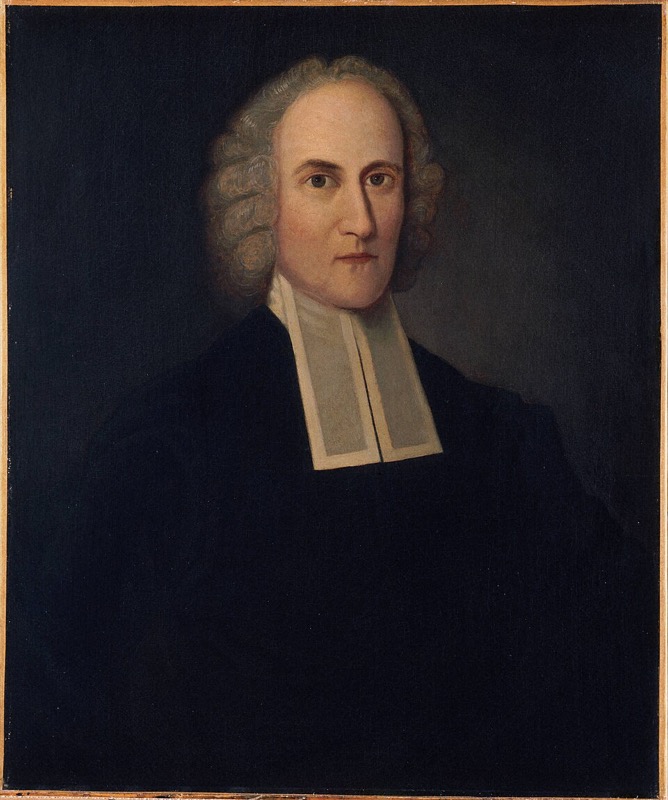
.jpg)
Summary
This paired entry sets Jonathan Edwards's most famous terror sermon beside his narrative of revival in Northampton and neighboring towns. Sinners in the Hands of an Angry God is often remembered for its imagery of danger, wrath, and suspended judgment, but its structure is theological before it is theatrical. Edwards wants hearers to feel the fragility of unconverted life and the urgency of divine mercy. A Faithful Narrative of the Surprising Work of God gives the wider pastoral and observational frame. There Edwards describes awakenings, conversions, doubts, emotional distress, youthful seriousness, communal contagion, and the difficulty of distinguishing true grace from mere enthusiasm. Together the works show revival as both event and problem of interpretation. Edwards welcomes intense religious affections, but he is wary of mistaking bodily agitation or social excitement for spiritual transformation. That makes him a major source for the medical and psychiatric history of revival. Critics in the eighteenth century often described revival enthusiasm in medical terms, while supporters tried to defend strong emotion without surrendering discernment. Edwards stands inside that debate. His prose can intensify fear in ways modern readers may find pastorally dangerous; it can also analyze motives, self-deception, despair, and consolation with unusual psychological precision. Historically, the works belong to the First Great Awakening, transatlantic evangelical networks, print culture, and New England Calvinism. They also reveal the pressure revival placed on ordinary life: families, congregations, young people, and ministers all had to interpret tears, fainting, confession, joy, relapse, and controversy. Read beside Wesley and Whitefield, Edwards is less itinerant performer and more theological diagnostician. He asks what counts as real change when bodies tremble, crowds gather, and language strains to name invisible grace. The answer is never simple, which is why these works remain unsettling. Their intensity is inseparable from their careful suspicion of intensity itself.
Plot or Argument
- Terror presses toward conversion
The sermon presents unconverted life as immediate peril in order to awaken hearers to dependence on mercy.
- Revival becomes observable history
The Narrative reports religious awakenings as events with patterns, testimonies, doubts, and communal consequences.
- Discernment tests strong feeling
Edwards tries to distinguish saving transformation from temporary excitement, social imitation, and bodily agitation.
Lessons
Fear can awaken and wound
Edwards uses fear as a spiritual alarm, not as entertainment. The method raises enduring questions about when fear clarifies danger and when it overwhelms a hearer's capacity for trust.
- How does Edwards justify frightening his hearers?
- What pastoral limits should fear have?
Emotion needs interpretation
The revival narrative refuses to equate intensity with authenticity. Edwards treats tears, trembling, joy, and distress as signs that require patient discernment.
- Why are strong feelings ambiguous for Edwards?
- How would a clinician describe the same events differently?
Conversion is a social event
Awakening spreads through households, youth circles, congregations, and print. Edwards shows private conscience becoming public and contagious.
- How does revival move through a community?
- Where is the line between social contagion and shared conviction?
Context
The works belong to the First Great Awakening, an eighteenth-century evangelical revival that linked New England, Britain, and the Atlantic world through itinerant preaching and print.
Composition
A Faithful Narrative was published in 1737 after Northampton awakenings; Sinners was preached in 1741 at Enfield and later printed.
Reception
The sermon became one of the most anthologized American sermons, while Edwards's revival writings shaped debates about religious affections, enthusiasm, and conversion.
Comparisons
- whitefield-selected-sermons
Whitefield dramatizes evangelical urgency as an itinerant performer, while Edwards analyzes revival with colder theological precision.
- homilies-on-the-statues
Both Chrysostom and Edwards use fear, but Chrysostom addresses civic danger and Edwards addresses eternal judgment.
- wesley-sermons-and-primitive-physick
Wesley shares revival concerns but links spiritual discipline more openly with practical medicine and bodily care.
Quotes
For Students
A reading companion for classical Christian high school students. See the student guide.
Reading Guide
Watch for
- The structure of Sinners: a text from Deuteronomy 32:35 about the foot that slides in due time, a single doctrine that only God's pleasure keeps the wicked out of hell at any moment, ten numbered considerations proving it, and a long application to the hearers at Enfield. Notice how much argument precedes the famous images.
- The chain of images in the application: the dammed-up waters held back only by God's hand, the bow bent and the arrow aimed at the heart, and the spider held over the fire. Ask what each image adds that the numbered considerations could not.
- The turn near the end of Sinners, where Edwards speaks of an extraordinary day of mercy, with Christ calling and many flocking to him from neighboring towns. The sermon's last movement is an invitation, not a sentence.
- In the Faithful Narrative, the two case histories Edwards tells at length: Abigail Hutchinson, a young woman who meets a painful illness and death with settled joy, and Phebe Bartlet, a four-year-old child whose seriousness about prayer he records carefully.
- Edwards's account of how the Northampton awakening of 1734-1735 declined, including the suicide of a respected townsman during a season of melancholy. Watch how Edwards reports trouble and excess alongside the conversions instead of leaving them out.
Key terms and names
- Enfield
- The town, then in Massachusetts and now in Connecticut, where Edwards preached Sinners on July 8, 1741. Hearers were so moved that he could not finish the sermon in the meeting house.
- Northampton
- The Massachusetts town where Edwards was pastor, succeeding his grandfather Solomon Stoddard. The awakening of 1734-1735 there is the main subject of the Faithful Narrative.
- Doctrine and Application
- The standard parts of a Puritan sermon after the reading of the text: the doctrine states and proves a single truth, and the application presses it on the consciences of the hearers. Sinners follows this pattern closely.
- Mere pleasure of God
- The heart of Edwards's doctrine in Sinners: the unconverted are preserved from moment to moment by nothing but God's sovereign forbearance, not by their health, their plans, or the means they use.
- Awakening
- Edwards's word for the stage in which a person becomes deeply concerned about his or her soul. In the Narrative he insists that awakening is not yet conversion, and that many who are awakened fall back.
- Enthusiasm
- In eighteenth-century usage, the claim to direct inspiration or the indulgence of religious passion without sound judgment. Critics charged the revival with it, and Edwards tries throughout the Narrative to distinguish true grace from it.
- First Great Awakening
- The wave of evangelical revival in the 1730s and 1740s in New England, the middle provinces, and Britain, connected to preachers such as George Whitefield and to the print circulation of narratives like Edwards's.
Seminar Questions
- Comprehension What is the text and the doctrine of Sinners in the Hands of an Angry God, and what kinds of things do Edwards's ten considerations rule out as sources of safety?
- Comprehension According to the Faithful Narrative, how did the awakening begin and spread in Northampton, and which groups in the town does Edwards say were affected?
- Comprehension What does Edwards record about Abigail Hutchinson and Phebe Bartlet, and why do you think he chose these two cases to tell at length?
- Interpretation Edwards builds Sinners from a careful logical argument and only then turns to the images of the bow, the waters, and the spider. Why does he order the sermon this way, and would it work with the order reversed?
- Interpretation The same man who preached Sinners wrote the Faithful Narrative, which is cautious about tears, fainting, and sudden joy. How can Edwards intensify religious feeling and distrust it at the same time?
- Interpretation Why does Edwards include the decline of the awakening and the death of a despairing townsman in a narrative meant to defend the revival? What does that choice say about the kind of witness he wants to be?
- Big Question Is fear a legitimate motive for turning to God, or must true faith begin with love?
- Big Question How can a community tell whether a powerful shared experience is genuine conviction or imitation and excitement?
Faith Connections
- Deuteronomy 32:35 (Scripture)
The text of Sinners, from the Song of Moses, warns that the foot of the rebellious will slide in due time. Edwards reads the verse as a picture of people standing on slippery ground, kept from falling only by God's restraint, and builds his whole doctrine from it.
- 1 John 4:1-6 (Scripture)
John tells believers to try the spirits whether they are of God. The Faithful Narrative is Edwards's attempt to do exactly that with the Northampton revival, and he soon expanded the effort in The Distinguishing Marks of a Work of the Spirit of God (1741), built on this chapter.
- Acts 2:37-41 (Scripture)
At Pentecost Peter's hearers are pricked in their hearts and ask what they must do, and thousands are added in a day. Edwards and his readers saw the sudden communal awakenings of the 1730s against this pattern, which is part of why he calls the work surprising.
- John Calvin, Institutes of the Christian Religion, Book III (Great Conversation)
Calvin treats faith, repentance, and assurance as works of the Spirit rather than products of human effort. Edwards stands in this Reformed tradition, which is why the Narrative cares so much about whether an awakened person has truly received grace or merely feels strongly.
Logic and Rhetoric
Central argument: Sinners argues: the unconverted deserve God's judgment and have no claim on his patience; nothing in their strength, prudence, or religious efforts secures them for a moment; therefore they are held from destruction only by God's pleasure, and they should seek Christ now while the day of mercy lasts. The Faithful Narrative adds a second argument: the Northampton awakening produced lasting changes of life in many people of every age and condition; such fruits cannot be explained by excitement alone; therefore the revival, for all its excesses, was a real work of God that deserves careful rather than dismissive judgment.
Rhetorical device: extended analogy. In the application of Sinners Edwards compares the hearer to a spider or loathsome insect held by God over a fire. The image is the climax of a series, after the dammed waters and the bent bow, each translating the abstract doctrine of God's restraint into something the hearer can see.
Debate: Resolved: Sinners in the Hands of an Angry God is fundamentally a sermon of mercy rather than a sermon of wrath.
Writing Prompts
Essay: Readers often remember Sinners only for its terror, yet the same author wrote the cautious, observant Faithful Narrative. Using the ten considerations and the closing invitation of Sinners, and the cases of Abigail Hutchinson and Phebe Bartlet in the Narrative, argue what Edwards believed true conversion was and how he thought preaching could serve it.
Comparison with Sermons on Several Occasions and Primitive Physick: Edwards and John Wesley both led revivals in the 1730s and 1740s, both saw hearers weep and collapse, and both had to judge what such signs meant. Compare how each understands the relation between strong emotion and genuine grace, and argue which offers the wiser guidance for a pastor facing a revival.
Medical Lens
Edwards is essential for studying revival enthusiasm, religious fear, conversion distress, and early modern attempts to interpret intense emotion. His accounts invite psychiatric comparison but should be presented historically rather than diagnostically.
- Sinners, central warning sequence
The sermon intensifies fear to produce urgent self-examination and conversion anxiety.
- Faithful Narrative, descriptions of awakenings
Reports of distress, tears, joy, and communal spread show revival emotion as an interpretive challenge.
Creative Prompts
- Essay
Analyze Edwards as both intensifier and diagnostician of religious emotion.
- Dialogue
Let Edwards and an eighteenth-century physician debate whether revival distress is grace, illness, or both.
Further Reading
Verification notes
Dates, revival context, and the relation between the sermon and Narrative are secure. Quotes are omitted until verified against a public-domain edition.
- Verify exact wording and publication details before adding direct quotations.