Work record
The Passions of the Soul
1649 · Renaissance Early Modern · Philosophy · French
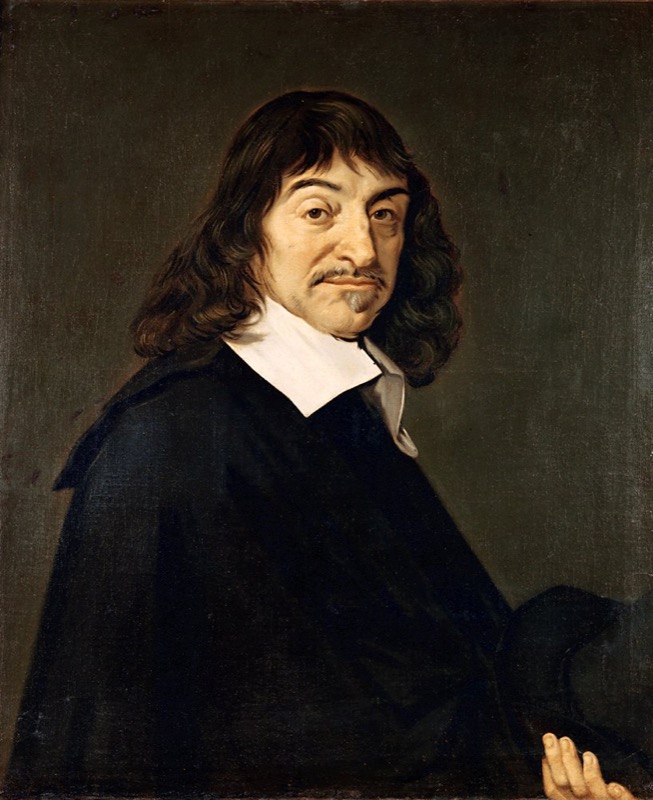

Summary
Les Passions de l'âme, published in Amsterdam and Paris in November 1649, was Descartes's last book and his fullest account of how mind and body interact in emotional life. It grew out of his correspondence with Princess Elisabeth of Bohemia, who in 1643 had asked him how an immaterial thinking soul could move a body, and who later pressed him on the regulation of grief and the good life. The work is organised in 212 short numbered articles divided into three parts and is preceded by an exchange of prefatory letters in which Descartes says he writes not as an orator or moral philosopher but as a physicist, a natural philosopher explaining the passions through the body. Part One sets out the machinery. The body is a self-moving machine heated by the fire in the heart, with blood circulating through the vessels and its finest parts, the animal spirits, flowing from the brain through the nerves to inflate the muscles. Functions that belong to the body must be distinguished from those of the soul, whose only proper activity is thought. Thoughts are either actions of the soul, chiefly volitions, or passions in the broad sense, perceptions received. Passions in the strict sense are perceptions, feelings or emotions of the soul referred to the soul itself and caused, maintained and strengthened by some movement of the spirits. Although the soul is joined to the whole body, its principal seat is a small gland in the middle of the brain, the pineal gland, where the movements of the spirits and the soul's volitions meet. The will cannot command passions directly, but can control them indirectly by representing things associated with other passions, and habit can join new movements of the gland to thoughts, as hunters train dogs. Part Two identifies six primitive passions, wonder, love, hatred, desire, joy and sadness, from which all others are compounded. For each Descartes describes the movements of blood and spirits, the changes in pulse, heat, digestion and colour, and the outward signs such as blushing, pallor, trembling, languor, fainting, laughter and tears. He explains why passions are naturally useful, since they dispose the soul to will what nature tells us is useful, and why they become injurious when excessive. Part Three treats particular passions: esteem and contempt, pride and humility, hope, fear, jealousy, irresolution, courage, remorse, mockery, envy, pity, gratitude, anger, shame and regret. Its centre is generosity, the rightful self-esteem of one who knows that only the free disposition of the will truly belongs to him and resolves always to use it well; generosity is the key to all the virtues and the remedy for disorder in the passions. The book ends with a general remedy: when a passion is aroused, one should wait until the agitation in the blood has calmed before acting, and recognise that the wise person can draw joy even from the passions.
Plot or Argument
- Prefatory letters
An exchange with an unnamed friend in Paris explains why Descartes has written the treatise and why he approaches the passions as a natural philosopher rather than a moralist or rhetorician.
- Part One: The passions in general and the whole nature of man (Art. 1–50)
Bodily functions as mechanism: heart heat, blood circulation, animal spirits, nerves and muscles. Distinction of actions and passions of the soul; definition of passions; the soul joined to the whole body but acting principally through the pineal gland; conflicts once attributed to higher and lower parts of the soul explained as conflicts between volition and the movements of the spirits; the soul's indirect power over passions through habit and training.
- Part Two: The number and order of the passions and the six primitive ones (Art. 51–148)
Passions are classified by the ways objects concern us. Wonder, love, hatred, desire, joy and sadness are defined and their physiology described in detail, including the pulse, heat and digestion. Outward signs, from blushing to laughter and tears, are explained. The natural use of passions in preserving the body-soul union is set beside their excesses, and inner emotions of the soul are distinguished from bodily passions.
- Part Three: The particular passions (Art. 149–212)
Derivative passions including esteem, contempt, pride, humility, veneration, hope, fear, jealousy, courage, cowardice, remorse, derision, envy, pity, gratitude, anger, glory and shame. Generosity is defined as the key to virtue and the remedy against disordered passion, and the treatise closes with practical advice on mastering passions and with the claim that life's good and ill depend on them alone.
Characters
- Princess Elisabeth of Bohemia, correspondent and inspiration
Exiled daughter of the Winter King, living in The Hague, whose questions about mind-body interaction and about grief and illness led Descartes to write the treatise; he sent her an early draft in 1646.
- Queen Christina of Sweden, patron
Young monarch who received the manuscript and invited Descartes to Stockholm in 1649.
- The unnamed Parisian friend, author of the prefatory letters
Correspondent who urges publication; often identified with Claude Clerselier or the Abbé Picot.
Lessons
Emotions have a physiology
Descartes insists on treating passions as a natural philosopher, tracing each to movements of blood and spirits and to changes in pulse, warmth and digestion. Although his mechanism is obsolete, the project of correlating feelings with bodily states is the ancestor of psychophysiology and affective neuroscience.
- Which of Descartes's descriptions of the bodily signs of passion still match modern observation?
- What does Descartes gain by writing 'as a physicist' rather than as a moral philosopher?
Indirect mastery of the passions
The will cannot simply order fear to stop, but it can redirect attention, call up opposing considerations, and build habits that link new responses to old stimuli. Descartes's comparison with training animals anticipates later ideas of conditioning and the cognitive strategies of modern therapy.
- How does Descartes's account of indirect control compare with cognitive reappraisal or exposure therapy?
- Why does he think that even the weakest soul can acquire mastery with enough skill?
Generosity as the key to the virtues
Part Three makes generosity, a well-founded self-esteem based only on the good use of one's free will, the master virtue. It frees a person from envy, contempt and excessive fear because it locates worth in what lies within one's power. The idea combines Stoic themes with a distinctly Cartesian emphasis on the will.
- How does Cartesian generosity differ from pride and from humility?
- Is it psychologically realistic to base self-esteem only on one's resolve to act well?
Wonder as the first passion
Descartes places wonder first among the passions because it arises before we know whether something is good or bad, and he notes that it alone involves no change in the heart and blood. Useful for learning, it becomes harmful in excess as astonishment. The ordering makes curiosity foundational to emotional life.
- Why does wonder have no opposite in Descartes's scheme?
- What is the difference between healthy wonder and the paralysing astonishment he warns against?
Context
Seventeenth-century Europe inherited theories of the passions from Aristotle, the Stoics, Galen and Aquinas, typically dividing them between concupiscible and irascible powers of a sensitive soul. Descartes discarded that faculty psychology and the sensitive soul altogether, explaining bodily life mechanically and reserving the soul for thought. He accepted William Harvey's circulation of the blood (1628) but explained the heartbeat by heat rather than muscular contraction. The treatise belongs to a wider early modern literature on the passions, including works by Coeffeteau, Senault and Hobbes, and was soon answered by Spinoza.
Composition
Elisabeth's letter of May 1643 challenged Descartes to explain mind-body interaction; in 1645 their correspondence turned to her persistent low fever, which Descartes attributed to sadness, and to Seneca's De vita beata. He drafted a short treatise on the passions for her in winter 1645–46 and revised and expanded it, especially Parts Two and Three, before sending it to Queen Christina and publishing it with Louis Elzevir in 1649. An anonymous English translation appeared in London in 1650, the year of his death.
Reception
The treatise shaped seventeenth-century discussion of emotion; Spinoza's Ethics Part III answers it, and the preface to Part V mocks the pineal gland hypothesis. Malebranche, Le Brun's lectures on the expression of the passions, and later physiologists drew on its accounts of bodily signs. In the twentieth century it was often read as the source of a mechanistic 'Cartesian dualism' in medicine, though recent scholars emphasise its account of mind-body union and its therapeutic ethics.
Comparisons
- meditations-on-first-philosophy
The Meditations prove the real distinction of mind and body; the Passions explains how the two nevertheless form one union, answering the problem Elisabeth raised about the Meditations' dualism.
- ethics
Spinoza adopts Descartes's project of a natural science of the emotions and his list of primary affects in modified form (desire, joy, sadness), but rejects free will and the pineal gland, ridiculed in the preface to Ethics Part V.
- the-principles-of-psychology
James's theory that emotion is the feeling of bodily changes makes the body still more primary than Descartes did, but both trace emotions through detailed descriptions of pulse, breathing, blushing and tears.
- galen-selected-works
Descartes keeps Galen's vocabulary of animal spirits and the brain's ventricles while replacing Galenic faculties and humours with mechanical motion and heat.
- letters-from-a-stoic
Descartes and Elisabeth read Seneca together in 1645; Cartesian generosity, which values only what lies in our power, adapts the Stoic distinction between what is and is not up to us while rejecting the Stoic ideal of extinguishing passion.
- a-treatise-of-human-nature
Book II of Hume's Treatise, 'Of the Passions', also classifies direct and indirect passions and makes pride and humility central, but famously makes reason the slave of the passions, inverting Descartes's hope of rational mastery.
Quotes
For Students
A reading companion for classical Christian high school students. See the student guide.
Reading Guide
Watch for
- The prefatory letters, where Descartes says he will treat the passions as a physicist and not as an orator or moral philosopher. Keep asking whether the book keeps that promise once it reaches generosity in Part Three.
- Part One's machinery of heart heat, blood, and animal spirits flowing through nerves to the muscles. Notice how much of human life Descartes assigns to the body alone before he says anything about the soul.
- The pineal gland in the middle of the brain, which Descartes makes the principal seat where soul and body act on each other. Follow how much weight this one small organ has to carry in the argument.
- Descartes's claim near the end of Part One that the will cannot command a passion directly but can change it indirectly, by turning attention to other thoughts and by training new habits, as hunters train dogs.
- The list of six primitive passions in Part Two, with wonder placed first, and the long descriptions of pulse, colour, tears, and laughter that follow.
Key terms and names
- Passions of the soul
- In Descartes's strict sense, perceptions or emotions that the soul refers to itself and that are caused, kept up, and strengthened by movements of the animal spirits. They are things the soul undergoes, as distinct from its own actions, the volitions.
- Animal spirits
- The finest and most active parts of the blood, which Descartes says flow from the brain through the nerves and swell the muscles to move the body. He keeps this old Galenic term but explains it as pure mechanism.
- Pineal gland
- The small gland in the centre of the brain that Descartes names as the principal seat of the soul. Movements of the spirits move the gland and so present passions to the soul, and the soul's volitions move the gland in turn.
- Wonder
- The first of the six primitive passions, a sudden surprise of the soul at something rare or extraordinary. Descartes ranks it first because it arises before we know whether a thing is good or bad for us.
- The six primitive passions
- Wonder, love, hatred, desire, joy, and sadness, from which Descartes says all other passions are compounded. He replaces the older division into concupiscible and irascible powers with this list.
- Generosity
- The rightful self-esteem of a person who knows that nothing truly belongs to him except the free use of his will, and who resolves always to use it well. Part Three makes it the key to all the virtues and the remedy for disordered passion.
- Princess Elisabeth of Bohemia
- The exiled princess whose 1643 question about how an immaterial soul can move a body began the correspondence from which the treatise grew. Her later letters on her own grief and illness turned the inquiry toward therapy.
Seminar Questions
- Comprehension What does Descartes say in Part One belongs to the body alone, and what belongs to the soul?
- Comprehension What are the six primitive passions, and why does Descartes put wonder first?
- Comprehension How does Descartes define generosity in Part Three, and what does he say it can do for the other passions?
- Interpretation Descartes says the soul cannot simply will away fear, but can master it indirectly by thinking of reasons and examples that call up courage. Is this a weakness in his account of free will or a realistic picture of how people change?
- Interpretation Why does Descartes insist that the passions are by nature good and useful, and when does he say they become injurious?
- Interpretation Elisabeth asked how something that thinks but has no extension could move a body. Does the account of the pineal gland actually answer her question, or does it only move the question to a smaller place?
- Big Question If emotions arise from movements of the blood and nerves, are we still responsible for what we feel, or only for what we do with our feelings?
Faith Connections
- Ephesians 4:26 (Scripture)
Paul says be angry and sin not, treating anger as something that can be held without wrongdoing. Descartes likewise holds that the passions are good in themselves and that the moral question is how the will governs them, not whether they should exist.
- James 1:19-20 (Scripture)
James counsels being swift to hear, slow to speak, and slow to wrath. Descartes's closing remedy, to wait until the agitation in the blood has calmed before acting, gives a physiological reason for the same patience.
- Augustine, City of God XIV (Church Fathers)
Against the Stoic ideal of freedom from passion, Augustine argues that fear, desire, grief, and joy are good or evil according to the will that directs them, and that Christ himself wept and grieved. Descartes's refusal to extinguish the passions and his insistence on the right use of the will stand close to this position.
- Thomas Aquinas, Summa Theologiae I-II, qq. 22-48 (Great Conversation)
Aquinas's treatise on the passions divides eleven passions between the concupiscible and irascible powers of a sensitive soul. Descartes knew this scholastic framework and set it aside, so reading the two together shows exactly what the Cartesian body-machine replaced.
Logic and Rhetoric
Central argument: Everything in us that can be explained by heat and motion belongs to the body, and the soul's only proper activity is thought. Passions are thoughts the soul undergoes because the body's spirits move the pineal gland, and they naturally dispose us to will what is useful for the union of soul and body. The will cannot command them directly, but it can redirect them through attention, reasons, and trained habit. Therefore a person who values only the good use of his own free will, which is generosity, can govern his passions and draw joy even from them.
Rhetorical device: analogy. Near the end of Part One (Art. 50) Descartes points to dogs trained so that the sight of a partridge makes them stop and the sound of a gun makes them run toward the bird, against their natural tendency. If habit can rewire an animal without reason, he argues, a human soul can retrain its own passions far more surely.
Debate: Resolved: Descartes succeeds in explaining how the soul and the body act on each other.
Writing Prompts
Essay: Descartes calls generosity the key to all the virtues and the remedy for every disorder of the passions. Using his account of the will in Part One and his treatment of pride, humility, and generosity in Part Three, argue whether generosity as he defines it is a moral virtue or a technique for emotional self-management.
Comparison with Summa Theologica: Aquinas treats the passions as movements of a sensitive soul ordered toward the good by reason and grace, while Descartes treats them as perceptions caused by animal spirits and ruled by the will through habit. Compare the two accounts of anger or of love, and argue which better explains how a person can grow in self-control.
Medical Lens
The Passions of the Soul is a landmark in the history of psychosomatic thinking and of neurophysiology. Descartes, who dissected animals extensively, describes reflex-like movements of animal spirits through the nerves, the heart and circulation, and the pineal gland as the point of mind-body interaction, a localisation that became notorious. His physiological descriptions of fear, sadness, joy and love, with their effects on pulse, appetite, digestion and complexion, and his claim that passions can cause or cure illness, reflect his correspondence with Elisabeth about her low fever and sadness, for which he prescribed cheerful thoughts and diversion. His account of indirect control of passions through habit and association, and his explanation of strange aversions by early impressions, foreshadow conditioning theories and cognitive approaches to anxiety. The common charge that Descartes split body from mind in medicine should be weighed against this book's insistence on their close union.
- Part One, opening articles (c. Art. 7–16)
Brief description of the body's parts: the heat in the heart, circulation of the blood, the animal spirits formed in the brain and travelling through the nerves to move the muscles.
- Part One (c. Art. 30–34)
The soul joined to the whole body but exercising its functions chiefly in a small gland in the middle of the brain, which the spirits move and which in turn moves the spirits.
- Part One, final articles (c. Art. 45–50)
The soul's indirect power over the passions; habits that join movements of the gland to thoughts; the example of training animals; the claim that no soul is so weak that it cannot acquire mastery.
- Part Two (c. Art. 96–111)
Movements of blood and spirits, and changes of pulse, heat and digestion, in love, hatred, desire, joy and sadness; why love is good for health and sadness weakens the appetite.
- Part Two (c. Art. 112–135)
External signs of the passions: changes of colour, trembling, languor, fainting, laughter, tears, groans and sighs, each explained by the motion of blood and spirits.
- Part Two (c. Art. 136)
Strange aversions in some people, such as an inability to bear the smell of roses or the presence of a cat, explained by impressions received in infancy.
- Part Three, closing articles (c. Art. 211–212)
A general remedy: in a strong passion, recall that the imagination exaggerates and wait for the agitation of the blood to calm before acting.
Creative Prompts
- Fiction
Write Princess Elisabeth's side of the 1645 correspondence as a diary: her low fever, her family's misfortunes, and her irritation and gratitude at Descartes's advice to think cheerful thoughts.
- Dialogue
Stage a debate between Descartes and Spinoza over the pineal gland: how can something unextended move something extended?
- Essay
Compare Descartes's account of the bodily signs of fear and sadness with modern psychophysiology of anxiety and depression. Where did mechanism get the phenomena right and the explanation wrong?
- Classroom
Ask students to map Descartes's six primitive passions onto a modern list of basic emotions, and discuss why wonder appears in his list but surprise is treated so differently today.
Further Reading
- The Correspondence between Princess Elisabeth of Bohemia and René Descartes, Lisa Shapiro (ed. and trans.)
- Meditations on First Philosophy, René Descartes
- Treatise of Man, René Descartes
Descartes's earlier mechanical physiology, published posthumously.
- Passion and Action: The Emotions in Seventeenth-Century Philosophy, Susan James
- Descartes' Error, Antonio Damasio
A neuroscientist's critique of Cartesian separation of reason and emotion.
- Descartes: An Intellectual Biography, Stephen Gaukroger
Verification notes
The structure (three parts, 212 articles, six primitive passions, generosity as master virtue) and the history of the Elisabeth correspondence are well established. No public-domain full text is stored for this work, so no quotations are included; content is summarised from knowledge of the text. Article numbers in medicalLens.passages are approximate ('c.') and should be checked against an edition such as Adam and Tannery vol. XI or Stephen Voss's translation.
- Article numbers for the passages listed in medicalLens (especially the strange aversions article, given as c. Art. 136, and the physiology of the primitive passions, c. Art. 96–111).
- Identity of the friend in the prefatory letters (Clerselier or Picot).
- Date of the anonymous 1650 English translation and its suitability as a public-domain source for future quotations.
- Whether Descartes says explicitly that wonder involves no change in heart and blood (Art. 71) in those terms.