Work record
The Misanthrope and Other Plays
1666 (The Misanthrope) · Renaissance Early Modern · Drama · French
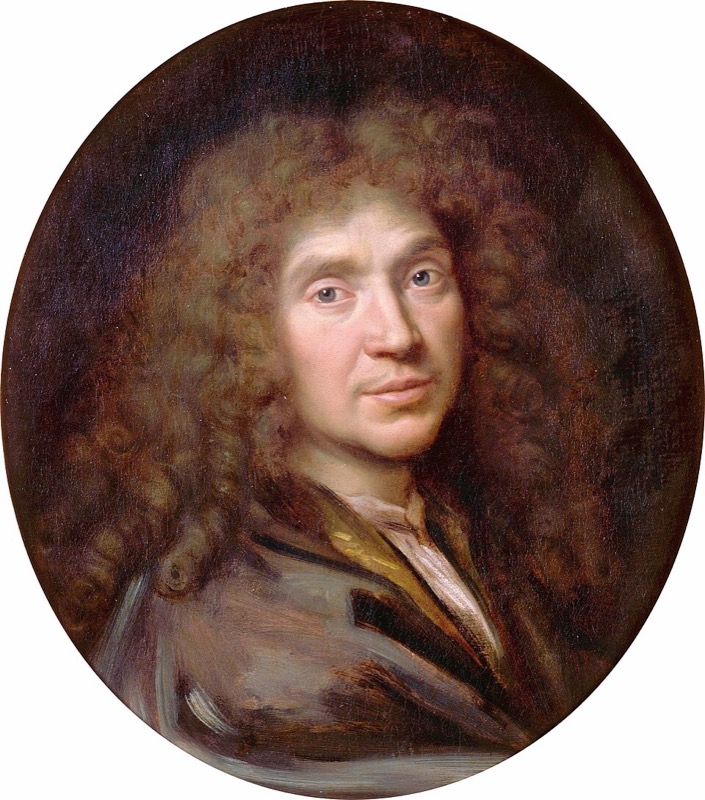
_-_Google_Art_Project_(cropped).jpg)
Summary
The Misanthrope and Other Plays collects several of Molière's comedies; the edition translated by John Wood and David Coward includes The Misanthrope, The Sicilian, Tartuffe, A Doctor in Spite of Himself and The Imaginary Invalid. Together they show the range of Molière's art, from the verse comedy of character to farce, and his satire of hypocrisy, pretension and medicine. In The Misanthrope (1666), written in alexandrine couplets, Alceste is a man who despises the flattery and polite lies of Parisian society and insists on total sincerity. His friend Philinte urges tolerance of human failings. Alceste nevertheless loves Célimène, a witty, flirtatious young widow who thrives on social gossip and keeps several suitors in play. He offends the foppish Oronte by condemning his sonnet, loses a lawsuit he refuses to influence, and is outraged when Célimène's letters mocking each of her admirers are revealed. He offers to marry her if she will retire with him into solitude; she refuses, and he departs to seek a place where one may be honest, leaving Philinte to marry the sincere Éliante. The play's subtitle, The Atrabilious Lover, links Alceste to the black bile of humoral melancholy. Tartuffe (1664–1669) portrays a religious hypocrite who worms his way into the household of the credulous Orgon, who offers him his daughter and signs over his property; Orgon's wife Elmire exposes Tartuffe by letting her husband, hidden under a table, witness his attempted seduction, and only the king's intervention saves the family. The play was banned for five years after protests by religious factions. The Sicilian is a short comic ballet in which a French gentleman frees a Greek slave from her jealous Sicilian master. A Doctor in Spite of Himself (1666) is a farce in which the woodcutter Sganarelle, beaten by his wife's contrivance into pretending to be a physician, cures a girl's feigned dumbness with Latin gibberish and helps her elope with her lover. The Imaginary Invalid (1673), Molière's last play, concerns Argan, a hypochondriac who submits to endless enemas, purges and bleedings from his doctors and wants to marry his daughter to a medical student; his wily maid Toinette disguises herself as a doctor, Argan's grasping second wife is exposed, and the play ends with a mock ceremony making Argan himself a physician.
Plot or Argument
- The Misanthrope (1666)
Alceste's war on social hypocrisy, his love for the coquette Célimène, the sonnet quarrel, the lost lawsuit, the exposure of Célimène's letters and his retreat.
- The Sicilian (1667)
A short comedy-ballet of a lover freeing a captive woman from a jealous guardian.
- Tartuffe (1664–1669)
A pious fraud takes over a household; Elmire stages his exposure; the king's officer restores order.
- A Doctor in Spite of Himself (1666)
Sganarelle, forced to play the doctor, prescribes nonsense with great success and aids young lovers.
- The Imaginary Invalid (1673)
Argan's hypochondria and his doctors' tyranny; Toinette's doctor disguise; Argan's mock graduation as a physician.
Characters
- Alceste, misanthrope
Uncompromising critic of social insincerity, in love with Célimène.
- Célimène, coquette
Witty young widow who enjoys society and admirers.
- Philinte, Alceste's friend
Tolerant man of the world who counsels moderation.
- Tartuffe, hypocrite
Religious impostor who exploits Orgon's credulity.
- Orgon, dupe
Head of household blinded by devotion to Tartuffe.
- Elmire, Orgon's wife
Clear-sighted wife who exposes Tartuffe.
- Dorine, maid in Tartuffe
Outspoken servant who sees through Tartuffe.
- Sganarelle, woodcutter turned doctor
Comic hero of A Doctor in Spite of Himself.
- Argan, hypochondriac
Wealthy man obsessed with his health and enslaved to his doctors.
- Toinette, Argan's maid
Clever servant who disguises herself as a doctor.
- Monsieur Purgon and the Diafoiruses, physicians
Argan's pompous doctor and the father and son physicians proposed as in-laws.
Lessons
Sincerity and sociability
The Misanthrope asks whether complete honesty is compatible with social life. Alceste is admirable and ridiculous at once, and the play declines to settle the question.
- Is Alceste right about society?
- Is Philinte's tolerance wisdom or complacency?
- Why can Alceste not stop loving Célimène?
The disguises of hypocrisy
Tartuffe shows how outward piety can mask greed and lust, and how the credulous cooperate in their own deception.
- Why is Orgon so attached to Tartuffe?
- Is the ending's royal intervention satire or flattery?
The authority of medicine
Molière's medical comedies mock doctors who hide ignorance behind Latin, ritual and confidence, and patients who crave their authority. The satire asks what makes medical knowledge trustworthy.
- Why does Sganarelle succeed as a doctor?
- Is Argan's illness imaginary, or is his need real?
- Which of Molière's medical jokes still apply today?
Context
Molière wrote for the court of Louis XIV and the Parisian public, in an age of salons, religious factions such as the Company of the Holy Sacrament, and a conservative Paris Faculty of Medicine that resisted Harvey's discovery of the circulation of the blood.
Composition
Tartuffe was first performed in a three-act version in 1664 and banned; its final version was permitted in 1669. The Misanthrope and A Doctor in Spite of Himself premiered in 1666. The Imaginary Invalid premiered in February 1673; at its fourth performance Molière fell ill on stage and died that night.
Reception
Molière became the national comic dramatist of France; French is called 'the language of Molière'. His comedies have been continuously performed and translated, notably in English by Richard Wilbur.
Comparisons
- lysistrata-and-other-plays
Aristophanes and Molière are the two great comic satirists of their traditions, mixing farce with attacks on public pretension.
- gullivers-travels
Gulliver's final misanthropy recalls Alceste's; both satires ask whether hating humanity is a sign of wisdom or madness.
- the-satires-of-horace-and-persius
Roman satire's mockery of social follies is a model for Molière's comedy of manners.
- candide
Voltaire continued Molière's satire of physicians, philosophers and religious hypocrites.
- persuasion
Mary Musgrove's complaints and the valetudinarians of Bath descend from Molière's malade imaginaire.
Quotes
For Students
A reading companion for classical Christian high school students. See the student guide.
Reading Guide
Watch for
- The opening debate of The Misanthrope (Act I, Scene 1), where Alceste demands perfect sincerity in every greeting and Philinte defends ordinary courtesy. Every later scene tests one of their two positions.
- Oronte's sonnet in The Misanthrope, Act I, Scene 2. Philinte praises it politely, Alceste tries for several speeches to avoid giving a verdict and then condemns it outright, and the quarrel follows him for the rest of the play.
- The delay before Tartuffe appears. He is discussed by the whole household for two acts before he walks on stage in Act III, so that the audience has judged him before Orgon has.
- Orgon hidden under the table in Tartuffe, Act IV, while Elmire leads Tartuffe on so that her husband can hear for himself what his guest really wants.
- The way doctors talk in A Doctor in Spite of Himself and The Imaginary Invalid: Sganarelle's Latin nonsense, Monsieur Purgon's threats when Argan skips an enema, and the mock graduation ceremony that ends Molière's last play.
Key terms and names
- Alexandrine couplet
- The twelve-syllable rhymed line of French classical verse drama. The Misanthrope and Tartuffe are written in it, so that even Alceste's outbursts and Orgon's foolishness arrive in polished, symmetrical verse.
- The Atrabilious Lover
- The subtitle of The Misanthrope. Atrabilious means full of black bile, the humor associated with melancholy and irritability, and it presents Alceste's sincerity as partly a matter of temperament.
- Célimène's portraits
- The scene in The Misanthrope, Act II, in which Célimène entertains her suitors with quick, cutting sketches of absent acquaintances. The same wit later turns against her when her letters describing each suitor are read aloud.
- Philinte
- Alceste's friend, who accepts human weakness without being corrupted by it and counsels patience with the world. He ends the play engaged to the sincere Éliante.
- Orgon
- The head of the household in Tartuffe, so devoted to his pious guest that he disinherits his son Damis, promises his daughter Mariane to Tartuffe, and signs over his property to him.
- Dorine
- The lady's maid in Tartuffe who sees through Tartuffe from the first and mocks Orgon to his face. Like Toinette in The Imaginary Invalid, she is the servant whose common sense rescues the household.
- Argan
- The hypochondriac of The Imaginary Invalid, who opens the play adding up his apothecary's bills and wants his daughter Angélique to marry a doctor so that he will have medical care in the family.
- Sganarelle
- The woodcutter of A Doctor in Spite of Himself, beaten into admitting he is a physician because his wife Martine has told others he will confess it only under blows. He then succeeds as a doctor by sounding like one.
Seminar Questions
- Comprehension Why is Alceste angry with Philinte at the start of The Misanthrope, and what has Philinte done that seems perfectly ordinary to him?
- Comprehension How does Elmire prove to Orgon what Tartuffe is, and what does Tartuffe do once he is exposed?
- Comprehension What trick does Toinette suggest to Argan in the last act of The Imaginary Invalid, and what does it reveal about his wife Béline and his daughter Angélique?
- Interpretation Alceste is right about almost everything he criticizes, yet he is the figure the audience laughs at. Why does Molière make the honest man comic?
- Interpretation Célimène refuses to leave society and go with Alceste into solitude. Is her refusal simply vanity, or does she see something about Alceste that he cannot see?
- Interpretation Tartuffe was banned for five years because some devout people believed it mocked religion itself. Using Cléante's speeches distinguishing true and false devotion, argue whether the play attacks piety or defends it.
- Interpretation In both medical plays, a person becomes a doctor by putting on the costume and the Latin. What is Molière saying about authority that rests on vocabulary rather than knowledge?
- Big Question Is courtesy that hides some of what we think a form of lying, or a form of charity? Where should a good person draw the line between Alceste's sincerity and Philinte's tact?
Faith Connections
- Matthew 6:1-6, 16-18 (Scripture)
Jesus warns against practicing righteousness in order to be seen by others, in giving, prayer and fasting. Tartuffe is a portrait of exactly this display, and Orgon's admiring account of his loud sighs at church, set beside Dorine's report of his hearty appetite, shows what the Sermon on the Mount warns against.
- Matthew 7:15-20 (Scripture)
False prophets come in sheep's clothing and are known by their fruits. Orgon judges Tartuffe by his outward devotions, while Elmire, Dorine and Cléante judge him by what he does in the house, and the play turns on that difference.
- Ephesians 4:15, 25 (Scripture)
Paul tells Christians to put away falsehood and to speak the truth in love. Alceste has the truth without the love and Philinte has a kind of love that softens the truth, and the verse names what neither of them fully achieves.
- Pascal, Pensées, the fragment on self-love (Brunschvicg 100) (Great Conversation)
Pascal, Molière's contemporary, argues that self-love makes us hate to hear the truth about ourselves, so that people flatter and deceive one another and human society rests on that mutual deceit. Alceste would agree with the diagnosis; Pascal, unlike Alceste, locates the remedy in grace rather than in flight to a desert.
Logic and Rhetoric
Central argument: Each comedy shows a person who has given his judgment over to a single obsession, Alceste to sincerity, Orgon to a pious guest, Argan to his doctors; an obsession of this kind blinds a man to the people around him and makes him easy to deceive or impossible to live with; the remedy in every case comes from clear-sighted figures such as Philinte, Elmire, Dorine and Toinette who keep their common sense; therefore good sense and moderation, not any single virtue pushed to extremes, are what make a household and a society livable.
Rhetorical device: stichomythia. In The Misanthrope, Act I, Scene 2, Alceste and Oronte trade short, sharp lines over the sonnet as politeness gives way to open challenge, and in Tartuffe, Act I, Scene 4, Orgon answers each piece of news about his ailing wife by asking only about Tartuffe. The rapid alternation turns a fixed idea into a comic rhythm.
Debate: Resolved: Philinte, not Alceste, is the wiser man in The Misanthrope.
Writing Prompts
Essay: Alceste, Orgon and Argan are each ruled by a single idea that cuts them off from the people who love them. Compare two of them and argue whether Molière's comedies teach that excess itself is the fault, or whether each man's chosen ideal is the real problem.
Comparison with Gulliver's Travels: Gulliver returns from the Houyhnhnms unable to bear his own family, and Alceste leaves Paris to find a place where a man may be honest. Compare the two men's disgust with human society and argue whether Swift and Molière present that disgust as wisdom, folly, or a mixture of both.
Medical Lens
Molière is the great satirist of seventeenth-century medicine. The Imaginary Invalid opens with Argan totting up his apothecary's bills for enemas and purges, and portrays doctors who bleed, purge and quote Latin authorities while refusing new ideas: the younger Diafoirus boasts of opposing the circulation of the blood. Its final ceremony, a mock doctoral graduation in macaronic Latin, ridicules the Paris Faculty of Medicine. A Doctor in Spite of Himself shows that confidence and jargon can pass for medical knowledge. The Misanthrope's subtitle, L'Atrabilaire amoureux, places Alceste within humoral theory as a man of black bile, a melancholic temperament; his gloom and need for solitude invite psychological readings, best framed as interpretations of a comic type. Molière, chronically ill with a lung disease in his later years, collapsed while playing Argan, a famous irony in theatre and medical history.
- The Misanthrope, subtitle and Act 1, Scene 1
Alceste's black humour and contempt for society, framed by the subtitle 'The Atrabilious Lover' (atrabile = black bile).
- A Doctor in Spite of Himself, Act 2
Sganarelle, disguised as a physician, diagnoses Lucinde's feigned dumbness with Latin nonsense and reversed anatomy.
- The Imaginary Invalid, Act 1, Scene 1
Argan audits his apothecary's bill for enemas, purges and draughts.
- The Imaginary Invalid, Act 2
The Diafoiruses visit; young Thomas Diafoirus boasts of rejecting the circulation of the blood; the doctors examine Argan.
- The Imaginary Invalid, Act 3
Monsieur Purgon curses Argan with a cascade of diseases; Toinette, disguised as a doctor, prescribes absurd remedies; Argan feigns death to test his family.
- The Imaginary Invalid, final interlude
Burlesque Latin ceremony admitting Argan to the medical profession.
Creative Prompts
- Adaptation
Rewrite the Diafoirus scene with modern specialists and their jargon.
- Essay
Is Alceste depressed, principled or merely difficult? Discuss the risks of diagnosing a comic character.
Further Reading
- The School for Wives, Molière
- Tartuffe (trans. Richard Wilbur), Molière
- The Greatest Benefit to Mankind: A Medical History of Humanity, Roy Porter
- Molière: A Theatrical Life, Virginia Scott
Verification notes
The plays and Molière's life are well documented. The exact contents of this volume are recalled from the Wood and Coward edition and should be checked. No quotations are included because I cannot reproduce a public-domain translation (e.g. Van Laun 1875) verbatim with confidence.
- Exact contents of the 'The Misanthrope and Other Plays' volume (recalled: The Misanthrope, The Sicilian, Tartuffe, A Doctor in Spite of Himself, The Imaginary Invalid).
- Whether Thomas Diafoirus' rejection of the circulation of the blood is in Act 2, Scene 5.
- Date of the premiere of The Sicilian (recalled as 1667).