Work record
Discourse on Method
1637 · Renaissance Early Modern · Philosophy · French
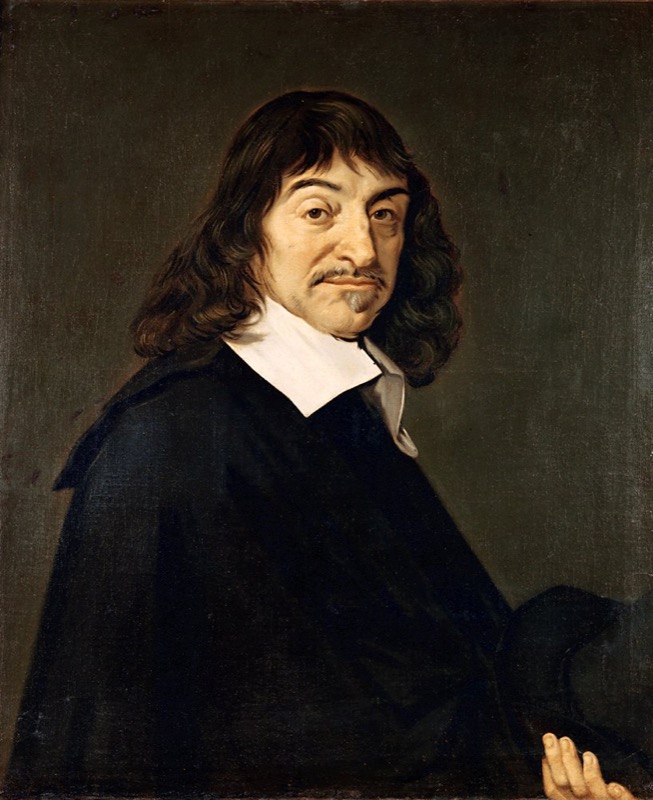

Summary
The Discourse on the Method of Rightly Conducting One's Reason and Seeking Truth in the Sciences was published anonymously in Leiden in 1637 as a preface to three scientific essays, the Dioptrics, the Meteors and the Geometry. Descartes wrote it in French rather than Latin so that readers using their natural reason, including women, could judge it without scholastic training, and he presented it not as a treatise but as a history or fable of his own mind. Part I opens with the ironic claim that good sense is the most equally distributed thing in the world, and argues that differences in opinion come from how people conduct their reason, not how much they have. Descartes reviews his education at one of the most celebrated schools in Europe and finds that only mathematics gave certainty, while philosophy offered nothing undisputed. He resolved to study the great book of the world, travelled, served in armies and learned how customs differ, then decided to make himself his own object of study. Part II recalls a winter day in Germany in 1619, spent alone in seclusion, when he reflected that works made by a single architect are better ordered than those patched by many hands, and resolved to rebuild his own beliefs from the foundations. He sets out four rules: accept nothing as true that is not clearly and distinctly known, divide each difficulty into parts, proceed in order from simplest to most complex, and make complete enumerations. Part III supplies a provisional morality to live by while doubting: obey the laws and customs of his country and moderate opinions; act resolutely on doubtful opinions once chosen, like travellers lost in a forest who should walk straight in one direction; master himself rather than fortune; and devote his life to cultivating reason. Part IV condenses the metaphysics later developed in the Meditations. Rejecting everything open to the slightest doubt, including the senses, demonstrations and waking experience that might be dreamed, he finds that while he doubts he must exist: I think, therefore I am. He concludes that he is a thinking substance distinct from the body, proves God's existence from his idea of a perfect being, and uses God's perfection to guarantee clear and distinct ideas. Part V summarizes his suppressed physics, The World, and gives a detailed mechanical account of the heart and the circulation of the blood, crediting William Harvey with circulation while disputing his explanation of the heartbeat. Descartes argues that animal bodies are machines and offers two tests, flexible use of language and general-purpose reason, that would distinguish any human from an automaton and humans from animals, concluding that the human soul is independent of the body. Part VI explains why he withheld The World after Galileo's condemnation in 1633, sets out his hope that science will make us masters and possessors of nature, and names medicine, the preservation of health, as its chief aim.
Plot or Argument
- Part I: An education weighed and found wanting
Good sense is equally distributed; method is what matters. Descartes evaluates the subjects of his schooling, praises mathematics, rejects disputed philosophy, and turns from books to travel and the great book of the world.
- Part II: The day of solitude and the four rules
Detained by winter in Germany, Descartes resolves to rebuild his beliefs as a single architect would plan a town. He adopts four rules of evidence, analysis, order and enumeration, inspired by geometry and algebra.
- Part III: A provisional morality
While his beliefs are under reconstruction he will obey laws and customs, act firmly like a lost traveller walking straight, change his desires rather than the world, and devote himself to reason. After nine years of travel he retires to a quiet country he leaves unnamed, the Dutch Republic.
- Part IV: Cogito, soul and God
Radical doubt yields the certainty of 'I think, therefore I am'; the self is a substance whose essence is thinking, distinct from the body. The idea of a perfect being proves God, who guarantees clear and distinct perception.
- Part V: Physics, the heart and the beast-machine
A summary of The World; a detailed explanation of cardiac motion by heat and rarefaction of blood; Harvey's circulation endorsed with evidence from ligatures; animal spirits and nerves; animals as automata; language and reason as marks of the rational soul.
- Part VI: Why publish, and what science is for
News of Galileo's condemnation made him withhold his physics. He publishes these essays because knowledge should make us masters and possessors of nature and, above all, preserve health, and he invites readers' objections and help with experiments.
Characters
- The narrator (Descartes), autobiographical subject
Presents his intellectual life as a story to be imitated or not, from schoolboy to soldier to solitary thinker.
- William Harvey, cited authority
'A physician of England' whom Descartes credits with discovering the circulation of the blood, while offering a different account of the heart's motion.
- Galileo Galilei, unnamed precedent
His condemnation by 'persons to whom I greatly defer' in 1633 is why Descartes suppressed The World.
- The lost travellers, moral image
Travellers lost in a forest who should keep walking in one direction illustrate the maxim of resolute action under uncertainty.
Lessons
Rebuild beliefs from foundations you can trust
Descartes's method is to clear away whatever admits doubt and proceed in careful order from what is evident. It teaches a habit of checking premises before building on them, even if his own foundations proved contestable.
- Is it possible to doubt everything at once, or only one belief at a time?
- Which of the four rules is most useful in clinical reasoning, and which is hardest to follow?
- What does Descartes gain by presenting his method as autobiography rather than as a rulebook?
Act decisively even when certainty is unavailable
The provisional morality separates the search for truth from the need to act. Like the traveller lost in the forest, one should choose the most probable path and keep to it rather than being paralyzed by doubt.
- When is persistence on a doubtful course wise, and when is it stubbornness?
- How does the third maxim, to change one's desires rather than the world, compare with Stoic and cognitive-behavioural ideas?
Medicine as the purpose of the new science
Part VI hopes that knowing nature will cure diseases of body and mind and perhaps slow ageing, because the mind depends closely on the body's organs. Descartes makes medicine the main reason for doing science.
- How can Descartes say the mind is distinct from the body and also that wisdom may be sought in medicine?
- What has the dream of 'mastering nature' delivered in medicine, and at what cost?
Language marks the difference between mind and mechanism
Part V's two tests, flexible speech and general-purpose reason, are Descartes's criteria for telling a thinking being from an automaton. They anticipate debates about artificial intelligence and animal minds.
- Would a modern language model pass or fail Descartes's tests?
- What do Descartes's remarks about deaf people inventing signs show about his view of language?
- What follows morally from Descartes's view that animals are machines?
Context
Descartes wrote amid the Thirty Years' War, the collapse of Aristotelian natural philosophy, the revival of ancient scepticism through Montaigne and others, and the Catholic Church's condemnation of Galileo. In medicine, Harvey's De motu cordis (1628) had just challenged Galenic physiology. Descartes's mechanism offered a new framework in which bodies, including human bodies, could be explained like clocks.
Composition
Descartes completed his physical treatise The World (including the Treatise on Man) in 1633 but suppressed it after learning of Galileo's condemnation. He then prepared three essays showing results of his method, and wrote the Discourse as their preface. The volume was printed by Jan Maire in Leiden in 1637 without the author's name. A Latin translation by Étienne de Courcelles, revised by Descartes, appeared in 1644. The Veitch translation used here dates from the nineteenth century.
Reception
The Discourse provoked objections from scholastics and mathematicians, and the Dutch universities of Utrecht and Leiden saw bitter controversies over Cartesianism in the 1640s. The Meditations (1641) developed Part IV in response. Cartesian mechanism dominated much of later seventeenth-century physiology, while Harvey and others rejected Descartes's heat theory of the heartbeat. The cogito and mind-body dualism remain the reference point for modern philosophy of mind and debates in psychiatry about the mental and the physical.
Comparisons
- meditations-on-first-philosophy
Part IV is a compressed preview of the Meditations; the later work adds the evil demon, the wax, and fuller arguments for God and the real distinction of mind and body, addressed to theologians in Latin.
- the-passions-of-the-soul
Part V's animal spirits and nervous machinery are developed in Descartes's last book into a physiology of emotion centred on the pineal gland, with remedies for excessive passions.
- novum-organum
Bacon also wants science to relieve the human condition and distrusts inherited learning, but builds knowledge by inductive collection of instances where Descartes deduces from clear first principles.
- essays-montaigne
Montaigne's self-portrait and sceptical 'what do I know?' supply both the autobiographical form and the doubt that the Discourse tries to overcome with method.
- an-essay-concerning-human-understanding
Locke inherits Descartes's 'idea' vocabulary and focus on the mind's own operations but rejects innate ideas and the claim that the essence of the soul is to think continuously.
- galen-selected-works
Part V's mechanical heart, driven by heat and governed by valves, is a direct challenge to Galen's physiology of faculties, innate heat and ebbing blood.
Quotes
Frequently cited
“The first was never to accept anything for true which I did not clearly know to be such”
Frequently cited
“I think, therefore I am (COGITO ERGO SUM”
“Good sense is, of all things among men, the most equally distributed; for every one thinks himself so abundantly provided with it, that those even who are the most difficult to satisfy in everything else, do not usually desire a larger measure of this quality than they already possess”
“The greatest minds, as they are capable of the highest excellences, are open likewise to the greatest aberrations”
“resolved no longer to seek any other science than the knowledge of myself, or of the great book of the world”
“imitating in this the example of travelers who, when they have lost their way in a forest, ought not to wander from side to side, far less remain in one place, but proceed constantly towards the same side in as straight a line as possible”
“My _third_ maxim was to endeavor always to conquer myself rather than fortune, and change my desires rather than the order of the world”
“the mind by which I am what I am, is wholly distinct from the body, and is even more easily known than the latter”
“I need only mention in reply what has been written by a physician of England, who has the honor of having broken the ice on this subject”
“Such persons will look upon this body as a machine made by the hands of God, which is incomparably better arranged, and adequate to movements more admirable than is any machine of human invention”
“they could never use words or other signs arranged in such a manner as is competent to us in order to declare our thoughts to others”
“and thus render ourselves the lords and possessors of nature”
“for the mind is so intimately dependent upon the condition and relation of the organs of the body, that if any means can ever be found to render men wiser and more ingenious than hitherto, I believe that it is in medicine they must be sought for”
“we could free ourselves from an infinity of maladies of body as well as of mind, and perhaps also even from the debility of age”
For Students
A reading companion for classical Christian high school students. See the student guide.
Reading Guide
Watch for
- The ironic first sentence of Part I about good sense being equally distributed, and Descartes's review of his schooling, where only mathematics earns his full trust.
- The winter day in Germany in Part II, spent alone in a stove-heated room, and the image of a town planned by one architect compared with one that grew by many hands. Then the four rules that follow from it.
- The provisional morality of Part III, especially the travellers lost in a forest, adopted so that he can live and act while his beliefs are being rebuilt.
- The sequence of doubts in Part IV that ends in I think, therefore I am, and the quick steps from there to the soul's distinction from the body and the existence of God.
- The long account of the heart in Part V, the two tests of language and reason that would separate a human being from any machine, and the hope in Part VI that medicine will be the chief fruit of the new science.
Key terms and names
- Good sense (bon sens)
- The power of judging well and distinguishing true from false, which Descartes says in Part I is equal in all people. Differences of opinion arise from how reason is conducted, which is why the book is about method.
- The four rules
- The method of Part II: accept nothing not clearly known to be true, divide difficulties into parts, proceed in order from simple to complex, and make complete enumerations so that nothing is omitted.
- Provisional morality
- The maxims of Part III by which Descartes lives while doubting: obey the laws and customs of his country, act resolutely once he has chosen, master himself rather than fortune, and devote his life to cultivating reason.
- Cogito
- Short for cogito ergo sum, I think, therefore I am, the first certainty Descartes reaches in Part IV. Even if everything else is doubted, the one doubting must exist while he doubts.
- Clear and distinct ideas
- Ideas so evident that the mind cannot doubt them. In Part IV Descartes makes them the standard of truth and grounds their reliability in the perfection of God, who is no deceiver.
- Thinking substance
- Descartes's account in Part IV of what he is: a thing whose whole nature is to think and which needs no place or body to exist. It is the ground of his claim that the soul is distinct from the body.
- Beast-machine
- The view in Part V that animal bodies are automata moved by the arrangement of their organs. Descartes's two tests, flexible use of language and reason applicable to every situation, mark what no animal or machine possesses.
- Masters and possessors of nature
- The aim Descartes sets for practical science in Part VI, the knowledge of nature's forces put to use for human life. He names the preservation of health as its chief good.
Seminar Questions
- Comprehension What does Descartes find lacking in the subjects he studied at school, and why does mathematics alone satisfy him?
- Comprehension What are the four rules of method in Part II, and what image of building does Descartes use to explain why he resolved to start his beliefs over?
- Comprehension In Part IV, what does Descartes doubt, what can he not doubt, and how does he move from his own existence to the existence of God?
- Interpretation Descartes calls the Discourse a history or fable of his own mind, offered for imitation or not. Why tell a philosophy as autobiography, and how does that choice affect your trust in it?
- Interpretation The provisional morality of Part III tells him to obey the customs of his country while he doubts everything. Is this consistent with radical doubt, or does it show that some things cannot be doubted in practice?
- Interpretation In Part V Descartes argues that language and general reason separate human beings from animals and machines. Are his two tests convincing, and what do they assume about what a soul is?
- Interpretation Descartes hopes science will make us masters and possessors of nature and free us from many maladies of body and mind. How does this hope relate to the method and metaphysics of the earlier parts?
- Big Question Is it possible, or wise, to begin knowledge by doubting everything one has been taught? What should a person take on trust, and what must be tested for oneself?
Faith Connections
- Augustine, City of God XI.26 (Church Fathers)
Augustine answers the sceptics that if he is deceived, he exists, for one who does not exist cannot be deceived. Descartes's cogito in Part IV reaches a strikingly similar certainty, and contemporaries pointed out the resemblance; the difference lies in how much each builds on it.
- 1 Thessalonians 5:21 (Scripture)
Paul tells the Thessalonians to test all things and hold fast what is good. Descartes's first rule, accepting nothing not clearly known, is a rigorous version of testing, though Paul's counsel keeps hold of what has been received while Descartes sets everything aside first.
- Genesis 1:28 and Genesis 2:15 (Scripture)
Man is given dominion over the earth and set in the garden to work it and keep it. Descartes's hope in Part VI that we become masters and possessors of nature for the sake of health echoes the first verse; the second adds a note of stewardship that students can weigh against his language.
- Pascal, Pensees (Great Conversation)
Pascal, himself a mathematician, complained that Descartes would gladly have done without God in his philosophy except to give the world a first push. The charge sets a fair test for Part IV: is Descartes's God a living God or a guarantor of clear ideas?
Logic and Rhetoric
Central argument: Good sense is equal in all, so error comes from method rather than from lack of reason. Inherited opinions are a patchwork of many hands and contain much that is doubtful. Therefore one should set aside every belief open to the least doubt and rebuild from what is certain. The one belief that survives all doubt is that I who doubt must exist; from this I know I am a thinking thing, and from my idea of a perfect being I know God exists, who guarantees that clear and distinct ideas are true. On this foundation, following four rules, reason can build a science of nature useful above all to medicine.
Rhetorical device: extended metaphor. In Part II Descartes compares inherited beliefs to an ancient town grown up haphazardly, and himself to an architect who would rather build on cleared ground; in Part III he adds that one who rebuilds his house must have other lodgings meanwhile, which is why he needs a provisional morality. The building metaphor carries the argument from doubt to method to practical life.
Debate: Resolved: Descartes's method of doubting everything is a sound way to begin the search for truth.
Memory Work
I think, therefore I am (COGITO ERGO SUM
My _third_ maxim was to endeavor always to conquer myself rather than fortune, and change my desires rather than the order of the world
Writing Prompts
Essay: Descartes presents the Discourse as the story of one mind rather than a set of commands for all. Using Part I's review of his education, Part II's building image, and Part III's provisional morality, argue whether his method is meant for everyone or only for a rare kind of thinker.
Comparison with Essays: Montaigne, whom Descartes had read, also made his own mind the subject of his book and doubted the learning of the schools, but he rested in doubt where Descartes sought certainty. Compare how each writer uses doubt and self-examination, and argue which offers a wiser path to knowledge and to living well.
Medical Lens
The Discourse is a key text in the history of physiology and of psychiatry's mind-body problem. Part V is an early printed endorsement of Harvey's circulation of the blood by a major philosopher, supported with evidence from surgeons' practice of tying the arm before bloodletting, combined with Descartes's own mistaken theory that the heart beats because blood is rarefied by heat. Its account of the body as a machine and of animals as automata shaped mechanistic medicine and later debates over animal experimentation. Part IV's dualism is often blamed for a split between 'mental' and 'physical' illness, though Part VI insists that the mind depends intimately on the body and looks to medicine to improve wisdom, cure maladies of mind and body, and slow ageing. That double message makes the book useful for teaching the history of biological psychiatry.
- Part IV
Methodical doubt including the possibility that waking experience is a dream; the conclusion that the thinking self is distinct from the body.
- Part V
Detailed mechanical account of cardiac motion, valves and auricles, explained by heat rarefying the blood, with an invitation to dissect the heart of a large animal.
- Part V
Harvey credited with circulation; evidence from surgeons who tie the arm above the vein they open in bloodletting.
- Part V
Animal spirits, nerves, muscles and the brain explained mechanically; animals as automata; speech and reason as signs of a rational soul, with remarks on deaf people's sign language.
- Part VI
Health as the first good; the mind's dependence on bodily organs; hope that medicine could cure diseases of body and mind and the debility of age.
Creative Prompts
- Dialogue
Stage a conversation between Descartes and William Harvey over a dissected heart, in which they agree about circulation and disagree about why the heart beats.
- Essay
Was Descartes's dualism bad for psychiatry? Use Part IV and Part VI together to argue that the Discourse is more ambivalent than its reputation.
- Fiction
Write the winter day in 1619 that Part II describes, when a young soldier sits alone and decides to rebuild everything he believes.
- Classroom
Give students transcripts from a chatbot and ask them to apply Descartes's two tests from Part V, then discuss whether the tests still work.
Further Reading
- Meditations on First Philosophy, René Descartes
- Treatise on Man, René Descartes
The physiological part of the suppressed World, published posthumously.
- On the Motion of the Heart and Blood in Animals, William Harvey
The 1628 work Descartes cites.
- Descartes: An Intellectual Biography, Stephen Gaukroger
- Descartes: The Project of Pure Enquiry, Bernard Williams
- Descartes' Error, Antonio Damasio
A neuroscientist's critique of mind-body dualism.
Verification notes
Contents, publication history and arguments are well established. All quotes were located verbatim by hand in the stored Veitch translation (Project Gutenberg #59) and have not yet been run through scripts/verify-quotes.mjs. Note that this translation omits the famous 'stove-heated room' (poêle) of Part II, rendering the passage as remaining 'the whole day in seclusion'; the summary follows the translation.
- Printer's name (Jan Maire, Leiden) and whether the 1637 volume appeared in June.