Work record
The Death of Ivan Ilyich
1886 · 19th Century · Novella · Russian

Summary
The Death of Ivan Ilyich begins at the end. In the law courts, colleagues of Ivan Ilyich Golovin read in the newspaper of his death, and each thinks first of the promotions and transfers it will bring. At the funeral his friend Peter Ivanovich feels severe before the corpse, and the widow, Praskovya Fedorovna, questions him about how to obtain a larger pension, while recounting how her husband screamed incessantly for three days before he died. Only the young servant Gerasim speaks simply of death as something that comes to everyone. The story then goes back to tell Ivan Ilyich's life, which, the narrator says, was most simple and most ordinary and therefore most terrible. The son of an official, he studied law, became a correct, pleasant, ambitious magistrate, and married a suitable woman. When marriage brought quarrels and demands, he retreated into his work and the agreeable world of official life and cards. After a setback he obtained a lucrative post in St Petersburg and threw himself into decorating a fine apartment. Climbing a ladder to show an upholsterer how to hang a curtain, he slipped and knocked his side against a window frame. The bruise healed, but soon he had a strange taste in his mouth and a growing pain in his side. He consulted a celebrated doctor, who treated him exactly as Ivan Ilyich treated defendants in court, with a show of importance and an evasion of the one question that mattered, whether his condition was dangerous. Diagnoses multiplied: a floating kidney, chronic catarrh, the vermiform appendix. Ivan Ilyich grew irritable, then frightened, and finally understood that he was dying. He could not grasp this: the syllogism that all men are mortal had always seemed correct for others but not for himself. What tormented him most was the lie, kept up by his wife, his daughter, his doctors and friends, that he was not dying but merely ill and would recover if he followed treatment. Only Gerasim, the healthy young peasant servant, did not lie; he sat for hours holding Ivan Ilyich's legs on his shoulders to ease the pain, and said simply that all must die. Ivan Ilyich began to ask whether his whole life had been wrong. For three days he screamed in agony, struggling against being pushed into a black sack. Then, at the end, he felt his son kiss his hand, pitied his family, and sensed the dark give way to light. Searching for his old fear of death, he could not find it. In place of death there was light. Someone said it is finished; he heard and repeated to himself that death is finished, and he died.
Plot or Argument
- Ch. 1: the funeral
Colleagues calculate promotions; Peter Ivanovich attends the funeral; the widow discusses pensions; Gerasim speaks plainly of death.
- Ch. 2–3: an ordinary life
Ivan Ilyich's correct career, convenient marriage, retreat into work, and triumphant move to a fine new post and apartment.
- Ch. 4–5: the illness
The fall from the ladder, the pain in the side, the evasive doctors and competing diagnoses, and growing terror.
- Ch. 6–7: confrontation with mortality and the lie
The Caius syllogism; isolation within the family's pretence; the comfort of Gerasim's truthful care.
- Ch. 8–11: the reckoning
Doctors' visits, opium and morphine, the family's theatre outing; Ivan Ilyich doubts that his life was right.
- Ch. 12: three days and the light
Three days of screaming, then pity for his family, the end of fear, and light in place of death.
Characters
- Ivan Ilyich Golovin, protagonist
Respectable, ambitious magistrate whose fatal illness forces him to judge his life.
- Praskovya Fedorovna, Ivan Ilyich's wife
Self-centred wife absorbed in social appearances and the inconvenience of his illness.
- Gerasim, servant
Young peasant butler's assistant whose honest, cheerful care is Ivan Ilyich's only comfort.
- Peter Ivanovich, colleague and friend
Fellow official whose awkward visit to the funeral frames the story.
- Lisa, daughter
Young woman impatient with her father's illness, about to be engaged.
- Vasya, son
Schoolboy who alone shows real pity for his father.
- The celebrated doctor, physician
Specialist whose evasive, self-important manner mirrors Ivan Ilyich's own as a judge.
Lessons
The ordinary life examined
Tolstoy's target is not crime but propriety: a life organized for comfort and approval rather than love. The story asks readers to examine their own 'correct' lives.
- Why does Tolstoy call Ivan Ilyich's life 'most terrible'?
- What, specifically, was wrong with it?
- Is the judgement fair?
The cruelty of the lie
The family's and doctors' refusal to acknowledge his dying isolates Ivan Ilyich more than the pain does. The story is a classic text on honest communication with the dying.
- Why do the others maintain the lie?
- What does Gerasim offer that no one else can?
- How do modern clinicians balance hope and honesty?
Care as presence
Gerasim's holding of Ivan Ilyich's legs is a simple bodily kindness that eases pain. Tolstoy presents compassionate presence as the core of care.
- Why does the posture with his legs raised relieve him?
- How does Gerasim's attitude to death differ from the gentry's?
Context
The story reflects the professional class of the Russian civil service and judiciary after the legal reforms of the 1860s, and Tolstoy's post-conversion hostility to official life and to the medical profession. It was partly inspired by the death of a Tula judge, Ivan Ilyich Mechnikov, brother of the biologist Élie Metchnikoff.
Composition
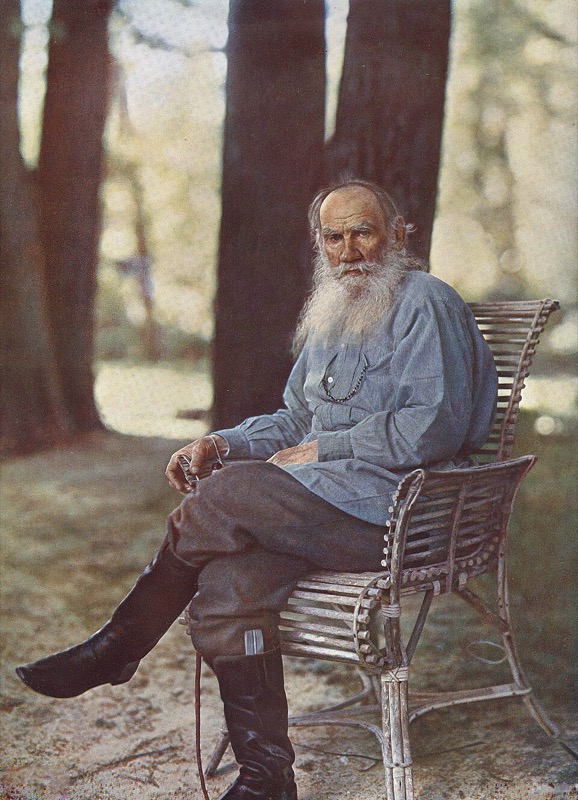
Written between 1882 and 1886 and first published in 1886 in the twelfth volume of Tolstoy's collected works, edited by his wife Sophia.
Reception
Widely regarded as one of the greatest novellas ever written. It has become a central text in medical education, palliative care and the medical humanities, and in existential philosophy; Heidegger cites it in Being and Time on being-towards-death.
Comparisons
- death-of-a-salesman
Two portraits of ordinary men facing the emptiness of lives built on social success; Willy Loman's death and Ivan Ilyich's are both reckonings with a false idea of the good life.
- meditations
Marcus constantly rehearses death as natural and universal, the truth Ivan Ilyich cannot accept until the end.
- the-last-days-of-socrates
The Phaedo's serene philosophical death is the antithesis of Ivan Ilyich's terror, yet both end in acceptance.
- the-meek-one
Dostoyevsky's narrator, like Ivan Ilyich, reviews his life in the presence of death and discovers his own failure of love.
- confessions
Tolstoy's own A Confession, written in Augustine's tradition, describes the crisis that produced this story.
Quotes
Frequently cited
“Ivan Ilych's life had been most simple and most ordinary and therefore most terrible.”
Frequently cited
“There was no fear because there was no death. In place of death there was light.”
“"Death is finished," he said to himself. "It is no more!"”
For Students
A reading companion for classical Christian high school students. See the student guide.
Reading Guide
Watch for
- The order of the story: Chapter 1 begins with the news of Ivan Ilyich's death and his funeral, and only Chapter 2 goes back to tell his life. Ask why Tolstoy tells the end first.
- Peter Ivanovich at the funeral, struggling with the springs of a low pouffe while the widow asks how to obtain a larger pension.
- The visit to the celebrated doctor in Chapter 4, who treats Ivan Ilyich exactly as Ivan Ilyich treated defendants in court.
- The syllogism about Caius in Chapter 6, which Ivan Ilyich had always accepted for others but cannot apply to himself.
- Gerasim holding Ivan Ilyich's legs on his shoulders in Chapter 7, and the final chapter's black sack, the son's kiss, and the light.
Key terms and names
- Gerasim
- The young peasant servant who cares for the dying man cheerfully and without pretence. He alone says plainly that all must die, and his presence is Ivan Ilyich's only comfort.
- The Caius syllogism
- The textbook argument Ivan Ilyich learned from Kiesewetter's logic: Caius is a man, men are mortal, therefore Caius is mortal. In Chapter 6 he sees that he never believed it applied to Vanya, the boy he once was.
- The lie
- The pretence kept up by his wife, daughter, doctors, and friends that Ivan Ilyich is only ill and will recover. Tolstoy makes it the chief torment of his last months.
- Comme il faut
- French for as it should be, the standard of propriety Ivan Ilyich follows in his career, marriage, and furnishings. His life is correct in every outward way and empty at the centre.
- The black sack
- The image in Chapter 12 of the hole into which Ivan Ilyich feels himself being pushed. What prevents him from passing through is his insistence that his life had been a good one.
- Praskovya Fedorovna
- Ivan Ilyich's wife, whose concern at the funeral is the pension and whose concern during his illness is how it inconveniences her. She embodies the world he chose.
Seminar Questions
- Comprehension What are the first thoughts of Ivan Ilyich's colleagues when they read of his death in Chapter 1?
- Comprehension How does Ivan Ilyich injure himself, and how do the doctors respond to his questions about his condition?
- Comprehension What does Gerasim do for Ivan Ilyich, and why does his care bring comfort when his family's does not?
- Interpretation The narrator says Ivan Ilyich's life was most simple and most ordinary and therefore most terrible. Why should an ordinary life be terrible?
- Interpretation Why does Tolstoy make the celebrated doctor behave toward Ivan Ilyich exactly as Ivan Ilyich behaved toward people in his court?
- Interpretation In Chapter 12, Ivan Ilyich stops struggling at the moment he admits his life was not right and feels pity for his family. Why are these the things that free him?
- Big Question Ivan Ilyich's final change comes in his last hours. Can a life misspent for decades be redeemed at the end, and what would that redemption consist of?
Faith Connections
- Ecclesiastes 7:2-4 (Scripture)
The Preacher says it is better to go to the house of mourning than the house of feasting, for that is the end of all men. Chapter 1 puts Peter Ivanovich in the house of mourning and shows him doing everything he can to avoid taking it to heart.
- John 19:30 (Scripture)
Near the end of Chapter 12 someone at the bedside says it is finished, and Ivan Ilyich repeats to himself that death is finished. The words echo Christ's last word from the cross and turn it toward Ivan Ilyich's own release.
- Matthew 20:1-16 (Scripture)
In the parable of the labourers, those hired at the eleventh hour receive the same wage as those who worked all day. Ivan Ilyich's turning in his final hour raises the same question of whether a late conversion can be complete.
- Pascal, Pensées (the fragments on diversion) (Great Conversation)
Pascal argues that people pursue amusements, business, and ambition chiefly so that they need not think about their misery and death. Ivan Ilyich's work, cards, and decorating are diversions of exactly this kind until illness takes them away.
Logic and Rhetoric
Central argument: A life spent pursuing what is pleasant, proper, and approved by others turns away from the one certain fact of death. When death comes, such a life offers no help, and the lies that sustained it become torments. Only the admission that the life was not right, and the turning of the heart outward in pity for others, frees the dying person from fear. Therefore the ordinary respectable life, lived without facing death, is the most terrible, and truthfulness about death is the beginning of real life.
Rhetorical device: syllogism. In Chapter 6 Tolstoy sets the textbook syllogism about Caius against Ivan Ilyich's memories of himself as a child with his mother, his toys, and his own particular feelings. A formally valid argument is shown to have no grip on a man until it is about him.
Debate: Resolved: Ivan Ilyich's final peace redeems a wasted life.
Writing Prompts
Essay: Gerasim is the only character who does not lie to Ivan Ilyich. Analyse Gerasim's role in the story, and argue what Tolstoy suggests about the relation between truthfulness, health, and love.
Comparison with Death of a Salesman: Ivan Ilyich and Willy Loman both organise their lives around being well regarded, and both face death surrounded by family evasion. Compare how Tolstoy and Miller bring each man to see his life, and argue which man reaches a truer understanding at the end.
Medical Lens
This is perhaps the single most important literary text in palliative care and medical education. Tolstoy dissects the doctor–patient encounter: the specialist's air of importance, his talk of floating kidneys and appendices, and his refusal to answer whether the case is serious, which Ivan Ilyich recognizes as the same professional manner he used on defendants. The family's collusion in hiding the prognosis and the patient's resulting isolation anticipate modern debates about truth-telling and 'conspiracies of silence'. The story documents opium and morphine use for pain, sleeplessness and despair, total pain in its physical, psychological and spiritual dimensions, and the healing value of simple bodily care in Gerasim's support of his legs. Readers sometimes speculate about the underlying disease (an abdominal cancer is often suggested), but the text deliberately leaves it vague, and its point is the experience, not the diagnosis.
- Ch. 1
The widow tells Peter Ivanovich of her husband's three days of incessant screaming before death.
- Ch. 3–4
The fall against a window frame, the pain in the side, the strange taste in the mouth, and the first consultation with a celebrated doctor.
- Ch. 4–5
Competing diagnoses (floating kidney, appendix); Ivan Ilyich reads medical books and becomes absorbed in his symptoms.
- Ch. 6
The Caius syllogism: he cannot accept that the logic of mortality applies to himself.
- Ch. 7
The lie that he is only ill torments him; Gerasim holds his legs on his shoulders for hours and speaks honestly of death.
- Ch. 8
Opium and morphine for pain and sleeplessness; the doctor's routine visit; the family goes to the theatre.
- Ch. 12
Three days of screaming, the sensation of being pushed into a black sack, then light and the end of fear.
Creative Prompts
- Essay
Write a modern consultation in which Ivan Ilyich's doctor answers his question honestly. What changes?
- Classroom
Use Gerasim as a case study in compassionate care and discuss what healthcare workers can learn from him.
Further Reading
- A Confession, Leo Tolstoy
- Being Mortal, Atul Gawande
Opens with a discussion of Ivan Ilyich.
- On Death and Dying, Elisabeth Kübler-Ross
- Master and Man, Leo Tolstoy
Another late Tolstoy story of death and transformation.
Verification notes
Plot, structure and chapter divisions (twelve chapters) are well established. Quotations are from the Maude translation, which spells the name 'Ilych'; they are famous lines given from memory and should be checked. The Mechnikov inspiration is widely reported.
- Publication date and public-domain status of the Louise and Aylmer Maude translation used.
- Exact Maude wording of the three quotations, including quotation marks in the last.
- Maude wording of the Caius syllogism passage (Ch. 6) and of the 'deception' passage (Ch. 7), omitted from quotes.
- Chapter assignments for the first consultation (Ch. 4) and opium use (Ch. 8).