Work record
The Sickness Unto Death
1849 · 19th Century · Philosophy · Danish
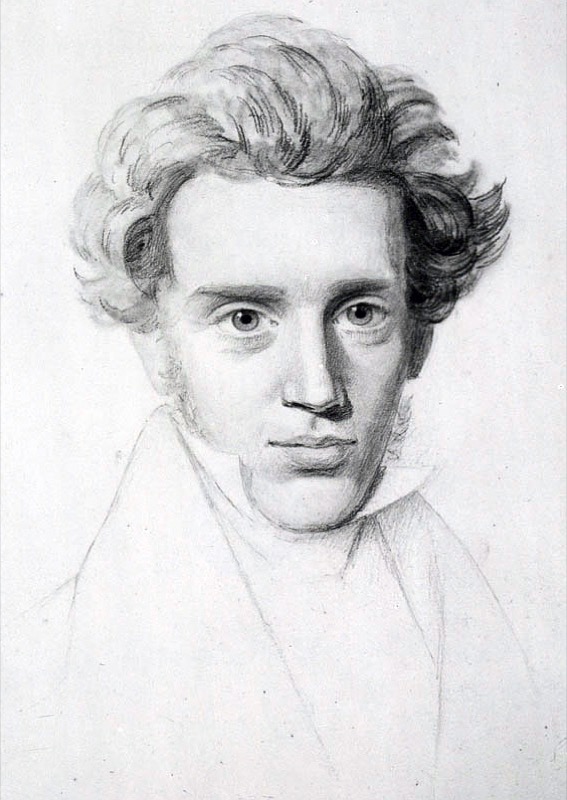
_-_(cropped).jpg)
Summary
The Sickness Unto Death: A Christian Psychological Exposition for Upbuilding and Awakening was published in Copenhagen on 30 July 1849 under the pseudonym Anti-Climacus, with Kierkegaard named as editor. Its title comes from Jesus' words about Lazarus in John 11:4, 'This sickness is not unto death.' The introduction argues that for the Christian even death is not the sickness unto death, since there is hope beyond it; the true sickness unto death is despair, a condition in which one cannot die and cannot live, a perpetual dying without end. Part One analyses despair. It opens with a famously dense definition of the human being as spirit, and of spirit as the self: a relation that relates itself to itself and, in doing so, relates to the power that established it. A human being is a synthesis of the infinite and the finite, the temporal and the eternal, freedom and necessity. Despair is a misrelation in this synthesis, and it takes three forms: being unaware of having a self, not willing to be oneself, and willing to be oneself in defiance. Anti-Climacus insists that despair is universal. Like a physician who says no one is completely healthy, he holds that almost everyone is in despair, including the many who feel content and do not know it; not knowing one is in despair is itself a form of despair. He then classifies its forms. Considered abstractly, despair can lack finitude, losing itself in fantastic infinity, or lack infinitude, shrinking into worldly conformity; it can lack necessity, dissolving in endless possibility, or lack possibility, as the fatalist and the philistine do. Considered with regard to consciousness, despair runs from spiritless ignorance through the despair of weakness, which despairs over earthly losses or over itself, to the despair of defiance, in which the self insists on creating itself, culminating in a demonic rage against existence. Part Two declares that despair is sin: sin is despair before God, either not willing to be oneself or willing to be oneself in defiance. Anti-Climacus rejects the Socratic definition of sin as ignorance, since Christianity holds that sin lies in the will, and argues against speculative theology that sin is a position, not a negation. He traces the intensification of sin: despairing over one's sin, despairing of the forgiveness of sins, which is offence at Christ, and finally declaring Christianity untrue. The opposite of sin is not virtue but faith, defined by the formula that in relating itself to itself and in willing to be itself, the self rests transparently in the power that established it. The book became a founding text of existentialism and of existential psychology.
Plot or Argument
- Preface and introduction: Lazarus
Anti-Climacus explains that the work is both rigorous and upbuilding, like a physician at the sickbed. Taking John 11 as his text, he argues that for the Christian death is not the worst, and that the sickness unto death is despair.
- Part One, A: Despair as a sickness of the self
The self as a relation relating itself to itself and to the power that established it. Three forms of despair: unconscious of having a self, not willing to be oneself, willing to be oneself. Despair is a sickness one cannot die of, an impotent self-consuming.
- Part One, B: The universality of despair
Just as the physician knows that no one is perfectly healthy, the expert in spirit knows that nearly everyone is in some despair. Happiness and immediacy are its favourite hiding places; Christianity alone treats despair as the occasion for becoming a self.
- Part One, C: The forms of despair
Abstract forms defined by the synthesis: infinitude without finitude, finitude without infinitude, possibility without necessity, necessity without possibility. Forms defined by consciousness: ignorant despair, despair of weakness over the earthly and over oneself, and defiant despair that wills to be oneself, rising to the demonic.
- Part Two, A: Despair is sin
Sin is despair intensified by consciousness of standing before God. The Socratic definition of sin as ignorance is examined and found wanting; sin is a position, not a mere absence; the offence of Christianity lies in the idea that the individual exists before God.
- Part Two, B: The continuation of sin
Sin's escalation: despair over one's sin, despair of the forgiveness of sins (offence), and the sin of abandoning Christianity positively, declaring it untruth. Faith, defined by the book's closing formula, is presented as the opposite of sin and the cure for despair.
Characters
- Anti-Climacus, pseudonymous author
An 'extraordinary Christian' who writes from a height of Christian ideality that Kierkegaard said he himself did not reach; contrasted with Johannes Climacus, the non-Christian author of the Philosophical Fragments.
- S. Kierkegaard, editor
Named on the title page as publisher, a device that separates the author's own life from the demanding standard the book sets.
- Lazarus, biblical figure
Raised from the dead in John 11; his illness 'not unto death' frames the whole argument.
- Socrates, foil
Admired for his ignorance and irony, but his definition of sin as ignorance is judged inadequate to the Christian concept of sin.
Lessons
The self is a task, not a given
Anti-Climacus defines the self as an activity of relating to oneself, a synthesis that can be held together well or badly. On this view selfhood is achieved rather than possessed, and despair is the failure to become the self one is. The idea underlies much existentialist and humanistic psychology.
- What does it mean for a self to be 'a relation that relates itself to itself'?
- How do the paired terms finite and infinite, possibility and necessity, help describe recognisable ways of losing oneself?
Despair can hide inside contentment
The most unsettling claim of the book is that the person who feels perfectly fine may be in the deepest despair, because they have never become aware of themselves as spirit. Despair is therefore not identical with feeling bad; it is a structural condition that moods may reveal or conceal.
- Is it meaningful to say someone is in despair without knowing it, or is that an unfalsifiable claim?
- How does Anti-Climacus's concept of despair differ from clinical depression?
Two shapes of failing to be oneself
Despair either flees the self, in weakness, or clutches it, in defiance, insisting on making oneself without dependence on anything beyond. The defiant form, which ends in a rage against existence, sharpens the book's diagnosis of modern self-assertion.
- Which form of despair does the culture around you encourage more, weakness or defiance?
- Why does Anti-Climacus regard defiance as more conscious, and therefore more intense, than weakness?
Faith as the opposite of sin
Against moralism, the book claims that the opposite of sin is not virtue but faith: resting transparently in the power that established the self. Sin is located in the will rather than in ignorance. The argument is theological, but it also offers a picture of healing as trust rather than self-improvement.
- Why does Anti-Climacus reject the Socratic view that sin is ignorance?
- Can the formula of faith be translated into non-religious terms without losing its point?
Context
The book was written in the aftermath of the revolutions of 1848, when Denmark adopted a constitutional monarchy and Kierkegaard felt the age dissolving into crowds and abstractions. Theologically it responds to the Hegelian theology fashionable in Copenhagen, associated with H. L. Martensen, which treated sin as a necessary moment in the development of spirit. Psychologically it continues The Concept of Anxiety (1844), whose pseudonym Vigilius Haufniensis had analysed anxiety as the precondition of sin.
Composition
Kierkegaard wrote the book in the first half of 1848, a year of intense religious experience for him, and hesitated for months over whether to publish it under his own name. He finally chose the new pseudonym Anti-Climacus, placing himself as editor, and C. A. Reitzel published it on 30 July 1849. Anti-Climacus is also the author of Practice in Christianity (1850). English translations include Walter Lowrie's (1941), Howard V. Hong and Edna H. Hong's (1980), and Alastair Hannay's (1989); all are in copyright, so no quotations are given here.
Reception
Little noticed in Denmark at first, the book was rediscovered through German translations in the early twentieth century and deeply influenced Heidegger, Jaspers, Barth, Tillich, Sartre and Camus. Its analysis of despair shaped existential psychotherapy (Rollo May, Viktor Frankl's interlocutors) and the work of psychoanalysts and psychiatrists interested in identity and selfhood, and its definition of the self is still discussed in philosophy of mind and theology.
Comparisons
- fear-and-trembling
Johannes de silentio of Fear and Trembling admires faith from outside and cannot make its movement; Anti-Climacus writes from within an exacting Christianity and defines faith with a precise formula.
- pensees
Pascal's wretchedness of man without God and his diversion that hides it from ourselves anticipate Anti-Climacus's despair concealed by busyness and contentment.
- the-anatomy-of-melancholy
Burton's religious melancholy and despair of salvation are humoral diseases with remedies; Anti-Climacus treats despair as a sickness of spirit that no medicine can reach, though he borrows the physician's stance.
- the-death-of-ivan-ilyich
Tolstoy's judge lives a pleasant, proper life that turns out to have been despair in Anti-Climacus's sense, unconscious of having a self, until a fatal illness forces the question.
- the-varieties-of-religious-experience
James's sick soul, who cannot ignore evil and must be twice-born, is a psychological portrait of the condition that Anti-Climacus analyses dialectically; James describes cases while Kierkegaard constructs the structure of the self.
- the-bible
The raising of Lazarus in John 11 supplies the title and the governing contrast between a sickness that ends in death and one that does not.
Quotes
For Students
A reading companion for classical Christian high school students. See the student guide.
Reading Guide
Watch for
- The Introduction's use of the raising of Lazarus in John 11, where Christ says the sickness is not unto death. Anti-Climacus turns the phrase around to ask what the true mortal sickness is.
- The dense opening of Part One, A, which defines the self as a relation that relates itself to itself and to the power that established it. Read it slowly; every later section depends on it.
- Part One, B's comparison between the physician, who knows that apparent health may hide disease, and the expert in spirit, who knows that nearly everyone is in some despair without realizing it.
- The images in Part One, C: the man who wanted to be Caesar or nothing, the house owner who chooses to live in the basement, and the defiant self compared to a misprint that refuses to be corrected because it wants to testify against its author.
- The turn at the start of Part Two, where despair becomes sin once the self is understood as existing before God, and the closing formula of faith as the self resting transparently in the power that established it.
Key terms and names
- Anti-Climacus
- The pseudonymous author, a Christian of extraordinary rigor whose standard Kierkegaard, named as editor on the title page, admitted he did not himself meet.
- Despair
- The sickness unto death of the title: not a mood but a misrelation in the self, in which a person can neither die nor truly live. Anti-Climacus holds it can be present even where someone feels content.
- The self as synthesis
- Part One, A's account of the human being as a joining of infinite and finite, temporal and eternal, freedom and necessity. Despair is a failure to hold these together rightly.
- Despair of weakness
- The form in Part One, C in which a person does not will to be himself, whether by despairing over some earthly loss or over his own weakness in being so affected.
- Defiance
- The more conscious form of despair, in which a person wills to be himself on his own terms, refusing help from any power beyond himself, and which can rise to a demonic rage against existence.
- Before God
- The phrase that transforms the analysis in Part Two. Despair becomes sin when the self knows it exists in the presence of God and still will not be the self God made it.
- Offence
- The reaction, discussed in Part Two, of a person who cannot accept that God would become man and forgive sins. To despair of forgiveness is to be offended at Christ.
- Faith
- In this book the opposite of sin, rather than virtue: the state in which the self, willing to be itself, rests transparently in the power that established it.
Seminar Questions
- Comprehension How does the Introduction use the story of Lazarus to explain what the sickness unto death is, and why is death itself not that sickness for the Christian?
- Comprehension What are the three forms of despair named in Part One, A, and how do they differ from one another?
- Comprehension Why does Anti-Climacus reject in Part Two the Socratic definition of sin as ignorance, and where does he locate sin instead?
- Interpretation Part One, B claims that a person who feels perfectly happy may be in despair without knowing it. What does Anti-Climacus mean, and what makes the claim both unsettling and difficult to test?
- Interpretation The man who wanted to be Caesar or nothing despairs when he fails. Why does Anti-Climacus say that what he really cannot bear is not the loss of Caesar's place but being stuck with himself?
- Interpretation Why does Anti-Climacus treat despair of the forgiveness of sins as worse than despair over sin itself?
- Big Question Is it possible to become fully oneself by one's own effort, or does a self become whole only by resting in the one who made it?
Faith Connections
- John 11:1-44 (Scripture)
Christ tells his disciples that Lazarus's sickness is not unto death and then raises him from the tomb. The whole book is an extended reflection on this chapter, asking what illness could truly be mortal when Christ is the resurrection and the life.
- Romans 14:23 (Scripture)
Paul says that whatever is not of faith is sin. Part Two leans on this verse to argue that the opposite of sin is not virtue but faith, which is the book's most striking reversal of ordinary moral thinking.
- Matthew 19:26 (Scripture)
Christ says that with men salvation is impossible but with God all things are possible. Part One, C treats the loss of possibility as one form of despair and presents belief that for God everything is possible as its cure.
- Augustine, Confessions I.1 (Church Fathers)
Augustine confesses that God made us for himself and our heart is restless until it rests in him. The closing formula of faith in The Sickness Unto Death, a self resting transparently in the power that established it, is a dialectical restatement of the same conviction.
Logic and Rhetoric
Central argument: A human being is a self, a relation that relates itself to itself and that has been established by another power. Such a self can relate to itself rightly only by relating rightly to the power that made it. When it fails, whether by fleeing itself in weakness or by insisting on itself in defiance, it falls into despair, which it cannot escape by its own efforts. Before God this despair is sin. Therefore the only cure for despair is faith, in which the self, willing to be itself, rests transparently in God.
Rhetorical device: prosopopoeia. In Part One, C Anti-Climacus pictures the most defiant despair as a misprint in a book that becomes conscious and refuses to be erased, wanting to remain as evidence that the author wrote badly. Giving a printer's error a will of its own makes the self's rebellion against its maker vivid and almost comic.
Debate: Resolved: A person can be in despair without feeling unhappy.
Writing Prompts
Essay: Anti-Climacus says the opposite of sin is not virtue but faith. Using the definition of the self in Part One, A, the forms of weakness and defiance in Part One, C, and the argument against Socrates in Part Two, explain why he makes this claim and argue whether it strengthens or weakens the moral life.
Comparison with The Death of Ivan Ilyich: Ivan Ilyich lives a pleasant and correct life until a fatal illness forces him to ask whether he has lived rightly. Using Anti-Climacus's account of despair that does not know itself, compare Tolstoy's story with Kierkegaard's analysis and argue whether Ivan's dying is a sickness unto death or the end of one.
Medical Lens
The Sickness Unto Death is framed throughout by medical analogy: Anti-Climacus writes like a physician at the bedside, insists that almost no one is wholly healthy, and distinguishes the sufferer's self-report from the expert's diagnosis. Its concept of despair is not depression, and the book explicitly separates despair from mere mood, yet its descriptions of hopelessness, the wish to die and the inability to die, and the self-consuming quality of despair are frequently cited in psychiatry, existential psychotherapy and suicide studies. Kierkegaard's own melancholy (tungsind), inherited, as he believed, from his father, is often read into the book; such readings are biographical interpretation, and any retrospective diagnosis of Kierkegaard should be presented as speculative. For clinicians, the book is a reminder that patients' suffering may concern meaning and identity as well as symptoms, and also a caution against equating spiritual categories with disorders.
- Preface and Introduction
The physician's bedside manner as a model for Christian exposition; the Lazarus story and the claim that despair, not death, is the mortal sickness.
- Part One, A
Despair as a sickness one cannot die of: the torment of wishing to die and being unable to, of the self wanting to be rid of itself.
- Part One, B
The analogy of the physician who knows that apparent health may hide illness, applied to the universality of unrecognised despair.
- Part One, C (forms of the synthesis)
Despair of infinitude lost in fantasy and despair of possibility, set against fatalistic and philistine despair of necessity; descriptions often compared to grandiosity and to depressive hopelessness.
- Part One, C (despair of weakness and of defiance)
Despair over the earthly and over oneself, inclosing reserve that hides despair from others, the risk of suicide in the inclosed person, and demonic defiance.
- Part Two, B
Despair over one's sin and of forgiveness as intensifications of despair, relevant to religious guilt and scrupulosity in clinical settings.
Creative Prompts
- Fiction
Write the evening in 1848 when Kierkegaard decides not to sign the manuscript himself and invents Anti-Climacus, showing what he fears in putting his own name to such a standard.
- Dialogue
Stage a conversation between Anti-Climacus and a contemporary psychiatrist about a patient who reports no symptoms but says life feels meaningless: is this despair, depression, or neither?
- Essay
Compare Kierkegaard's distinction between despair and mood with the distinction between demoralisation and major depression in modern psychiatry.
- Classroom
Have students build a chart of the forms of despair in Part One and attach a fictional or historical example to each, then debate whether the scheme is a diagnosis, a typology or a sermon.
Further Reading
- The Concept of Anxiety, Søren Kierkegaard
- Practice in Christianity, Søren Kierkegaard
The other work by Anti-Climacus.
- Søren Kierkegaard: A Biography, Joakim Garff
- Kierkegaard, Alastair Hannay
- The Meaning of Anxiety, Rollo May
Existential psychology drawing on Kierkegaard.
Verification notes
Structure, pseudonymity, publication date and main argument are well established. The work is flagged copyrighted because all standard English translations (Lowrie, Hong, Hannay) are in copyright and no verified public-domain translation is stored; therefore no quotations are included, and key formulas are paraphrased rather than quoted. Section labels follow the Danish structure (Part One A–C, Part Two A–B).
- Precise subdivision labels within Part One C and Part Two B differ between translations.
- Date of composition (first half of 1848) and Kierkegaard's journal entries on choosing the Anti-Climacus pseudonym.
- Whether any pre-1929 English translation exists that could serve as a public-domain source for short quotations.