Work record
The Portable Faulkner
1946 (ed. Malcolm Cowley) · Early 20th Century · Collection · English
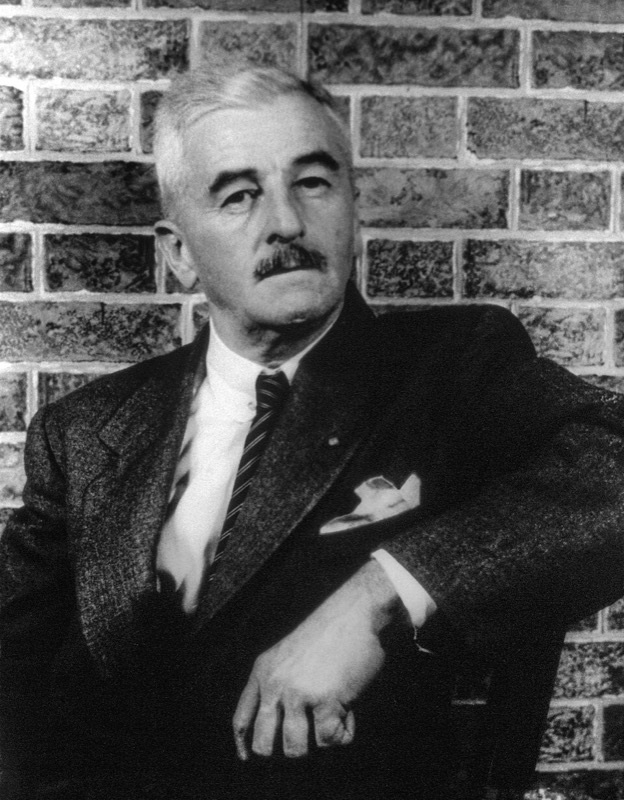
.jpg)
Summary
The Portable Faulkner is not a single work in the usual sense but an edited map of Faulkner's Yoknapatawpha fiction. Malcolm Cowley arranged stories, novel excerpts, genealogical material and commentary so that readers could see Faulkner's invented county as one continuous historical field. The volume moves through plantation origins, the Civil War, Reconstruction, racial violence, declining aristocratic families, poor white households, Black endurance, modern commerce and inward collapse. Its power lies in showing that Faulkner's separate books are connected by recurring names, inherited guilt and stories retold from incompatible angles. Selections from works such as Sartoris, The Sound and the Fury, As I Lay Dying, Sanctuary, Light in August, Absalom, Absalom!, The Hamlet and Go Down, Moses reveal a fictional society unable to bury slavery, sexual violence, lost land or family shame. Cowley's structure made Faulkner more legible without making him simple. The collection emphasizes the county as a tragic archive: plantations rise on stolen labor; aristocratic honor conceals brutality; poor families survive through stubbornness and grotesque comedy; children inherit secrets they cannot fully understand. Faulkner's narrative methods also become visible across the anthology. He uses fractured chronology, interior monologue, oral storytelling, legal memory, gossip and biblical cadence to show how history persists as pressure rather than background. The anthology also trains readers to notice how the same event changes when retold by another class, race, generation or narrator. For a medical reader, the volume offers recurring attention to trauma, childbirth, disability, alcoholism, racial terror, intellectual disability, war wounds, suicidal despair and the pathologies of family systems. Because the anthology excerpts longer works, each selection should be read as both self-contained and partial. Its historical importance is enormous: Cowley's editorial framing helped move Faulkner from difficult regional writer to central modernist, and it taught generations to read Yoknapatawpha as a deliberately constructed moral geography.
Plot or Argument
- Cowley's Yoknapatawpha frame
The anthology introduces Faulkner's county as a shared historical setting, using editorial arrangement to reveal links among families, plantations, towns and recurring events.
- Old families and Civil War memory
Selections from the Sartoris and Compson materials show aristocratic self-mythology, lost causes and the corrosion of inherited honor.
- Interior collapse and modernist form
The Sound and the Fury and related selections show family decay through broken chronology, sensory consciousness and voices unable to command the story they inhabit.
- Poor white survival and grotesque comedy
As I Lay Dying and Snopes material show families whose endurance can look comic, heroic, brutal and absurd at once.
- Race, violence and buried guilt
Selections associated with Light in August, Absalom, Absalom! and Go Down, Moses confront racial obsession, sexual violence, lynching, slavery's legacy and contested inheritance.
- A county as archive
The collection's cumulative argument is that Yoknapatawpha is not scenery but a memory system, where stories, bodies and property carry the unresolved past.
Characters
- Quentin Compson, recurring figure
A Harvard student and heir to Southern memory whose obsession with family, honor and history leads toward suicide.
- Benjy Compson, Compson son
A cognitively disabled man whose sensory consciousness shapes one of Faulkner's most radical narrative experiments.
- Caddy Compson, Compson daughter
A beloved and policed sister whose sexuality becomes the screen for her brothers' grief and fantasies of honor.
- Thomas Sutpen, plantation founder
An ambitious planter whose design for a dynasty is built on slavery, repudiation and racial violence.
- Joe Christmas, central figure in Light in August selections
A racially ambiguous, alienated man whose life exposes the lethal fantasies of Southern racial classification.
- Lena Grove, traveler and mother
A pregnant woman whose patient journey offers one of Faulkner's counterweights to violence and obsession.
- Anse Bundren, Bundren patriarch
A poor farmer whose family's burial journey mixes comic persistence, selfishness and bodily hardship.
- Ike McCaslin, heir and renouncer
A descendant who attempts to repudiate inherited property because of slavery's moral taint.
Lessons
History is carried by form
Faulkner's broken chronologies are not decorative difficulty; they enact a society unable to experience the past as past. The anthology teaches that narrative structure can be an ethics of memory.
- How does fragmentation change the reader's sense of guilt?
- Why might chronological order falsify Yoknapatawpha?
- What does Cowley's arrangement clarify or simplify?
Family stories can be prisons
Faulkner's families pass down names, land, myths and shame as if they were genetic material. Characters suffer not only from what happened to them but from the explanations they inherit.
- Which family is most trapped by its own story?
- How does inheritance operate beyond property?
Racial categories damage everyone while protecting power
The anthology repeatedly shows race as a violent social fiction with real bodily consequences. Faulkner exposes obsession with purity and ancestry as a structure of domination, terror and self-deception.
- How do characters use ancestry to justify violence?
- Where does Faulkner risk reproducing the categories he critiques?
The grotesque can preserve moral seriousness
Comedy, exaggeration and bodily grotesquerie do not trivialize suffering in Faulkner. They reveal how endurance and absurdity coexist in lives shaped by poverty, death and social contempt.
- When is Faulkner funny, and what kind of laughter is it?
- How does bodily comedy change scenes of grief?
Context
The anthology frames Faulkner's fictional county against Southern history from slavery and the Civil War through Reconstruction, Jim Crow, tenancy, modernization and Depression-era hardship. It also belongs to the postwar canon-making moment in which difficult modernist writers were repackaged for American and international readers.
Composition
Published in 1946 by Viking and edited by Malcolm Cowley, The Portable Faulkner selected and arranged material from Faulkner's earlier novels and stories, with Cowley's introductions and a genealogical orientation to Yoknapatawpha County.
Reception
The volume played a major role in reviving Faulkner's reputation after some books had gone out of print. It helped readers see coherence across the works and prepared the way for his Nobel Prize in Literature in 1949.
Comparisons
- wuthering-heights
Both construct family tragedy through houses, inheritance, revenge and narrators who receive damaged stories from others.
- twelve-years-a-slave
Northup's memoir gives direct testimony to slavery's bodily facts, while Faulkner shows its afterlife in memory, property and racial terror.
- the-scarlet-letter
Hawthorne and Faulkner both make communal guilt and symbolic stigma organize whole societies, though Faulkner's historical burden is slavery and race.
- the-waves
Woolf and Faulkner both use modernist interiority, but Woolf's lyric patterning differs from Faulkner's historical density and oral violence.
- east-of-eden
Steinbeck's family saga also gives moral weight to inheritance, brothers and land, but with a more explicit biblical architecture.
Quotes
For Students
A reading companion for classical Christian high school students. See the student guide.
Reading Guide
Watch for
- Cowley's arrangement. The selections are ordered roughly by the history of Yoknapatawpha County, not by when Faulkner wrote them, so notice how a family name met in an early selection returns generations later.
- In A Rose for Emily, the narrator is the town itself, speaking as we. Watch how the story jumps back and forth in time and holds back the discovery in the upstairs room until the last paragraph.
- In An Odor of Verbena, young Bayard Sartoris goes to face his father's killer as honor demands, but goes unarmed. Notice what the women around him, Aunt Jenny and Drusilla, expect him to do.
- The Dilsey section from The Sound and the Fury, set on Easter Sunday, 1928. Follow Dilsey's care for the broken Compson household and her response to the visiting preacher's sermon.
- The Compson Appendix, which Faulkner wrote for this volume, giving the family history in genealogical entries from the first Compson to the last. Notice how a family tree can tell a story of decline.
Key terms and names
- Yoknapatawpha County
- Faulkner's invented county in northern Mississippi, with Jefferson as its seat, which Faulkner mapped and peopled over many books. Cowley's anthology presents it as one place with a continuous history.
- Jefferson
- The county seat of Yoknapatawpha, with its courthouse, square, and jail. In stories like A Rose for Emily its townspeople act as a chorus that watches, gossips, and remembers.
- Malcolm Cowley
- The critic who edited The Portable Faulkner in 1946, choosing and ordering the selections and writing the introduction. His work helped return Faulkner's out-of-print books to readers before the Nobel Prize of 1949.
- The Compson Appendix
- The genealogy of the Compson family that Faulkner composed for Cowley's volume. It traces the family from its founding in the county to its dispersal, ending with the household's servants, of whom Faulkner writes simply that they endured.
- Dilsey
- The Black cook and housekeeper of the Compson family, whose steady care holds the household together. At the Easter service in the Dilsey section she weeps and says she has seen the first and the last.
- Thomas Sutpen and Wash Jones
- In the story Wash, the poor white Wash Jones has admired the planter Sutpen for years. When Sutpen speaks contemptuously of Wash's granddaughter and the child she has borne him, Wash kills him with a scythe.
- Snopes
- A sprawling family of poor white newcomers who rise by shrewd trading and exploitation of others. In Spotted Horses, Flem Snopes stays offstage while a Texan auctions wild ponies to farmers who cannot afford them.
Seminar Questions
- Comprehension In A Rose for Emily, what does the town discover when it enters the upstairs room after Miss Emily's funeral?
- Comprehension In An Odor of Verbena, what does Bayard Sartoris do when he goes to meet Redmond, and how does the town respond?
- Comprehension In Spotted Horses, what happens to Henry Armstid and to the five dollars his wife earned by weaving?
- Interpretation Why does Faulkner have the townspeople of Jefferson narrate A Rose for Emily as we? What does the town know, and what has it chosen not to know?
- Interpretation Bayard refuses to kill his father's killer but still goes to face him. Is his act courage, obedience to conscience, or a new kind of honor, and how does Drusilla's reaction help you decide?
- Interpretation Faulkner ends the Compson Appendix by saying of the servants only that they endured. Why does a family history of the Compsons close with Dilsey and her people?
- Big Question Can the children of a family or a region carry guilt for wrongs committed before they were born, or only the consequences of those wrongs?
Faith Connections
- Revelation 22:13 (Scripture)
Christ says, I am Alpha and Omega, the beginning and the end, the first and the last. Dilsey's words at the Easter sermon, that she has seen the first and the last, borrow this language, and her vision gives the ruined Compson story a frame larger than the family's own decline.
- Ezekiel 18:2-4, 20 (Scripture)
The prophet rejects the proverb that the fathers have eaten sour grapes and the children's teeth are set on edge, declaring that each soul answers for its own sin. Faulkner's county seems to live by the old proverb, and his heirs, from the Compsons to the Sartorises, struggle with whether they can be free of their fathers' deeds.
- Matthew 5:38-39 (Scripture)
Jesus sets aside an eye for an eye in favor of not resisting the evildoer. In An Odor of Verbena Bayard Sartoris breaks the code of blood revenge by walking unarmed into Redmond's office, choosing a costly path closer to this teaching than to his father's.
Logic and Rhetoric
Central argument: The past of a place does not stay in the past but lives on in its families, property, customs, and stories. Yoknapatawpha was built on slavery, war, and a code of honor that demanded blood, and each generation inherits both the land and the unpaid debts of that founding. Some heirs repeat the old patterns, some collapse under them, and a few, like Bayard in An Odor of Verbena, find a way to break them. Therefore the county's history is a moral inheritance that must be faced, and endurance and conscience, more than pride, are what let people survive it.
Rhetorical device: first-person plural narration. A Rose for Emily is told by an unnamed we that speaks for the town of Jefferson across decades. The collective voice lets Faulkner show a community's curiosity, pity, and failure to act at once, and it makes the reader share the town's shock at the final discovery.
Debate: Resolved: Bayard Sartoris in An Odor of Verbena acts with more courage than his father, Colonel John Sartoris.
Writing Prompts
Essay: Dilsey in the Easter section and the servants at the close of the Compson Appendix are described as enduring while the Compsons decline. Argue what Faulkner means by endurance, and why he gives this virtue to the people with the least power in the household.
Comparison with The Scarlet Letter: A Rose for Emily and The Scarlet Letter both show a woman whose life is watched, judged, and talked about by a whole town over many years. Compare how Faulkner's townspeople of Jefferson and Hawthorne's Puritans of Boston treat Emily Grierson and Hester Prynne, and argue which community understands the woman it watches better.
Medical Lens
Across the anthology, Faulkner is a major resource for trauma, heredity, disability, alcoholism, suicide, childbirth, racial terror and family pathology. Benjy Compson's narrative raises questions about disability representation; Quentin's crisis of honor and time is central for suicidal melancholia; Addie Bundren's corpse and Lena Grove's pregnancy make bodies and reproductive labor unavoidable. The medical lens should avoid turning the county into a diagnostic catalogue, but Faulkner's fiction is deeply interested in how history gets somatized in families and communities.
- The Sound and the Fury selections
Benjy's sensory narrative, Caddy's absence and Quentin's breakdown foreground disability, grief, time disturbance and suicidal despair.
- As I Lay Dying selections
The Bundrens' journey with Addie's corpse centers childbirth, death care, injury, heat, smell and family endurance.
- Light in August selections
Joe Christmas's alienation and the violence around racial identity invite discussion of trauma, heredity myths and social pathology.
- Absalom, Absalom! selections
Sutpen's dynastic design and its collapse link racial violence, obsession, family secrets and intergenerational damage.
Creative Prompts
- Essay
Use The Portable Faulkner to argue how editorial arrangement can make a fictional world look like a clinical family history.
- Fiction
Write a Yoknapatawpha medical intake form that fails because every symptom points backward into county history.
- Classroom
Ask students to trace one inherited object or name through the anthology and explain how it carries guilt.
Further Reading
- The Sound and the Fury, William Faulkner
- Absalom, Absalom!, William Faulkner
- Go Down, Moses, William Faulkner
- William Faulkner: The Yoknapatawpha Country, Cleanth Brooks
- One Matchless Time: A Life of William Faulkner, Jay Parini
Verification notes
The anthology's role, Cowley's editorship and major included Faulkner works are solid. No quotations are included because the volume and underlying works are copyrighted.
- Exact table of contents and selection titles in the Viking Portable edition.
- Whether any specific selection locators should use Cowley's section headings rather than source-work titles.
- Any direct quotation against a licensed copy, under copyright limits.