Work record
Civilization and Its Discontents
1930 · Early 20th Century · Philosophy · German
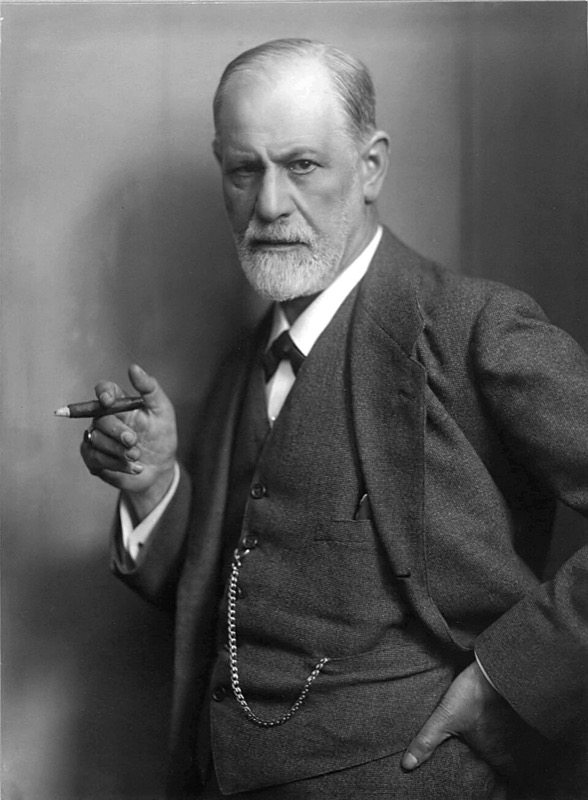
.jpg)
Summary
Freud's late essay, in German Das Unbehagen in der Kultur ('the uneasiness in culture'), asks why civilized people, who have built so much for their own protection, are so often unhappy. It is written in eight short chapters in a conversational, self-questioning style. The first chapter begins with a letter from the French writer Romain Rolland, who had praised Freud's critique of religion in The Future of an Illusion but objected that the true source of religious feeling was an 'oceanic' sense of limitless connection with the world. Freud says he cannot find this feeling in himself and explains it as a survival of the infant's early ego, before it distinguished itself from the outside world, illustrating the persistence of earlier mental states with the image of Rome's buried strata. The second chapter asks what people want from life and answers: happiness, as defined by the pleasure principle. Yet suffering threatens from three directions, the decaying body, the overwhelming external world and our relations with other people. Freud surveys the techniques people use to cope: intoxication, which he calls the crudest but most effective chemical method; the taming or killing off of drives; sublimation in work, science and art; withdrawal into fantasy; delusional remoulding of reality, among which he counts religion; love; and the enjoyment of beauty. None is guaranteed, and each person must find his own way. The third chapter turns to civilization itself, the 'third source' of suffering, and lists its achievements: tools that make man a kind of prosthetic god, cleanliness, order, beauty, intellectual and religious ideals, and the regulation of social relationships, which replaces individual power with the power of a community. All of this rests on the renunciation of instinct. Chapter four traces civilization's origins in Eros and Ananke, love and necessity, and argues that love, which founded families, comes into conflict with the wider culture, especially through restrictions on sexual life. In chapter five Freud examines the command to love one's neighbour as oneself and concludes that it is impossible because humans carry a powerful inclination to aggression; he quotes the Latin 'homo homini lupus', man is a wolf to man, criticizes the communist hope that abolishing property will end hostility, and names the 'narcissism of minor differences'. Chapter six revives his theory of a death drive opposed to Eros, and chapter seven explains how civilization disarms aggression by turning it inward as the super-ego, whose severity grows with each renunciation and produces an unconscious sense of guilt. The final chapter calls this guilt the most important problem of civilization, suggests that whole cultures may become neurotic, and ends by wondering whether Eros can hold its own against its immortal adversary.
Plot or Argument
- Ch. I: Rolland's oceanic feeling
Freud answers Romain Rolland's claim that religion springs from a feeling of eternity by tracing it to the infant's undifferentiated ego. The ruins of Rome illustrate how past mental states survive alongside later ones.
- Ch. II: The purpose of life and the techniques of avoiding suffering
People seek happiness under the pleasure principle but are exposed to suffering from body, world and others. Freud weighs intoxicants, suppression of drives, sublimation, fantasy, love, beauty and religion, which he treats as a mass delusion.
- Ch. III: What civilization gives and takes
Civilization protects us from nature and regulates relationships, producing technology, hygiene, order and ideals. It is built on renunciation of instinct, which explains a widespread hostility to culture.
- Ch. IV: Eros, Ananke and the family
Work and love founded human communities. Genital love created families, but civilization draws energy away from sexual life and restricts it, and women come to represent the claims of family against culture.
- Ch. V: The neighbour and human aggression
'Love thy neighbour' is impracticable given innate aggressiveness. Freud criticizes communism's theory of property, describes the narcissism of minor differences, and notes how persecutions bind groups together.
- Ch. VI: The death drive
Freud recounts the development of his drive theory and argues for a death drive, partly turned outward as aggression, locked in struggle with Eros. Civilization is the stage of that struggle.
- Ch. VII: Conscience and the super-ego
Aggression is internalized as the super-ego, which treats the ego as harshly as the ego would have liked to treat others. Renunciation increases rather than appeases conscience, and remorse after the primal parricide is offered as an origin of guilt.
- Ch. VIII: Guilt as civilization's central problem
The price of progress is a heightened, largely unconscious sense of guilt felt as malaise. Freud asks whether whole epochs can be diagnosed as neurotic and ends uncertain about Eros's struggle with destructiveness.
Characters
- Romain Rolland, interlocutor
French novelist and pacifist, unnamed in the first edition, whose letter about the 'oceanic feeling' prompts the opening chapter.
- The 'neighbour', ethical test case
The stranger whom the commandment orders us to love; Freud argues that he more often arouses hostility.
- The super-ego, inner agency
Internalized authority that watches the ego like a garrison in a conquered city and punishes it with guilt.
- Eros and the death drive, opposed forces
The drive to combine living things into larger unities and the drive toward dissolution and aggression, whose struggle Freud calls the content of civilization.
Lessons
Every way of escaping suffering has a cost
Freud's survey in chapter two treats intoxication, withdrawal, sublimation, love and religion as strategies with different risks and payoffs, not as right or wrong choices. It is an early, sober comparison of coping methods.
- Why does Freud call chemical intoxication the most effective and the most dangerous method?
- Is sublimation available to everyone, or only to people with particular gifts and circumstances?
- Which modern coping strategies would Freud add to his list?
Conscience grows harsher the more we obey it
Freud's paradox is that renouncing aggression feeds the super-ego, so the most virtuous people may feel the most guilt. Guilt need not track wrongdoing at all.
- How does Freud's paradox fit the experience of scrupulosity or depressive guilt?
- Does Freud's account leave any room for healthy guilt?
Aggression does not disappear when property does
Against utopian hopes, Freud argues that hostility is a drive that will find new objects, including minor differences between closely related groups. Social reform can redirect but not abolish it.
- Is the 'narcissism of minor differences' a useful explanation of conflict between similar groups?
- Written in 1929, what did the essay foresee about the decade to come, and what did it miss?
A diagnosis of a whole culture should be offered with caution
Freud raises the possibility that civilizations can be neurotic, then warns that there is no 'normal' culture to compare them with and no authority to impose therapy. The ending refuses consolation.
- What are the risks of applying clinical concepts to societies?
- Why does Freud end with a question rather than a prescription?
Context
Freud wrote after the First World War, which had pushed him to theorize a death drive in Beyond the Pleasure Principle (1920), and amid political violence in Austria and Germany. The book followed his critique of religion in The Future of an Illusion (1927) and engaged contemporary debates about Bolshevism, pacifism and mass psychology. It appeared just as the world economic crisis began; Freud added a final sentence in 1931 as the Nazi threat grew.
Composition
Written in the summer of 1929 at Schneewinkl near Berchtesgaden, while Freud was seventy-three and living with jaw cancer. His working title used Unglück ('unhappiness'), changed to Unbehagen. Published in Vienna by the Internationaler Psychoanalytischer Verlag at the end of 1929 with a 1930 date. Joan Riviere's English translation appeared in 1930; James Strachey's version for the Standard Edition (vol. XXI) appeared in 1961.
Reception
The first printing sold out quickly and Freud received the Goethe Prize in 1930. The book became the most widely read of Freud's cultural writings and shaped Frankfurt School critical theory, Herbert Marcuse's Eros and Civilization and Norman O. Brown's Life Against Death. Critics have questioned the death drive and the speculative anthropology of the primal horde, while its account of guilt and aggression remains influential.
Comparisons
- the-interpretation-of-dreams
The dream book models the individual psyche through wish-fulfilment and censorship; the late essay applies the same structure of drive and repression to culture, now with the super-ego as censor and the death drive added.
- leviathan
Freud's homo homini lupus echoes Hobbes's war of all against all, but where Hobbes's sovereign ends the conflict, Freud's civilization only internalizes it as guilt.
- beyond-good-and-evil
Nietzsche's idea that morality turns instincts inward and that the 'bad conscience' is internalized cruelty is the closest precursor to Freud's theory of the super-ego.
- the-varieties-of-religious-experience
James treats mystical oneness as a real datum of religious life; Freud's first chapter reduces Rolland's version of it to a residue of infantile ego-feeling.
- the-social-contract
Rousseau also holds that social life deforms natural man, but he looks to a legitimate general will to restore freedom; Freud sees no political arrangement that removes the conflict between drive and culture.
- the-world-as-will-and-representation
Schopenhauer's will that can only be quieted by renunciation anticipates Freud's pessimism about drives, though Freud refuses Schopenhauer's ascetic remedy.
Quotes
“Life, as we find it, is too hard for us; it brings us too many pains, disappointments and impossible tasks.”
“Man has, as it were, become a kind of prosthetic God.”
For Students
A reading companion for classical Christian high school students. See the student guide.
Reading Guide
Watch for
- The opening exchange with Romain Rolland in Chapter I. Rolland grants Freud's critique of religious doctrine but claims the real source of religion is a feeling of limitless connection, and Freud's answer sets the tone of the whole book.
- The picture of Rome in Chapter I, where Freud imagines every building of every period standing in the same place at once, as an image of how the mind preserves its past.
- The list of ways of avoiding suffering in Chapter II, from intoxication to love and beauty, and where Freud places religion on that list.
- Freud's treatment of the command to love one's neighbor as oneself in Chapter V, and his reasons for calling it impossible to obey.
- The account of conscience in Chapter VII, where the super-ego is compared to a garrison stationed in a conquered city, and the claim in Chapter VIII that guilt is the most important problem in the development of civilization.
Key terms and names
- Oceanic feeling
- Romain Rolland's name for a sense of eternity and of oneness with the world, which he took to be the true source of religion. Freud traces it instead to the infant who has not yet separated himself from his surroundings.
- Pleasure principle
- Freud's term for the mind's basic aim of seeking pleasure and avoiding pain. In Chapter II he argues that its program is at odds with the whole order of the universe, so that full happiness is not part of the plan of creation.
- Sublimation
- The redirection of instinctual energy into work, science, or art. Freud admires it as one of the best defenses against suffering but notes that only a few people are capable of it.
- Eros and Ananke
- Love and necessity, which Freud in Chapter IV calls the parents of human civilization. Necessity compelled people to work together, and love bound them into families.
- Death drive
- The instinct Freud proposes in Chapter VI, opposed to Eros, which seeks dissolution and, turned outward, appears as aggression. He presents the struggle between the two as the meaning of the evolution of civilization.
- Super-ego
- The internalized authority that watches and judges the ego. Freud argues in Chapter VII that it grows harsher the more a person renounces his aggression, which explains why the most virtuous often feel the most guilty.
- Narcissism of minor differences
- Freud's phrase in Chapter V for the hostility between neighboring communities that are very alike, such as the Spanish and the Portuguese or the North and South Germans. Such rivalries give aggression a harmless outlet and bind each group together.
Seminar Questions
- Comprehension What does Romain Rolland claim about the oceanic feeling, and how does Freud explain where that feeling comes from?
- Comprehension According to Chapter II, from what three directions does suffering threaten human beings, and which source does Freud find hardest to accept?
- Comprehension Why does Freud think the command to love one's neighbor cannot be obeyed, and why does he think the abolition of private property would not end human hostility?
- Interpretation Freud says that the more a person renounces aggression, the more severe his conscience becomes. Does this account fit the experience of saints and serious moral strivers, or does it leave something out?
- Interpretation Freud lists religion among the methods people use to escape suffering and calls it a delusion. What would a believer have to show in order to answer him on his own grounds, and where in Chapter II is his argument strongest?
- Interpretation Civilization, Freud says, makes us safer and more capable but also less happy. Is he describing a defect in civilization that might be cured, or a permanent condition of human nature?
- Big Question Freud diagnoses a sense of guilt that grows with civilization but offers no forgiveness for it. Can guilt ever be truly resolved, and what would that require?
Faith Connections
- Leviticus 19:18 and Matthew 22:37-40 (Scripture)
The command to love one's neighbor as oneself comes from Leviticus and is joined by Jesus to the love of God as the summary of the law. Freud examines it in Chapter V as a demand cut off from the first command, which is precisely the setting that Christian teaching says makes it possible.
- Matthew 5:43-48 (Scripture)
Jesus commands love even of enemies and prayer for persecutors. Freud finds this second command even more baffling than the first, and the passage shows that the Gospel knew the neighbor could be hostile and asked for love anyway.
- Romans 7:7-25 (Scripture)
Paul describes how the law makes him more aware of sin and leaves him crying out for deliverance from his divided self. Freud's harsh super-ego describes a similar experience of conscience growing sharper under the law, but Paul's answer in Christ, which Romans 8 develops, has no counterpart in Freud's account.
- Augustine, Confessions I.1 (Great Conversation)
Augustine begins by telling God that the human heart is restless until it rests in him. Freud and Augustine agree that human beings are deeply and persistently unhappy, and they disagree about the reason, which makes them strong partners for a seminar on the source of human discontent.
Logic and Rhetoric
Central argument: Human beings seek happiness but are threatened by their bodies, by nature, and by one another; civilization protects them from the first two by demanding that they give up much of their sexual and aggressive instinct; that renounced aggression is turned inward as a harsh conscience; therefore the progress of civilization is paid for by an increasing, mostly unconscious sense of guilt, and its future depends on whether Eros can hold its own against the drive to destruction.
Rhetorical device: extended analogy. In Chapter I Freud asks the reader to picture Rome as a mind in which no building ever disappears, so that the ancient temples and the later palaces all occupy the same ground at once. He then admits the image breaks down, using its failure to show how strange the mind's preservation of its past really is.
Debate: Resolved: Freud is right that the command to love one's neighbor as oneself asks more than human nature can give.
Writing Prompts
Essay: Freud claims in Chapter VII that conscience grows harsher the more we obey it, and in Chapter VIII that guilt is civilization's central problem. Explain his account of how guilt arises, and argue whether it describes all guilt or only an unhealthy form of it.
Comparison with Leviathan: Hobbes and Freud both cite the old saying that man is a wolf to man, and both see society as a restraint on natural aggression. Compare Hobbes's sovereign with Freud's super-ego as the power that keeps aggression in check, and argue which thinker gives the more convincing account of why peace is so hard to keep.
Medical Lens
One of Freud's most read works and a core text for the psychoanalytic theory of guilt, aggression and the super-ego. Chapter two contains Freud's brief but important remarks on intoxicants as the most effective chemical method of keeping suffering at bay, written by a man who had promoted cocaine in the 1880s and who knew the risks of dependence. His treatment of the oceanic feeling as regression bears on later psychiatric discussion of mystical and drug-induced states of ego dissolution. The idea that cultures can be neurotic remains contested. Readers often connect the 'prosthetic God' image and the book's sober tone with Freud's cancer and prosthesis, which is plausible biographical context, not something the text states. Freud's death by morphine in 1939 is part of the history of physician-assisted dying.
- Ch. I
Romain Rolland's oceanic feeling explained as an infantile ego-feeling persisting alongside the adult ego; pathological states in which the boundary between ego and world becomes uncertain.
- Ch. II
Survey of methods of avoiding suffering: intoxication as the crudest and most effective chemical method, with the danger that it wastes energy; killing the drives as in yoga; sublimation; fantasy; flight into neurosis or psychosis; love; beauty.
- Ch. III
Civilization's protections against disease and nature, including hygiene and cleanliness; technology as prosthetic organs; the footnoted speculation about the control of fire.
- Ch. IV and notes
Restriction of sexual life by civilization; speculation that upright posture and the devaluation of smell led to 'organic repression'.
- Ch. VII–VIII
The super-ego, unconscious guilt, and the 'need for punishment'; melancholia as the clinical picture of a harsh super-ego; the possibility of diagnosing 'communal neuroses'.
Creative Prompts
- Dialogue
Write the exchange of letters between Freud and Romain Rolland that the first chapter implies, with Rolland trying to make Freud feel the oceanic feeling.
- Essay
Take Freud's list of strategies for avoiding suffering in chapter two and evaluate each as a modern clinician would. Which would he be surprised to see medicalized?
- Fiction
Write a short story set in the summer of 1929 at Berchtesgaden, as Freud, in pain from his prosthesis, writes the chapter on the death drive.
- Classroom
Have students track a week of news stories for examples of the 'narcissism of minor differences' and present whether Freud's concept explains them.
Further Reading
- The Future of an Illusion, Sigmund Freud
Freud's 1927 critique of religion, to which this book responds.
- Beyond the Pleasure Principle, Sigmund Freud
Where Freud first proposed the death drive.
- Freud: A Life for Our Time, Peter Gay
- Eros and Civilization, Herbert Marcuse
- Freud: The Mind of the Moralist, Philip Rieff
Verification notes
Chapter contents, composition and publication history are well established. The work is treated as copyrighted in this library: no full text is stored, and the two short quotes follow James Strachey's widely quoted Standard Edition wording from memory and have not been checked against a printed copy. The 'Rome' analogy, the death-drive argument and the narcissism of minor differences are summarized, not quoted.
- Exact wording and punctuation of both Strachey quotes against the Standard Edition, vol. XXI (or Norton paperback).
- Freud's working title using 'Unglück' and the place of composition (Schneewinkl, Berchtesgaden, summer 1929).
- Date of the added closing sentence (usually given as 1931).
- Whether Rolland is unnamed in the first edition and named only in later ones.