Work record
The Agricola and the Germania
98 CE · Ancient · History · Latin
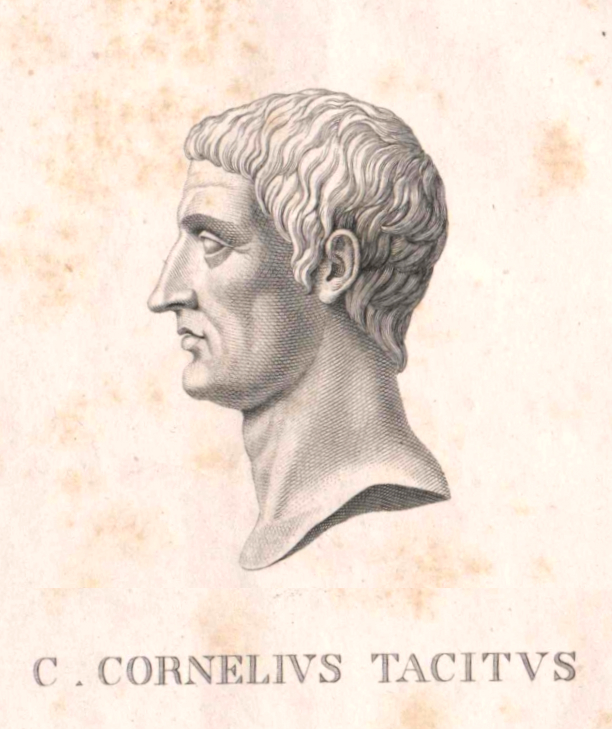
.jpg)
Summary
This volume contains Tacitus' two earliest works, both written in 98 CE, soon after the assassination of the emperor Domitian. The Agricola is a biography and eulogy of the author's father-in-law, Gnaeus Julius Agricola, who died in 93. Tacitus opens by lamenting the years of Domitian's tyranny, when free speech was suppressed and books were burned, and celebrates the new freedom under Nerva and Trajan. He then traces Agricola's life: his birth at Forum Julii in Gaul, his education at Massilia, his mother's restraint of his youthful enthusiasm for philosophy, his early service in Britain during Boudicca's revolt, and his career through the magistracies. Much of the work is devoted to Agricola's governorship of Britain from about 77 to 84. Tacitus gives an account of the geography and peoples of Britain and of earlier Roman campaigns, and describes how Agricola combined military campaigns with a policy of Romanization, encouraging the Britons to adopt baths, porticoes, togas and banquets, which Tacitus calls part of their enslavement. Agricola's fleet circumnavigates Britain, and his armies push into Caledonia, culminating in the victory at Mons Graupius, before which Tacitus gives the Caledonian leader Calgacus a speech denouncing Roman imperialism. Recalled by a jealous Domitian, Agricola lives quietly in Rome, avoiding the fate of more outspoken men, and dies in circumstances that prompt rumours of poisoning. Tacitus closes with a moving address to Agricola's spirit. The Germania is an ethnographic treatise on the lands and peoples beyond the Rhine and Danube. Its first part describes the Germans in general: their supposed indigenous origin and purity of race, their land and climate, their weapons and warfare, their chiefs and assemblies, their religion, the strictness of their marriages and the chastity of their women, their hospitality, their love of drinking and gambling, their funeral customs. The second part surveys individual tribes, from the Chatti and the Suebi to the Fenni at the edge of the known world. The Germania praises the simplicity and vigour of the 'barbarians' in implicit contrast with Roman luxury and moral decline, while also recording their indolence and drunkenness. The two works together establish Tacitus' themes of liberty and tyranny, virtue and corruption, and the moral costs of empire.
Plot or Argument
- Agricola 1–3: preface
Lament for the silencing of free speech under Domitian and celebration of the new reign.
- Agricola 4–9: early life and career
Agricola's origins, education, service in Britain and Asia, and the murder of his mother.
- Agricola 10–17: Britain
Geography and peoples of Britain and the history of Roman conquest.
- Agricola 18–38: the governorship
Campaigns, Romanization, the circumnavigation, Calgacus' speech and the battle of Mons Graupius.
- Agricola 39–46: recall and death
Domitian's jealousy, Agricola's discreet retirement, his death and Tacitus' farewell.
- Germania 1–27: the Germans in general
Origins, land, warfare, government, religion, family, customs, food and drink, funerals.
- Germania 28–46: the tribes
Survey of individual tribes from the Rhine to the Baltic and the remotest north.
Characters
- Gnaeus Julius Agricola, subject of the biography
Roman general and governor of Britain, presented as a model of virtue under tyranny.
- Domitian, emperor
Suspicious, jealous ruler whose reign is the dark background of the Agricola.
- Calgacus, Caledonian leader
British chief to whom Tacitus gives a great speech against Roman imperialism.
- Boudicca, queen of the Iceni
Leader of the British revolt of 60–61 CE, recalled in the Agricola.
Lessons
Virtue under tyranny
Tacitus defends Agricola's quiet service against those who sought glorious martyrdom, arguing that great men can exist even under bad emperors. The work asks how to act ethically within a corrupt system.
- Is Agricola's prudence admirable or compromising?
- How does Tacitus' own career shape his argument?
Empire seen from the other side
Calgacus' speech gives voice to the conquered, condemning Roman rule in some of the most quoted words in Latin. Tacitus lets a Roman reader see empire as robbery.
- Why does a Roman senator write such a powerful anti-Roman speech?
- How does the description of Romanization as 'enslavement' complicate the praise of Agricola?
- Where do similar critiques of empire appear in later literature?
The uses and dangers of ethnography
The Germania uses 'noble barbarians' to criticize Roman decadence. Its notion of German racial purity was later exploited by nationalists and Nazis, showing how ancient texts can be misused.
- What does Tacitus really know about the Germans?
- How should historians handle a text later appropriated for racial ideology?
Context
Written in 98 CE, in the first months of Trajan's reign, after the assassination of Domitian in 96 and the brief reign of Nerva. Roman Britain had been invaded in 43 CE; the Rhine frontier faced the Germanic tribes who had destroyed three legions in 9 CE.
Composition
The Agricola is a hybrid of funeral eulogy, biography and history. The Germania is the only surviving ancient ethnographic monograph of its kind. Both survived through a single manuscript, the Codex Hersfeldensis, rediscovered in the fifteenth century.
Reception
The Germania was taken up by German humanists in the sixteenth century as a national founding text and later by nineteenth- and twentieth-century nationalists, a history traced in Christopher Krebs's study. The Agricola is a foundational source for Roman Britain and Calgacus' speech a touchstone of anti-imperial rhetoric.
Comparisons
- heart-of-darkness
Marlow begins by imagining Roman soldiers arriving in barbarous Britain; Tacitus' Agricola is the Roman side of that scene, and Calgacus' speech anticipates Conrad's critique of empire.
- the-histories
Herodotus founded the ethnographic description of foreign peoples that Tacitus develops in the Germania.
- the-twelve-caesars
Suetonius's Life of Domitian gives the biographer's version of the tyranny Tacitus laments.
- the-nibelungenlied
The medieval German epic draws on the world of migration-era Germanic peoples whom Tacitus describes in their earlier form.
- two-lives-of-charlemagne
Einhard modelled his biography of Charlemagne on Suetonius but, like Tacitus, wrote a eulogistic life of a great man.
Quotes
“To robbery, slaughter, plunder, they give the lying name of empire; they make a solitude and call it peace.”
For Students
A reading companion for classical Christian high school students. See the student guide.
Reading Guide
Watch for
- The preface of the Agricola (chapters 1-3), where Tacitus recalls the burning of books under Domitian and says Romans would have lost their memory along with their voice if forgetting were as easy as keeping silent.
- Agricola 21, where Agricola encourages the Britons to build temples, forums, and houses, learn Latin, and adopt the toga, baths, and banquets. Note Tacitus's own judgment on what the Britons called this new refinement.
- The paired speeches before Mons Graupius: Calgacus's address to the Caledonians in chapters 30-32 and Agricola's reply to his soldiers in chapters 33-34. Ask why a Roman historian gives the enemy the stronger speech.
- Agricola's quiet retirement after his recall (chapters 39-43) and Tacitus's claim that great men can exist even under bad emperors. Weigh this against those who chose open defiance and death.
- In the Germania, the passages on the Germans' chiefs and assemblies, their worship in sacred groves without temples or images, the loyalty of a chief's companions, and the strictness of their marriages. Watch for the unspoken contrast with Rome.
Key terms and names
- Gnaeus Julius Agricola
- Tacitus's father-in-law, born at Forum Julii in Gaul, governor of Britain from about 77 to 84. Tacitus presents him as a model of competence, moderation, and integrity under a jealous emperor.
- Domitian
- The emperor whose suspicion and jealousy darken the Agricola. He recalls Agricola after Mons Graupius, and the book's preface celebrates the freedom that followed his death in 96.
- Calgacus
- The Caledonian leader to whom Tacitus gives the great speech before Mons Graupius in Agricola 30-32, accusing Rome of plundering the world and calling it empire.
- Mons Graupius
- The site in northern Britain of Agricola's decisive victory over the Caledonians in about 83 or 84, the military climax of the Agricola.
- Romanization
- Agricola's policy in Agricola 21 of drawing the Britons into Roman ways through towns, education, dress, and comforts. Tacitus says the Britons called it civilization when it was really part of their servitude.
- Comitatus
- The band of companions bound to a Germanic chief, described in Germania 13-14, who think it a disgrace to survive their leader in battle.
- Ethnography
- A description of a people's land, customs, religion, and government. The Germania is the only full ancient example of the form to survive, surveying first the Germans in general and then each tribe.
Seminar Questions
- Comprehension What does Tacitus say about free speech and the burning of books under Domitian in the preface of the Agricola?
- Comprehension What did Agricola do as governor of Britain besides fighting, and how did the Britons respond to the Roman way of life he introduced?
- Comprehension According to the Germania, how do the Germans choose their kings and war leaders, how do they worship their gods, and what do they think of marriage?
- Interpretation Tacitus gives Calgacus a speech that condemns Roman conquest more powerfully than any Roman could. Why would a Roman historian, praising a Roman general, put such words in an enemy's mouth?
- Interpretation Agricola survives Domitian by keeping quiet, while others won fame by defiant deaths. Is Tacitus defending moderation as a virtue, or defending his father-in-law and himself for having served a tyrant?
- Interpretation When Tacitus praises the Germans' faithful marriages and simple lives, whom is he really addressing? Find two places where the description of the Germans seems aimed at Rome.
- Interpretation Tacitus says the Britons called their new baths and banquets civilization when they were really part of their servitude. How can comfort become a form of bondage?
- Big Question When is it right to serve faithfully under an unjust ruler, and when does faithful service become a share in his injustice?
Faith Connections
- Daniel 1 and 6 (Scripture)
Daniel serves the kings of Babylon and Persia with excellence while refusing to give up his prayers to God, even at the risk of the lions' den. Agricola also serves a dangerous master faithfully, and the comparison sharpens the question of what a good man under a bad ruler must refuse to do.
- Acts 17:24-28 (Scripture)
Paul tells the Athenians that the God who made the world does not dwell in temples made with hands and that he made every nation of mankind from one man. The Germania notes that the Germans did not confine their gods within walls, and Paul's speech gives a Christian frame for reading Tacitus's survey of a foreign people.
- Augustine, City of God XIX.12-13 (Church Fathers)
Augustine defines true peace as the tranquillity of order and observes that even those who wage war seek a peace of their own making. Calgacus's charge that Rome makes a solitude and calls it peace is the pagan accusation Augustine's distinction between true and false peace helps students examine.
Logic and Rhetoric
Central argument: A tyranny like Domitian's burns books, forbids free speech, rewards servility, and punishes excellence. Yet Agricola served Rome with skill and integrity, conquered and governed Britain well, and avoided both flattery and a showy, useless death. Therefore, Tacitus argues, great men can exist even under bad emperors, and their quiet virtue deserves memory now that free speech has returned. The Germania supports the same moral by holding up the simple, faithful, warlike Germans as a mirror in which Romans can see how far luxury has carried them from their ancestors.
Rhetorical device: prosopopoeia (speech given to another voice). In Agricola 30-32 Tacitus composes a full oration for Calgacus, the Caledonian chief, ending with his famous charge that Romans plunder and slaughter and call the result empire and peace. The device lets a Roman author voice the case against Rome with full force while keeping it in the mouth of an enemy about to be defeated.
Debate: Resolved: Agricola's quiet service under Domitian was more admirable than open defiance would have been.
Writing Prompts
Essay: Tacitus praises Agricola for conquering Britain, yet he gives Calgacus the most powerful words in the book and calls Romanization a form of servitude. Argue whether the Agricola finally celebrates or questions Rome's empire, using chapters 21, 30-34, and 42.
Comparison with The Annals of Imperial Rome: In the Agricola Tacitus defends a man who survived Domitian through moderation; in the Annals he shows senators under Tiberius and Nero surviving through flattery or dying through defiance. Compare the two works' portraits of how a good man should live under a bad emperor, and argue whether Tacitus's judgment changes.
Medical Lens
Medical content is limited but notable. Agricola's final illness is described with the frequent visits of the emperor's freedmen and physicians, and Tacitus reports a rumour of poisoning that he declines to affirm, a classic case of the politics of a ruler's doctors. The closing address to Agricola's spirit is a model of Roman consolation and mourning. The Germania describes Germanic drinking customs, feasts lasting day and night, and councils held over drink, along with funeral customs. These passages are useful to historians of alcohol and of Roman ideas about 'barbarian' bodies and health.
- Agricola 43
Agricola's last illness, the emperor's physicians and freedmen visiting, and rumours of poison.
- Agricola 45–46
Tacitus' lament and address to the dead Agricola, a classical consolation.
- Germania 22–23
German drinking habits, quarrels at feasts, and deliberation over drink; their beer-like beverage.
- Germania 27
Germanic funeral customs and mourning.
Creative Prompts
- Essay
Compare Calgacus' speech with a modern anti-imperial speech. What has changed in the rhetoric of resistance?
- Fiction
Write the account of Agricola's death from the perspective of one of Domitian's physicians.
- Classroom
Trace how the Germania was used by later German nationalists, and discuss responsible ways to teach ancient ethnography.
Further Reading
- Annals, Tacitus
- A Most Dangerous Book: Tacitus's Germania from the Roman Empire to the Third Reich, Christopher B. Krebs
- Tacitus, Ronald Syme
Verification notes
Contents and history of both works are well established. The Calgacus line is quoted from the Church and Brodribb translation, which is widely reproduced; punctuation may vary between printings. Chapter references for medical passages are approximate.
- Exact Church and Brodribb punctuation of Agricola 30.
- Chapter references for German drinking customs (given as Germania 22–23) and funerals (27).
- Agricola's birthplace (Forum Julii) and the dates of his governorship (c. 77–84).