Work record
The Annals of Imperial Rome
c. 109–117 CE · Ancient · History · Latin
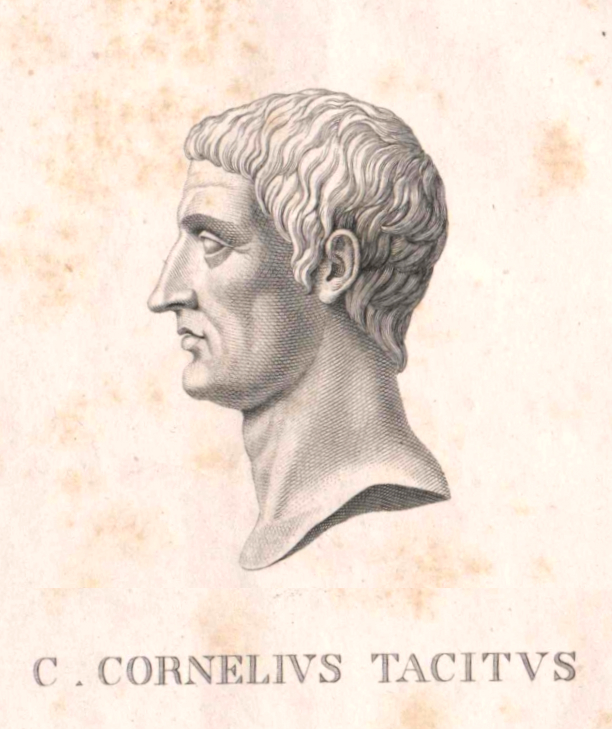
.jpg)
Summary
The Annals of Imperial Rome narrates the Julio-Claudian empire from the death of Augustus through Tiberius, Claudius and Nero, though parts are lost. Tacitus writes history as the psychology of autocracy. The old republican language remains, but fear has altered public behavior: senators flatter, informers thrive, emperors dissemble, and private households become political theatres. Tiberius withdraws behind ambiguity while Sejanus rises and falls; treason trials teach Rome how fear spreads through speech. Claudius appears weak, learned and manipulable, dominated in Tacitus’ account by freedmen and imperial women. Nero’s reign brings artistic vanity, murders of kin, court spectacle, the great fire of Rome and persecution of Christians. The narrative repeatedly turns on bodies: poisonings, forced suicides, executions, illness, disfigurement, sexual scandal and the staged control of death. Tacitus is not a neutral modern historian; his senatorial perspective and hostility to imperial corruption shape every portrait. Yet his insight into fear is extraordinary. Autocracy becomes a mental environment in which sincerity is dangerous and interpretation is compulsory. People must read faces, rumors, pauses and letters for signs of survival. Medical relevance appears in poison, suicide, stress, tyranny’s emotional climate, and the body as evidence of power. Nero’s matricide, Seneca’s forced death, the fire’s aftermath and the accounts of suspected poisoning all show politics entering the body. The Annals remains indispensable because it makes political pathology visible: a society can continue to function while its habits of truth, courage and trust are steadily diseased. The Annals also shows how historical narrative can mimic the atmosphere it describes. Tacitus’ compressed style forces readers to infer motives from fragments, much as imperial subjects infer danger from hints. The result is not just a record of tyranny but a reading experience shaped by suspicion, compression and dread. Its darkness is political method. Its readers learn to distrust every performance of calm.
Plot or Argument
- After Augustus
Tiberius inherits the principate and the language of liberty persists under increasingly constrained politics.
- Sejanus and fear
The rise and fall of Sejanus intensify treason trials, informers and senatorial self-protection.
- Claudius’ court
Imperial women, freedmen and succession politics dominate Tacitus’ account of Claudius.
- Nero’s crimes
Nero’s reign includes artistic display, murders, the great fire, persecution and forced deaths.
- History of servitude
Across reigns, Tacitus tracks how autocracy changes speech, memory and moral agency.
Characters
- Tiberius, emperor
Suspicious and opaque ruler whose reign normalizes fear and treason trials.
- Sejanus, praetorian prefect
Ambitious favorite whose rise and fall reveal the danger of proximity to power.
- Claudius, emperor
Presented as learned but weak, vulnerable to court manipulation.
- Nero, emperor
Artist-emperor whose reign becomes a study in vanity, violence and theatrical rule.
- Agrippina the Younger, imperial mother
Powerful dynastic actor murdered under Nero.
- Seneca, philosopher and courtier
Nero’s former tutor, forced to die after conspiracy accusations.
Lessons
Fear rewrites public speech
Tacitus shows people speaking safely rather than truthfully. Political terror becomes a language disorder.
- Where do characters speak in code?
- How does fear change memory?
Power enters the household
Imperial politics is not confined to the senate or army. Marriage, adoption, maternity and inheritance become instruments of rule.
- Which private relationships become political?
- How does Tacitus portray powerful women?
Death can be staged by the state
Forced suicide and exemplary punishment make the body a political message. Tacitus asks how dignity survives coerced endings.
- Which deaths are theatrical?
- What makes Seneca’s death philosophically charged?
Context
Tacitus wrote under the principate after the Julio-Claudian and Flavian dynasties, looking back at the first imperial century from senatorial memory.
Composition
The Annals were probably composed in the early second century CE. Books covering parts of Caligula, Claudius and Nero are lost.
Reception
Tacitus became a central historian of tyranny, court politics and political dissimulation, influential in Renaissance and modern republican thought.
Comparisons
- the-agricola-and-the-germania
Tacitus’ shorter works introduce the moral contrast between Roman corruption and provincial or barbarian virtue.
- the-history-of-the-peloponnesian-war
Both historians analyze fear and power with austere intensity, though Tacitus writes under monarchy rather than interstate war.
- letters-from-a-stoic
Seneca appears as both Stoic moralist and Nero's tutor and courtier inside Tacitus’ imperial world.
Quotes
For Students
A reading companion for classical Christian high school students. See the student guide.
Reading Guide
Watch for
- Tacitus's promise at the start of Book I to write of Tiberius, Claudius, and Nero without anger or partisanship, and the scenes in Book I where the senate tries to read what Tiberius really wants as he hesitates to accept power.
- The trial of the historian Cremutius Cordus in Book IV, prosecuted for praising Brutus and Cassius, and Tacitus's comment that rulers who burn books only spread the fame of what they suppress.
- Sejanus's rise to power in Book IV and Tiberius's withdrawal to Capri. Much of Sejanus's fall is lost, but follow its aftermath in Book VI, where his friends and family are hunted down.
- The deaths at Nero's court in Books XIII-XIV: Britannicus poisoned at dinner, and Agrippina surviving a collapsing ship only to be murdered at her villa. Notice how the narrative lingers on who saw what and who kept silent.
- Book XV: the great fire of Rome, Nero's blaming of the Christians, the conspiracy of Piso, and Seneca's calm, drawn-out death as he leaves his friends the image of his life.
Key terms and names
- Principate
- The system of rule founded by Augustus in which an emperor held supreme power while the old republican offices, senate, and vocabulary of liberty continued. Tacitus shows how these forms became masks.
- Maiestas
- The law of treason against the majesty of the Roman people, extended under Tiberius to words and even gestures against the emperor. Its trials fill Books I-VI and spread fear through the senate.
- Informers (delatores)
- Accusers who prosecuted fellow citizens for treason in hope of a share in their property and the emperor's favor. Tacitus presents them as a plague that the emperors fed rather than cured.
- Sejanus
- The commander of the Praetorian Guard who gains Tiberius's trust in Book IV, schemes for the succession, and is destroyed when Tiberius turns against him.
- Agrippina the Younger
- Daughter of Germanicus, wife of Claudius, and mother of Nero, who secures her son's accession and is murdered on his orders in Book XIV.
- Seneca
- The Stoic philosopher who tutored Nero and guided his early reign. Accused in the Pisonian conspiracy of Book XV, he is ordered to die and opens his veins in the presence of his wife Paulina and his friends.
- The fire of 64
- The great fire that burned much of Rome in Book XV. Tacitus reports that rumor blamed Nero, and that Nero shifted the blame to the Christians, whom he punished with cruel deaths.
Seminar Questions
- Comprehension How does Tiberius behave when the senate offers him power in Book I, and how do the senators respond?
- Comprehension Why is Cremutius Cordus put on trial in Book IV, and what does Tacitus say about the burning of his books?
- Comprehension According to Book XV, how did Nero respond to the rumor that he had started the fire, and what did he do to the Christians?
- Interpretation Tacitus promises to write without anger or partisanship, but he often reports rumors he says he cannot confirm, such as suspicions about Augustus's death in Book I. Does this method keep his promise or quietly break it?
- Interpretation Tacitus reports that, though he thought the Christians guilty of hating mankind, the crowd began to pity them because they were dying for one man's cruelty. Why does a historian hostile to Christians record this turn in public feeling?
- Interpretation Seneca's death in Book XV is staged like a philosopher's last lesson. Is Tacitus honoring him, or showing that even a Stoic's death becomes a performance under Nero?
- Interpretation The senators of the Annals keep the outward forms of liberty while flattering and accusing one another. In Tacitus's account, who is more to blame for this servility, the emperors or the senate itself?
- Big Question What happens to truthfulness, friendship, and courage in a society where any word may be reported as treason?
Faith Connections
- Romans 13:1-7 (Scripture)
Paul wrote to the Christians in Rome, probably in Nero's early years, that governing authorities are instituted by God and must be honored. Tacitus's account of what the same Nero later did to Christians in Book XV gives students the concrete setting in which to weigh Paul's teaching about obedience and its limits.
- 1 Peter 4:12-16 (Scripture)
Peter tells believers not to be surprised at the fiery trial among them and not to be ashamed if they suffer as Christians. Tacitus's description of Christians burned and torn by dogs after the fire is the earliest pagan account of the kind of persecution these lines anticipate, and church tradition places Peter's own martyrdom in Rome under Nero.
- Tertullian, Apology 5 (Church Fathers)
Tertullian, writing around 197, tells the Roman authorities to consult their own records, where they will find that Nero was the first to rage with the imperial sword against the Christians. He turns the persecution Tacitus describes into an argument: a sect first condemned by Nero must be something good.
Logic and Rhetoric
Central argument: Under the principate the names of the republic survived, but real power passed to one man whose favor meant life and whose suspicion meant death. Since the law of treason could reach words, silence, and even facial expressions, senators learned to flatter, informers prospered, and honest speech became dangerous. Since emperors too came to rule by dissimulation, every public act had to be read for hidden meaning. Therefore, Tacitus argues, autocracy corrupts not only rulers but the character of the whole governing class, and the historian's task is to preserve the memory of both its crimes and its rare acts of courage so that later ages may judge them.
Rhetorical device: insinuation (innuendo through reported rumor). In Book I Tacitus reports that some suspected Livia of hastening Augustus's death, and in Book XV he says it is uncertain whether the fire began by accident or by Nero's design, before recording the rumor that Nero sang of the fall of Troy while Rome burned. He does not assert the charges, but by placing them where they fall, he lets suspicion color the reader's judgment, much as it colored life at court.
Debate: Resolved: Seneca was wrong to serve as Nero's adviser.
Writing Prompts
Essay: Tacitus records few heroes in the Annals, but he gives careful attention to those who met death with dignity, such as Cremutius Cordus, Seneca, and the Christians after the fire. Argue what kind of courage Tacitus most admires and whether his history is finally a record of despair or of hope.
Comparison with The Twelve Caesars: Tacitus and Suetonius both wrote about Tiberius and Nero in the early second century. Compare their accounts of one of these emperors, especially how each handles rumor and scandal, and argue which historian gives the truer picture of what living under that emperor was like.
Medical Lens
The Annals is medically relevant through suspected poisonings, forced suicides, court fear and the political staging of bodies. Tacitus’ Rome is an ecology of anxiety: people monitor signs, rumors and imperial moods as if survival depended on diagnosis. The work also raises questions about suicide under coercion, especially in elite Roman culture where self-killing could preserve property, family or dignity.
- Book 4, treason trials
Informers and accusations create chronic fear and self-protective speech among elites.
- Book 12, death of Claudius traditions
Tacitus reports the famous poisoning tradition surrounding Claudius and succession.
- Book 14, murder of Agrippina
Nero’s attempts on his mother’s life turn family violence into imperial policy.
- Book 15, Seneca’s death
Seneca’s forced suicide is narrated as philosophical performance and political coercion.
- Book 15, fire and Christians
The great fire and punishments of Christians show public trauma redirected into scapegoating.
Creative Prompts
- Essay
Compare forced Roman suicide with modern debates about coercion, dignity and agency.
- Classroom
Track rumors in one book of the Annals and ask when rumor becomes political fact.
Further Reading
- The Annals, Tacitus
- Tacitus, Ronald Syme
- The Roman Revolution, Ronald Syme
Verification notes
The major reigns and themes are secure; individual poison narratives should be checked against book/chapter numbers.
- Add verified quotations only after checking the named public-domain translation.
- Confirm book, chapter, letter or rule locators against the intended edition.