Work record
The Twelve Caesars
c. 121 CE · Ancient · Biography · Latin
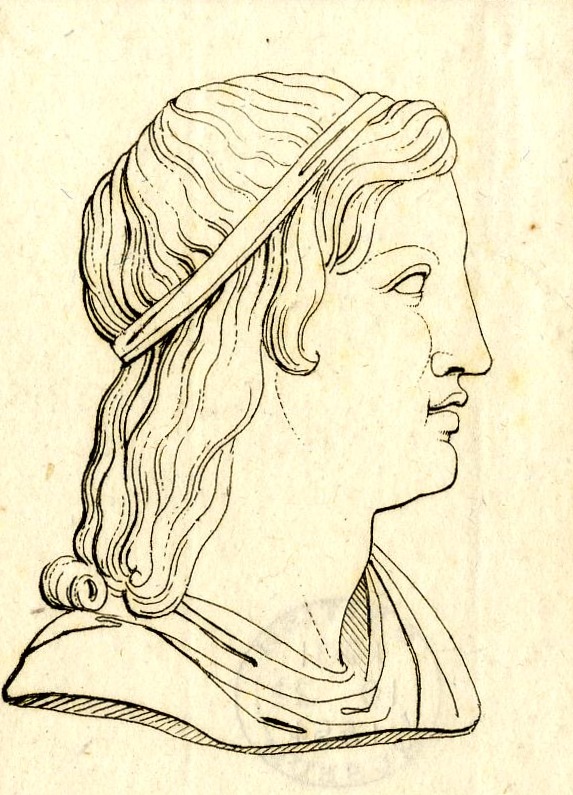
.jpg)
Summary
The Twelve Caesars offers biographies of Julius Caesar and the first eleven Roman emperors from Augustus through Domitian. Suetonius does not write history as Tacitus does, with sustained analysis of institutions and causation. Instead he organizes lives by ancestry, omens, public offices, military acts, building programs, appearance, habits, virtues, vices, sexual behavior, cruelty, generosity, sayings, portents and deaths. Julius Caesar appears as brilliant general, populist politician, dictator and murdered founder of the imperial sequence. Augustus becomes the model ruler whose private habits, family troubles and public restraint shape the principate. Tiberius withdraws into suspicion and sexual scandal on Capri. Caligula's biography moves sharply from promise to monstrous tyranny, extravagance and madness. Claudius is mocked for bodily and social awkwardness yet shown as an energetic administrator vulnerable to wives and freedmen. Nero's artistic vanity, theatricality, matricide, cruelty and suicide make him one of the book's dark centers. The civil-war emperors Galba, Otho and Vitellius pass quickly through ambition, instability and violent death. Vespasian and Titus restore a measure of order, while Domitian returns the sequence to suspicion and autocracy. The work is invaluable and treacherous: Suetonius preserves details found nowhere else, but he loves gossip, bodily signs, sexual scandal and moral anecdote. His method can feel like a dossier in which public deeds and bedroom rumors sit side by side. It also shows how imperial biography turns private habits into arguments about legitimacy, as if diet, sleep, sex and jokes could explain the health of the state. For medical history it is especially rich. Emperors' bodies are political texts: epilepsy, baldness, deformity, sleep, digestion, poison, fever, assassination wounds, omens at birth and death, sexual excess and alleged madness all become evidence of rule. The book reveals how ancient biography diagnosed character through the body, often mixing observation, moralism and rumor in a form that asks for careful source judgment.
Plot or Argument
- Julius Caesar
Suetonius presents Caesar's ancestry, political rise, military genius, dictatorship, personal habits, omens and assassination.
- Augustus
Augustus is treated as founder and model of imperial rule, with attention to public moderation, domestic trouble, bodily habits and death.
- Tiberius and Caligula
The biographies emphasize withdrawal, suspicion, sexual scandal, cruelty and the moral dangers of unchecked power.
- Claudius and Nero
Claudius's bodily awkwardness and administrative activity give way to Nero's performance, violence, extravagance and suicide.
- Galba, Otho and Vitellius
The short-lived emperors of 69 CE show imperial legitimacy collapsing into military faction, appetite and violent turnover.
- Vespasian and Titus
The Flavian restoration brings fiscal discipline, public building and relative stability, though still filtered through anecdote and character.
- Domitian
Domitian's suspicion, authoritarianism and assassination close the sequence with a return to fear and court intrigue.
Lessons
Biography can make the body political
Suetonius repeatedly treats appearance, appetite, illness and sexual behavior as signs of rule. The work teaches how ancient political judgment often passed through bodily anecdote.
- Which bodily details seem politically relevant?
- Which feel like gossip?
- How does Suetonius invite moral diagnosis?
Anecdote preserves and distorts
The book is indispensable because it records vivid details, but those same details can be rumor, moral theatre or hostile tradition. Readers must value evidence without surrendering judgment.
- How should historians use scandalous anecdotes?
- What makes a story feel true in Suetonius?
Power magnifies private disorder
Whether or not every scandal is factual, Suetonius shows a Roman belief that private vice becomes public danger when attached to absolute power.
- Does Suetonius think character causes political outcomes?
- How does imperial power change ordinary appetite?
Death scenes summarize lives
Each emperor's death is treated as revelation: murder, suicide, serenity, panic or omen becomes final commentary. Ancient biography turns dying into moral interpretation.
- Which death scene is most carefully shaped?
- How do omens affect the meaning of death?
Context
Suetonius wrote under the early second-century empire, looking back on the Julio-Claudian and Flavian rulers from a world where imperial biography was both politically sensitive and culturally fascinating. His access to archives and court traditions shaped the work.
Composition
The Twelve Caesars was probably published around 121 CE. Suetonius had served in imperial administration, but his biographical method favors topical categories and anecdotes over annalistic chronology.
Reception
The work became one of the most influential sources for Roman imperial scandal and character. It shaped later biographies, Renaissance political imagination and modern popular images of emperors such as Caligula and Nero.
Comparisons
- the-fall-of-the-roman-republic
Plutarch's lives give more moral and dramatic shape to republican figures, while Suetonius catalogues imperial bodies, habits and scandals.
- the-agricola-and-the-germania
Tacitus provides sharper political analysis and senatorial moralism; Suetonius offers biography through anecdote, appearance and private life.
- the-age-of-alexander
Both biographical traditions ask how power reveals character, but Suetonius is more archival and scandal-driven than Plutarch.
- macbeth
Shakespeare's tyrant shares Suetonius's theme that ambition, fear and bodily omens converge around illegitimate rule.
- two-lives-of-charlemagne
Einhard and Notker inherit ancient biography's interest in rulerly habits, bodies and exemplary anecdotes.
Quotes
For Students
A reading companion for classical Christian high school students. See the student guide.
Reading Guide
Watch for
- Suetonius' arrangement by topics rather than by years. After birth and career, each life turns to sections on public deeds, private habits, appearance, health, virtues, vices, and death. Notice how the Life of Caligula pauses partway through to say that the rest concerns a monster rather than a prince.
- Julius Caesar at the Rubicon and on the Ides of March: his hesitation at the river and the omens and warnings before his murder, including the report that he spoke to Brutus in Greek as he fell.
- The Life of Augustus, the longest and most admiring, with his boast of finding Rome brick and leaving it marble, his plain habits, and his deathbed question to his friends whether he had played his part well in the comedy of life.
- Two early pagan notices of the Christian movement: Claudius expelling the Jews from Rome for disturbances stirred up by one Chrestus, and Nero punishing the Christians among his public measures.
- The death scenes that close each life, from Nero's lament over the artist dying with him to Vespasian's joke that he must be turning into a god and Domitian's assassination after years of fear.
Key terms and names
- Principate
- The system founded by Augustus in which one man held supreme power while keeping the forms of the Republic, such as the Senate and consuls. Suetonius' lives trace how each successor used or abused that hidden monarchy.
- Julio-Claudians
- The dynasty from Augustus through Tiberius, Caligula, and Claudius to Nero, linked by blood, marriage, and adoption. Its end with Nero's suicide in 68 opens the civil wars.
- Year of the Four Emperors
- The civil wars of 69, when Galba, Otho, and Vitellius each held power briefly before Vespasian won. Suetonius' short lives of these men show legitimacy passing to whichever army was strongest.
- Flavians
- Vespasian and his sons Titus and Domitian, who restored order after 69. Suetonius praises the father's thrift and the son Titus' generosity, then ends the book with Domitian's suspicion and murder.
- Rubicon
- The small river marking the boundary of Caesar's province. By crossing it with his army in 49 BC he began civil war, and Suetonius records his saying that the die was cast.
- Omens and portents
- Signs such as dreams, lightning strikes, and strange births that Suetonius records at the rise and fall of each ruler. He presents them as part of the record of a life, foretelling greatness or doom.
- Ab epistulis
- The imperial office in charge of the emperor's correspondence, which Suetonius held under Hadrian. The post gave him access to archives, including letters of Augustus that he cites in the lives.
Seminar Questions
- Comprehension How is a typical life in The Twelve Caesars organized? Use the Life of Augustus to list the main topics Suetonius covers and the order in which he covers them.
- Comprehension Which emperors died by murder, which by suicide, and which by natural causes, and what omens does Suetonius report before at least two of those deaths?
- Interpretation Suetonius praises Augustus' modesty in dress and food and blames later emperors for luxury and excess. Why does he treat private habits as evidence about a ruler's public character?
- Interpretation The Life of Caligula moves from a young prince the people loved to a ruler Suetonius calls a monster. What, according to Suetonius, changed, and does he explain the change or only describe it?
- Interpretation Suetonius often reports rumors with phrases like some say or it is reported. How should a reader weigh these stories, and why might Suetonius include stories he cannot confirm?
- Interpretation Titus is said to have counted a day lost when he had done no one a kindness, yet his brother Domitian ends the book in suspicion and cruelty. What does the contrast between the brothers suggest about whether character or circumstance makes a good ruler?
- Big Question Does absolute power reveal a man's character, or does it change him into someone he would not otherwise have been?
Faith Connections
- Luke 2:1-7 (Scripture)
Luke dates the birth of Jesus by a decree of Caesar Augustus that all the world should be registered. The emperor whose census and building programs Suetonius praises becomes, in the Gospel, the unwitting instrument that brings Joseph and Mary to Bethlehem.
- Acts 18:1-3 (Scripture)
Luke reports that Aquila and Priscilla came to Corinth because Claudius had commanded all Jews to leave Rome. Suetonius' Life of Claudius records the same expulsion and ties it to disturbances over one Chrestus, letting students read a pagan and a Christian account of one event.
- Daniel 4 (Scripture)
Nebuchadnezzar boasts over the great Babylon he has built and is driven out to live like a beast until he acknowledges that heaven rules. Suetonius' emperors who claimed divine honors, above all Caligula, give the chapter a Roman commentary.
- Augustine, City of God V.12-19 (Church Fathers)
Augustine argues that the Romans restrained their other vices out of love of glory, and that God granted them empire as an earthly reward for that virtue. His analysis offers a theological frame for Suetonius' gallery of men who lived for fame and power.
Logic and Rhetoric
Central argument: A ruler's character shows itself in everything he does, from war and lawgiving to diet, dress, sleep, and jokes. Suetonius gathers evidence under each of these heads for every Caesar. Therefore the reader can judge each emperor by the whole pattern of his habits and deeds, and the pattern shows that moderation, as in Augustus and Vespasian, sustains rule, while cruelty, luxury, and suspicion, as in Caligula, Nero, and Domitian, end in violent death.
Rhetorical device: exemplum. Suetonius makes single anecdotes stand for a whole character, as when the Life of Titus records that he counted a day lost on which he had granted no favor, or the Life of Domitian reports that he spent hours alone catching flies with a pen. Each small story becomes a memorable example of virtue or vice that the reader carries away in place of an analysis.
Debate: Resolved: Suetonius' anecdotes about the private lives of the emperors are trustworthy evidence for judging how they ruled.
Writing Prompts
Essay: Suetonius closes each life with a death scene. Choose three emperors, such as Julius Caesar, Augustus, and Nero, and argue how Suetonius uses the manner of each death to deliver a final judgment on the life.
Comparison with The Annals of Imperial Rome: Tacitus in the Annals and Suetonius in The Twelve Caesars both describe Tiberius and Nero, one year by year and the other topic by topic. Compare their accounts of one of these emperors and argue which method gives the truer picture of the man and his reign.
Medical Lens
Suetonius is exceptionally useful for the history of bodies in political biography. Caesar's reported epilepsy, Claudius's bodily impairments, Caligula's alleged madness, Nero's suicide, poisoning rumors, sexual catalogues, omens of birth and death, and assassination wounds show how ancient authors made medicalized or bodily signs into character evidence. Many claims are hostile or anecdotal; present them as Suetonius's reports, not clinical facts.
- Julius Caesar
Reports of Caesar's falling sickness and bodily habits show illness incorporated into political biography.
- Caligula
The biography uses illness, sleeplessness and behavioral excess to frame tyranny as madness or monstrous disorder.
- Claudius
Descriptions of Claudius's gait, speech and bodily difference connect disability, mockery and political underestimation.
- Nero
Nero's violence, artistic grandiosity and suicide are presented through bodily fear, performance and death.
- Several lives
Poisoning rumors, assassination wounds and deathbed omens recur as instruments of political interpretation.
Creative Prompts
- Essay
Analyze how Suetonius turns emperors' bodies into political evidence.
- Dialogue
Stage Suetonius and a modern physician debating whether Caesar's epilepsy belongs in a ruler's biography.
- Classroom
Have students sort Suetonius's details into evidence, rumor, moral anecdote and bodily stigma.
Further Reading
- The Annals of Imperial Rome, Tacitus
- The Twelve Caesars, Suetonius
- Suetonius: The Scholar and His Caesars, Andrew Wallace-Hadrill
- Augustus, Anthony Everitt
- Rubicon, Tom Holland
Verification notes
Structure and major medical hooks are secure. Quotations are omitted because Rolfe wording and section numbers should be checked before use.
- Exact section numbers for Caesar's epilepsy, Caligula's sleep/illness, Claudius's bodily description and Nero's suicide.
- Whether the local edition uses Graves or another copyrighted translation, which would affect quotations.
- Any direct quotations against a public-domain translation such as Rolfe.