Work record
Essays
1597-1625 · Renaissance Early Modern · Essays · English
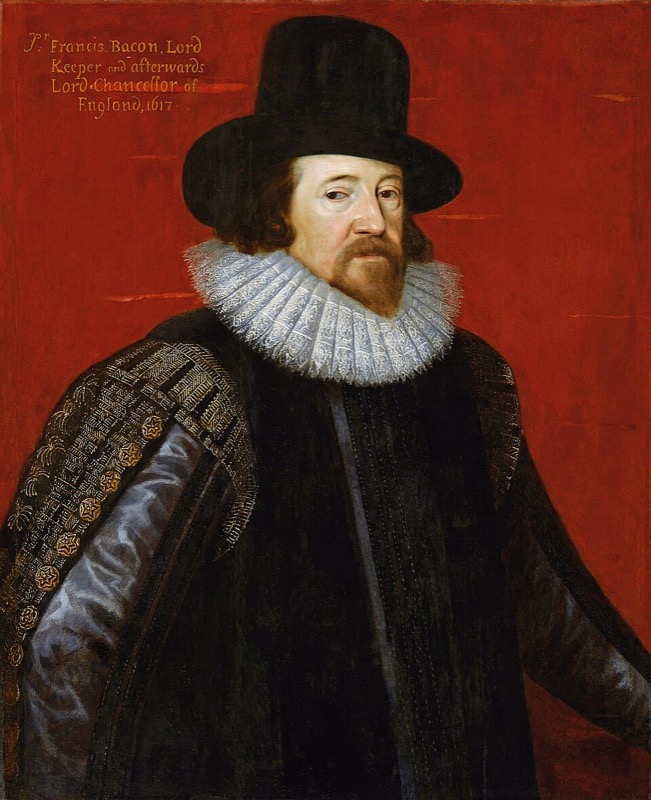

Summary
Bacon's Essays, or Counsels, Civil and Moral, grew over almost thirty years from a slim volume of ten pieces in 1597 to fifty-eight in the final edition of 1625, the text used here. Bacon borrowed the name essay from Montaigne, but where Montaigne explored himself at leisure, Bacon compressed observation into dense, balanced sentences meant for men of business and government. The early essays are almost strings of aphorisms; later revisions add examples from Roman history, the Bible and recent European politics, and sometimes soften or complicate the first verdicts. The book opens with Of Truth, which begins with jesting Pilate and admits that most people love lies because a mixture of falsehood adds pleasure, before praising the inquiry, knowledge and belief of truth as the sovereign good. Of Death argues that men fear death as children fear the dark, that every strong passion can overcome that fear, and that it is as natural to die as to be born. Many essays deal with private life and the passions: revenge is a kind of wild justice that law should weed out; adversity reveals virtue as crushed spices release their scent; parents' joys and griefs are secret; he who has wife and children has given hostages to fortune; envy is the most importunate passion and has something of witchcraft in it; love is better confined to the stage. A large group treats public life, the essays that made Bacon's reputation as a political moralist: great place, nobility, seditions and troubles, empire, counsel, delays, cunning, innovations, dispatch, faction, judicature and the true greatness of kingdoms, all written from the perspective of a royal servant who knows how courts work and how they fail. Of Simulation and Dissimulation and Of Cunning analyse concealment with unsentimental precision. A third group touches body and mind. Of Regiment of Health advises self-observation as the best physic, gradual change of habit, moderation of passions and a physician who knows the patient. Of Friendship describes the friend as the only remedy that opens the heart, doubling joys and halving griefs. Of Deformity, perhaps prompted by the hunchbacked Robert Cecil, links bodily difference to boldness and ambition. Of Youth and Age, Of Nature in Men and Of Custom and Education consider temperament and habit. Of Studies, among the most famous, ranks books as tasted, swallowed or chewed and digested and prescribes particular studies for particular defects of mind, as exercises are prescribed for bodily ills. Of Gardens and Of Building show Bacon's pleasure in design. The book ends with Of Vicissitude of Things, on the cycles of religions, wars and learning, and an unfinished fragment on fame.
Plot or Argument
- Editions of 1597, 1612 and 1625
Ten short essays in 1597, bound with religious meditations; thirty-eight in 1612; fifty-eight in 1625, many expanded with examples and dedicated to the Duke of Buckingham. A Latin version followed in 1638.
- Truth, death, religion (Essays I–III, XVI–XVII)
Of Truth on the love of lies and the vantage ground of truth; Of Death on the fear of dying and the passions that master it; Of Unity in Religion, Of Atheism and Of Superstition on religious division, the claim that a little philosophy inclines to atheism while depth brings men to religion, and superstition as worse than unbelief.
- The private passions (IV–X, XXVII)
Revenge as wild justice, adversity as the blessing of the Old Testament, simulation and dissimulation, parents and children, marriage and single life, envy as an evil eye, love as a weak and foolish passion, and friendship as a medicine for the heart and understanding.
- Office, state and counsel (XI, XIV–XV, XIX–XXV, XXIX)
Of Great Place on the servitude of high office; Of Seditions and Troubles on causes and remedies of rebellion; Of Empire on the burdens of kings; Of Counsel, Of Delays, Of Cunning, Of Innovations and Of Dispatch on the conduct of business; Of the True Greatness of Kingdoms and Estates on military virtue as the basis of power.
- Health, temperament and the body (XXX, XXXVIII–XXXIX, XLII–XLIV)
Of Regiment of Health on self-observation and moderation; Of Nature in Men and Of Custom and Education on habit; Of Youth and Age, Of Beauty and Of Deformity on how the body and its stage of life shape character and fortune.
- Suspicion, discourse and the conduct of the mind (XXXI–XXXII, L, LVII)
Suspicions are like bats that fly by twilight and should be remedied by knowing more; good discourse varies and asks questions; Of Studies prescribes reading for defects of mind; Of Anger offers ways to restrain and calm it.
- Wealth, colonies and building (XXXIII–XXXIV, XLI, XLV–XLVI)
Of Plantations on colonizing new lands, Of Riches and Of Usury on money, Of Building on houses and Of Gardens, which begins 'God Almighty first planted a garden' and lists plants for every month.
- Fortune, fame and the cycles of things (XL, LIII–LVIII, fragment)
Of Fortune on men as architects of their fortune; essays on praise, vainglory, honour and judicature; Of Vicissitude of Things on recurring floods, plagues, sects and wars; and an unfinished essay Of Fame.
Characters
- The essayist, counsellor-narrator
Bacon's voice as an experienced courtier and lawyer, addressing readers who must act in a world of power, envy and dissimulation.
- Pontius Pilate, opening figure
'Jesting Pilate', who asked what truth was and did not wait for an answer, opens the first essay.
- Celsus, cited physician
Roman medical writer whose advice to alternate contraries while leaning to the benign extreme Bacon praises in Of Regiment of Health.
- Montaigne, acknowledged predecessor
Quoted in Of Truth on why being called a liar is such a disgrace; source of the essay form.
Lessons
Observe your own body before trusting general rules
Of Regiment of Health makes a person's own observation of what helps and harms them the best physic, while warning that strength in youth hides debts paid in age. Bacon recommends gradual change of habits and a physician who knows the patient as well as the disease.
- How does Bacon's advice anticipate individualized medicine, and where does it conflict with evidence from trials?
- Why does Bacon say it is safer to change many things than one?
- What does his warning about physicians who please the patient and physicians who follow the art too rigidly suggest about good care?
A friend is a remedy no apothecary sells
Of Friendship describes the unburdening of the heart to a friend as a cure for the 'stoppings and suffocations' of the mind, and adds that friendship clarifies judgment and gives faithful counsel. Isolation, Bacon says, makes men cannibals of their own hearts.
- Compare Bacon's account of friendship's 'first fruit' with modern evidence on social support and mental health.
- Why does Bacon think even kings need friends, and what does it cost them to have one?
Read for use, and choose studies to correct the mind
Of Studies separates reading for delight, ornament and ability, and treats different disciplines as exercises for different weaknesses of mind. Mathematics fixes a wandering wit; law trains a mind that cannot connect cases.
- Which books in your own life were tasted, swallowed or chewed and digested?
- Is Bacon's idea of matching studies to mental defects a kind of cognitive therapy?
Worldly wisdom has a moral cost to be counted
Many essays teach how to handle power, envy and dissimulation, sometimes with cool approval of concealment. Read alongside Bacon's own fall for corruption, they show both the usefulness and the limits of prudence without principle.
- Where does Bacon distinguish acceptable secrecy from deceit, and is the line convincing?
- Does Of Great Place read differently once one knows Bacon was impeached?
Context
The Essays span the late Elizabethan court, the accession of James I, and the rise of the royal favourite George Villiers, Duke of Buckingham. They belong to a Renaissance culture of political counsel shaped by Machiavelli, Tacitus and Seneca, and to the period of English expansion into Ireland and Virginia that Of Plantations addresses. Bacon was at the same time writing The Advancement of Learning and Novum Organum, and the essays share their interest in observation and in the idols that distort judgment.
Composition
The first edition (1597) contained ten essays with Meditationes Sacrae and The Colours of Good and Evil. Bacon added and revised essays for the 1612 edition (thirty-eight) and the 1625 edition (fifty-eight), titled The Essays or Counsels, Civil and Moral, written after his fall from office. A Latin translation, Sermones Fideles, was prepared under his supervision and published in 1638. The stored text follows the 1625 edition with modernized spelling.
Reception
The Essays were Bacon's most popular work in his lifetime and have remained in print ever since. They shaped the English aphoristic prose style and were standard school texts in Britain and America. Readers from Samuel Johnson to modern critics have admired their concision while noting their calculating, sometimes Machiavellian tone; Alexander Pope's line calling Bacon 'the wisest, brightest, meanest of mankind' captures the mixed verdict.
Comparisons
- essays-montaigne
Bacon took the name of the form from Montaigne but not its manner: Montaigne's essays wander and confess, while Bacon's are compressed public counsel with almost no self-portrait.
- novum-organum
Of Truth and Of Suspicion share the Novum Organum's diagnosis of how the mind deceives itself; the idols of the tribe and cave are the systematic form of the essays' observations about love of lies and unfounded fears.
- the-prince
Bacon admired Machiavelli for describing what men do rather than what they ought to do, and essays such as Of Simulation and Dissimulation and Of Cunning adopt his realism while keeping a Christian frame.
- letters-from-a-stoic
Bacon quotes Seneca on dying from mere weariness and borrows the Stoic consolations of Of Death and Of Adversity, while warning that the Stoics made death more fearful by over-preparing for it.
- characters
Theophrastus sketches types of folly in miniature portraits; Bacon's essays on envy, vainglory and suspicion analyse the same failings as general laws of conduct rather than characters.
- on-friendship
Cicero's dialogue grounds friendship in virtue among equals; Bacon's essay, more practical, values friendship for its effects on the passions, the understanding and the conduct of affairs.
Quotes
Frequently cited
“WHAT is truth? said jesting Pilate, and would not stay for an answer”
Frequently cited
“Some books are to be tasted, others to be swallowed, and some few to be chewed and digested”
“Doth any man doubt, that if there were taken out of men's minds, vain opinions, flattering hopes, false valuations, imaginations as one would, and the like, but it would leave the minds, of a number of men, poor shrunken things, full of melancholy and indisposition, and unpleasing to themselves”
“MEN fear death, as children fear to go in the dark; and as that natural fear in children, is increased with tales, so is the other”
“Groans, and convulsions, and a discolored face, and friends weeping, and blacks, and obsequies, and the like, show death terrible”
“It is as natural to die, as to be born; and to a little infant, perhaps, the one is as painful, as the other”
“REVENGE is a kind of wild justice; which the more man's nature runs to, the more ought law to weed it out”
“Certainly virtue is like precious odors, most fragrant when they are incensed, or crushed”
“HE THAT hath wife and children hath given hostages to fortune; for they are impediments to great enterprises, either of virtue or mischief”
“you may take sarza to open the liver, steel to open the spleen, flowers of sulphur for the lungs, castoreum for the brain; but no receipt openeth the heart, but a true friend”
“for it redoubleth joys, and cutteth griefs in halves”
“a man's own observation, what he finds good of, and what he finds hurt of, is the best physic to preserve health”
“As for the passions, and studies of the mind; avoid envy, anxious fears; anger fretting inwards; subtle and knotty inquisitions; joys and exhilarations in excess; sadness not communicated”
“Physicians are, some of them, so pleasing and conformable to the humor of the patient, as they press not the true cure of the disease; and some other are so regular, in proceeding according to art for the disease, as they respect not sufficiently the condition of the patient”
“Bowling is good for the stone and reins; shooting for the lungs and breast; gentle walking for the stomach; riding for the head; and the like”
For Students
A reading companion for classical Christian high school students. See the student guide.
Reading Guide
Watch for
- The first sentence of the whole book, in Of Truth, where jesting Pilate asks what truth is and does not wait for an answer. Notice how the essay then admits that people love lies before praising truth as the sovereign good.
- The three degrees of concealment in Of Simulation and Dissimulation: closeness or secrecy, dissimulation, and outright simulation. Decide where Bacon draws the line between prudence and falsehood.
- The fruits of friendship in Of Friendship (XXVII): ease of the heart, clarity of the understanding, and help in affairs a man cannot handle himself, with the list of apothecary remedies none of which can open the heart.
- The pairing of Of Atheism and Of Superstition (XVI-XVII), where Bacon argues that shallow philosophy inclines to atheism, deep philosophy returns men to religion, and superstition does more damage than unbelief.
- Of Studies (L), with its ranking of books to be tasted, swallowed, or chewed and digested, and its prescription of particular studies for particular weaknesses of mind.
Key terms and names
- Essay
- From the French essai, a trial or attempt, a name Bacon borrowed from Montaigne. Bacon's essays are short, compressed counsels rather than Montaigne's wandering self-examinations.
- Counsels, Civil and Moral
- The subtitle of the 1625 edition. Civil counsels concern public life, office and the state; moral counsels concern private passions and conduct.
- Wild justice
- Bacon's description of revenge in Of Revenge (IV). The phrase admits that revenge springs from a sense of justice while insisting that law, not private passion, must answer wrongs.
- Hostages to fortune
- Bacon's image in Of Marriage and Single Life (VIII) for wife and children, whose welfare binds a man and makes him cautious in great enterprises of virtue or of mischief.
- Dissimulation
- In Of Simulation and Dissimulation (VI), letting others believe one is not what one is, as distinct from secrecy (saying nothing) and simulation (actively pretending to be what one is not).
- Regiment of health
- The title of Essay XXX, meaning a rule or regimen for keeping well. Bacon makes a person's own observation of what helps and harms him the first principle.
Seminar Questions
- Comprehension In Of Truth, why does Bacon say most people prefer a mixture of lies, and what does he say would be left of their minds if vain opinions and flattering hopes were removed?
- Comprehension What three fruits of friendship does Bacon name in Of Friendship, and why does he say even kings need friends?
- Comprehension In Of Death, what passions does Bacon say can overcome the fear of dying, and what does he say makes death seem more terrible than it is?
- Interpretation Bacon calls revenge a kind of wild justice. Why does he grant revenge the word justice at all, and why does he still want law to weed it out?
- Interpretation In Of Simulation and Dissimulation, Bacon approves of secrecy, allows dissimulation in some cases, and condemns habitual simulation. Is his line between them a moral line or only a practical one?
- Interpretation Bacon says adversity is the blessing of the New Testament and that virtue is like precious odours, most fragrant when crushed. How does Of Adversity combine Christian and Stoic consolation?
- Big Question Bacon wrote some of the best counsel on great place and integrity, yet was impeached for taking gifts from litigants. Can a person teach wisdom he does not live, and should readers trust it less when he fails?
Faith Connections
- John 18:37-38 (Scripture)
Jesus tells Pilate he came to bear witness to the truth, and Pilate answers with his question and walks out. Bacon opens the Essays with this scene, making Pilate the model of the man who asks about truth without wanting the answer.
- Psalm 14:1 (Scripture)
Bacon cites the fool who has said in his heart there is no God in Of Atheism, and argues that the fool says it in his heart rather than believes it in his head. The essay reads atheism as a wish more than a conviction.
- Romans 12:17-21 (Scripture)
Paul forbids private vengeance and leaves wrath to God and to the governing authority. Of Revenge reaches a similar conclusion through a lawyer's argument: public justice must replace wild justice.
- Augustine, Confessions X.23 (Church Fathers)
Augustine observes that people love truth when it shines on them and hate it when it accuses them, so that they would rather be deceived than shown to be wrong. Bacon's Of Truth makes the same observation about why lies please.
Logic and Rhetoric
Central argument: Human beings act within a world of passions, offices and fortunes that they cannot fully control. Experience, history and Scripture reveal the regular causes and effects of these forces. A man who understands them can govern himself and his affairs better than one who relies on rules alone. Therefore the wise man studies conduct as a natural philosopher studies nature, and turns observation into compact counsel he can carry into action.
Rhetorical device: antithesis. In Of Friendship Bacon says that confiding in a friend redoubles joys and cuts griefs in halves, setting two opposite effects side by side in balanced clauses so that the sentence itself performs the doubling and halving it describes.
Debate: Resolved: Bacon's counsel on dissimulation is compatible with Christian honesty.
Memory Work
Some books are to be tasted, others to be swallowed, and some few to be chewed and digested
REVENGE is a kind of wild justice; which the more man's nature runs to, the more ought law to weed it out
Writing Prompts
Essay: Bacon's Essays teach how to rise and survive in a world of courts, envy and concealment, yet the collection opens with an essay on truth and includes essays on atheism, adversity and goodness. Argue whether the Essays offer a coherent Christian ethic of public life or a worldly prudence with Christian ornament.
Comparison with Essays: Bacon took the name of his book from Montaigne but wrote in a very different manner. Compare Bacon's Of Friendship with Montaigne's Of Friendship, and argue which essayist gives the truer account of what friendship is for and what it costs.
Medical Lens
Several essays give a compact picture of early modern lay medicine. Of Regiment of Health is a Renaissance guide to self-care: individual observation of what agrees with one's body, gradual change of habits, Celsus's rule of alternating contraries, avoidance of harmful passions, and a balanced choice of physician; its remark that some physicians please the patient while others follow the art without regard to the person remains a teaching point on clinical judgment. Of Friendship uses the materia medica of the day (sarsaparilla, iron, sulphur, castoreum) to argue that confiding in a friend relieves the mind as purges relieve the body. Of Death is an early essay on the experience of dying and the fear of it. Of Deformity's claim that physical difference shapes character reflects period assumptions that should be read critically, not as clinical insight. Bacon's own interest in prolonging life appears more fully in his History of Life and Death (1623).
- Essay I, Of Truth
Illusions and flattering hopes as supports of morale; without them minds would be 'full of melancholy and indisposition'.
- Essay II, Of Death
Fear of death compared to children's fear of the dark; the deathbed's groans and convulsions; passions that overcome the fear of dying; death as natural as birth.
- Essay XXVII, Of Friendship
Friendship as the remedy for 'stoppings and suffocations' of the heart; contemporary remedies for liver, spleen, lungs and brain; those without friends as cannibals of their own hearts; a physician unacquainted with the patient's body may cure the disease and kill the patient.
- Essay XXX, Of Regiment of Health
Self-observation as physic, gradual change, Celsus's alternation of fasting and full eating, waking and sleep; passions to avoid; choosing a physician of middle temper.
- Essay XXXI, Of Suspicion
Suspicions as defects 'not in the heart, but in the brain' that dispose wise men to irresolution and melancholy, remedied by learning more.
- Essays XLII–XLIV, Of Youth and Age, Of Beauty, Of Deformity
Stages of life and bodily appearance as influences on character; deformity as a spur to boldness and ambition.
- Essay L, Of Studies
Exercises for bodily ills (bowling for the stone, walking for the stomach) as a model for studies prescribed for defects of the mind.
Creative Prompts
- Essay
Write a Baconian essay 'Of Sleep' in his compressed style, drawing on Of Regiment of Health and on modern sleep medicine.
- Dialogue
Write a consultation in 1625 between Bacon and two physicians, one who flatters the patient and one who follows the book, as he describes them in Of Regiment of Health.
- Classroom
Have students sort their semester's reading into books tasted, swallowed and chewed and digested, and defend one choice in a paragraph.
- Fiction
Tell the story of Bacon's last experiment on Highgate Hill, stuffing a chicken with snow, through the eyes of the servant who helped him.
Further Reading
- Novum Organum, Francis Bacon
- The Advancement of Learning, Francis Bacon
- Hostage to Fortune: The Troubled Life of Francis Bacon, Lisa Jardine and Alan Stewart
- Brief Lives, John Aubrey
Source of the anecdote of Bacon's death.
- Francis Bacon: From Magic to Science, Paolo Rossi
Verification notes
Edition history, essay titles and content are well established. Essay numbers follow the 1625 order; the stored Project Gutenberg #575 text has modernized spelling and does not number the essays. All quotes were located verbatim by hand in that text and have not yet been run through scripts/verify-quotes.mjs. The link between Of Deformity and Robert Cecil and Aubrey's account of Bacon's death are traditional and hedged accordingly.
- Whether Of Deformity was aimed at Robert Cecil (a contemporary assumption, not stated in the essay).
- Aubrey's account of Bacon's death from a chill caught while stuffing a chicken with snow.
- Exact count of essays in the 1612 edition (usually given as thirty-eight).