Work record
Selected Short Stories
1880s · 19th Century · Short Stories · French

Summary
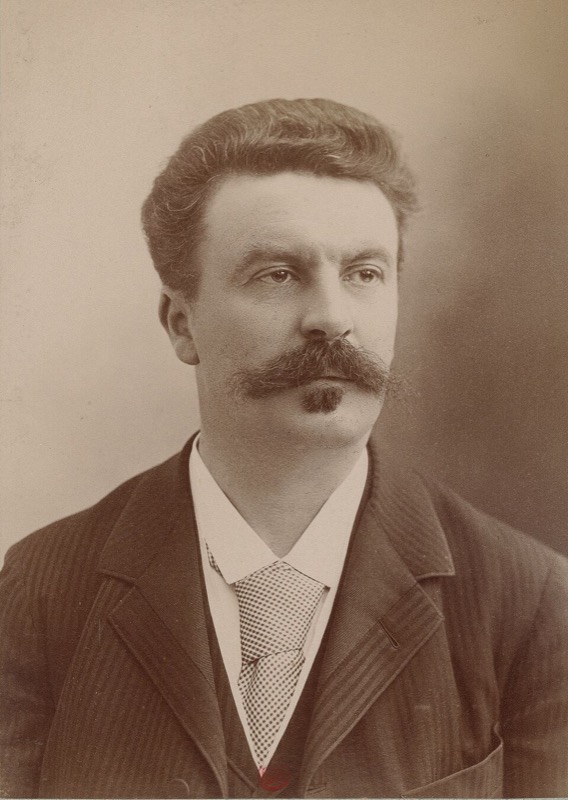
Maupassant's stories, written mostly between 1880 and 1890, are compact, ironic and often brutal studies of French life: Norman peasants, Parisian clerks, prostitutes, bourgeois families, soldiers and the provincial gentry. This selection gathers many of the best known, which typically include the following. 'Boule de Suif' (1880), his first masterpiece, follows a coach of respectable citizens, nuns, a democrat and a plump prostitute nicknamed Boule de Suif fleeing occupied Rouen during the Franco-Prussian War. When a Prussian officer refuses to let the coach leave unless she sleeps with him, her fellow travellers, who had happily eaten her food, pressure her to submit; once she has, they shun her. 'The Necklace' (1884) tells of Mathilde Loisel, a clerk's wife who borrows a diamond necklace for a ball, loses it, and spends ten years of drudgery paying for a replacement, only to learn the original was paste. 'Two Friends' shows two Parisian anglers shot as spies by the Prussians during the siege. 'A Piece of String' follows a Norman peasant accused of stealing a pocketbook after he is seen picking up a piece of string; though cleared, he is never believed and dies obsessed with protesting his innocence. 'Madame Tellier's Establishment' takes the women of a provincial brothel to a first communion in the country, where their emotion sets the congregation weeping. 'Mademoiselle Fifi' depicts a sadistic Prussian officer killed by a prostitute he insults. 'The Horla' (1887), in its final diary form, records a man's growing conviction that an invisible being has entered his house, drinks his water and milk while he sleeps, and controls his will. He reads of an epidemic of madness in Brazil, attends a hypnotism demonstration, traps the creature in his room and burns the house, forgetting his servants, and concludes that since the Horla is not dead he must kill himself. Other tales present country cruelty, comic adulteries, ghostly encounters and the bleakness of ordinary lives, all told with the economy Maupassant learned from Flaubert.
Plot or Argument
- Boule de Suif
Respectable refugees exploit and then despise the prostitute who saves them by yielding to a Prussian officer.
- The Necklace
A borrowed necklace is lost; a decade of hardship to replace it ends with a cruel revelation.
- War stories: Two Friends, Mademoiselle Fifi
Ordinary French people under Prussian occupation; executions and acts of revenge.
- Norman tales: A Piece of String and others
Peasant suspicion, avarice and the ruin of a man by rumour.
- Madame Tellier's Establishment
Brothel workers attend a country first communion in a mixture of comedy and pathos.
- The Horla
A diary of encroaching madness and an invisible invader, ending in fire and thoughts of suicide.
Characters
- Boule de Suif (Élisabeth Rousset), title character
Patriotic, generous prostitute whose fellow travellers press her into a sacrifice for their sake and then shun her.
- Mathilde Loisel, protagonist of 'The Necklace'
Discontented wife whose vanity costs ten years of poverty.
- Maître Hauchecorne, protagonist of 'A Piece of String'
Thrifty Norman peasant destroyed by a false accusation.
- The narrator of 'The Horla', diarist
Comfortable Norman gentleman who comes to believe an invisible being possesses him.
- Madame Tellier, brothel keeper
Respectable-minded madam who closes her house to attend her niece's first communion.
Lessons
Hypocrisy of respectability
In 'Boule de Suif', the bourgeois travellers use and discard the prostitute who is morally their superior. Maupassant exposes the selfishness behind social virtue.
- Who in the coach behaves worst?
- Why does the story end with the Marseillaise?
Irony and fate
The twist of 'The Necklace' shows how much suffering can rest on a small mistake or pride. Maupassant's endings make earlier details change meaning in retrospect.
- Is Mathilde punished fairly?
- What if she had confessed the loss at once?
The mind under siege
'The Horla' presents madness from the inside and leaves open whether the invader is real. It shows how belief, fear and the science of the day can intertwine.
- Is the narrator mad or perceptive?
- What role does hypnotism play in the story?
- Does knowing about Maupassant's illness change your reading?
Context
Maupassant's France was the early Third Republic, still marked by defeat in the Franco-Prussian War of 1870–1871 and the Prussian occupation. His stories reflect naturalism's interest in heredity and environment, Norman peasant life, and Parisian bureaucracy, and late tales like 'The Horla' reflect contemporary fascination with hypnotism and Charcot's work at the Salpêtrière.
Composition
'Boule de Suif' appeared in the collective volume Les Soirées de Médan (1880). Maupassant then published stories in newspapers such as Gil Blas and Le Gaulois, collected into many volumes. 'The Horla' exists in two versions (1886 and 1887); the 1887 diary version is the better known.
Reception
Maupassant was immensely popular and influential, shaping the modern short story; writers including Chekhov, Kate Chopin, Somerset Maugham and O. Henry learned from his methods. Tolstoy admired his talent while criticising his morality.
Comparisons
- the-meek-one
Dostoyevsky's monologue and Maupassant's 'The Horla' both render a disordered consciousness from within, ending in death.
- the-call-of-cthulhu-and-other-weird-stories
Lovecraft admired 'The Horla', whose invisible invader from beyond anticipates his cosmic horror.
- the-turn-of-the-screw-and-the-aspern-papers
Both 'The Horla' and James's tale leave open whether the supernatural is real or the narrator is deluded.
- candide
Both use ironic narration to expose the selfishness and cruelty of 'respectable' people in times of war.
- the-portable-dorothy-parker
Parker's stories share Maupassant's ironic endings and sharp eye for social pretension.
Quotes
For Students
A reading companion for classical Christian high school students. See the student guide.
Reading Guide
Watch for
- In Boule de Suif, the basket of food Élisabeth Rousset shares with the hungry travellers on the first day, and the closing scene in the coach when they eat their own provisions without offering her anything while Cornudet whistles the Marseillaise.
- The elderly nun's argument at the inn in Tôtes that an act may be pardoned when done with a good intention, and how the other travellers use it to pressure Boule de Suif.
- In The Necklace, how Mathilde Loisel's ten years of labour change her hands, her voice, and her face, and the single sentence from Madame Forestier at the end that changes the meaning of everything before it.
- In Two Friends, the refusal of Morissot and Sauvage to give the Prussian officer the password, and what the officer does with their fish afterward.
- In The Horla, the diary's dated entries and the tests the narrator devises, the carafe of water and the mirror, as his certainty grows while the reader's trust in him shrinks.
Key terms and names
- Boule de Suif
- The nickname, meaning roughly ball of fat or suet dumpling, of Élisabeth Rousset, a prostitute fleeing occupied Rouen. She is the most patriotic and generous person in the coach and is treated worst by its respectable passengers.
- Cornudet
- The democrat in the coach to Le Havre, who talks loudly of patriotism. He does not defend Boule de Suif when the others press her, and his whistling of the Marseillaise at the end turns the anthem into an accusation.
- Franco-Prussian War
- The war of 1870 to 1871 in which Prussia and its German allies defeated France and occupied much of the north. It is the setting of Boule de Suif, Two Friends, and Mademoiselle Fifi.
- Madame Forestier
- Mathilde Loisel's wealthy school friend in The Necklace, who lends the diamond necklace for the ministry ball. Mathilde never tells her of the loss until the final meeting on the Champs-Élysées.
- Maître Hauchecorne
- The thrifty Norman peasant of A Piece of String who picks up a bit of cord in the market at Goderville and is accused of finding a lost pocketbook. Even after the pocketbook is returned, no one believes him.
- The Horla
- The name the diarist gives to the invisible being he believes has entered his house in Normandy, drinking his water and milk and ruling his will. The story never settles whether it exists or is a sign of his madness.
- Naturalism
- The literary movement led by Zola, in whose collection Les Soirées de Médan Boule de Suif first appeared in 1880. It aimed to show human behaviour as shaped by appetite, money, and circumstance, observed without moral comment.
Seminar Questions
- Comprehension Who are the passengers in the coach in Boule de Suif, and how does each group, the wine merchant, the manufacturer, the count, the nuns, and Cornudet, behave toward Boule de Suif before and after the stop at Tôtes?
- Comprehension What does Mathilde Loisel do after she loses the necklace, how long does it take to repay the debt, and what does she learn at the end?
- Comprehension Why is Maître Hauchecorne suspected in A Piece of String, and why do his repeated protests make his neighbours believe him less?
- Interpretation Maupassant almost never tells the reader what to think of his characters. In Boule de Suif, how do details such as the shared food and the final meal make the judgment for him?
- Interpretation Is the ending of The Necklace a punishment for Mathilde's vanity, a cruel accident, or a reward for her honesty in repaying the debt?
- Interpretation In The Horla, the narrator reads of an epidemic of madness in Brazil and watches a doctor hypnotize his cousin in Paris. How do these scenes make the invisible being more believable to him and less believable to us?
- Interpretation In Two Friends and Mademoiselle Fifi, ordinary people under occupation act with unexpected courage. What do these stories suggest about where courage is found?
- Big Question Maupassant's stories often show respectable people behaving worse than those they look down on. Can a writer expose sin this sharply without offering any picture of repentance or grace, and what does the reader do with what remains?
Faith Connections
- Luke 7:36-50 (Scripture)
A woman known as a sinner anoints Jesus at the house of Simon the Pharisee, and Jesus tells Simon that she has shown more love than her host. Boule de Suif turns on the same reversal, with the travellers taking her food and then refusing to share theirs, though Maupassant's story ends without anyone to speak for her.
- Romans 3:8 (Scripture)
Paul rejects the slander that Christians say, Let us do evil that good may come. The elderly nun at Tôtes offers almost exactly this reasoning about intention to persuade Boule de Suif, and Maupassant shows how readily the others seize on it.
- Blaise Pascal, Provincial Letters, Letter VII (Great Conversation)
Pascal mocked casuists who excused wrong acts by directing the intention toward a permissible end. The nun's cases of saints and heroines in Boule de Suif are a fictional instance of the method Pascal attacked two centuries earlier.
- Proverbs 22:1 (Scripture)
A good name is rather to be chosen than great riches. Maître Hauchecorne in A Piece of String loses nothing but his good name, and the story shows how completely a man can be destroyed by that loss alone.
Logic and Rhetoric
Central argument: Social respectability is often a costume for self-interest. In Boule de Suif the travellers accept the prostitute's food when they are hungry, press her to yield to the Prussian when they want to leave, and shun her once she has saved them, so their virtue is shown to be only convenience. The Necklace, A Piece of String, and the war stories repeat the pattern with appearance, rumour, and occupation. Therefore Maupassant's stories argue by example that people should be judged by what they do under pressure, not by their station.
Rhetorical device: situational irony with a reversal at the close. In The Necklace, Madame Forestier's last remark that the original necklace was paste reverses the meaning of the whole story in one line: ten years of sacrifice were paid to replace a cheap imitation, and the reader must reread every earlier choice in its light.
Debate: Resolved: The passengers in Boule de Suif are more guilty than the Prussian officer.
Writing Prompts
Essay: Boule de Suif opens with her basket of food and closes with the travellers' meal she is not invited to share. Using these two meals, the nun's argument at Tôtes, and Cornudet's whistling of the Marseillaise, analyze how Maupassant uses objects and gestures to pass judgment without ever stating one.
Comparison with The Turn of the Screw and The Aspern Papers: The diarist of The Horla and James's governess both report invisible or spectral threats that only they perceive. Compare how each author builds uncertainty into a first-person account, and argue which story gives the reader stronger grounds for deciding whether the threat is real.
Medical Lens
'The Horla' is a key text for the history of psychiatry and literature: its diary format traces fatigue, insomnia, a sense of being drained during sleep, the conviction of an invisible presence controlling the will, and escalating fear, ending in arson and a resolution to die. It draws explicitly on hypnotism and suggestion as demonstrated by physicians of the period (a doctor's demonstration features in the story), reflecting Charcot's and the Nancy school's influence. Readers often connect it to Maupassant's own neurosyphilis, his visual disturbances and his 1892 suicide attempt and asylum confinement, but scholars caution that the story was written before his decline was severe, so the link is biographical context rather than proof. 'A Piece of String' depicts an obsessive preoccupation leading to decline and death. Prostitution in several stories carries the period's anxieties about venereal disease.
- 'The Horla', early diary entries
Fever-like malaise, insomnia and nightmares of being strangled and drained in sleep.
- 'The Horla', middle entries
A doctor's demonstration of hypnotic suggestion on the narrator's cousin in Paris.
- 'The Horla', later entries
Water and milk vanish from the carafe; the narrator's reflection fails to appear in the mirror; he reads of an epidemic of madness in São Paulo.
- 'The Horla', final entries
He sets fire to his house to destroy the Horla and resolves that he must kill himself.
- 'A Piece of String'
Hauchecorne's fixation on clearing his name ends in delirium and death.
Creative Prompts
- Essay
Compare the 1886 and 1887 versions of 'The Horla'. What does the change from a doctor's case presentation to a private diary do?
- Fiction
Rewrite 'The Necklace' in a modern setting with a borrowed luxury item.
- Classroom
Retell 'Boule de Suif' from the point of view of one of the nuns.
Further Reading
- Bel-Ami, Guy de Maupassant
- Les Soirées de Médan, Émile Zola et al.
Collective volume in which 'Boule de Suif' first appeared.
- Madame Bovary, Gustave Flaubert
By Maupassant's mentor.
Verification notes
Story summaries and biographical facts are well established. The exact contents of this selection vary by edition. No quotes because I cannot attach verbatim lines to a named public-domain translation with confidence.
- Contents of the current 'Selected Short Stories' edition.
- Whether the Horla narrator reads of an epidemic of madness in São Paulo (or Rio).
- Whether 'Two Friends' and 'Mademoiselle Fifi' are included in this volume.
- Date of Maupassant's suicide attempt (January 1892) and death (July 1893).