Work record
The Social Contract
1762 · 18th Century · Political Theory · French
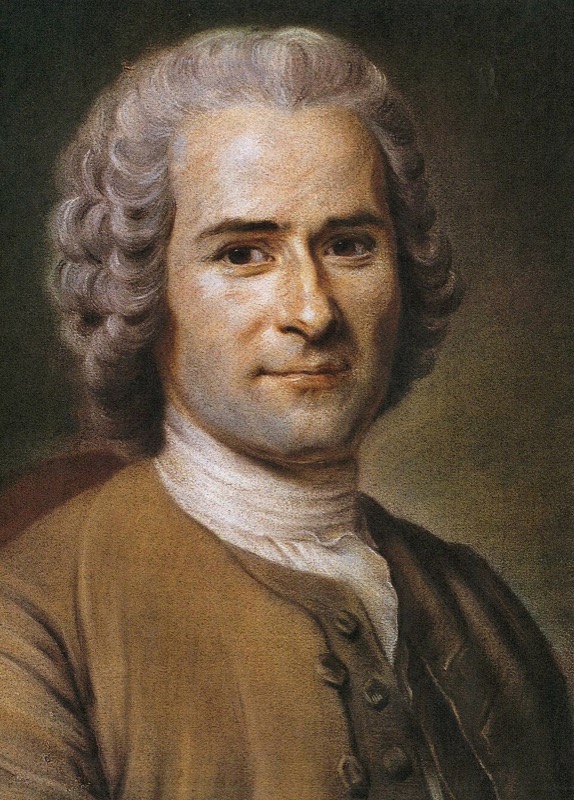
.jpg)
Summary
Of the Social Contract, or Principles of Political Right is a compact treatise in four books, the only finished part of a larger work on political institutions that Rousseau abandoned. It opens with its most famous sentence, that man is born free and everywhere in chains, and with a promise not to explain how this happened but to say what could make it legitimate. Book I clears away false foundations. The family is the only natural society, and even it lasts only while children need their father. Force cannot create right, since yielding to force is necessity, not duty. Slavery, whether of individuals or of conquered peoples, is void, because no one can give himself away for nothing and a promise of absolute obedience is meaningless. Rousseau then states the problem: to find a form of association that defends each member with the whole common force while leaving each as free as before. The answer is the social compact, in which each person gives himself and all his rights to the whole community. Because the condition is equal for all, no one has an interest in making it burdensome, and the act creates a public person, the sovereign, whose will is the general will. Whoever refuses to obey it will be forced to be free. The passage to the civil state replaces instinct with justice and turns a stupid, limited animal into a moral being. Book II analyses sovereignty. It is inalienable and indivisible; the general will is always right but the people can be deceived, and factions corrupt it by substituting partial wills. Law must be general in source and object. Since a people cannot easily frame its own laws, a quasi-divine Legislator, like Lycurgus or Calvin, must persuade it, sometimes by invoking the gods. Rousseau discusses the size, wealth and climate a people needs and names Corsica as the one European nation still fit for legislation. Book III separates sovereignty from government, the executive body that applies the laws, and compares democracy, aristocracy and monarchy; a true democracy would suit only a people of gods. Every government tends to degenerate, and the body politic, like the human body, begins to die from birth. Sovereignty cannot be represented: the English are free only at elections. Book IV examines voting, the Roman comitia, the tribunate, dictatorship and the censorship, and ends with the chapter on civil religion, which would banish those who reject a short creed of social dogmas and punish with death anyone who professes the creed and then acts against it. The book was banned in Geneva and burned there in 1762, and it later became a scripture of the French Revolution.
Plot or Argument
- Book I: Force, slavery and the compact
Refutes the family, the right of the strongest and slavery as grounds of political authority. States the fundamental problem and its solution in the total alienation of each to all, creating the sovereign. Contrasts natural with civil and moral liberty, and treats property as possession converted into right.
- Book II: Sovereignty, the general will and law
Sovereignty is inalienable and indivisible; the general will differs from the will of all, which is a sum of private interests. Law is the act of the whole people ruling on matters of general concern. The Legislator, a figure outside the constitution, founds peoples; the suitability of a people depends on its youth, size, resources and customs.
- Book III: Government and its decline
Government is an intermediary body executing the general will, and its proper size varies inversely with that of the state. Democracy, aristocracy (elective aristocracy is best) and monarchy are compared; no form suits every country. Governments usurp sovereignty over time; periodic assemblies of the people are the remedy, and representation is condemned.
- Book IV: Institutions and civil religion
How the general will is expressed by vote, the unanimous original contract versus majority rule, and an extended study of Roman assemblies, tribunes, dictators and censors. The closing chapter distinguishes the religion of man, the religion of the citizen and priestly religion, and proposes a minimal civil profession of faith enforced by the state.
Characters
- The Legislator, conceptual figure
Extraordinary founder, outside both sovereignty and government, who gives a people its laws and must persuade by authority rather than force; exemplified by Lycurgus, Moses, Muhammad and Calvin.
- The Sovereign, conceptual figure
The body of citizens acting collectively as lawmaker; it can never bind itself or act on particular cases.
- Grotius and Hobbes, opponents
Natural-law theorists whom Rousseau attacks for deriving right from fact and for justifying slavery and absolute rule.
- Lycurgus, exemplar
Spartan lawgiver who abdicated his royalty before giving laws, the model of the Legislator.
Lessons
Might cannot manufacture right
Book I, Chapter III argues that yielding to force is an act of necessity or prudence, never of duty: if the stronger may rule, the right vanishes the moment strength changes hands. Legitimate authority must therefore rest on agreement. The argument remains a compact test for any regime that claims obedience simply because it can compel it.
- Is Rousseau right that a 'right' that disappears with force was never a right at all?
- Where do contemporary states rely on force while claiming consent?
The general will is not majority opinion
Rousseau distinguishes the general will, aimed at the common good, from the will of all, a sum of private preferences. The people may be deceived; factions turn citizens into partisans. The concept is powerful because it names the public interest, and dangerous because someone may claim to know it better than the people do.
- How could anyone tell whether a vote expressed the general will or merely the will of all?
- Why does Rousseau dislike partial associations and parties?
- Is 'forced to be free' a paradox, a threat, or a description of how law shapes character?
Representation as a loss of freedom
Book III, Chapter XV insists that sovereignty cannot be delegated and mocks the English, who are free only on election day. The claim confronts modern representative democracy with an severe standard of participation and suggests that civic indifference ('What does it matter to me?') is a symptom of political death.
- Is direct self-government possible in a large state, or is Rousseau's ideal only for small cities like Geneva?
- What modern institutions try to recover the participation Rousseau demanded?
Every polity carries its own mortality
Rousseau compares the body politic to a human body that begins to die at birth. Constitutions can be robust or weak, but none is permanent; even Sparta and Rome perished. The lesson is less fatalism than stewardship: citizens can lengthen a state's life by renewing its laws and assemblies.
- What are the early symptoms of decline that Rousseau lists, and do they look familiar?
- Does the analogy between state and organism illuminate politics or mislead it?
The cost of a civic religion
The final chapter seeks a faith that binds citizens to the laws without the divided loyalties of Christianity. Its tolerance has a hard edge: unbelievers may be banished and hypocrites executed. Reading it shows how a theory of freedom can end in coercion of conscience.
- Does the civil religion contradict the rest of the book?
- What does Rousseau think Christianity does to citizenship, and is he fair to it?
Context
Rousseau wrote as a self-styled 'citizen of Geneva', a Calvinist city-republic whose General Council of citizens had been sidelined by an oligarchic Small Council. His theory also answers the natural-law tradition of Grotius, Pufendorf, Hobbes and Locke, and the absolutist France of Louis XV. Unlike the philosophes' faith in enlightened monarchs, Rousseau's model is the small, austere republic: Sparta, early Rome and an idealised Geneva.
Composition
Rousseau planned a large work called Political Institutions while secretary to the French ambassador in Venice in 1743–44. He abandoned it, salvaged the Social Contract from the drafts (an earlier version known as the Geneva Manuscript survives), and published it with Marc-Michel Rey in Amsterdam in April 1762, a month before Emile. G. D. H. Cole's English translation appeared in the Everyman's Library in 1913, together with the Discourses.
Reception
The Small Council of Geneva condemned both 1762 books and ordered them burned in June 1762; Rousseau renounced his Genevan citizenship in 1763 and answered in the Letters Written from the Mountain. The book was little read at first but became a revolutionary text after 1789, cited by Robespierre and the Jacobins. Benjamin Constant blamed it for revolutionary despotism, and in the twentieth century J. L. Talmon traced 'totalitarian democracy' to it, while Kant, Hegel and later democratic theorists treated its ideas of autonomy and popular sovereignty as foundational.
Comparisons
- leviathan
Hobbes and Rousseau both start from a covenant of total surrender, but Hobbes hands power to a separate sovereign who represents the people, whereas Rousseau makes the people itself sovereign and denies that sovereignty can be represented at all.
- second-treatise-of-government
Locke's contract protects pre-political rights of property and allows resistance to a government that breaches its trust; Rousseau demands total alienation of rights to the community and treats property as a creation of the civil state.
- the-republic
Plato and Rousseau both want a polity that shapes souls and both rely on a founder and on useful myths; but Plato gives rule to philosophers, while Rousseau gives sovereignty to all citizens and confines the wise Legislator to a founding moment.
- the-prince
Rousseau's Legislator, who must invoke the gods to persuade a people, echoes Machiavelli's armed founders such as Moses and Romulus; Rousseau reportedly read The Prince as a lesson to peoples rather than to princes.
- rousseaus-confessions
The Confessions narrate the Venice embassy where Rousseau first conceived Political Institutions and the persecution that followed publication, giving the autobiographical side of the theory's austere civic ideal.
Quotes
Frequently cited
“Man is born free; and everywhere he is in chains. One thinks himself the master of others, and still remains a greater slave than they”
Frequently cited
“whoever refuses to obey the general will shall be compelled to do so by the whole body. This means nothing less than that he will be forced to be free”
Frequently cited
“Were there a people of gods, their government would be democratic. So perfect a government is not for men”
“To yield to force is an act of necessity, not of will--at the most, an act of prudence. In what sense can it be a duty”
“each man, in giving himself to all, gives himself to nobody”
“Each of us puts his person and all his power in common under the supreme direction of the general will, and, in our corporate capacity, we receive each member as an indivisible part of the whole”
“the people is never corrupted, but it is often deceived, and on such occasions only does it seem to will what is bad”
“It would take gods to give men laws”
“Most peoples, like most men, are docile only in youth; as they grow old they become incorrigible”
“I have a feeling that some day that little island will astonish Europe”
“The body politic, as well as the human body, begins to die as soon as it is born, and carries in itself the causes of its destruction”
“The people of England regards itself as free; but it is grossly mistaken; it is free only during the election of members of parliament”
“If any one, after publicly recognising these dogmas, behaves as if he does not believe them, let him be punished by death: he has committed the worst of all crimes, that of lying before the law”
For Students
A reading companion for classical Christian high school students. See the student guide.
Reading Guide
Watch for
- The opening of Book I, Chapter I, where Rousseau says he will not explain how men came to be in chains but only what could make those chains legitimate. Track whether the rest of the book keeps that promise.
- The statement of the fundamental problem in Book I, Chapter VI, and the solution by which each person gives himself and all his rights to the whole community. Notice how much rests on the claim that the condition is equal for all.
- The distinction in Book II, Chapter III between the general will and the will of all, and Rousseau's warning there about factions and partial associations.
- The Legislator in Book II, Chapter VII, a founder who stands outside the constitution and must sometimes put his own wisdom in the mouth of the gods. Ask why a book about popular sovereignty needs such a figure.
- The chapter on civil religion in Book IV, Chapter VIII, where Rousseau compares the religion of man, the religion of the citizen, and priestly religion, and proposes a short creed enforced by the state.
Key terms and names
- General will
- The will of the whole body of citizens directed toward the common good. Rousseau holds that it is always right, though the people who express it can be deceived.
- Will of all
- The sum of the private wills of individual citizens, each seeking his own advantage. Rousseau contrasts it with the general will in Book II, Chapter III, and says factions turn a vote into a contest of partial interests.
- Sovereign
- The public person created by the social compact, made up of all citizens acting together as lawmaker. It cannot be represented, divided, or given away, and it may only make general laws, never rule on particular cases.
- Government
- In Book III, the intermediate body that carries out the laws made by the sovereign. Rousseau insists that magistrates are servants of the sovereign people, not its masters.
- The Legislator
- The extraordinary founder, such as Lycurgus of Sparta, who gives a people its first laws. He has no power to command, so he must persuade by authority and by appeal to divine sanction.
- Civil liberty and natural liberty
- Natural liberty is the unlimited freedom of the isolated individual, bounded only by his strength. Civil liberty, gained through the compact, is freedom limited by the general will, and Rousseau adds moral liberty, obedience to a law one prescribes to oneself.
- Civil religion
- The short public creed of Book IV, Chapter VIII, including the existence of God, the life to come, the reward of the just, and the sanctity of the social contract and the laws. Citizens who refuse it may be banished, and those who profess it and then act against it may be put to death.
Seminar Questions
- Comprehension In Book I, Chapters II through IV, Rousseau rejects the family, the right of the strongest, and slavery as foundations for political authority. What is his reason for rejecting each one?
- Comprehension According to Book III, Chapter XV, why are the English free only during elections, and what does Rousseau think a free people must do instead?
- Interpretation Rousseau says that whoever refuses to obey the general will shall be forced to be free. Read Book I, Chapters VI through VIII together and explain what he must mean by freedom for this sentence not to be a contradiction.
- Interpretation Why does a book that grounds all authority in the people's own will need a Legislator who invokes the gods? Does the Legislator in Book II, Chapter VII strengthen or weaken Rousseau's argument?
- Interpretation Rousseau compares the body politic to a human body that begins to die as soon as it is born. What remedies does Book III offer against that decline, and does he believe they can work for long?
- Interpretation In Book IV, Chapter VIII, Rousseau argues that Christianity, by turning hearts toward a heavenly country, makes poor citizens of an earthly one. What exactly is his charge, and how might a Christian reader answer it from within the chapter's own categories?
- Big Question Can a political community rightly shape the beliefs and loves of its citizens, as Rousseau's civil religion does, or must some region of the soul be left to God and conscience alone?
Faith Connections
- Romans 13:1-7 (Scripture)
Paul teaches that governing authority comes from God and that rulers are God's servants for the good. Rousseau grounds authority instead in the compact of the people, and setting the two side by side shows exactly where the source of political obligation lies in each account.
- 1 Samuel 8 (Scripture)
Israel asks Samuel for a king like the nations, and Samuel warns of what the king will take from them. Rousseau's fear that governments usurp the sovereignty of the people in Book III has a long ancestry in this chapter's warning about rulers who grow beyond their mandate.
- Matthew 22:15-22 (Scripture)
Jesus answers the question about tribute by distinguishing what belongs to Caesar from what belongs to God. Rousseau's civil religion chapter treats exactly this division of loyalties as the problem Christianity introduced into politics, so the passage sits at the center of his argument.
- Augustine, City of God XIX.24 (Church Fathers)
Augustine defines a people as a multitude of rational beings united by common agreement about the objects of their love. Both Augustine and Rousseau make a common will the bond of a people, but Augustine judges a people by what it loves, while Rousseau judges its will by whether it aims at the common good.
Logic and Rhetoric
Central argument: Force cannot create a duty to obey, and no one can rightly give himself away as a slave; therefore legitimate authority must rest on agreement. If each person gives himself wholly and equally to the community, no one has an interest in making the burden heavy, and each obeys only a law in which he shares as lawmaker. Therefore a people that governs itself by the general will is both bound and free, and sovereignty must remain with the whole people, never divided or represented.
Rhetorical device: paradox. In Book I, Chapter VII, Rousseau concludes that the citizen who refuses the general will shall be forced to be free. The sentence joins two ideas that seem to cancel each other, compelling the reader to work out Rousseau's special definition of liberty as obedience to a law one has prescribed for oneself.
Debate: Resolved: Sovereignty cannot be represented, and a people that only elects its lawmakers is not truly free.
Memory Work
Man is born free; and everywhere he is in chains. One thinks himself the master of others, and still remains a greater slave than they
It would take gods to give men laws
Writing Prompts
Essay: Rousseau begins by promising to make political chains legitimate and ends with a civil religion that punishes unbelief. Argue whether the chapter on civil religion in Book IV, Chapter VIII follows from the principles of Book I or contradicts them.
Comparison with The Federalist Papers: Rousseau in Book II, Chapter III fears factions and wants either none or very many, while Madison in Federalist No. 10 builds a large representative republic to control factions. Compare their diagnoses of faction and argue which remedy better protects the common good.
Medical Lens
The treatise is political, but it relies on organic metaphors that a history-of-medicine reader will recognise: the state as a body with a robust or weak constitution, born to die, whose decline can be slowed by good regimen. Rousseau proposes population growth as the surest sign of good government (Book III, Chapter IX), an early demographic criterion that anticipates later public-health thinking about national vitality. The 'stupid and unimaginative animal' turned moral being in Book I, Chapter VIII draws on his theory of natural man from the Discourse on Inequality, which in the same Cole volume questions the need for physicians in a state of nature. Rousseau's own chronic urinary illness and the persecutory fears of his later years are often discussed in retrospective diagnoses; these are interpretive readings and belong to the Confessions rather than this text.
- Book III, Chapter IX
Rousseau names the increase of population, without colonies or naturalisation, as the decisive mark of good government and dismisses tranquillity that hides depopulation.
- Book III, Chapter XI
The body politic compared to a human body that begins to die at birth; the constitution of man is nature's work, that of the state the work of art and can be prolonged.
- Book II, Chapter VIII
Peoples, like men, are docile only in youth; aged peoples resist reform like cowardly patients who rave at the sight of the doctor. Revolutions are compared to illnesses that make individuals forget the past, after which a state may be reborn.
Creative Prompts
- Fiction
Write the scene in Geneva in June 1762 when the Small Council's order is carried out and copies of The Social Contract and Emile are burned before the town hall, seen by a watchmaker's apprentice who has secretly read both.
- Dialogue
Imagine Rousseau and a modern member of parliament debating Book III, Chapter XV: can representatives ever express the general will?
- Essay
Rousseau says population growth is the surest sign of good government. Evaluate that criterion against modern measures such as life expectancy, mental health and wellbeing indices.
- Classroom
Run a mock Genevan General Council: students vote on a proposed law, then argue whether the result expressed the general will or merely the will of all.
Further Reading
- Discourse on the Origin of Inequality, Jean-Jacques Rousseau
The conjectural history that the Social Contract presupposes; included in the Cole volume.
- Emile, or On Education, Jean-Jacques Rousseau
- Jean-Jacques Rousseau: Transparency and Obstruction, Jean Starobinski
- The Origins of Totalitarian Democracy, J. L. Talmon
- Rousseau and the Republic of Virtue, Carol Blum
- Jean-Jacques: The Early Life and Work of Jean-Jacques Rousseau, Maurice Cranston
Verification notes
Book and chapter structure, arguments and publication history are standard. All quotes were checked against the stored Cole translation (Project Gutenberg #46333), which also contains the Discourses and the Discourse on Political Economy.
- Date of the Genevan condemnation and burning (19 June 1762 is commonly given).
- Rousseau's remark that The Prince is the book of republicans comes from a note added in the 1782 edition and is absent from the stored text.