Work record
Homilies on the Gospel of John
c. 406-420 CE · Ancient · Sermons · Latin

Summary
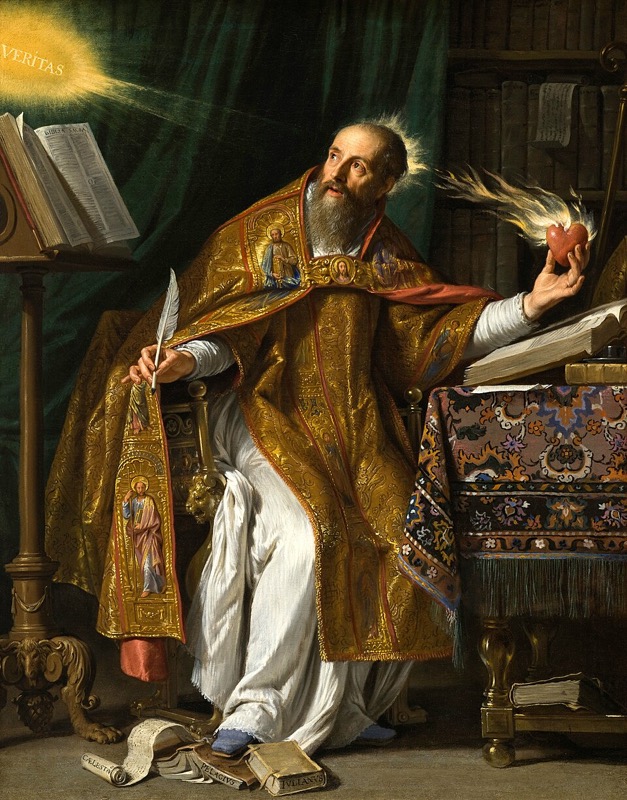
Augustine's Homilies on the Gospel of John are pastoral expositions of one of Christianity's most theologically dense texts. Preached to a congregation rather than composed as a detached treatise, they move through John's prologue, signs, discourses, passion narrative, resurrection appearances, and final scenes with Peter and the beloved disciple. Augustine's central concern is to lead hearers from visible signs to invisible truth. Water, bread, light, blindness, shepherding, friendship, and love become occasions to teach Christ's divinity, the humility of incarnation, the work of grace, and the unity of the church. The homilies repeatedly turn interpretation into therapy: pride must be lowered, desire purified, grief redirected, and curiosity disciplined by love. Augustine often asks listeners to attend to their own hearts while reading John's narrative. The blind man, Lazarus, the Samaritan woman, Peter, and Thomas become figures for spiritual perception, death, thirst, weakness, doubt, and restoration. The collection is less dramatic than Chrysostom's emergency sermons, but its medical interest lies in the slow treatment of the soul. Augustine's preaching assumes that human beings are wounded by disordered love and healed by grace working through word, sacrament, and community. He does not separate doctrine from cure. Historical readers also encounter Augustine's anti-Donatist and anti-Manichaean concerns, his defense of catholic unity, and his habit of reading Scripture through the whole economy of salvation. The homilies are not a modern commentary and should not be used as one without caution; they are theological medicine delivered orally to late antique Christians. Their enduring value is the fusion of intellectual subtlety and pastoral diagnosis. John's Gospel becomes, in Augustine's hands, a training of attention: learn to see signs without stopping at them, and learn to love the one to whom they point. The result is preaching that reads Scripture and congregation at the same time together.
Plot or Argument
- The Word descends into visible signs
Augustine reads John's prologue and early signs as invitations to move from sensory events toward the eternal Word.
- Figures of thirst, blindness, and bread
Episodes such as the Samaritan woman, the man born blind, and the bread discourse become studies in desire, perception, and nourishment.
- Friendship deepens toward sacrifice
The farewell discourses and passion narrative reveal love, humility, betrayal, and the meaning of Christ's self-giving.
- Restoration follows denial and doubt
The resurrection scenes with Thomas and Peter let Augustine preach faith, weakness, forgiveness, and pastoral responsibility.
Lessons
Signs ask to be read beyond themselves
Augustine teaches that visible events can become transparent to deeper reality. The danger is either refusing the sign or clinging to it without following its direction.
- How does Augustine distinguish sign from thing signified?
- What habits of reading does this demand?
Desire needs reordering
The homilies treat human longing as powerful but misdirected. Healing comes not from suppressing desire but from teaching it what to love.
- How does Augustine's language of love differ from moral rule-keeping?
- Can desire be educated?
Weakness can become pastoral knowledge
Peter's denial and restoration let Augustine speak of failure without despair. The fallen disciple becomes a shepherd precisely through humbled dependence.
- Why does Peter's failure matter for leadership?
- What kind of cure is forgiveness?
Context
The homilies come from Augustine's ministry as bishop of Hippo in late Roman North Africa, where biblical preaching served catechesis, doctrinal formation, and communal discipline.
Composition
They were preached over time and preserved as tractates on John's Gospel. The Latin sermons reflect oral address, scriptural cross-reference, and Augustine's pastoral controversies.
Reception
The homilies became a durable source for Western exegesis of John, especially on signs, love, grace, ecclesial unity, and the relation between visible sacrament and invisible truth.
Comparisons
- confessions
Confessions narrates Augustine's own disordered loves; the John homilies apply that same therapeutic theology to a congregation.
- homilies-on-the-statues
Chrysostom preaches under civic emergency, while Augustine more often conducts a patient inward education through scriptural signs.
- the-bible
The work is inseparable from John's Gospel and demonstrates late antique Christian habits of allegorical and pastoral reading.
Quotes
For Students
A reading companion for classical Christian high school students. See the student guide.
Reading Guide
Watch for
- Tractate 1 on the prologue, where Augustine compares the eternal Word to the word conceived in a speaker's mind before it is spoken aloud, to help his hearers think about how the Word can be with God and be God.
- Tractate 15 on the Samaritan woman, where Jesus wearied at the well at the sixth hour becomes a picture of the Word's humility, and the woman becomes a figure of the Church coming from the nations.
- Tractate 24 on the feeding of the five thousand, where Augustine says that God's daily governance of the world is a greater miracle than the multiplied loaves, though familiarity has made it cheap to us.
- Tractate 44 on the man born blind, where the clay made of spittle and earth stands for the Word made flesh, and the whole human race is said to be blind from birth.
- Tractate 123 on Peter's threefold confession of love by the lake, which Augustine sets against his threefold denial and connects to the charge to feed Christ's sheep.
Key terms and names
- Tractate
- The name for each of Augustine's 124 sermons on John's Gospel. Many were preached to the congregation at Hippo and later revised for reading.
- Sign and thing
- Augustine's distinction between a visible sign and the reality it points to. John's miracles are signs, and the hearer should not stop at wonder but understand what they say about Christ.
- The Word
- John's name for the eternal Son in the prologue. Augustine explains it by the word in a speaker's heart, which remains whole in him even when sounded aloud to many.
- Sacrament
- In Tractate 80 Augustine says the word comes to the element and it becomes a sacrament. Water in baptism cleanses because of the word of faith joined to it.
- Donatists
- The rival North African church that claimed to be the pure church. Augustine argues against them in these homilies, especially on baptism, the dove at Christ's baptism, and the unity of the Church.
- Lazarus
- In Tractate 49 the friend raised after four days becomes a figure for the sinner buried under the weight of habit. Christ calls him out, and the disciples' loosing of his graveclothes stands for the Church's ministry of forgiveness.
- Drawing
- In Tractate 26 Augustine asks how the Father draws anyone to Christ without compelling him, and answers that a person is drawn by delight, as a sheep is drawn by a green branch held out to it.
Seminar Questions
- Comprehension In Tractate 1, what everyday experience of speech does Augustine use to explain how the Word was in the beginning with God?
- Comprehension In Tractate 24, why does Augustine say that people marvel at the feeding of the five thousand but not at the harvest that feeds them every year?
- Comprehension How does Augustine connect Peter's threefold denial with the three questions Jesus asks him beside the lake in Tractate 123?
- Interpretation In Tractate 44 Augustine reads the clay on the blind man's eyes as the Word made flesh. What does this reading gain, and does it lose anything from the plain story in John 9?
- Interpretation Tractate 26 says the Father draws people to Christ by delight rather than force. How does this fit Augustine's larger claim that people are healed by learning what to love?
- Interpretation Why does Augustine keep turning from John's narrative to his listeners' own hearts? What does preaching to a congregation change about how he reads the Gospel?
- Big Question Augustine says the ordinary order of nature is a greater wonder than a miracle, but that habit has dulled our sight. Can a person be taught to see wonder in what is familiar, and what would that training look like?
Faith Connections
- John 1:1-14 (Scripture)
The prologue is the text of Augustine's first tractates and the key to the whole series. His reading of every later sign depends on its claim that the eternal Word became flesh and dwelt among us.
- John 9 (Scripture)
The healing of the man born blind ends with Jesus saying he came so that the blind may see and those who see may become blind. Augustine's Tractate 44 makes this chapter a map of the whole human condition and its cure.
- Augustine, On Christian Doctrine, Book I (Church Fathers)
Here Augustine sets out his distinction between signs and things, and between using and enjoying, with God alone to be enjoyed for his own sake. The homilies put this theory into practice on John's signs before a live congregation.
- Thomas Aquinas, Catena Aurea on John (Great Conversation)
Aquinas compiled a running commentary on the Gospels from patristic sources, and Augustine's tractates supply much of the material for John. It shows how these sermons became the standard Latin reading of the Fourth Gospel.
Logic and Rhetoric
Central argument: Human beings are wounded by disordered love and cannot see God directly. The eternal Word therefore came in the flesh and gave visible signs, healings, bread, water and light, suited to people who can only see visible things. A sign is meant to be passed through to the reality it signifies. Therefore the right way to read John is to move from each sign to Christ himself, and this reading is also a cure, since it reorders the hearer's love from the visible toward the invisible.
Rhetorical device: allegory (figural interpretation). In Tractate 44 Augustine reads each detail of John 9 figuratively: the spittle mixed with earth is the Word joined to flesh, the anointing is faith, and washing in the pool of Siloam, which means Sent, is baptism into the one who was sent.
Debate: Resolved: Augustine's figurative readings of John's signs illuminate the Gospel more than they obscure its plain narrative.
Writing Prompts
Essay: Augustine repeatedly calls Christ a physician and sin a wound or blindness. Using Tractates 44 and 49 on the blind man and Lazarus, argue how Augustine understands healing, and whether his metaphor of medicine shapes his reading of John or simply decorates it.
Comparison with Confessions: In Confessions Augustine tells how his own disordered loves were healed; in the homilies on John he tries to heal a congregation's. Compare the role of Scripture in each work, and argue whether Augustine's preaching applies the lessons of his own conversion or adds something new to them.
Medical Lens
Augustine's medical relevance lies in spiritual therapy: disordered love, blindness, thirst, and death become metaphors for psychic and moral conditions. His treatment of grief, weakness, and restoration is valuable historically, though it should not be mistaken for modern clinical psychology.
- Homilies on the man born blind
Blindness becomes a layered figure for perception, ignorance, healing, and confession.
- Homilies on Lazarus
Death and resurrection supply Augustine with a pastoral language for grief, sin, and renewed life.
Creative Prompts
- Essay
Analyze Augustine's preaching as a long therapy of attention rather than a sequence of isolated doctrines.
- Dialogue
Let Augustine discuss disordered love with a modern therapist who resists theological language.
Further Reading
- Augustine of Hippo, Peter Brown
The classic modern biography.
- Augustine and the Limits of Virtue, James Wetzel
A study of Augustine's moral and theological psychology.
Verification notes
The broad Johannine sequence, Augustine's pastoral themes, and North African context are secure. Quotes are omitted until exact NPNF wording is verified.
- Check tractate numbers before adding specific quotation locators.