Work record
The Theban Plays
c. 429–401 BCE · Ancient · Drama · Greek
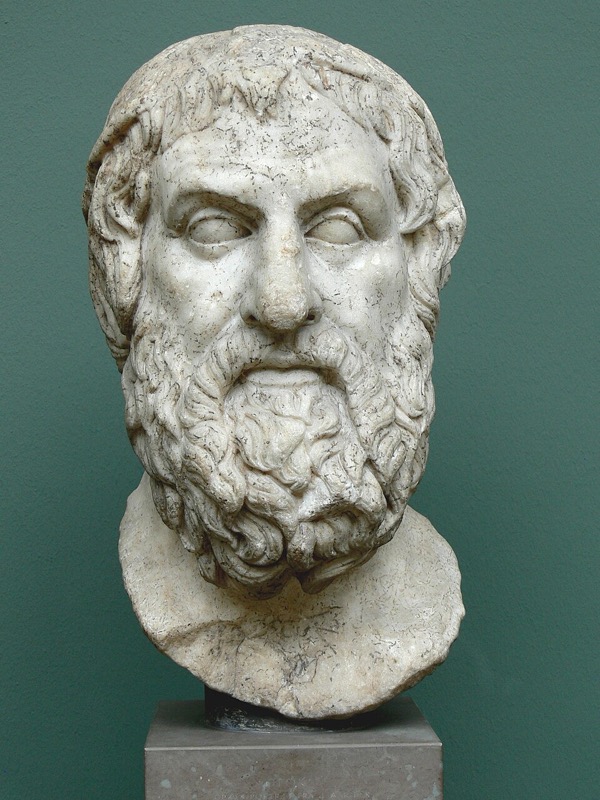

Summary
The Theban Plays collects Sophocles’ tragedies about Oedipus and his children: Oedipus the King, Oedipus at Colonus and Antigone. They were not written as a trilogy, but together they form the most influential family disaster in Western drama. Oedipus the King begins with a city under plague. The oracle says Thebes is polluted because Laius’ murderer lives unpunished. Oedipus, famous for solving the Sphinx’s riddle, vows to find the criminal. His investigation becomes a trap of knowledge: witnesses, prophecies and memories reveal that he himself killed Laius at a crossroads and married Jocasta, his mother. Jocasta hangs herself; Oedipus blinds himself and begs exile. Oedipus at Colonus shows the blind exile near death outside Athens. He is no longer merely polluted; his burial place will bring power to the city that receives him. His sons seek advantage, his daughters guide him, and Theseus protects him until he vanishes mysteriously. Antigone follows the next generation. After civil war between Eteocles and Polynices, Creon forbids burial of the supposed traitor. Antigone buries her brother in obedience to divine law and family duty. Creon condemns her, then too late recognizes his error; Antigone, Haemon and Eurydice die by suicide. The plays turn illness, law, kinship and knowledge into tragic pressure. Plague exposes hidden guilt; blindness becomes insight; burial rites become political rebellion. Sophocles does not offer easy comfort. His Thebes is a place where intelligence is necessary, pride is dangerous, and human beings meet limits they can understand only after crossing them. The three plays also differ in emotional temperature. Oedipus the King is investigative and compressed; Oedipus at Colonus is ritual, aged and strange; Antigone is starkly political. Read together, they show Sophocles returning to the same cursed family to ask different questions about knowledge, care, authority, and the duties owed to bodies before and after death.
Plot or Argument
- Plague and inquiry
Oedipus investigates Thebes’ plague and discovers the pollution is tied to Laius’ unsolved murder.
- Recognition and blindness
Testimony reveals Oedipus as Laius’ killer and Jocasta’s son; Jocasta dies and Oedipus blinds himself.
- The exile at Colonus
The old Oedipus reaches sacred ground near Athens, resists political exploitation and dies mysteriously under Theseus’ protection.
- Burial forbidden
Creon prohibits Polynices’ burial, and Antigone knowingly violates the edict.
- Too-late reversal
Creon changes course only after Antigone, Haemon and Eurydice are dead, leaving him alive with ruin.
Characters
- Oedipus, king and exile
Solver of riddles who discovers himself to be the cause of Thebes’ pollution.
- Jocasta, queen of Thebes
Oedipus’ wife and mother, who recognizes the truth and dies by suicide.
- Antigone, daughter of Oedipus
Defies Creon to bury her brother and accepts death for religious and familial duty.
- Creon, ruler of Thebes
Defender of civic order whose rigidity destroys his family.
- Ismene, Antigone’s sister
Cautious survivor who fears state power but loves her family.
- Tiresias, seer
Blind prophet whose warnings are resisted by Oedipus and Creon.
Lessons
Knowledge can arrive as catastrophe
Oedipus is admirable because he seeks truth, yet truth destroys the identity he lives by. Sophocles asks whether self-knowledge is still good when it ruins us.
- Is Oedipus punished for ignorance or for pride?
- Would ignorance have been kinder?
Law needs humility before the dead
Antigone shows a political order collapsing when it refuses burial and grief. The dead retain claims the state cannot erase.
- What makes burial a political issue?
- Where is Antigone courageous, and where is she severe?
Prophecy does not remove responsibility
The plays are filled with oracles, but choices still matter. Tragedy lives in the overlap between necessity and character.
- Which choices remain free?
- How does Tiresias function differently in each play?
Context
The plays reflect fifth-century Athenian interests in plague, civic law, religious obligation and the fragility of rulers. Their mythic Thebes often acts as Athens’ tragic mirror.
Composition
Antigone was likely produced around 442 BCE, Oedipus the King around the 420s, and Oedipus at Colonus near the end of Sophocles’ life, produced posthumously in 401 BCE.
Reception
Oedipus became Aristotle’s model tragedy and later central to psychoanalysis. Antigone has become a durable text for conscience, resistance and state power.
Comparisons
- the-oresteia
Aeschylus moves inherited guilt toward trial; Sophocles presents knowledge and burial as crises no institution fully heals.
- the-bacchae-and-other-plays
Both Thebes cycles show rulers destroyed by resisting divine claims they think they can master.
- frankenstein
Both works turn inquiry into self-condemnation: the investigator discovers that the monster or pollution is bound to himself.
Quotes
Frequently cited
“Therefore wait to see life’s ending ere thou count one mortal blest; Wait till free from pain and sorrow he has gained his final rest”
Frequently cited
“The immutable unwritten laws of Heaven. They were not born today nor yesterday; They die not; and none knoweth whence they sprang”
For Students
A reading companion for classical Christian high school students. See the student guide.
Reading Guide
Watch for
- Oedipus' proclamation early in Oedipus the King, where he curses the unknown murderer of Laius and anyone who shelters him. Every word of that curse falls back on the man who speaks it.
- Jocasta's attempt to calm Oedipus by proving that prophecies fail, which instead gives him the detail of the place where three roads meet. Watch how comfort turns into evidence.
- The arrival of the messenger from Corinth with news of Polybus' death and the questioning of the old shepherd. Notice the exact moment when Jocasta understands, and how long it takes Oedipus to follow.
- In Oedipus at Colonus, the blind old man's arrival at the grove of the Eumenides, his refusal of his son Polynices, and his mysterious passing witnessed by Theseus alone.
- In Antigone, the confrontation between Antigone and Creon over the unwritten laws, Haemon's plea to his father, and the choral ode on the wonders and limits of man.
Key terms and names
- Miasma
- Religious pollution caused by bloodshed or sacrilege, which can bring plague on a whole city. The oracle says Thebes suffers because Laius' killer lives unpunished within it.
- Oracle of Delphi
- Apollo's shrine, whose prophecies set the action in motion: the warning to Laius, the prophecy Oedipus fled from Corinth, and the command to drive out Laius' murderer.
- Tiresias
- The blind prophet who sees what the sighted rulers cannot. He tells Oedipus he is the polluter he seeks and warns Creon that refusing burial to Polynices offends the gods.
- The Sphinx
- The monster whose riddle Oedipus solved, winning the throne of Thebes and Jocasta's hand. His fame as a solver of riddles makes his ignorance of his own identity all the sharper.
- Polynices and Eteocles
- The sons of Oedipus who kill each other in the war for Thebes. Creon honors Eteocles with burial and forbids it to Polynices as a traitor, setting up Antigone's choice.
- Unwritten laws
- The eternal ordinances of the gods that Antigone sets above Creon's decree. She claims they were not made today or yesterday and that no mortal edict can override them.
- Colonus
- The village near Athens, and Sophocles' own birthplace, where the aged Oedipus finds the sacred grove in which he is destined to die. His grave is promised as a protection to Athens.
- Chorus
- The group of Theban elders, or men of Colonus, who comment on the action in song. Their final words in Oedipus the King warn against calling any mortal blessed before his life has ended.
Seminar Questions
- Comprehension What steps does Oedipus take to find Laius' murderer, and which witness finally supplies the evidence that he cannot deny?
- Comprehension Why does Creon forbid the burial of Polynices, and what arguments do Haemon and Tiresias use to change his mind?
- Interpretation Tiresias is blind but sees the truth, while Oedipus sees and is ignorant until he blinds himself. How does Sophocles use sight and blindness to shape our understanding of knowledge?
- Interpretation In Oedipus at Colonus the old Oedipus insists he acted in ignorance and is not truly guilty. Does this play change how we judge the Oedipus of the first play?
- Interpretation Ismene refuses to help bury Polynices but later asks to share Antigone's punishment, and Antigone refuses her. Why does Sophocles include the sister who will not act, and what does Antigone's refusal show about her?
- Interpretation Creon finally gives way after Tiresias' warning but goes first to bury Polynices before freeing Antigone. What does the order of his actions, and its result, suggest about his reversal?
- Big Question When the law of the city commands what the higher law forbids, must the citizen disobey, and what does Antigone teach about the cost of doing so?
Faith Connections
- Romans 2:14-15 (Scripture)
Paul says that Gentiles without the law of Moses show the work of the law written on their hearts. Antigone's appeal to unwritten laws that no one knows the origin of is one of the clearest pagan witnesses to this law of conscience.
- Acts 5:29 (Scripture)
Before the council, Peter and the apostles answer that they must obey God rather than men. Antigone makes a parallel claim before Creon, and the comparison sharpens what is the same and what is different about a martyr and a tragic heroine.
- Ezekiel 18 (Scripture)
Ezekiel insists that the son shall not bear the iniquity of the father, but each soul answers for its own sin. The house of Laius, where a curse passes from father to son and daughter, gives students a sharp contrast to this prophetic teaching on personal responsibility.
- Aristotle, Poetics 11 and 13 (Great Conversation)
Aristotle praises Oedipus the King for joining recognition and reversal in a single moment, and describes the best tragic hero as a man neither wholly good nor wicked who falls through some error. His analysis is the starting point for every later argument about Oedipus' guilt.
Logic and Rhetoric
Central argument: Human beings must seek knowledge and govern their cities, yet they cannot see the whole of their own lives or overrule the laws of the gods. Oedipus seeks the truth with full intelligence and finds that he is its object; Creon rules by his own decree and finds that he has defied heaven. Therefore human wisdom and power are real but bounded, and no mortal can be counted blessed until his life has ended.
Rhetorical device: dramatic irony. In his first proclamation in Oedipus the King, Oedipus curses Laius' unknown killer, vows to fight for the dead king as for his own father, and calls down ruin on whoever hides the murderer. The audience knows the myth, so every phrase is heard as a curse on himself, and the irony grows heavier at each step of his investigation.
Debate: Resolved: Antigone is right and Creon is wrong, without qualification.
Memory Work
The immutable unwritten laws of Heaven. They were not born today nor yesterday; They die not; and none knoweth whence they sprang
Therefore wait to see life’s ending ere thou count one mortal blest; Wait till free from pain and sorrow he has gained his final rest
Writing Prompts
Essay: Oedipus is famous for solving the Sphinx's riddle, yet he cannot see who he is. Argue whether Oedipus the King presents his intelligence and determination to know the truth as his greatness, his downfall, or both.
Comparison with The Last Days of Socrates: Antigone breaks the city's law in obedience to the gods, while Socrates in the Crito refuses to escape because he will not break the laws of Athens. Compare their reasoning and argue whether the two positions can be reconciled.
Medical Lens
Oedipus the King is framed by plague: infertility, disease and civic pollution drive the investigation. Oedipus’ self-blinding and later disabled dependence matter for disability readings, while Antigone contains multiple suicides and profound mourning. The prophecies are religiously true inside the plays, so modern psychiatric categories should be used carefully. The collection is especially useful for public-health metaphors: a city seeks the hidden source of contamination and discovers moral, familial and political causes intertwined.
- Oedipus the King, opening
Thebes suffers plague, failed crops, infertility and public supplication before Oedipus.
- Oedipus the King, recognition
Jocasta dies by hanging and Oedipus blinds himself after discovering his birth and crimes.
- Oedipus at Colonus, opening
The blind, dependent Oedipus arrives guided by Antigone, reframing disability and exile.
- Antigone, burial conflict
Antigone insists on rites for the dead despite state prohibition, making grief a public act.
- Antigone, final messenger speech
Antigone, Haemon and Eurydice die by suicide after Creon’s delayed repentance.
Creative Prompts
- Essay
Read Antigone as a conflict between public health law and private mourning, then test where the analogy breaks.
- Classroom
Ask students to trace every form of sight and blindness in Oedipus the King.
Further Reading
- Oedipus at Thebes, Bernard Knox
- Antigones, George Steiner
- The Birth of Tragedy, Friedrich Nietzsche
Verification notes
Major plot and dates are standard, with approximate dating noted.
- Confirm line, book or chapter locators against the intended reference or public-domain edition.