Work record
The Fall of the Roman Republic: Six Lives
c. 100 CE · Ancient · Biography · Ancient Greek

Summary
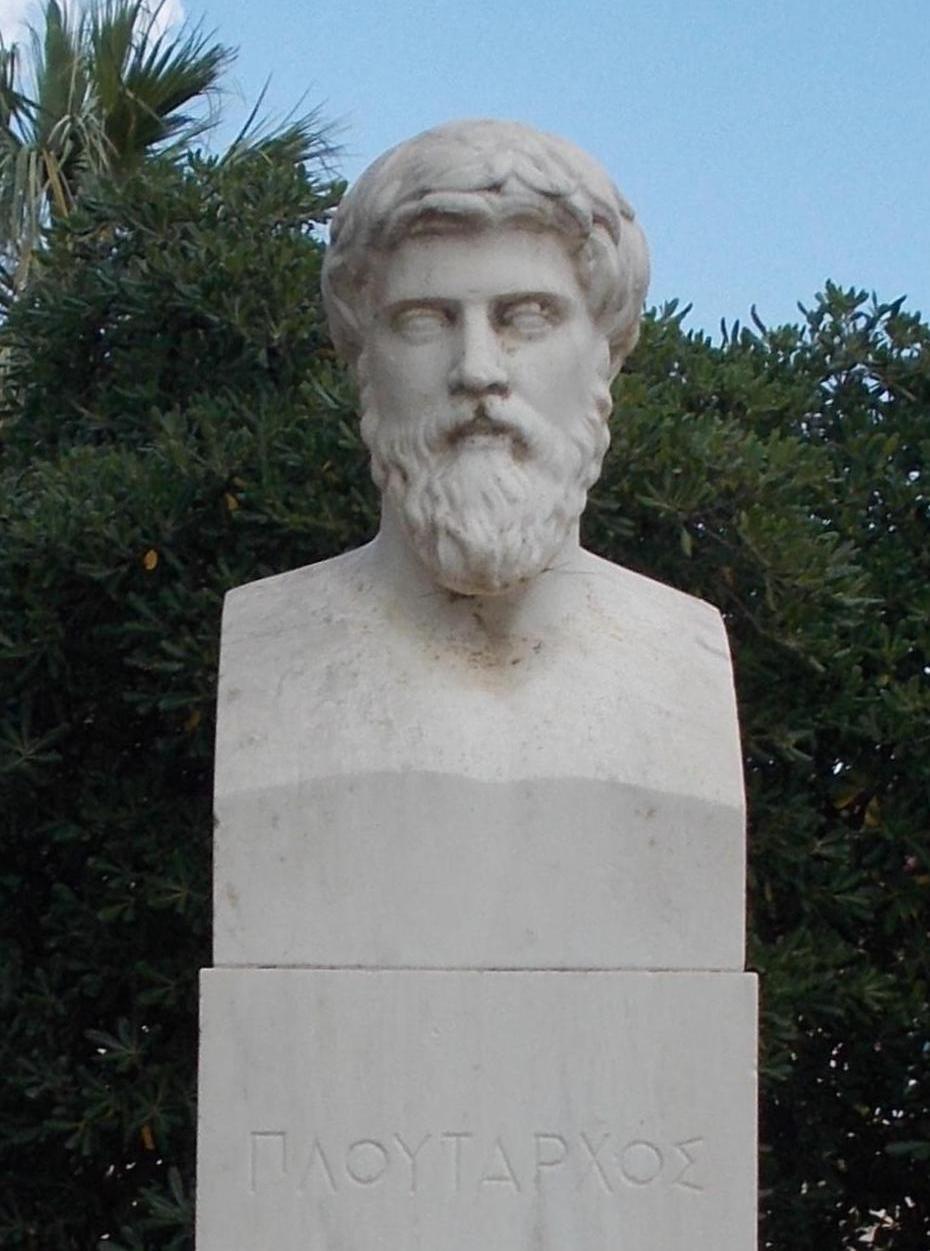
The Fall of the Roman Republic is a selection of six of Plutarch's Roman Lives, arranged to tell the story of the Republic's collapse in the century before Augustus: Marius, Sulla, Crassus, Pompey, Caesar and Cicero. Read in sequence, they show how military glory, personal ambition and civil war destroyed Rome's traditional government. Gaius Marius, a rough soldier of humble birth from Arpinum, rises through his military talent, reforms the army, defeats the invading Cimbri and Teutones, and holds an unprecedented seven consulships. His rivalry with his former subordinate Sulla leads to civil war; driven into exile, Marius hides in the marshes of Minturnae, returns to Rome with a massacre of his enemies, and dies soon after in his seventh consulship, delirious and haunted. Lucius Cornelius Sulla, a dissolute patrician of brilliant talents, defeats Mithridates of Pontus, marches on Rome with his army, makes himself dictator, posts proscription lists of enemies to be killed, then resigns his power and dies of a loathsome disease. Marcus Licinius Crassus, the richest man in Rome, builds his fortune by buying property during the proscriptions and fires, crushes Spartacus' slave revolt, joins Pompey and Caesar in the so-called First Triumvirate, and dies in a disastrous campaign against Parthia at Carrhae. Pompey the Great, a youthful prodigy, wins triumphs in Africa, Spain and the East, clears the Mediterranean of pirates, settles the East, and becomes the Senate's champion against his former ally and son-in-law Caesar, only to be defeated at Pharsalus and murdered on the shore of Egypt. Julius Caesar's Life follows his escape from Sulla, his capture by pirates, his political rise, his conquest of Gaul, his crossing of the Rubicon, the civil war, his dictatorship and reforms, the omens before the Ides of March, and his assassination in the Senate at the foot of Pompey's statue. Cicero, the 'new man' and greatest orator of Rome, rises by eloquence, crushes the conspiracy of Catiline as consul, is exiled and recalled, attacks Mark Antony in the Philippics after Caesar's death, and is murdered on Antony's orders, his head and hands displayed on the Rostra. Plutarch is interested above all in character: the virtues and vices, and the small revealing anecdotes, that explain why each man rose and how each contributed to the fall of free government. The result is both a vivid narrative and a meditation on ambition, envy and the corruption of power.
Plot or Argument
- Marius
The soldier from Arpinum, his army reforms, victories over the Cimbri and Teutones, rivalry with Sulla, exile and bloody return.
- Sulla
The patrician general who marches on Rome, proscribes his enemies, becomes dictator, resigns and dies of disease.
- Crassus
The richest Roman, victor over Spartacus, triumvir, and casualty of the Parthian disaster at Carrhae.
- Pompey
The prodigy general whose greatness ends in defeat at Pharsalus and murder in Egypt.
- Caesar
Ambition, Gaul, the Rubicon, civil war, dictatorship and the Ides of March.
- Cicero
The orator-statesman who defends the Republic against Catiline and Antony and dies for it.
Characters
- Gaius Marius, subject
Seven-times consul, army reformer and rival of Sulla.
- Lucius Cornelius Sulla, subject
General and dictator who instituted the proscriptions.
- Marcus Licinius Crassus, subject
Plutocrat and triumvir killed at Carrhae.
- Gnaeus Pompeius Magnus (Pompey), subject
Great general who became Caesar's adversary.
- Gaius Julius Caesar, subject
Conqueror of Gaul and dictator, assassinated in 44 BCE.
- Marcus Tullius Cicero, subject
Orator, consul and defender of the Republic, killed in the proscriptions of 43 BCE.
- Mark Antony, antagonist
Caesar's lieutenant who ordered Cicero's death.
- Cato the Younger, republican opponent
Stoic statesman who opposed Caesar and Pompey's power.
Lessons
How republics die
The Lives show institutions eroding as generals command personal armies and politicians break norms for advantage. Each precedent, from Marius' consulships to Sulla's march on Rome, makes the next breach easier.
- Which single act did the most damage to the Republic?
- What modern parallels do readers draw, and are they fair?
- Could the Republic have been saved?
Character and fortune
Plutarch weighs talent, temperament and luck in each career. Sulla attributes his success to Fortune; Pompey's luck runs out; Caesar seizes chances. The Lives ask how far character determines fate.
- Which of the six is most responsible for his own downfall?
- How does Plutarch use omens and portents?
The orator and the sword
Cicero's eloquence wins power but cannot defeat armies. His Life raises the question of what intellect and speech can do in a time of violence.
- Was Cicero a hero or a vain opportunist?
- Why does Plutarch end the volume with Cicero's death?
Context
The six Lives cover roughly 157–43 BCE, from Marius' birth to Cicero's death: the Social War, the civil wars of Marius and Sulla, the Spartacus revolt, the alliance of Pompey, Crassus and Caesar, and the civil wars that ended in Caesar's dictatorship and the triumvirate of Antony, Octavian and Lepidus.
Composition
Written in the late first and early second centuries CE as part of the Parallel Lives, each Roman Life paired with a Greek one. This volume, translated by Rex Warner (1958) and later revised, extracts the six into chronological sequence.
Reception
Thomas North's 1579 English translation supplied Shakespeare with plot and wording for Julius Caesar. The Lives remain the most vivid ancient narrative of the Republic's fall and have shaped political thought on tyranny and liberty from Machiavelli to the American founders.
Comparisons
- the-age-of-alexander
The Greek counterparts in the Parallel Lives; Caesar's pair is Alexander, Pompey's Agesilaus, Cicero's Demosthenes.
- the-twelve-caesars
Suetonius begins where Plutarch's Caesar ends, with the imperial monarchy born from the Republic's collapse.
- macbeth
Shakespeare's tragedies of ambition and assassination, including Julius Caesar, draw on Plutarch's moral psychology of power.
- the-agricola-and-the-germania
Tacitus writes under the emperors about virtue's survival after the Republic's liberty was lost.
- the-satires-of-horace-and-persius
Horace, who fought for Brutus at Philippi, writes satire in the aftermath of the civil wars these Lives describe.
Quotes
For Students
A reading companion for classical Christian high school students. See the student guide.
Reading Guide
Watch for
- The small anecdotes Plutarch uses to reveal character: young Caesar joking with the pirates who captured him and then crucifying them as he had promised, or Caesar weeping in Spain as he read of Alexander's conquests at the same age.
- Each precedent that makes the next breach easier: Marius's repeated consulships, Sulla's march on Rome with his own legions, the proscription lists, and Caesar's crossing of the Rubicon.
- Marius hiding in the marshes of Minturnae and the Gallic soldier who cannot bring himself to kill him, set against Marius's massacre of his enemies when he returns to Rome.
- The deaths of the men themselves: Crassus at Carrhae, Pompey stabbed on the Egyptian shore as he steps from the boat, Caesar falling at the foot of Pompey's statue, Cicero putting his head out of his litter to the soldiers.
- Omens, dreams, and warnings, especially the soothsayer's warning about the Ides of March and Calpurnia's dream in the Life of Caesar, and how much weight Plutarch gives them.
Key terms and names
- Consul
- One of the two annually elected chief magistrates of the Republic. Marius's seven consulships, several in a row during the war with the Cimbri and Teutones, broke the custom that kept any one man from holding power too long.
- Proscription
- The posting of lists of citizens who could be killed by anyone for a reward, with their property seized. Sulla introduced it after his victory, Crassus grew rich buying confiscated estates, and Cicero himself died in the proscriptions of the second triumvirate.
- Dictator
- An emergency magistrate traditionally given supreme power for six months. Sulla revived the office without a time limit and then resigned it; Caesar was made dictator for life, which helped provoke his murder.
- First Triumvirate
- The private political alliance of Pompey, Crassus, and Caesar around 60 BCE, which Plutarch shows overriding the Senate. It collapsed after Crassus died at Carrhae and Caesar's daughter Julia, Pompey's wife, died.
- Rubicon
- The small river marking the boundary of Caesar's province in Cisalpine Gaul. Crossing it under arms in 49 BCE meant civil war, and Plutarch shows Caesar hesitating and weighing the consequences before he crosses.
- Optimates and populares
- The two broad styles of Roman politics, the first working through the Senate and the traditional nobility, the second appealing to the people's assemblies. Marius and Caesar rose as populares, Sulla and Cicero's ally Cato stood with the optimates.
- Catiline
- The bankrupt noble whose conspiracy Cicero exposed as consul in 63 BCE. Cicero's execution of the arrested conspirators without trial won him the title of father of his country and later led to his exile.
Seminar Questions
- Comprehension How did Sulla gain control of Rome, and what did he do with his power before he resigned the dictatorship?
- Comprehension What led to the break between Caesar and Pompey after their alliance, and where and how did each of them die?
- Comprehension What did Cicero do as consul against Catiline, and how did his opposition to Mark Antony after the Ides of March lead to his death?
- Interpretation Plutarch says he writes lives, not histories, and often prefers a joke or a small gesture to a great battle. Choose one anecdote from the Life of Caesar and explain what it reveals that a battle narrative could not.
- Interpretation Sulla called himself Felix, the fortunate, and credited his success to Fortune. Does Plutarch agree, or does he show Sulla's character making his fortune?
- Interpretation Crassus was the richest man in Rome yet sought military glory against Parthia. What does his Life suggest about the relation between wealth and ambition?
- Big Question None of these six men set out to destroy the Republic, yet together they did. Can a free government be lost through many reasonable-seeming decisions, and who bears the blame when it is?
Faith Connections
- James 4:1-2 (Scripture)
James asks where wars and fightings come from and answers that they come from desires at war within, from coveting what one cannot obtain. Plutarch's six lives read almost as a case history of this verse, as rivalry between Marius and Sulla, and then Caesar and Pompey, turns into civil war.
- Mark 8:36 (Scripture)
Plutarch’s Caesar is a pagan illustration of Christ’s warning against gaining the whole world at the cost of the soul. Caesar, who wept that he had done nothing at the age when Alexander had conquered the world, gains nearly the whole Roman world and dies stabbed in the Senate.
- Augustine, City of God III.27-30 and V.12 (Church Fathers)
Augustine recounts the massacres of Marius and Sulla and the war of Caesar and Pompey to show that Rome's gods did not protect it from its worst evils, and in Book V he traces Roman greatness and Roman ruin alike to the love of glory and the lust for domination. He read the same civil wars as Plutarch and drew a theological lesson from them.
Logic and Rhetoric
Central argument: A republic survives only while its leading men accept limits on their ambition and its laws are stronger than any one commander. In the century these Lives cover, generals came to command armies loyal to themselves, each broke a custom his rival then broke further, and rivalry for first place turned into civil war. Therefore the Republic fell not by one blow but through the characters of its great men, whose virtues of courage and talent, joined to unchecked ambition, destroyed the order that had made them great.
Rhetorical device: synkrisis (comparison of lives). Plutarch wrote these Lives as halves of pairs, setting Caesar beside Alexander and Cicero beside Demosthenes, and within the Roman Lives he constantly measures one man against another, as when Pompey's early luck is set against Caesar's daring or Crassus's wealth against Pompey's glory. The habit of comparison turns biography into moral judgment.
Debate: Resolved: Caesar was more responsible for the fall of the Republic than any of the other five men in these Lives.
Writing Prompts
Essay: Plutarch arranges the fall of the Republic as a sequence of men rather than of institutions. Using the Lives of Marius, Sulla, and Caesar, argue whether he shows character or circumstance to be the decisive cause of the Republic's collapse.
Comparison with The Civil War: Caesar's own Civil War presents his crossing into Italy and his war with Pompey as a defense of his dignity and of the tribunes' rights, while Plutarch's Life of Caesar weighs his ambition from outside. Compare the two accounts of the same events and argue which gives the truer picture of Caesar's motives.
Medical Lens
Plutarch includes several famous medical anecdotes. Marius is said to have undergone surgery on varicose veins in his legs without being bound, enduring the pain without a cry, but refused to let the surgeon operate on the other leg, judging the cure not worth the pain. Sulla's death is attributed to a disease in which his flesh was consumed by lice (phthiriasis), with a final haemorrhage; modern scholars treat the lice story sceptically, as a traditional death for tyrants. Marius in his last illness is described as delirious, imagining himself commanding the war against Mithridates, after heavy drinking and sleeplessness. Caesar is described as suffering from epilepsy, which Plutarch says first attacked him at Corduba, and as using hard campaigning to fortify his weak constitution; modern alternative explanations (such as cerebrovascular disease) are speculative. Pompey's dangerous fever at Naples prompts public prayers across Italy, which Plutarch sees as feeding his overconfidence. Cicero's delicate digestion and his voice training on Rhodes also appear.
- Life of Marius 6
Marius has the varicose veins of one leg cut out without restraint, then refuses surgery on the other.
- Life of Marius 45
Marius, aged and drinking heavily, falls ill with pleurisy and in delirium imagines himself fighting Mithridates.
- Life of Sulla 36
Sulla's final illness, described as an infestation of lice and an internal ulcer, ending in a haemorrhage.
- Life of Pompey 57
Pompey's serious illness at Naples and Italy-wide celebrations at his recovery.
- Life of Caesar 17
Caesar's epilepsy and his use of hard living on campaign as a remedy for his weak health.
- Life of Caesar 63
Calpurnia's nightmare and other portents before the Ides of March.
Creative Prompts
- Essay
Marius refuses a second operation because the cure is worse than the disease. Use the anecdote to discuss patient autonomy and treatment burden.
- Dialogue
Write a conversation between Cicero and Caesar the night before the Rubicon.
- Classroom
Compare Plutarch's account of Caesar's assassination with Act 3 of Shakespeare's Julius Caesar.
Further Reading
- Julius Caesar, William Shakespeare
- The Roman Revolution, Ronald Syme
- Rubicon: The Last Years of the Roman Republic, Tom Holland
- Caesar: Life of a Colossus, Adrian Goldsworthy
Verification notes
The six Lives and their content are well established. Chapter numbers for medical anecdotes follow standard Loeb divisions from memory and should be checked. No quotations are included because I cannot reproduce Perrin's or Dryden/Clough's wording verbatim with confidence for the chosen passages.
- Chapter numbers for Marius' varicose-vein surgery (6), his final illness (45), Sulla's death (36), Pompey's illness (57) and Caesar's epilepsy (17).
- Perrin's wording of Caesar's words at the Rubicon (Caesar 32), omitted from quotes.
- The original translator and date of this volume (recalled as Rex Warner, 1958).