Work record
The Call of Cthulhu and Other Weird Stories
1928 (title story) · Early 20th Century · Short Stories · English
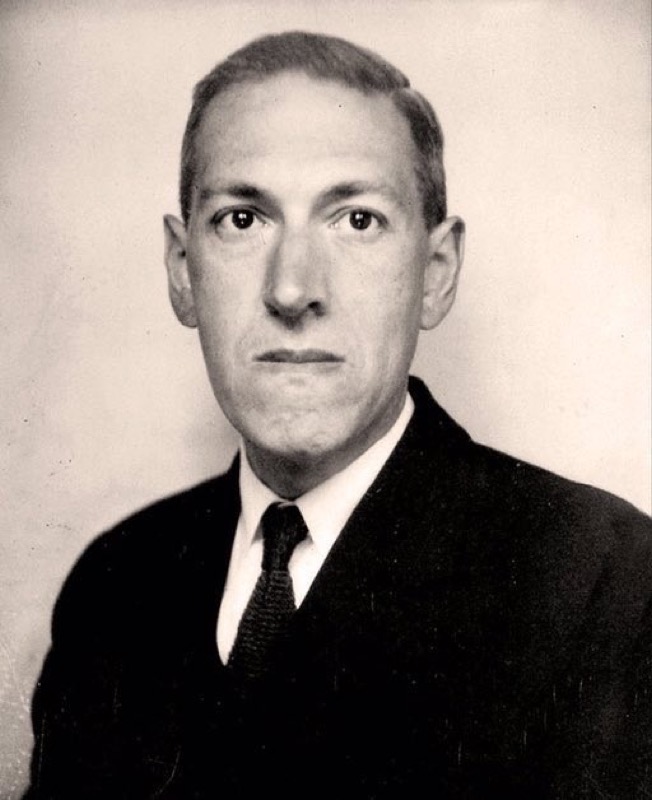

Summary
The Call of Cthulhu and Other Weird Stories is a selection of Lovecraft's tales, edited with notes by the Lovecraft scholar S. T. Joshi, tracing his development from early Poe-influenced pieces to the 'cosmic horror' for which he is known. Lovecraft's central idea is that humanity is an insignificant accident in a vast, indifferent universe, and that knowledge of this truth is enough to destroy sanity. 'Dagon' (1919) is the confession of a morphine-addicted former merchant officer who, cast adrift in the Pacific, glimpses a gigantic creature on a newly risen sea bottom and now awaits it. 'The Statement of Randolph Carter' records a man's testimony after his friend descended into an ancient tomb. 'Facts Concerning the Late Arthur Jermyn and His Family' tells of an aristocrat who discovers a horrifying ancestry and burns himself to death; it is an example of Lovecraft's obsession with heredity and racial degeneration. 'The Picture in the House' and 'The Outsider' are tales of New England decadence and of a creature who discovers, when he sees himself in a mirror, that he is the monster. 'Herbert West—Reanimator', a serial parody of Frankenstein, follows a medical student at Miskatonic University who obtains fresh corpses, including during a typhoid epidemic, to test a reanimating solution, with grotesque results. 'The Rats in the Walls' concerns an American who restores his ancestral English priory and descends into the atavistic horror beneath it. 'Cool Air' is narrated by a man who lodges beneath a Spanish physician, Dr Muñoz, who keeps himself alive by refrigeration long after his body has died. The title story, 'The Call of Cthulhu', is assembled from the papers of a dead professor: a sculptor's feverish dreams and bas-relief, a police raid on a swamp cult in Louisiana, and the diary of a Norwegian sailor whose ship encountered the risen city of R'lyeh and its sleeping god Cthulhu. During one spring, artists and sensitive people worldwide suffered nightmares and breakdowns. 'The Colour Out of Space' describes a meteorite that poisons a farm and its family with an unknown colour, a vivid portrait of slow toxic decline. Later tales in the volume, such as 'The Whisperer in Darkness' and 'The Shadow over Innsmouth', develop Lovecraft's mythology of alien beings and corrupted bloodlines. Narrators throughout doubt their own sanity, write under compulsion, or have been institutionalized.
Plot or Argument
- Early tales: 'Dagon' to 'The Outsider'
First-person confessions of madness, morphine and horror, ancestral taint and self-discovery in the Poe tradition.
- 'Herbert West—Reanimator'
A darkly comic serial about a medical student's reanimation experiments, from Arkham's typhoid epidemic to the battlefields of Flanders.
- 'The Rats in the Walls' and 'Cool Air'
Atavism and inherited horror in an English priory; a physician who survives death by refrigeration in a New York boarding house.
- 'The Call of Cthulhu'
Documents reveal a worldwide cult, mass nightmares among sensitives, and the brief rising of R'lyeh.
- 'The Colour Out of Space'
A meteorite's alien colour slowly poisons crops, livestock and the Gardner family, driving them to madness and death.
- Later cosmic tales
Stories such as 'The Whisperer in Darkness' and 'The Shadow over Innsmouth' elaborate alien visitors and hybrid ancestry.
Characters
- Francis Wayland Thurston, narrator of 'The Call of Cthulhu'
Bostonian who pieces together his great-uncle's papers on the Cthulhu cult.
- Professor George Gammell Angell, Thurston's great-uncle
Brown University professor whose sudden death leaves the papers behind.
- Henry Anthony Wilcox, sculptor
Young artist whose dreams and fever reproduce the image of Cthulhu.
- Inspector John Raymond Legrasse, New Orleans policeman
Leads the raid on the swamp cult and preserves its idol.
- Gustaf Johansen, Norwegian sailor
Survivor of the encounter with R'lyeh, whose diary closes the tale.
- Herbert West, medical student and reanimator
Cold, obsessive researcher who seeks to restore life to corpses.
- Dr Muñoz, physician in 'Cool Air'
Spanish doctor who sustains his own dead body by artificial cold.
- Nahum Gardner, farmer in 'The Colour Out of Space'
Farmer whose family and land are slowly destroyed by the meteorite's influence.
Lessons
Knowledge as danger
Lovecraft inverts the Enlightenment: to know the true nature of the universe is to lose one's mind. His tales dramatize the fear that science reveals human insignificance.
- Why do Lovecraft's narrators keep investigating despite the danger?
- Is cosmic indifference more frightening than a hostile universe?
Horror built from documents
'The Call of Cthulhu' assembles notes, newspaper clippings and testimony, creating dread through accumulation. The method shows how fragmented evidence can be more powerful than direct description.
- How does the document structure create belief?
- What is never directly shown, and why?
Fear of the other
Lovecraft's horror of hybridity and degeneration is inseparable from his racial prejudice, visible in the cult descriptions and in tales of corrupted bloodlines. Reading him critically means seeing how fear of contamination shapes the genre.
- How do racial anxieties shape 'The Call of Cthulhu' and 'Arthur Jermyn'?
- How have later writers such as Victor LaValle and Matt Ruff responded to Lovecraft?
- Can one separate the cosmic vision from the prejudice?
Context
Lovecraft wrote during the 1910s–1930s, when Einsteinian physics, deep geological time and evolutionary biology were unsettling human-centred cosmology, and when eugenics and fears of 'degeneration' and immigration were mainstream in American culture.
Composition
Most tales appeared in Weird Tales and other pulps. 'The Call of Cthulhu' was written in 1926 and published in Weird Tales in February 1928. The 1999 edition is edited by S. T. Joshi, who restored texts from manuscripts.
Reception
After his death, August Derleth and Donald Wandrei founded Arkham House to keep Lovecraft in print. His 'Cthulhu Mythos' spawned an enormous shared literature, games and films. His inclusion in the Library of America (2005) marked canonical acceptance, while his racial prejudice has prompted sustained critique, including the 2015 retirement of the World Fantasy Award bust in his likeness.
Comparisons
- the-turn-of-the-screw-and-the-aspern-papers
Both make the reliability of a disturbed narrator the core of horror; James's ambiguity is psychological, Lovecraft's cosmic.
- frankenstein
'Herbert West—Reanimator' is an explicit parody of the Frankenstein plot, transferring reanimation to a medical school.
- the-narrative-of-arthur-gordon-pym-of-nantucket
Lovecraft revered Poe; At the Mountains of Madness continues Pym's Antarctic journey, and the sea horrors of 'Dagon' echo Pym.
- dracula
Both use assembled documents and diaries to present invasion by an ancient, contaminating power.
- the-vampyre
Two ends of the Gothic tale: Polidori's aristocratic predator and Lovecraft's impersonal cosmic monster.
Quotes
Frequently cited
“The most merciful thing in the world, I think, is the inability of the human mind to correlate all its contents”
Frequently cited
“That is not dead which can eternal lie, / And with strange aeons even death may die.”
Frequently cited
“Ph'nglui mglw'nafh Cthulhu R'lyeh wgah'nagl fhtagn”
“I am writing this under an appreciable mental strain, since by tonight I shall be no more.”
For Students
A reading companion for classical Christian high school students. See the student guide.
Reading Guide
Watch for
- The structure of 'The Call of Cthulhu' in three parts: Angell's notes on the sculptor Wilcox, Inspector Legrasse's raid on the Louisiana swamp cult, and Johansen's account of the risen city. Notice how the horror grows as separate documents are put together.
- The moment in 'The Outsider' when the narrator reaches out to the monster in the hall and touches the cold surface of a mirror.
- The narrators who write under compulsion and doubt their own sanity, from the morphine-dependent sailor of 'Dagon' to Thurston, who expects to be the next victim.
- The episodes of 'Herbert West—Reanimator', each ending in a worse failure, from the typhoid epidemic in Arkham to the battlefield hospital in Flanders.
- The slow, season-by-season poisoning of the Gardner farm in 'The Colour Out of Space', told years later by an old neighbour to a surveyor before the land is flooded for a reservoir.
Key terms and names
- Cthulhu
- The vast, winged, tentacled being who lies dead but dreaming in the sunken city of R'lyeh. His cult on earth waits for the stars to come right so that he can rise.
- R'lyeh
- The city of Cthulhu, which rises briefly from the Pacific in the spring of 1925 and is seen by Johansen's crew. Its angles and geometry are described as wrong in ways the human eye cannot follow.
- Necronomicon
- The forbidden book attributed to the mad Arab Abdul Alhazred, connected in 'The Call of Cthulhu' with the couplet about death dying. Lovecraft invented it, and it reappears across his tales as a source of lethal knowledge.
- Arkham and Miskatonic University
- Lovecraft's fictional Massachusetts town and its university, where Herbert West conducts his first experiments. The setting gives cosmic horror a plain New England address.
- Cosmic horror
- Lovecraft's term for fear arising from the vastness and indifference of the universe. The terror in these tales is less a monster than the discovery that human beings do not matter.
- Atavism
- The reappearance of a distant ancestral trait. In 'The Rats in the Walls' Delapore's descent beneath his ancestral priory ends in his own reversion to the savagery of his forebears.
Seminar Questions
- Comprehension What does Professor Angell learn from the sculptor Wilcox and his bas-relief, and how does Thurston come into possession of his great-uncle's papers?
- Comprehension What does Inspector Legrasse find in the Louisiana swamp, and what does the captured cultist Castro say about the Great Old Ones?
- Comprehension What happens to the Gardner family's crops, animals, well, and minds in 'The Colour Out of Space'?
- Interpretation Thurston opens by calling the mind's inability to correlate its contents merciful. Why does Lovecraft begin a story of discovery by praising ignorance?
- Interpretation Why does Lovecraft tell 'The Call of Cthulhu' through notes, newspaper cuttings, and a sailor's narrative rather than through a single eyewitness?
- Interpretation In 'The Outsider' and 'The Rats in the Walls', the horror turns out to be the narrator himself. How does this change the meaning of the monsters elsewhere in the volume?
- Big Question If the universe were as vast and indifferent as Lovecraft's narrators believe, would knowing it be a reason for despair? What would a person need to believe to look at the same night sky without fear?
Faith Connections
- Psalm 8:3-4 (Scripture)
The psalmist looks at the heavens and asks what man is that God is mindful of him. Lovecraft's narrators see the same vastness and conclude that no one is mindful of man at all; the psalm and the stories begin from the same sense of human smallness and reach opposite conclusions.
- Psalm 104:24-26 (Scripture)
The psalm names Leviathan as a creature God made to play in the sea. Cthulhu sleeping in R'lyeh is a sea monster with no maker above it, and the comparison shows how much of Lovecraft's terror comes from removing the Creator rather than adding the beast.
- Ecclesiastes 1:18 (Scripture)
The Preacher says that in much wisdom is much grief and that increasing knowledge increases sorrow. Thurston's opening reflection in 'The Call of Cthulhu' is a darker form of the same observation, without the Preacher's final counsel to fear God.
- Pascal, Pensées (the fragments on the two infinities and the silence of infinite spaces) (Great Conversation)
Pascal felt the terror of a universe in which man is lost between the infinitely great and the infinitely small, and answered it with man's dignity as a thinking reed and with the hidden God. Lovecraft, a convinced materialist, kept the terror and denied the answer, which makes the two writers an exact debate.
Logic and Rhetoric
Central argument: The universe is immeasurably old and vast, and powers older than humanity exist in it without regard for human concerns. Human meaning, morality, and religion are local accidents that survive only because people cannot put together all they know. Each investigator in the tales who correlates the scattered evidence, Angell, Thurston, Johansen, is destroyed or awaits destruction. Therefore the fragmentary ignorance of ordinary life is a mercy, and the sciences that are slowly putting the pieces together will end in madness or a new dark age.
Rhetorical device: praeteritio (claiming something cannot be described while describing it). In Section III of 'The Call of Cthulhu', Johansen's account of R'lyeh repeatedly insists that its geometry and the being that emerges from it cannot be put into words, while giving just enough detail of slimy stone, wrong angles, and a vast clawed shape to let the reader's imagination do the rest.
Debate: Resolved: The narrators of these tales would have been wiser never to investigate.
Memory Work
The most merciful thing in the world, I think, is the inability of the human mind to correlate all its contents
Writing Prompts
Essay: Herbert West, Dr Muñoz in 'Cool Air', and the investigators of 'The Call of Cthulhu' all pursue knowledge past the point of safety. Argue whether Lovecraft treats scientific curiosity itself as the danger, or only the discovery of what the universe is really like.
Comparison with Pensees: Pascal and Lovecraft both confront a universe whose size dwarfs human beings. Compare Pascal's thinking reed and his wager with Thurston's merciful ignorance, and argue which writer gives a more honest account of what the human mind should do with its knowledge of the cosmos.
Medical Lens
Madness is the organizing idea of Lovecraft's fiction: narrators fear for their sanity, write confessions before suicide or confinement, or are discredited as insane. Lovecraft's own parents both died in Butler Hospital in Providence, his father after years of paresis attributed to syphilis, which biographers connect to his preoccupation with inherited madness; treat that link as biographical interpretation. 'Herbert West—Reanimator' satirizes medical education, body procurement, and experimentation, set during an Arkham typhoid epidemic and the First World War. 'Cool Air' features a physician sustaining himself by refrigeration. 'The Call of Cthulhu' describes a wave of collective nightmares, fevers and psychotic breakdown among artists, an early literary 'epidemic' of mental disturbance. 'The Colour Out of Space' is often read today as a parable of radiation or environmental poisoning. His obsession with heredity reflects early-twentieth-century degeneration theory and eugenics.
- 'Dagon'
Narrator's morphine dependence, terror and suicidal resolve after his vision of the sea creature.
- 'Herbert West—Reanimator', Parts I–II
Medical students steal fresh corpses for reanimation trials; a typhoid epidemic in Arkham supplies bodies and kills the medical dean.
- 'Facts Concerning the Late Arthur Jermyn and His Family'
A family history of madness and 'taint' culminating in Arthur Jermyn's self-immolation.
- 'Cool Air'
Dr Muñoz keeps his dead body functioning through artificial refrigeration until the machinery fails.
- 'The Call of Cthulhu', Section I
Wilcox's fevered dreams and delirium; reports of worldwide nightmares, panic and asylum admissions among sensitives.
- 'The Colour Out of Space'
The Gardner family sicken, grow grey and brittle, and lose their minds as the colour poisons the land.
Creative Prompts
- Essay
How does 'Herbert West—Reanimator' parody both Frankenstein and the American medical school of the early twentieth century?
- Fiction
Write the admission notes of a 1925 asylum physician who receives one of Wilcox's fellow dreamers.
- Classroom
Read 'The Colour Out of Space' alongside accounts of radiation poisoning and discuss what the story anticipates.
Further Reading
- I Am Providence: The Life and Times of H. P. Lovecraft, S. T. Joshi
- The Ballad of Black Tom, Victor LaValle
Rewriting of 'The Horror at Red Hook' from a Black protagonist's perspective.
- Lovecraft Country, Matt Ruff
- The Thing on the Doorstep and Other Weird Stories, H. P. Lovecraft
Companion volume.
Verification notes
The stories and themes are well established, but the exact contents of this volume are given from memory. Quotations come from stories published before 1931, as the manifest requires; the opening lines of 'The Call of Cthulhu' and 'Dagon' are among the most widely reproduced in horror fiction. Section numbering of 'The Call of Cthulhu' follows its three titled parts.
- Exact table of contents of this volume, especially whether 'The Whisperer in Darkness' and 'The Shadow over Innsmouth' are included.
- Whether the Alhazred couplet appears in Section II of 'The Call of Cthulhu' (it originates in 'The Nameless City', 1921).
- Details of Lovecraft's father's diagnosis (general paresis) and his hospitalization dates.
- Whether the narrator of 'Dagon' says he is out of morphine and the wording of that passage.