Work record
Novum Organum
1620 · Renaissance Early Modern · Philosophy · Latin
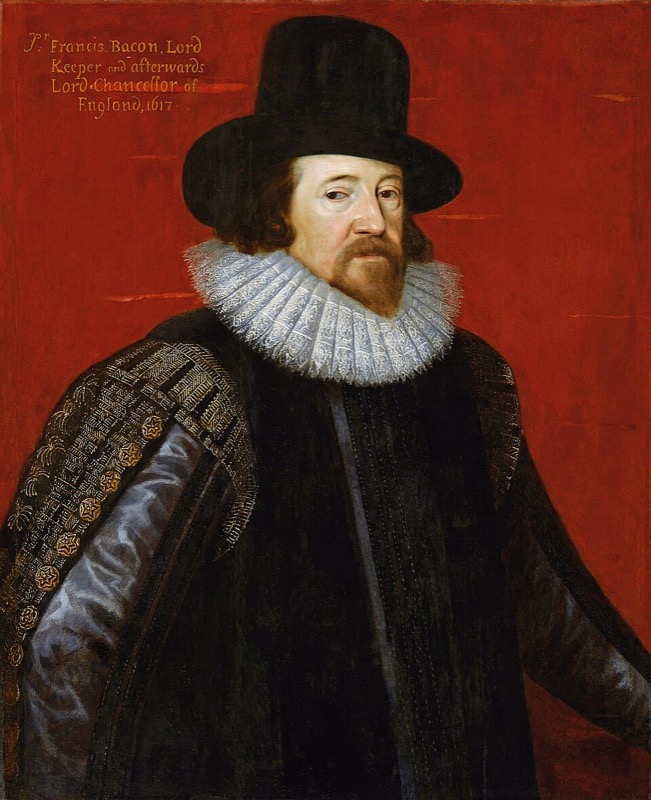

Summary
The Novum Organum ('new instrument') is the second and only substantially completed part of Bacon's projected Instauratio Magna, a six-part plan to rebuild human knowledge from its foundations. Its title throws down a challenge to the Organon, the collection of Aristotle's logical works that had governed university teaching for centuries. Bacon argues that the syllogism forces assent but cannot discover anything new, because it works on words, and words stand for notions abstracted carelessly from things. The sciences of his day, he says, are elaborations of a few familiar observations rather than methods of discovery, and the practical inventions that do exist came by chance and craft rather than philosophy. The book is written as numbered aphorisms rather than continuous argument, a form Bacon chose deliberately because broken, provisional statements invite further inquiry instead of closing it off. Book I, of 130 aphorisms, is the destructive part. Its most famous section is the doctrine of the idols, the false images that beset the mind before any evidence arrives. The idols of the tribe are errors common to human nature, such as seeing more order than exists and noticing hits while ignoring misses. The idols of the den (the cave) come from each person's temperament, education and reading. The idols of the market arise from language, which fixes vague or empty names. The idols of the theatre come from philosophical systems, which Bacon treats as so many stage plays. He then surveys why knowledge has stalled: reverence for antiquity, the contentious habits of the schools, the confusion of natural philosophy with theology, impatience for quick results, and the boasting of alchemists and magicians that discredits sober inquiry. He ends Book I on grounds for hope, insisting that the printing press, gunpowder and the compass have changed the world more than any empire, and that a patient, cooperative method could yield far more. Book II, of 52 aphorisms, is the constructive part. Taking heat as its worked example, Bacon assembles a table of instances where heat is present, a table of closely similar cases where it is absent, and a table of degrees where it varies. He then excludes every candidate nature that fails to track heat across the tables, and ventures a provisional 'first vintage': heat is an expansive motion, restrained, acting in the smaller particles. The rest of the book catalogues twenty-seven kinds of 'prerogative instances', favored observations that speed inquiry, among them solitary, migrating, glaring and crucial instances, the last a forerunner of the decisive experiment. The book stops before the further 'helps' it promises. What survives is less a usable algorithm than a manifesto for organised, experimental, collaborative natural history, later claimed by the founders of the Royal Society.
Plot or Argument
- Preface and plan of the Great Instauration
Bacon rejects both the dogmatists, who claim nature is already known, and the sceptics, who deny it can be known. He proposes a middle way: grant the senses their due, correct them with experiment, and give the understanding a new instrument rather than leaving it to its own unaided movements.
- Book I, Aphorisms I–XXXVII: the failure of syllogism and 'anticipations'
Man is nature's minister and interpreter, and knowledge and power coincide because effects follow causes. Existing logic confirms errors founded on vulgar notions. Bacon contrasts 'anticipations of nature', hasty leaps from a few particulars to sweeping axioms, with the 'interpretation of nature' that climbs slowly by graded steps.
- Book I, Aphorisms XXXVIII–LXVIII: the four idols
The tribe (errors of the species, including confirmation and a craving for order), the den (individual temperament and training), the market (the tyranny of words) and the theatre (dogmatic systems, sophistical, empirical and superstitious). Bacon names Aristotle, the alchemists and Pythagorean or Platonic theology as examples of the last.
- Book I, Aphorisms LXIX–XCII: signs and causes of error
Bacon judges inherited philosophy by its fruits and finds it barren. He traces the stagnation to brief and interrupted periods of real progress, reverence for antiquity, the confusion of science with religion, the profit-seeking of professional teachers, and the wild promises of impostors.
- Book I, Aphorisms XCIII–CXXX: grounds for hope
The bee that gathers from the field and transforms its material becomes the emblem of a method joining experiment and reason. A properly organised natural history, written learned experience and graduated induction could make discovery systematic, and the great modern inventions show what is possible. The book's highest ambition is to enlarge the empire of mankind over nature.
- Book II, Aphorisms I–XX: the three tables and exclusion
Bacon defines the aim of science as finding the 'forms' of simple natures. Using heat, he lists instances of presence, of absence in proximity and of degrees, then rejects natures that do not accompany heat in every case. Exclusion is presented as the true foundation of induction.
- Book II, Aphorism XX: the first vintage of heat
On the principle that truth emerges more readily from error than from confusion, Bacon permits a provisional hypothesis: heat is an expansive motion, restrained and striving through the smaller particles of bodies, with an 'operative' corollary for producing heat at will.
- Book II, Aphorisms XXI–LII: prerogative instances
Twenty-seven classes of favored instances, from solitary and migrating instances to instances of the fingerpost (crucial instances) and practical or 'polychrest' instances. Medicine, cold, condensation and the action of drugs on the bodily spirits recur among the examples. The work breaks off with the remaining parts of the method promised but unwritten.
Characters
- Aristotle, principal target
Author of the Organon whose syllogistic logic and natural philosophy Bacon accuses of corrupting inquiry with words and premature axioms.
- The empirics and the dogmatists, rival schools
Personified in Aphorism XCV as ants that only hoard and spiders that spin webs from themselves; Bacon's bee mediates between them.
- The alchemists and natural magicians, foils
Practitioners Bacon credits with accidental discoveries but blames for credulity, secrecy and inflated promises of long life and transmutation.
- James I, dedicatee
The king to whom Bacon addressed the Instauratio Magna, hoping for royal patronage of a collective natural history.
- Celsus, cited authority
The Roman medical writer Bacon invokes in Book I to show that remedies were found by experiment first and explained by theory afterward.
Lessons
Name your idols before you trust your data
Bacon's four idols anticipate what psychologists now call cognitive biases: confirmation, availability, motivated reasoning, the seduction of terminology, loyalty to a school. He thought no method could work until these predispositions were identified, because they shape what counts as an observation in the first place.
- Which idol best describes how a new psychiatric diagnosis or drug class can become fashionable?
- Bacon's votive-tablet example asks where the drowned men's portraits are. What is its equivalent in clinical evidence?
- Can a method protect against the idols, or does it only create a new idol of the theatre?
The negative instance carries more weight
In Book I, Aphorism XLVI and in the exclusion tables of Book II, Bacon insists that one solid counter-instance outweighs many agreeing cases. Progress comes from systematically ruling things out, not from piling up confirmations.
- Why does Bacon build a 'table of absence in proximity' rather than only a table of presence?
- How does this principle relate to modern placebo-controlled trials?
Ants, spiders and the bee
Bacon distrusts pure data-gathering as much as armchair theory. The bee's method, collecting material and then transforming it, is a picture of science as both experimental and rational, and also as a cooperative labour that outlives any single investigator.
- Is Bacon fair to the 'empirics', given that he praises medical discoveries made by trial?
- Where in modern medicine do you see ant-like or spider-like reasoning?
Knowledge as power, and the question of its uses
Bacon equates knowledge with human power and celebrates the 'empire of man over things'. The aspiration produced modern experimental science, but its language of mastery and subduing nature has also drawn criticism from ecological and feminist readers. The book makes it possible to examine how a therapeutic ambition and a desire for dominion can share one vocabulary.
- Bacon ranks ambition for mankind above ambition for self or nation. Does that ranking hold up?
- What does 'nature is only to be commanded by obeying her' imply for a physician's relation to the body?
Context
Bacon wrote amid a crisis of authority in learning. Copernicus, Vesalius and Paracelsus had shaken confidence in ancient astronomy, anatomy and medicine; William Gilbert's De Magnete (1600) showed what patient experiment could achieve, though Bacon criticised Gilbert for building a whole philosophy on the magnet. Voyages to the Americas and the new inventions of print, gunpowder and the compass gave Bacon his image of a world enlarged beyond ancient limits. The engraved title page shows a ship sailing out between the Pillars of Hercules under the motto from Daniel 12:4, 'Many shall pass through and knowledge shall be increased.'
Composition
Bacon worked on the method for more than a decade; the Advancement of Learning (1605) and the unpublished Cogitata et Visa sketch earlier versions, and he reportedly revised the text many times. It was published in Latin in London in October 1620 as part of the Instauratio Magna, with a short Parasceve on how to compile natural and experimental histories. Bacon's fall from office in 1621 redirected his remaining years toward the natural histories the method required, and the later parts of the six-part plan were never completed.
Reception
James I reportedly joked that the book was like the peace of God, which passes all understanding. William Harvey, Bacon's physician, is said by Aubrey to have remarked that Bacon wrote philosophy like a Lord Chancellor. The founders of the Royal Society (1660) adopted Bacon as their patron; Thomas Sprat's History of the Royal Society and Abraham Cowley's ode celebrate him. Later critics, including Macaulay, Liebig and philosophers of science from Whewell to Popper, debated whether Baconian induction describes how science actually works. Hypothesis-driven science departed from his tables, but his account of systematic bias and his ideal of organised research remain influential.
Comparisons
- discourse-on-method
Descartes published his method seventeen years later. He too starts by demolishing inherited learning, but he rebuilds from a single indubitable certainty and mathematical deduction, whereas Bacon distrusts leaps to first principles and climbs slowly from particulars.
- essays-bacon
Bacon's Essays apply the same aphoristic compression to civil and moral life. Reading 'Of Studies' or 'Of Regiment of Health' beside the idols shows one mind treating prudence and natural science as parallel kinds of practical knowledge.
- an-enquiry-concerning-human-understanding
Hume inherits Bacon's experimental ideal and turns it on induction itself, asking what justifies the inference from observed instances to unobserved ones. Bacon never doubted that a properly graduated induction could reach the forms of things.
- on-medicine
Bacon cites Celsus in Book I as an honest witness that remedies were found by trial before theories explained them. Celsus's preface on the dispute between the Empirics and the Rationalists is a direct ancestor of Bacon's ants and spiders.
- natural-history-a-selection
Pliny's encyclopaedic Natural History is exactly the kind of credulous compilation Bacon wanted replaced by a checked, experimental history. Yet Bacon's own Book II tables still borrow many examples from the ancient natural-history tradition.
- the-anatomy-of-melancholy
Burton's Anatomy appeared in 1621, a year after the Novum Organum, and shows the older mode Bacon attacked: vast reliance on authorities, humoral theory and quotation. Read together they mark the turn from learned compilation toward experimental medicine.
Quotes
“Man, as the minister and interpreter of nature, does and understands as much as his observations on the order of nature, either with regard to things or the mind, permit him, and neither knows nor is capable of more”
“Knowledge and human power are synonymous, since the ignorance of the cause frustrates the effect; for nature is only subdued by submission”
“the specious meditations, speculations, and theories of mankind are but a kind of insanity, only there is no one to stand by and observe it”
“Four species of idols beset the human mind, to which (for distinction’s sake) we have assigned names, calling the first Idols of the Tribe, the second Idols of the Den, the third Idols of the Market, the fourth Idols of the Theatre.”
“But where are the portraits of those who have perished in spite of their vows”
“The human understanding resembles not a dry light, but admits a tincture of the will”
“The former like ants only heap up and use their store, the latter like spiders spin out their own webs”
“We must not then add wings, but rather lead and ballast to the understanding, to prevent its jumping or flying”
“printing, gunpowder, and the compass. For these three have changed the appearance and state of the whole world”
“Now the empire of man over things is founded on the arts and sciences alone, for nature is only to be commanded by obeying her”
“Since, however, truth emerges more readily from error than confusion, we consider it useful to leave the understanding at liberty”
“But opiates, and the like, banish the spirits by their malignant and hostile quality”
For Students
A reading companion for classical Christian high school students. See the student guide.
Reading Guide
Watch for
- The form of the book. It is written in numbered aphorisms instead of chapters, a choice Bacon defends because short, broken statements invite further inquiry. Notice how each aphorism can be read alone and how they build in sequence.
- The contrast in Book I between anticipations of nature, hasty leaps from a few particulars to sweeping axioms, and the interpretation of nature, which climbs slowly by graded steps.
- The four idols in Book I, Aphorisms XXXIX to LXVIII: tribe, den, market, and theatre. For each one, think of an example from your own reasoning.
- Aphorism XCV, where Bacon compares empirics to ants, dogmatists to spiders, and the true philosopher to the bee that gathers and transforms.
- Book II's worked example on heat: the tables of presence, absence, and degrees, the exclusion of false candidates, and the first vintage that names heat as a kind of motion.
Key terms and names
- Organon
- The collected logical works of Aristotle, taught in the universities for centuries. Bacon's title, the New Organon or new instrument, announces a replacement for the syllogism as the tool of discovery.
- Idols of the Tribe
- Errors common to all human beings, such as seeing more order than exists and remembering hits while forgetting misses. Aphorism XLVI's story of the votive portraits illustrates them.
- Idols of the Den
- Errors that come from a person's own temperament, education, and favorite studies. Bacon's den echoes Plato's cave: each mind has its own cave that bends the light of nature.
- Idols of the Market
- Errors that arise from words, which are formed for common conversation and so name things loosely or name things that do not exist. Bacon thought them the most troublesome of all.
- Idols of the Theatre
- Errors received from philosophical systems, which Bacon treats as stage plays creating fictional worlds. He names Aristotle's logic, the alchemists, and superstitious mixing of theology with philosophy.
- Induction
- Reasoning from particular cases to general principles. Bacon rejects induction by simple enumeration and calls for a true induction built on exclusion, where negative instances weigh most.
- Instances of the fingerpost
- Bacon's name in Book II for crucial instances that decide between two possible causes, like a signpost at a fork in the road. They anticipate the idea of a decisive experiment.
- Instauratio Magna
- The Great Instauration, Bacon's six-part plan to rebuild human knowledge. The Novum Organum is its second part and the only one substantially completed.
Seminar Questions
- Comprehension What are the four idols, and what example of each does Bacon give in Book I?
- Comprehension In Aphorism XLVI, what does the man shown the portraits of those saved from shipwreck ask in reply, and what point does Bacon draw from it?
- Comprehension What three tables does Bacon draw up for heat in Book II, and what does he conclude heat to be in his first vintage?
- Interpretation Why does Bacon say in Aphorism CIV that the understanding needs lead and ballast instead of wings? What is wrong with a mind that flies too quickly to conclusions?
- Interpretation Bacon says that nature is only commanded by obeying her. How can the same act be both obedience and command?
- Interpretation Why does Bacon think the idols of the market, which come from words, are the hardest to remove? Can you find a word in current use that creates the kind of confusion he describes?
- Interpretation Bacon criticizes the mixing of theology with natural philosophy, yet he ends Book II by speaking of the Fall and its partial repair. How does he understand the relation between faith and science?
- Big Question Bacon claims that knowledge and human power are one. Is power the right measure of knowledge, or are there kinds of knowledge whose value lies elsewhere?
Faith Connections
- Genesis 1:28 and Genesis 3:17-19 (Scripture)
God gives mankind dominion over creation, and after the Fall the ground is cursed and yields its fruit only through toil. At the end of Book II Bacon writes that man lost both innocence and dominion in the Fall, and that the first can be partly restored by religion and faith and the second by the arts and sciences.
- Proverbs 25:2 (Scripture)
It is the glory of God to conceal a thing and the honour of kings to search it out. Bacon cited this verse elsewhere in his writings as a charter for natural inquiry, and the patient searching method of the Novum Organum is his attempt to do that searching well.
- Augustine, Confessions X.35 (Church Fathers)
Augustine warns against curiosity, the lust of the eyes that seeks to know for the sake of knowing or for vain experiment. Bacon answers the worry by insisting that knowledge be sought for the relief of human life and with humility before nature, so the two together frame the question of what inquiry is for.
- Plato, Republic VII (Great Conversation)
Plato's prisoners in the cave mistake shadows for reality until one is turned toward the light. Bacon's idols of the den openly borrow the image, but where Plato's prisoner ascends to the Forms by dialectic, Bacon's inquirer escapes by experiment and the patient study of particulars.
Logic and Rhetoric
Central argument: Existing logic works on words, and words stand for notions abstracted carelessly from things, so the syllogism can confirm error but never discover truth. The human mind is further distorted by idols of the tribe, den, market, and theatre before any evidence arrives. Therefore knowledge has stalled, and the inventions that exist came by chance. If the mind is purged of its idols and guided by a method of collecting instances, excluding false causes, and rising slowly from particulars to axioms, then discovery can become systematic. Since knowledge and power coincide, such a method would relieve human life and restore part of the dominion lost in the Fall.
Rhetorical device: extended simile. In Book I, Aphorism XCV, Bacon compares the empirics to ants that only heap up and use their store and the dogmatists to spiders that spin webs out of themselves, then presents the bee, which gathers from the field and transforms its material, as the model for true philosophy. Three small creatures carry a whole theory of method.
Debate: Resolved: Bacon's idols are a more serious obstacle to knowledge than lack of evidence.
Memory Work
Knowledge and human power are synonymous, since the ignorance of the cause frustrates the effect; for nature is only subdued by submission
The human understanding resembles not a dry light, but admits a tincture of the will
Writing Prompts
Essay: Bacon argues that the mind must be cleansed of its idols before it can learn from nature. Choose two of the four idols, explain them using Bacon's own examples from Book I, and argue whether his method in Book II, with its tables and exclusions, is an adequate remedy for them.
Comparison with Discourse on Method: Bacon and Descartes both set out to rebuild knowledge from the ground up, but Bacon begins with the patient collection of particulars and Descartes with radical doubt and the certainty of the thinking self. Compare the two methods and argue which offers the surer foundation for knowledge of the natural world.
Medical Lens
The Novum Organum is not a medical treatise. Its importance for medicine lies in method and bias. The doctrine of the idols is a pre-modern taxonomy of cognitive error that maps readily onto diagnostic and research bias: confirmation and neglect of negative cases (I.XLVI), affect-driven belief (I.XLIX), the authority of terminology (I.LIX–LX) and school loyalty (I.LXI–LXII). Bacon praises physicians for attending to observable qualities but blames them for reducing these to elementary qualities and occult powers. That is a critique of Galenic and Paracelsian reasoning, not a rejection of practice. Book II's examples include a short pharmacology of soporifics and opiates framed in terms of the vital 'spirits' of the brain's ventricles. The text concedes the drugs' danger and also their usefulness in moderation. Bacon's list of quack promises (I.LXXXVII), among them prolonged life, relief of pain and exaltation of the intellect, reads today like a catalogue of enhancement claims. His wider programme, including the coinage of 'euthanasia' for a gentle medical death in the Advancement of Learning, belongs in the history of medical ethics.
- Book I, Aphorisms XLI–XLIX
Idols of the tribe and den: the distorting mirror of human perception, the pull of first conclusions, neglect of negative instances, and belief tinctured by will and passion.
- Book I, Aphorism LXVI
Bacon criticises the doctrines of elementary qualities and occult specific powers while commending physicians' attention to attraction, astringency, maturation and other secondary qualities of medicines.
- Book I, Aphorism LXXIII
Citing Celsus, Bacon observes that medical experiments came first and philosophical causes were assigned afterward, using medicine as evidence against speculative systems.
- Book I, Aphorism LXXXVII
Impostors who promise prolongation of life, retarding of old age, relief of pain and the exaltation of the intellect discredit honest natural philosophy.
- Book II, Aphorism L
Medicines that condense the flesh or the spirits: mild soporifics (violet, dried roses, lettuce), rose-water for fainting fits, and opiates that expel the spirits from the brain's ventricles yet in moderation may aid cure and longevity.
Creative Prompts
- Classroom
Give students a recent pharmaceutical press release and have them annotate every sentence with the Baconian idol it most resembles, then rewrite it as a 'table of absence' would require.
- Essay
Compare Bacon's table of presence, absence and degrees for heat with the logic of a dose–response study. What does Bacon get right about controls, and what is missing?
- Fiction
Write the March 1626 scene at Highgate in which the disgraced Lord Chancellor stops his coach to stuff a hen with snow, told by the servant who held the bird.
- Dialogue
Stage a debate between Bacon and William Harvey, his physician, on whether the circulation of the blood was found by Baconian induction or by something Bacon's method cannot describe.
Further Reading
- The Advancement of Learning, Francis Bacon
The 1605 survey of knowledge whose medical sections discuss prolongation of life and gentle death.
- New Atlantis, Francis Bacon
Bacon's utopia of a state-funded research institution, Salomon's House.
- Francis Bacon: From Magic to Science, Paolo Rossi
- Hostage to Fortune: The Troubled Life of Francis Bacon, Lisa Jardine and Alan Stewart
- The Great Instauration: Science, Medicine and Reform 1626–1660, Charles Webster
How Puritan reformers turned Bacon's programme toward medicine and social improvement.
Verification notes
Structure (130 + 52 aphorisms), the idols, the tables and the first vintage of heat are well established. All quotations were checked by hand against the Devey edition stored at content/texts/novum-organum.txt. Two had bracketed footnote markers silently removed, and this is noted in their context. The Devey text is a revision of an earlier nineteenth-century translation and differs from modern ones (e.g. 'Den' for the more usual 'Cave'). Aphorism numbers follow the Latin and match the Devey text. Anecdotes about James I and Harvey come from Aubrey and similar sources and are reported as such.
- Attribution of the 'peace of God' joke to James I and Harvey's 'like a Lord Chancellor' remark (both via John Aubrey and later anecdote).
- Whether the opiate passage falls under Book II, Aphorism L in every edition (it sits in the polychrest-instances aphorism in the Devey text).
- Bacon's coinage of 'euthanasia' in its medical sense is credited to The Advancement of Learning (1605) Book II; confirm locator before citing.