Work record
Letters and Papers from Prison
1943-1945 (published 1951) · Early 20th Century · Collection · German

Summary
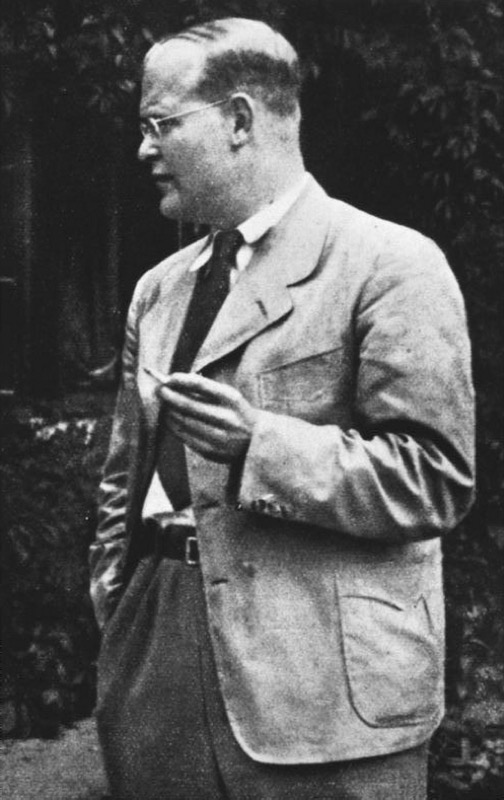
Letters and Papers from Prison was assembled after the war by Eberhard Bethge, Bonhoeffer's closest friend, former student and nephew by marriage, and published in 1951 as Widerstand und Ergebung ('Resistance and Submission'). It gathers what Bonhoeffer wrote during two years of imprisonment by the Nazi state, together with the essay 'After Ten Years', composed at Christmas 1942 as a stocktaking for fellow conspirators. Bonhoeffer was arrested on 5 April 1943, ostensibly for helping Jews escape to Switzerland and for evading military service through his Abwehr post, and held in the Wehrmacht's interrogation prison at Berlin-Tegel. For eighteen months he wrote letters to his parents, censored and cheerful, designed to reassure them and to keep his story consistent for interrogators. Through a friendly guard he also smuggled uncensored letters to Bethge, then serving in the army in Italy, and these form the heart of the book. The early letters record the texture of confinement: the first twelve days in a cold isolation cell, the smell of the blankets, the routine of reading, exercise and prayer, the Psalms, Paul Gerhardt's hymns, Stifter's novels, and the terror of fellow prisoners during the heavy air raids of November 1943, when Bonhoeffer helped in the sick bay. He writes about boredom, longing, the experience of time, his engagement to Maria von Wedemeyer, and the discipline needed not to let others see his distress. From 30 April 1944 the letters to Bethge turn to theology. Bonhoeffer asks who Christ really is for us today, in a 'world come of age' that no longer needs God as a working hypothesis to explain nature, morality or politics. He criticises a religion that uses God as a deus ex machina for the boundaries of human knowledge and strength, proposes a 'religionless Christianity' and a 'non-religious interpretation of biblical concepts', and insists that God is to be found at the centre of life, not at its edges. In a famous letter of 16 July 1944 he writes that only a suffering God can help. The failure of the 20 July 1944 attempt on Hitler's life doomed the conspirators; the next day Bonhoeffer wrote of learning to have faith by living completely in this world. After the Zossen files exposing the conspiracy were found in September, he was moved in October to the Gestapo prison on Prinz-Albrecht-Strasse, and the letters largely stop. The poems date mostly from the second half of 1944: 'Who Am I?', which sets the calm prisoner others see against the restless, sick, longing one he feels himself to be; 'Stations on the Way to Freedom'; and 'By Gracious Powers', sent to his mother for Christmas 1944. Bonhoeffer, his brother Klaus and his brothers-in-law Hans von Dohnanyi and Rüdiger Schleicher were all executed in April 1945.
Plot or Argument
- 'After Ten Years' (Christmas 1942)
A accounting for fellow conspirators on a decade of Nazi rule: the failure of reason, conscience and duty to resist evil, the danger of stupidity as more injurious than malice, and the need for 'responsible action' that accepts guilt.
- Tegel, spring–autumn 1943: letters to parents
Censored letters describing prison routine, reading, health and gratitude for parcels, written to calm his family and to protect the story he was telling his interrogators.
- Correspondence with Bethge from November 1943
Smuggled letters, frank about loneliness, the air raids, care for frightened prisoners, his engagement, and music; they create one of the great friendships in letters of the century.
- The theological letters, April–August 1944
The world come of age, the end of religion as a stopgap for human limits, religionless Christianity, the 'arcane discipline', and the God who is weak and suffering in the world; summarised in the 'Outline for a Book' of August 1944.
- After 20 July 1944
Letters written as the conspiracy collapses reflect on this-worldliness, on taking one's own and others' suffering seriously, and on discipleship as living fully in the world.
- Prison poems
'Who Am I?', 'Christians and Pagans', 'Stations on the Way to Freedom', 'The Death of Moses', 'Jonah' and 'By Gracious Powers' compress the theology and the emotional strain of confinement into verse.
- Final notes from the Gestapo cellar and Flossenbürg
Few writings survive from the last months; the book ends with brief notices and the testimony of others about Bonhoeffer's final days.
Characters
- Dietrich Bonhoeffer, author
Pastor, theologian and conspirator writing under interrogation and threat of death.
- Eberhard Bethge, principal correspondent and editor
Friend, former Finkenwalde student and husband of Bonhoeffer's niece Renate Schleicher, who preserved and published the letters.
- Karl Bonhoeffer, father
Leading German psychiatrist and neurologist, recipient with his wife of the censored family letters.
- Paula Bonhoeffer, mother
Who sent parcels and books; 'By Gracious Powers' was written for her birthday and Christmas 1944.
- Maria von Wedemeyer, fiancée
Engaged to Bonhoeffer in January 1943; her letters with him were published separately as Love Letters from Cell 92.
- Hans von Dohnanyi, brother-in-law and fellow conspirator
Abwehr jurist arrested the same day as Bonhoeffer and executed in April 1945.
Lessons
God at the centre of life, not its edges
Bonhoeffer rejects a faith that retreats to whatever science and medicine cannot yet explain. He asks instead how belief speaks to people in their strength, health and ordinary responsibilities.
- What is the 'God of the gaps' that Bonhoeffer wants to abandon?
- How might hospital chaplaincy look different under Bonhoeffer's proposal?
- Is 'religionless Christianity' still Christianity?
The divided self under strain
'Who Am I?' contrasts the composed prisoner admired by guards with the inwardly anxious, homesick and exhausted man. The poem explores whether identity lies in public conduct, private feeling or something beyond both.
- Which self does Bonhoeffer finally claim?
- What does the poem suggest about the cost of appearing calm for others?
Responsible action means accepting guilt
'After Ten Years' argues that people of conscience who keep their hands clean may still fail their neighbours. Bonhoeffer's decision to join a conspiracy to kill Hitler embodies an ethics that acts and bears the guilt of acting.
- How does Bonhoeffer distinguish responsible action from mere obedience to principle?
- Can a pastor justify participation in an assassination plot?
Disciplines for surviving confinement
The letters show deliberate routines: fixed hours, reading plans, exercise, prayer, letter-writing, and attention to small pleasures. They read as a practical record of how one person preserved sanity and purpose in prison.
- Which of Bonhoeffer's routines seem most important to his resilience?
- How does he write about time and waiting differently as months pass?
- What role does correspondence itself play in keeping him well?
Context
Bonhoeffer belonged to the Berlin professional elite that produced much of the conservative and liberal resistance to Hitler. The Abwehr under Admiral Canaris and Hans Oster harboured conspirators, and Bonhoeffer used his Abwehr cover to travel to Sweden and Switzerland to contact the Allies. The Gestapo initially investigated the group for currency offences connected with 'Operation 7', the rescue of a small group of Jews to Switzerland. The failed bomb plot of 20 July 1944 led to thousands of arrests and executions.
Composition
Letters were written at Tegel from April 1943 to October 1944, many smuggled through the guard Corporal Knobloch. Bethge buried some letters in his garden during the war. He published a first selection as Widerstand und Ergebung in 1951; an English translation by Reginald H. Fuller appeared in 1953 (US title Prisoner for God), enlarged in 1967 and 1971 with letters from Bonhoeffer's correspondents. The critical German edition (Dietrich Bonhoeffer Werke vol. 8, 1998) and its English translation (DBWE 8, 2010) present the complete material.
Reception
The theological letters provoked the 'death of God' and secular theology debates of the 1960s, especially through John A. T. Robinson's Honest to God (1963). Bonhoeffer became a martyr figure across denominations and is commemorated among the twentieth-century martyrs on the west front of Westminster Abbey. His ethics of responsible action has been invoked in the American civil rights movement, in South African anti-apartheid theology, and, controversially, by political movements of very different kinds.
Comparisons
- the-cost-of-discipleship
The 1937 book's contrast of cheap and costly grace prepares the prison letters' this-worldly faith, but the later Bonhoeffer criticises his earlier, more sharply separated church as a temptation to holiness withdrawn from the world.
- the-consolation-of-philosophy
Boethius also wrote in prison awaiting execution by a ruler he had served; he seeks consolation in philosophy's ascent beyond fortune, while Bonhoeffer seeks God within suffering and earthly life.
- alone-in-berlin
Fallada's novel of a working-class couple's postcard campaign shows resistance from below in the same city and years, ending like Bonhoeffer's story with arrest, Gestapo interrogation and the guillotine or the rope.
- fear-and-trembling
Bonhoeffer read Kierkegaard closely, but his conspiratorial decision was not the solitary knight of faith's suspension of the ethical; he framed it as responsibility taken for others and shared with others.
- letters-from-a-stoic
Seneca's letters to Lucilius are another correspondence used to train oneself for death under a tyrant; Bonhoeffer's letters share the self-discipline but reject Stoic detachment in favour of grief, longing and hope.
- the-sickness-unto-death
Anti-Climacus describes the self that cannot be itself, a frame for 'Who Am I?', where Bonhoeffer resolves the split between public and private selves by placing his identity in God's knowledge.
Quotes
For Students
A reading companion for classical Christian high school students. See the student guide.
Reading Guide
Watch for
- The essay After Ten Years, written at Christmas 1942 for his fellow conspirators, especially its sections on stupidity as a greater danger to the good than malice and on the responsible action that is willing to incur guilt.
- The difference between the censored, reassuring letters to his parents in 1943 and the smuggled letters to Eberhard Bethge from the same months, which speak frankly of loneliness and fear.
- The letters about the heavy air raids on Berlin in November 1943, when prisoners cried out in locked cells and Bonhoeffer helped in the sick bay.
- The theological letters beginning on 30 April 1944, which ask who Christ really is for us today, and the letter of 16 July 1944, which argues that Christ helps us by his weakness and suffering rather than by his power.
- The poems of summer and winter 1944, above all Who Am I?, with its two portraits of the prisoner, and By Gracious Powers, written for his mother and family at Christmas from the Gestapo prison.
Key terms and names
- Tegel
- The military interrogation prison in Berlin where Bonhoeffer was held from April 1943 to October 1944 and where nearly all the letters were written.
- Eberhard Bethge
- Bonhoeffer's closest friend, former Finkenwalde student and nephew by marriage, who received the smuggled letters, hid some of them during the war, and edited the book in 1951.
- World come of age
- Bonhoeffer's description, in the letters of 1944, of a modern world that explains nature, morals and politics without needing God as a working hypothesis.
- Deus ex machina
- The god lowered by machine onto the ancient stage to rescue a hopeless plot. Bonhoeffer uses the phrase for a religion that calls on God only at the limits of human knowledge or strength.
- Religionless Christianity
- Bonhoeffer's unfinished proposal for a faith freed from religion understood as an inward, otherworldly province of life, and for a non-religious interpretation of biblical concepts for a world come of age.
- Arcane discipline
- The early church's practice of keeping its central mysteries for the baptized. Bonhoeffer revives the idea to argue that prayer and worship must be guarded even as Christians speak to the world in non-religious terms.
- Responsible action
- The ethic set out in After Ten Years: acting for others in a concrete situation and bearing the guilt such action may bring, rather than keeping one's own conscience spotless.
Seminar Questions
- Comprehension Why was Bonhoeffer arrested in April 1943, and how do his letters to his parents differ from the letters he smuggled to Bethge?
- Comprehension What does After Ten Years say about stupidity, and why does Bonhoeffer think it a more dangerous enemy of the good than malice?
- Comprehension What happened at Tegel during the air raids of November 1943, and what part did Bonhoeffer take in caring for other prisoners?
- Interpretation In the letter of 30 April 1944 Bonhoeffer asks who Christ really is for us today. What does he mean by a world come of age, and why does he object to a God kept for the boundaries of human knowledge and strength?
- Interpretation Who Am I? sets the calm prisoner seen by the guards against the restless, longing man Bonhoeffer feels himself to be. How does the poem resolve the question of which self is real, and is the resolution satisfying?
- Interpretation On 21 July 1944, the day after the failed attempt on Hitler's life, Bonhoeffer writes of learning to have faith by living completely in this world. Why might he have written this on that day of all days?
- Big Question After Ten Years argues that a man who keeps his own hands clean may still fail his neighbour. Can a Christian rightly take part in a plot to kill a ruler, and must he then accept that he bears guilt for it?
- Big Question Should faith be strongest where human strength fails, or, as Bonhoeffer argues, at the centre of life, in health, work and responsibility?
Faith Connections
- Isaiah 53:4 and Matthew 8:17 (Scripture)
Matthew applies Isaiah's words, that he took our infirmities and bore our sicknesses, to Jesus' healings. Bonhoeffer cites Matthew 8:17 in the letter of 16 July 1944 to argue that Christ helps not by omnipotence but by weakness and suffering.
- Psalm 31:15 (Scripture)
The psalmist, surrounded by enemies, says that his times are in God's hand. Bonhoeffer prayed the Psalms daily in Tegel, and the letters' long reflections on waiting and on time in prison read as a struggle to make this trust his own.
- Martin Luther, Heidelberg Disputation (1518), theses 19-21 (Great Conversation)
Luther contrasts the theologian of glory, who looks for God in visible power, with the theologian of the cross, who knows God through suffering and the cross. Bonhoeffer's prison letter on the suffering God carries this Lutheran theology of the cross into a cell under sentence of death.
Logic and Rhetoric
Central argument: The modern world has come of age: it explains nature, morality and politics without God as a working hypothesis. A faith that keeps God only for the gaps in knowledge and the moments of weakness will be pushed back as those gaps close, and it misrepresents the God of the Bible, who meets people at the centre of life. In Christ, God lets himself be pushed out of the world onto the cross and helps by weakness and suffering rather than by power. Therefore Christians must speak of God in non-religious terms, live fully in this world, and share in God's sufferings there, even when responsible action for others means taking on guilt.
Rhetorical device: antithesis. In the poem Who Am I? Bonhoeffer sets the composed, friendly and unshaken prisoner described by the guards and his fellow inmates against the man he knows himself to be, restless, homesick and worn out. The opposed portraits build to the final turn, where he gives the unanswered question to God.
Debate: Resolved: Bonhoeffer was right to join the conspiracy against Hitler.
Writing Prompts
Essay: Compare the censored letters Bonhoeffer wrote to his parents in 1943 with the smuggled letters to Bethge from the same months. What does he conceal from each, and why? Argue what the difference shows about truthfulness, love, and the duty to protect others under a regime that reads every letter.
Comparison with The Consolation of Philosophy: Boethius and Bonhoeffer both wrote in prison while awaiting death at the hands of the ruler of their day. Compare how Lady Philosophy consoles Boethius by lifting his mind above fortune with how Bonhoeffer seeks God in suffering and earthly life, and argue which account of consolation better fits the Christian faith both men held.
Medical Lens
The letters are a first-person record of the psychological effects of prolonged pre-trial detention under threat of death: initial isolation, disrupted sleep, longing, boredom, temporal disorientation, and the effort of maintaining composure. Bonhoeffer describes fellow prisoners' terror during air raids and his work in the sick bay, observations that resemble later accounts of acute combat-stress reactions. His father Karl Bonhoeffer, among Germany's most eminent psychiatrists, is the addressee of many letters, and the family's medical background shapes how Bonhoeffer reports his own health. 'Who Am I?' is often read in clinical and pastoral settings as a portrait of the gap between outward functioning and inner distress; it is a poem and a theological statement, not a symptom report. The theological argument against a God invoked only at the limits of medicine and knowledge has direct bearing on chaplaincy, palliative care and the spiritual care of the dying.
- Early letters to parents, April–May 1943
The first days of isolation in Tegel, physical conditions of the cell, and his deliberate adoption of routine.
- Letters to Bethge, late November 1943
Heavy air raids on Berlin; prisoners screaming in locked cells, Bonhoeffer assisting in the sick bay, and his reflections on fear.
- Letters on time, waiting and longing (winter 1943–1944)
Reflections on the experience of time in prison, homesickness, and the danger of letting longing become despair.
- Poem 'Who Am I?' (summer 1944)
Contrast between the composed figure others see and the restless, sick, caged inner self.
- Letters of 30 April, 8 June and 16 July 1944
Critique of religion as a deus ex machina at the limits of human knowledge and strength, with implications for faith at the sickbed.
- 'Stations on the Way to Freedom' (after 20 July 1944) and 'By Gracious Powers' (December 1944)
Death imagined as the last station of freedom; a poem of trust written for his family at Christmas in the Gestapo prison.
Creative Prompts
- Essay
Read 'Who Am I?' alongside a modern account of high-functioning depression or masked anxiety. What does the poem understand that clinical language misses, and vice versa?
- Dialogue
Imagine a conversation, impossible under censorship, between Karl Bonhoeffer the psychiatrist and his imprisoned son about how each understands fear.
- Fiction
Write the night of an air raid on Tegel in November 1943 from the viewpoint of a young soldier-prisoner whom Bonhoeffer sits with in the sick bay.
- Classroom
Have students compare the censored letters to his parents with the smuggled letters to Bethge from the same weeks, listing what he conceals from each and why.
Further Reading
- Dietrich Bonhoeffer: A Biography, Eberhard Bethge
- Love Letters from Cell 92, Dietrich Bonhoeffer and Maria von Wedemeyer
- Ethics, Dietrich Bonhoeffer
Unfinished manuscripts written 1940–1943 on responsible action.
- Strange Glory: A Life of Dietrich Bonhoeffer, Charles Marsh
- Honest to God, John A. T. Robinson
The 1963 book that popularised Bonhoeffer's prison theology.
Verification notes
Biographical and publication facts are well established. Dates of individual letters (30 April, 8 June, 16 July, 21 July 1944) are widely cited. No quotations are included: the book is copyrighted in all English translations and no public-domain text is stored. Poem titles follow common English renderings and vary by translation.
- Name of the Tegel guard who smuggled letters (commonly given as Corporal Knobloch).
- Year of the first English edition (1953) and its US title Prisoner for God.
- Whether Bonhoeffer's sick-bay work during raids is described in the November 1943 letters or later ones.
- Length of the initial isolation period (commonly given as twelve days).