Work record
The Interpretation of Dreams
1899 (dated 1900) · 19th Century · Philosophy · German
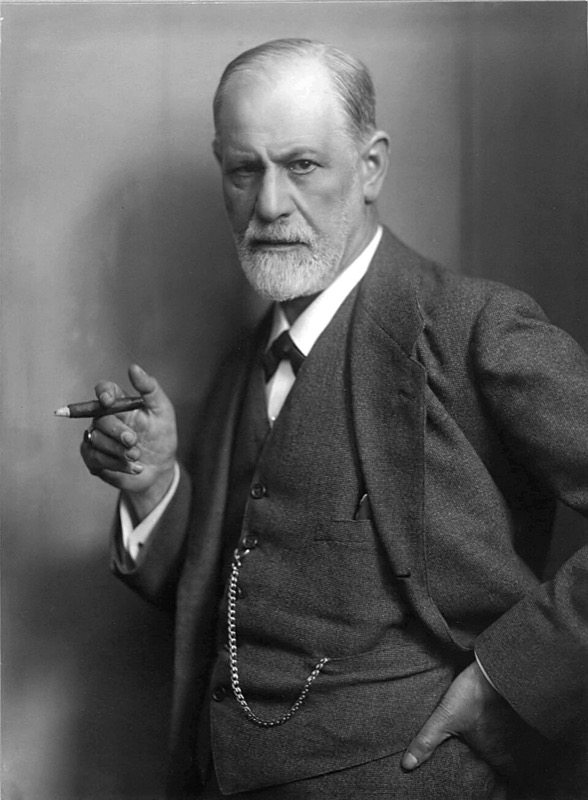
.jpg)
Summary
Die Traumdeutung appeared in November 1899 with the date 1900 on its title page, and Freud regarded it as his most important book. Its central claim is that dreams are meaningful psychic acts that can be interpreted, and that every dream, properly analysed, proves to be the fulfilment of a wish. The first chapter is a long survey of the scientific literature on dreams, from ancient prophecy to the nineteenth-century physiologists who saw dreams as the by-product of external stimuli, bodily sensations or fragmentary brain activity. Freud credits them with observations but rejects their conclusion that dreams have no meaning. In Chapter II he introduces his method: the dreamer reports the dream piece by piece and gives free associations to each element, without criticism. He demonstrates it on his own 'dream of Irma's injection' of July 1895, in which a patient whose treatment had stalled appears at a party with pains, a white patch in her throat, and an infection that colleagues attribute to a careless injection with a dirty syringe. His associations show that the dream exonerates him of responsibility for her illness and takes revenge on the friend who had hinted at his failure. Chapter III states the thesis that dreams fulfil wishes, illustrated by simple dreams of children and of thirst. Chapter IV confronts apparent counter-examples, anxious and unpleasant dreams, and introduces dream distortion: a censorship between two psychic agencies forces forbidden wishes into disguise, so that the dream is the disguised fulfilment of a suppressed or repressed wish. Chapter V traces the sources of dream material: recent impressions of the day, infantile memories, bodily stimuli, and typical dreams of nakedness, examinations and the death of loved persons. Here Freud presents Sophocles' Oedipus as the fulfilment of a universal childhood wish to possess one parent and remove the other, with Hamlet as its repressed modern counterpart. Chapter VI, the longest, analyses the dream-work, the processes that turn latent dream-thoughts into manifest content: condensation, displacement, considerations of representability through images and symbols, and secondary elaboration, illustrated by dreams such as the botanical monograph and 'Non vixit'. Chapter VII builds a speculative model of the mind, the 'psychic apparatus', to explain forgetting, regression, wish and anxiety, and the relation between primary and secondary processes, culminating in the claim that the unconscious is the true psychic reality. The book sold slowly at first, but Freud revised it through eight editions, and A. A. Brill's 1913 translation of the third edition introduced it to English readers.
Plot or Argument
- I. The scientific literature on dreams
A critical review of earlier theories: dreams as messages, as reactions to sensory and organic stimuli, as products of weakened reason, and as expressions of moral feeling; Freud notes their insights into memory and stimulus while rejecting the denial of meaning.
- II. Method: the dream of Irma's injection
Interpretation proceeds element by element through the dreamer's uncensored associations, not by symbolic keys or dream books. Freud's analysis of his own dream about a patient and his medical colleagues establishes the method and its first result.
- III. The dream as wish-fulfilment
Undisguised wish dreams of convenience, thirst and children, such as a child dreaming of eating up all the cherries, support the general thesis.
- IV. Distortion and censorship
Unpleasant and anxiety dreams, and dreams that seem to frustrate wishes, such as the patient who dreams she cannot give a supper party, are explained by a censoring agency that disguises forbidden wishes.
- V. Material and sources
Recent and indifferent impressions, infantile experiences, somatic stimuli and typical dreams. The section on dreams of the death of loved persons introduces the Oedipus legend and, in a long note, Hamlet.
- VI. The dream-work
Condensation compresses many thoughts into one image; displacement shifts emphasis to trivial elements; representability converts thoughts into visual scenes and symbols; secondary elaboration gives the dream a surface coherence. Treatments of absurd dreams, numbers, speeches and affects follow.
- VII. The psychology of the dream processes
Starting from the dream of the burning child, Freud models the mind as an apparatus with perceptual and motor ends, preconscious and unconscious systems, regression, and primary and secondary processes, and argues that the dream is the guardian of sleep.
Characters
- Sigmund Freud, author, principal dreamer
Supplies most of the dreams analysed, exposing his ambition, rivalries, guilt and family memories as evidence.
- Irma, patient in the specimen dream
Young widow and family friend whose partly successful treatment for hysteria provokes the dream; often identified with Anna Hammerschlag Lichtheim, with elements from Emma Eckstein.
- Otto, colleague in the dream
Friend whose remark that Irma was 'better, but not altogether well' irritated Freud; in the dream he gives the careless injection. Usually identified with Oskar Rie.
- Dr. M., senior physician in the dream
Respected colleague who appears pale, limping and beardless; usually identified with Josef Breuer.
- Leopold, colleague in the dream
Thorough physician who percusses Irma and finds dullness; contrasted favourably with Otto.
- Wilhelm Fliess, unnamed friend
Berlin nose-and-throat specialist and Freud's intimate correspondent during the writing; his theories on sexual chemistry lie behind the trimethylamine formula in the Irma dream.
- Oedipus, literary exemplar
Sophocles' king, who kills his father and marries his mother, presented as the fulfilment of a childhood wish shared by all.
- Hamlet, literary exemplar
Shakespeare's prince, whose inability to take vengeance on the man who did what he unconsciously wished is read as the repressed form of the Oedipus material.
Lessons
Meaning hides in the trivial detail
Freud's method refuses to treat any element of a dream as accidental. Displacement moves emotional weight onto minor details, so the incidental phrase or odd image often leads to the central thought. Whatever one thinks of his conclusions, the book teaches a discipline of attention to what seems unimportant.
- Why does the 'botanical monograph' turn out to matter more than its surface suggests?
- Can the method of following every association ever be falsified, or does it always find a meaning?
The physician's self-exoneration
The specimen dream is about medical failure: a patient not fully cured, a colleague's reproach, a dirty syringe. Freud reads it as a wish to be innocent of Irma's illness and shows how a doctor's mind distributes blame. It is one of the most candid documents of clinical guilt in medical literature.
- Which explanations of Irma's illness does the dream offer, and why do they contradict one another?
- What does the dream suggest about how clinicians cope with treatments that do not work?
Literature as evidence of the mind
Freud uses Oedipus and Hamlet not as ornaments but as data: the lasting power of a tragedy is explained by the wishes it stirs in its audience. This move made literary interpretation part of psychology, for better and worse, and launched a century of psychoanalytic criticism.
- Does Freud's reading of Oedipus depend on ignoring that Oedipus did not know his parents?
- What is gained and lost when Hamlet's delay is explained by a repressed wish rather than by character or plot?
Sleep defends itself
Freud argues that dreams serve to keep the sleeper asleep by turning stimuli and wishes that would wake the sleeper into hallucinated satisfactions. The burning child dream shows the limit: when reality presses hard enough, the sleeper wakes. The idea links dream theory to the physiology of sleep and to the nature of anxiety dreams that fail.
- How does the dream of the burning child both support and strain the idea that dreams fulfil wishes?
- How does Freud's idea of dreams as guardians of sleep compare with modern accounts of REM sleep and nightmares?
Context
Freud wrote in fin-de-siècle Vienna, where academic psychiatry was dominated by brain anatomy, and where hypnosis, hysteria and 'nervous' illness were matters of debate. Nineteenth-century dream research by Maury, Scherner, Strümpell, Volkelt, Delboeuf and others had explored stimuli and memory in dreams. Freud's turn from neurological models (the abandoned Project for a Scientific Psychology of 1895) to a psychological theory of meaning took place in the context of his self-analysis, his correspondence with Wilhelm Fliess, and his struggle for academic recognition as a Jewish physician in an increasingly antisemitic city.
Composition
Freud dated the insight that dreams fulfil wishes to the Irma dream of 24 July 1895 at the Bellevue villa outside Vienna, later imagining a plaque to mark the spot. Much of the book was written in 1898–99, and he discussed drafts in letters to Fliess. It was published by Franz Deuticke in November 1899, dated 1900; the first printing of 600 copies took years to sell. Freud added material in eight German editions up to 1930, including a section on symbolism largely influenced by Wilhelm Stekel. Brill's 1913 translation renders the third edition (1911).
Reception
Early reviews were few and mostly dismissive. Through the growing psychoanalytic movement after 1902, the book became the founding text of psychoanalysis, shaping psychiatry, literature, Surrealism and twentieth-century culture. Critics from the start questioned its evidence and the unfalsifiability of interpretation; later sleep research, including the discovery of REM sleep in 1953 and the activation-synthesis hypothesis of Hobson and McCarley in 1977, offered rival accounts of dreaming. Historians have also examined the real identities and fates of Freud's patients and colleagues behind the dreams.
Comparisons
- the-principles-of-psychology
James's psychology, published nine years earlier, treats consciousness as a stream and is cautious about unconscious mental states; Freud makes the unconscious the larger circle of mental life and consciousness a sense organ for part of it.
- the-varieties-of-religious-experience
James and Freud both treat abnormal and private experience as evidence about the mind, but James judges religious states by their fruits while Freud interprets dreams by tracing them back to infantile wishes.
- the-theban-plays
Sophocles' Oedipus the King is the literary keystone of Chapter V; reading the play beside Freud shows how much his argument rests on the tragedy of a man who did not know what he was doing.
- macbeth
In the Hamlet note Freud adds that Macbeth, written soon after, turns on the theme of childlessness; Lady Macbeth's sleepwalking is the kind of nocturnal disclosure of guilt that his theory tries to explain.
- civilization-and-its-discontents
Thirty years later Freud extends the conflict between wish and censorship from the individual dreamer to culture itself, where instinctual renunciation is the price of civilised life.
- the-world-as-will-and-representation
Schopenhauer's blind, striving will working beneath consciousness and his essay on madness as a disturbance of memory anticipate Freud's unconscious wishes and repression, a debt Freud acknowledged only later.
- the-anatomy-of-melancholy
Burton catalogues dreams among the symptoms and causes of melancholy within humoral medicine; Freud's dreams belong to a psychological system in which symptoms and dreams are both compromise formations.
Quotes
Frequently cited
“The dream is the (disguised) fulfilment of a (suppressed, repressed) wish”
Frequently cited
“The dream is the guardian of sleep, not the disturber of it”
Frequently cited
“The unconscious is the larger circle which includes within itself the smaller circle of the conscious”
“I say to her: “If you still have pains, it is really only your own fault”
“I think that after all I must be overlooking some organic affection”
“the content of the dream is thus the fulfilment of a wish; its motive is a wish”
“What does the goose dream of”
“King Oedipus, who has struck his father Laius dead and has married his mother Jocasta, is nothing but the realised wish of our childhood”
“Like Oedipus, we live in ignorance of the wishes that offend morality, wishes which nature has forced upon us”
“Hamlet can do everything but take vengeance upon the man who has put his father out of the way, and has taken his father’s place with his mother”
“Father, don’t you see that I am burning”
“Properly speaking, the unconscious is the real psychic”
For Students
A reading companion for classical Christian high school students. See the student guide.
Reading Guide
Watch for
- Chapter I's survey of earlier dream theories, from ancient prophecy to nineteenth-century physiologists, and the one thing Freud says they all missed: that dreams have meaning.
- The dream of Irma's injection in Chapter II, which Freud analyzes phrase by phrase. Notice how many contradictory excuses the dream offers for Irma's illness, and that every one clears the dreamer.
- Chapter IV's turn to unpleasant and anxious dreams, including the patient who dreams she cannot give a supper party, and Freud's comparison of the dream censor to the restrictions faced by a political writer.
- The section on typical dreams in Chapter V, where Freud moves from dreams of the death of loved persons to Sophocles' Oedipus and then, in a long note, to Hamlet.
- The dream of the burning child at the opening of Chapter VII, which Freud uses to begin his model of the mind and to test the limits of his own theory.
Key terms and names
- Manifest and latent content
- The manifest content is the dream as remembered; the latent content is the set of hidden dream-thoughts behind it. Interpretation, for Freud, means working back from the first to the second.
- Free association
- The method introduced in Chapter II, in which the dreamer reports whatever comes to mind about each element of the dream without criticism. Freud contrasts it with dream books that assign fixed meanings to symbols.
- Wish-fulfilment
- Freud's central thesis that every dream, properly interpreted, represents a wish as fulfilled. Chapter IV revises it to cover dreams that seem painful by adding disguise and repression.
- Censorship
- The agency Freud posits in Chapter IV between two psychic systems, which forces forbidden wishes into disguise before they can appear in a dream. It explains why dreams seem strange and senseless.
- Condensation
- One of the processes of the dream-work in Chapter VI, by which many thoughts are compressed into a single image, figure, or word. Composite persons in Freud's own dreams are his main examples.
- Displacement
- The dream-work's shifting of emotional emphasis from important thoughts to trivial details, as in the botanical monograph dream. It is why Freud insists that no detail of a dream may be ignored.
- Oedipus
- Sophocles' king, whom Freud presents in Chapter V as the fulfilment of a childhood wish to possess one parent and remove the other. Freud later called this pattern the Oedipus complex.
- Psychic apparatus
- The speculative model of Chapter VII, in which the mind has a perceptual end and a motor end, with unconscious and preconscious systems between. Dreams occur when excitation flows backward toward perception, which Freud calls regression.
Seminar Questions
- Comprehension In the dream of Irma's injection, what is wrong with Irma, who examines her, and whom does the dream blame for her illness?
- Comprehension How does Freud's method of interpretation in Chapter II differ from the symbolic method and the decoding method of the old dream books?
- Interpretation Freud uses his own dreams as his main evidence, exposing his ambition, rivalries, and guilt. Does this candor make his argument more trustworthy or less?
- Interpretation How does the idea of the censor in Chapter IV allow Freud to explain away anxious and unpleasant dreams? Is there any dream his theory could not explain?
- Interpretation Freud says Oedipus moves modern audiences because it fulfills a wish they share. Does his reading account for the fact that in Sophocles Oedipus does not know who his parents are and is horrified to learn it?
- Interpretation In the dream of the burning child, the father dreams his dead son's reproach while a candle has in fact fallen on the body. Why does Freud open his final chapter with this dream, and what wish does he find in it?
- Big Question Freud claims that the unconscious is the true psychic reality and that consciousness reports it imperfectly. If he is right, how much of our moral life is under our control, and what becomes of responsibility for what we do not know about ourselves?
Faith Connections
- Genesis 41:1-36 (Scripture)
Joseph interprets Pharaoh's dream of seven fat and seven lean cows as seven years of plenty and seven of famine, saying the interpretation belongs to God. Freud cites this very dream in Chapter II as the model of the symbolic method he rejects, which makes it a natural place to compare dream as message with dream as wish.
- Jeremiah 17:9-10 (Scripture)
Jeremiah declares the heart deceitful above all things and asks who can know it, answering that the Lord searches the heart. Freud's Irma dream, in which the mind invents excuse after excuse for itself, is a vivid case study of the self-deception Jeremiah describes, though Freud trusts the analyst rather than God to search it.
- Augustine, Confessions X.30 (Church Fathers)
Augustine confesses that images of old desires return in his dreams and that in sleep he seems to consent to what he refuses awake, and he asks whether he is not then himself. He anticipates Freud's question about the relation between the waking self and the dreaming self, while treating it as a matter for prayer and grace rather than analysis.
Logic and Rhetoric
Central argument: Every psychic act has a meaning that can be found by tracing its connections, and dreams are psychic acts. When dreams are interpreted by free association, element by element, they turn out to express wishes as fulfilled. Dreams that seem painful or senseless are disguised because a censor forbids certain wishes direct expression, and the dream-work of condensation and displacement produces the disguise. Therefore the dream is the disguised fulfilment of a repressed wish, and interpreting dreams is the royal way to knowledge of the unconscious, which is the larger part of mental life.
Rhetorical device: analogy. In Chapter IV Freud explains the dream censor by comparing the dreamer to a political writer who must say unwelcome things to those in power and so softens and disguises his meaning to evade the authorities. The familiar image of political censorship makes an invisible mental process seem concrete and plausible.
Debate: Resolved: Because no dream can contradict Freud's theory of wish-fulfilment, the theory cannot be scientific.
Memory Work
The dream is the (disguised) fulfilment of a (suppressed, repressed) wish
Father, don’t you see that I am burning
Writing Prompts
Essay: Freud calls the dream of Irma's injection the specimen dream of psychoanalysis. Analyze his interpretation in Chapter II and argue whether it proves that the dream fulfills a wish, or whether Freud's associations simply find the meaning he was looking for.
Comparison with The Theban Plays: Freud reads Oedipus the King as the tragedy of a universal childhood wish, while Sophocles presents it as the tragedy of a man who seeks the truth about himself and finds it in the oracle's fulfillment. Read the play beside Chapter V of The Interpretation of Dreams and argue which account better explains why Oedipus's discovery is tragic.
Medical Lens
A foundational text in the history of psychiatry and psychotherapy. The specimen dream of Irma's injection is a physician's dream about misdiagnosis, a toxic injection (trimethylamine, propyl preparations) and a dirty syringe; historians link it to Freud's anxieties about hysteria diagnoses, to his earlier promotion of cocaine and the death of his friend Ernst von Fleischl-Marxow, and to the botched nasal surgery on Emma Eckstein by Wilhelm Fliess in 1895. These biographical links are interpretations drawn from the Fliess letters, not statements in the book. Chapter I is a valuable survey of nineteenth-century somatic theories of dreaming. The work introduces the concepts of repression, censorship, condensation, displacement, the Oedipus complex and primary process thinking, which shaped psychiatric thinking for most of the twentieth century. Its evidential claims are contested, and modern sleep science explains much dreaming differently; for teaching it is best read as a theory of meaning and a historical document rather than established neuroscience.
- Chapter I
Survey of external, internal sensory and organic stimuli as causes of dreams, including experiments on sleepers and the views of physicians and psychiatrists on dreams and insanity.
- Chapter II, the dream of Irma's injection
A patient with hysterical symptoms, a throat examination revealing white patches, colleagues diagnosing infection and blaming an injection given with an unclean syringe; Freud's analysis of his own professional guilt.
- Chapter IV
Anxiety and unpleasant dreams, the dreams of patients that seem to contradict the theory, and the introduction of the censor and dream distortion.
- Chapter V, typical dreams
Dreams of embarrassment at nakedness, examination dreams and dreams of the death of loved persons, leading to the Oedipus and Hamlet readings and the discussion of childhood sexuality and sibling rivalry.
- Chapter VII, opening
The dream of the burning child, reported by a patient from a lecture, and Freud's account of how external perception and grief enter a dream.
- Chapter VII, sections on regression and wish-fulfilment
The model of the psychic apparatus, regression to perception in hallucinatory dreams, and the relation of dreams to the psychoneuroses, hysterical symptoms and psychosis.
Creative Prompts
- Fiction
Retell the dream of Irma's injection from Irma's point of view: a patient who cannot accept her doctor's 'solution' and finds herself examined at a party by four men.
- Dialogue
Stage a debate between Freud and a modern sleep researcher over the dream of the burning child: wish-fulfilment, threat simulation, or memory consolidation?
- Essay
Read the Irma dream as a document of clinical error. What does it reveal about how doctors handle uncertainty, blame and the fear of missing organic disease?
- Classroom
Have students keep a dream diary for a week and analyse one dream first with Freud's free-association method and then with a contemporary neuroscientific account, comparing what each approach can and cannot explain.
Further Reading
- On Dreams, Sigmund Freud
Freud's short 1901 summary of the theory.
- Studies on Hysteria, Josef Breuer and Sigmund Freud
- Freud: A Life for Our Time, Peter Gay
- The Discovery of the Unconscious, Henri F. Ellenberger
- Fin-de-Siècle Vienna: Politics and Culture, Carl E. Schorske
Includes an essay reading the Traumdeutung politically.
- The Dreaming Brain, J. Allan Hobson
Verification notes
Chapter structure and argument follow the stored Brill translation of the third edition (Project Gutenberg #66048), whose seven chapters are followed by an index; all quotes were checked against that text. Brill places the Hamlet discussion in a footnote. Identifications of Irma, Otto, Dr. M. and Leopold come from later scholarship and the Fliess correspondence, not from the book.
- Identifications of Irma (Anna Hammerschlag Lichtheim and/or Emma Eckstein), Otto (Oskar Rie), Dr. M. (Josef Breuer) and Leopold (Ludwig Rosenstein) are conventional but debated.
- Size of the first printing (600 copies) and the years taken to sell it.
- Classification as 'philosophy' follows the manifest genre; the book is a work of psychology and clinical theory.