Work record
The Aeneid
c. 29–19 BCE · Ancient · Epic · Latin
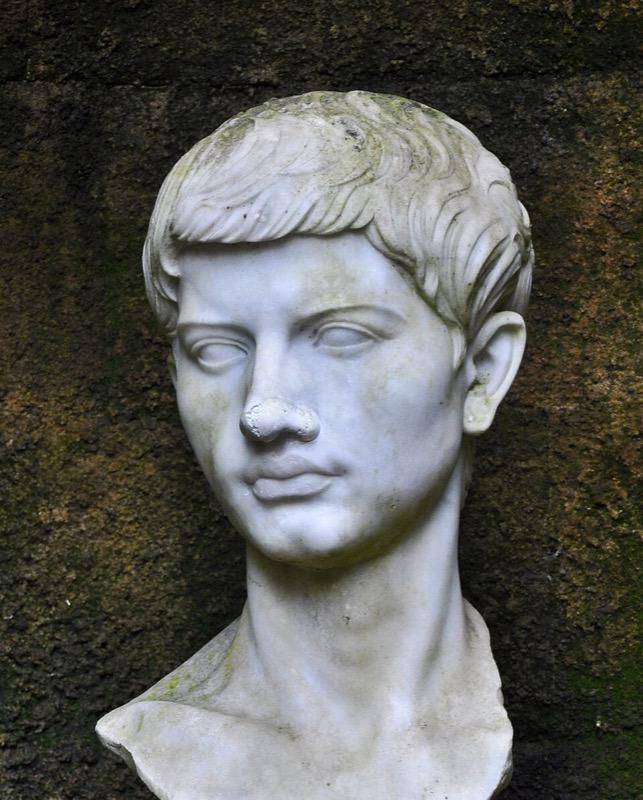
.jpg)
Summary
The Aeneid tells how Aeneas, a Trojan survivor, travels from ruined Troy to Italy to found the lineage that will become Rome. The poem opens with storm and displacement: Juno hates the Trojans, Aeolus releases winds, and Aeneas reaches Carthage. There he tells Dido the fall of Troy: the wooden horse, Laocoon, Priam’s death, Creusa’s loss, and the command to carry household gods into exile. Dido and Aeneas become lovers after divine manipulation and a storm-cave union, but Jupiter orders him onward. Dido curses him and dies by suicide, becoming one of the poem’s great figures of abandoned passion. The Trojans wander through Sicily, games, omens and the underworld. In Book 6 Aeneas descends with the Sibyl, sees the dead, meets Dido’s shade, and receives from Anchises a vision of Roman destiny, including future heroes and civil grief. The second half shifts to Italy. Aeneas seeks alliance with Latinus, but Juno and Allecto inflame war. Turnus, Lavinia, Amata, Evander, Pallas, Camilla and Mezentius are drawn into violence. Aeneas becomes both pious founder and terrifying killer. In the final duel he wounds Turnus and nearly spares him, then sees Pallas’ belt and kills him in rage. The epic’s power lies in this doubleness. Rome is destined, but destiny costs Troy, Carthage, Italy, women, youths and enemies. The poem is medically relevant through wounds, plague memories, grief, prophetic frenzy, suicide and trauma after war. It asks whether empire can be founded without carrying the symptoms of the violence that made it possible. Virgil’s style keeps public destiny and private sensation in constant contact. A shield can display future empire, while a single wound, blush or cry returns attention to mortal bodies. That tension explains why the poem could serve imperial ideology and still trouble readers who hear, beneath the prophecy of Rome, the voices of the defeated.
Plot or Argument
- Storm and Carthage
Aeneas is driven to Carthage, where Dido welcomes the Trojans and hears Troy’s story.
- Fall of Troy
Aeneas narrates the horse, sack, death of Priam, loss of Creusa and escape with Anchises and Ascanius.
- Dido and departure
Divinely driven love turns to abandonment, curse and suicide when Aeneas obeys Jupiter and leaves.
- Underworld destiny
Aeneas descends to the dead and sees future Roman history through Anchises’ prophecy.
- War in Italy
Latins, Trojans and allies fight after divine incitement, with Pallas, Camilla and others killed.
- Turnus killed
Aeneas defeats Turnus and kills him after seeing Pallas’ belt, ending the poem in rage.
Characters
- Aeneas, Trojan leader
Pious survivor whose duty to destiny repeatedly conflicts with pity and personal feeling.
- Dido, queen of Carthage
Widowed ruler who loves Aeneas and dies by suicide after his departure.
- Turnus, Italian warrior
Aeneas’ rival for Lavinia and final opponent in Italy.
- Anchises, father of Aeneas
Carried from Troy and later guide to Roman destiny in the underworld.
- Ascanius, son of Aeneas
Child whose future links Troy to Rome.
- Juno, divine antagonist
Opposes Trojan destiny and prolongs wandering and war.
Lessons
Founding stories remember their victims
The poem glorifies Rome while making readers feel the dead left behind. Empire’s origin is both providential and mournful.
- Whose suffering does Roman destiny require?
- Does the poem endorse or question empire?
Duty can damage the dutiful
Aeneas obeys fate, but obedience does not leave him whole. The final killing shows duty and rage entangled.
- When is Aeneas most admirable?
- When is he most frightening?
Grief becomes historical force
Dido’s curse, Trojan memory and Italian mourning shape future conflict. Personal pain becomes geopolitical destiny.
- How does Dido alter Rome’s future?
- Which laments interrupt heroic momentum?
Context
The Aeneid was written in the Augustan age after Roman civil wars, giving the new regime a mythic ancestry while registering the cost of violence.
Composition
Virgil worked on the poem in the 20s BCE and died in 19 BCE before completing final revisions. Augustus ordered it preserved despite later stories that Virgil wanted it burned.
Reception
The Aeneid became Rome’s national epic, a school text for centuries and a central source for Dante, Milton and imperial literature.
Comparisons
- the-iliad
Virgil rewrites Homeric war through Roman destiny, especially in the second half’s Italian Iliad.
- the-odyssey
The first half adapts wandering, storms and hospitality into a Trojan-Roman Odyssey.
- the-bhagavad-gita
Aeneas and Arjuna both confront violence demanded by duty, though their religious worlds differ.
Quotes
Frequently cited
“Arms, and the man I sing, who, forc’d by fate, And haughty Juno’s unrelenting hate, Expell’d and exil’d, left the Trojan shore”
For Students
A reading companion for classical Christian high school students. See the student guide.
Reading Guide
Watch for
- The opening of Book I, which names the poem's subject as arms and the man driven by fate and Juno's anger. Notice that before Aeneas does anything, the poet tells us how much it will cost to found Rome.
- Aeneas's account of Troy's last night in Book II: Laocoon and the serpents, Priam killed at the altar, Aeneas carrying Anchises on his shoulders and leading Ascanius by the hand, and Creusa lost in the dark.
- Book IV, where Mercury brings Jupiter's command to leave Carthage and Dido curses Aeneas before she dies. Watch how little Aeneas says in his own defense.
- The descent to the underworld in Book VI: Dido's shade turning away in silence, and Anchises' parade of future Roman heroes with his charge that Rome's art will be to rule, to spare the conquered, and to war down the proud.
- The final scene of Book XII, where Aeneas hesitates over the wounded Turnus, sees the belt of Pallas, and kills him. The poem ends there, with no funeral and no founding.
Key terms and names
- Pietas
- The Roman virtue of dutiful devotion to the gods, to country, and to family, which earns Aeneas his constant title of pious. The poem tests it against love in Book IV and against pity in Book XII.
- Fate (fatum)
- The destined founding of the Roman line in Italy, known to Jupiter and revealed to Aeneas in pieces. Juno can delay fate with storms and war but cannot overturn it.
- Penates
- The household gods of Troy that Aeneas is told to carry into exile in Book II. They make his voyage a transfer of a whole people's worship, not just a flight.
- Dido
- The Phoenician queen who founded Carthage, welcomes the Trojans, and dies by her own hand when Aeneas leaves in Book IV. Her curse foretells the wars between Carthage and Rome.
- The Sibyl of Cumae
- Apollo's prophetess who guides Aeneas through the underworld in Book VI, after he plucks the golden bough that grants him entry.
- Pallas
- The young son of King Evander, entrusted to Aeneas and killed by Turnus in Book X. Turnus strips his sword-belt, and the sight of it on Turnus's shoulder decides the poem's last act.
- Turnus
- King of the Rutulians and suitor of Lavinia, stirred to war by the Fury Allecto. He is Aeneas's final opponent, brave and violent, and the last death in the poem.
- The shield of Aeneas
- The shield Vulcan forges in Book VIII, engraved with scenes of future Roman history down to Augustus's victory at Actium. Aeneas lifts it onto his shoulders, rejoicing in images he does not understand.
Seminar Questions
- Comprehension In Book II, what happens to Laocoon, to Priam, and to Creusa, and what does Creusa's ghost tell Aeneas?
- Comprehension Why does Aeneas leave Carthage in Book IV, and what does Dido do and say once she learns he is going?
- Comprehension Whom does Aeneas meet in the underworld in Book VI, and what does Anchises show him?
- Interpretation Dido's shade turns away from Aeneas in Book VI without a word. What does her silence say about his explanation for leaving her, and why does Virgil give her the last word by giving her none?
- Interpretation Anchises tells future Romans to spare the conquered and war down the proud. Measured by that charge, is Aeneas's killing of Turnus in Book XII an act of Roman justice or a failure of it?
- Interpretation The poem's first lines name Juno's unrelenting hate as a driving force of the story. How do Juno's interventions, from Aeolus's storm to Allecto's fury, shape the human choices of Dido, Amata, and Turnus?
- Interpretation Aeneas carries his father out of Troy in Book II and the shield of Rome's future in Book VIII. What do these two burdens on his shoulders say about what it means to be pious?
- Big Question Can a great and good city be founded without injustice to those who stand in its way, and if not, is the founding still worth it?
Faith Connections
- Hebrews 11:13-16 (Scripture)
The patriarchs are described as strangers and exiles on the earth, seeking a homeland and a city God has prepared for them. Aeneas is a pilgrim of the same shape, an exile driven toward a promised land and a city he will never see built, which is why medieval Christian readers found him a natural figure of the soul's journey.
- Daniel 2:31-45 (Scripture)
Nebuchadnezzar's dream of a statue of four metals shows earthly kingdoms rising and falling until a kingdom not made by human hands fills the earth. Jupiter promises in Book I an empire without end for Rome; Daniel offers a Christian reader the counterpoint that only God's kingdom has no end.
- Augustine, Confessions I.13 (Church Fathers)
Augustine remembers weeping as a schoolboy over Dido's death while feeling nothing for his own soul's death away from God. His confession shows both how powerfully Book IV moved Christian readers and how he came to judge the tears it drew from him.
- Dante, Inferno, Cantos I-II (Great Conversation)
Dante chooses Virgil as his guide through Hell and Purgatory, calling him his master and author, and the journey begins as a deliberate echo of Aeneas's descent in Book VI. Virgil can lead Dante as far as human reason and poetry reach, but not into Paradise.
Logic and Rhetoric
Central argument: Rome is destined by Jupiter to rule, and the founder of its line must subordinate his own desires to that destiny. Aeneas therefore abandons burning Troy, then Dido, then his own wish for rest, and finally fights a war in Italy he did not seek. But each act of obedience costs innocent life: Creusa, Dido, Pallas, Camilla, Turnus. Since the poem ends not with the founding but with Aeneas killing a suppliant in rage, Virgil presents Roman greatness as truly destined and truly glorious, yet purchased by a suffering that the poem refuses to let the reader forget.
Rhetorical device: prolepsis (prophetic foreshadowing). In Book VI Anchises shows Aeneas the souls of Romans not yet born, and in Book VIII Vulcan's shield pictures Rome's future down to Actium. Virgil, writing under Augustus, lets his hero see the history the first readers had already lived, so that past, present, and destiny meet in one image.
Debate: Resolved: Aeneas was right to kill Turnus.
Memory Work
Arms, and the man I sing, who, forc’d by fate, And haughty Juno’s unrelenting hate, Expell’d and exil’d, left the Trojan shore
Writing Prompts
Essay: Aeneas is called pious throughout the poem. Using his flight from Troy in Book II, his departure from Dido in Book IV, and his killing of Turnus in Book XII, argue whether his pietas makes him admirable, pitiable, or both.
Comparison with The Divine Comedy: Dante takes Virgil as his guide and models his journey through Hell on Aeneas's descent in Book VI. Compare the two underworlds, especially what each traveler learns from the dead about his own future, and argue what Dante keeps from Virgil and what he transforms.
Medical Lens
The Aeneid is rich in wounds, mourning and war trauma. Dido’s suicide and abandoned passion are central; Aeneas carries survivor memory from Troy; prophetic frenzy appears in the Sibyl and divine possession; the Italian war supplies anatomical violence and battlefield grief. The poem should not be reduced to trauma diagnosis, but it is powerful for moral injury and the psychic cost of founding violence.
- Book 2
Aeneas narrates the fall of Troy, Priam’s death and the loss of Creusa as survivor testimony.
- Book 4
Dido’s passion, abandonment, curse and suicide dominate the Carthage episode.
- Book 6
The Sibyl’s possession and Aeneas’ descent to the dead frame prophecy as an altered state.
- Books 9–12
Battle scenes linger over wounds, young deaths and grieving parents.
- Book 12
Aeneas kills Turnus after a flash of rage at Pallas’ belt.
Creative Prompts
- Essay
Ask whether Dido is a love tragedy, a political casualty or both.
- Adaptation
Retell the final duel as a moral-injury debrief after a war of settlement.
Further Reading
- Virgil: Aeneid, Virgil
- Virgil: Aeneid Book VI, R. G. Austin
- The World of Odysseus, M. I. Finley
Verification notes
Narrative and themes are secure. Medical readings are interpretive and need exact line checking for publication.
- Confirm line, book or chapter locators against the intended reference or public-domain edition.