Work record
Sermons and Letter from Birmingham Jail
1955-1963 · Postwar Contemporary · Sermons · English
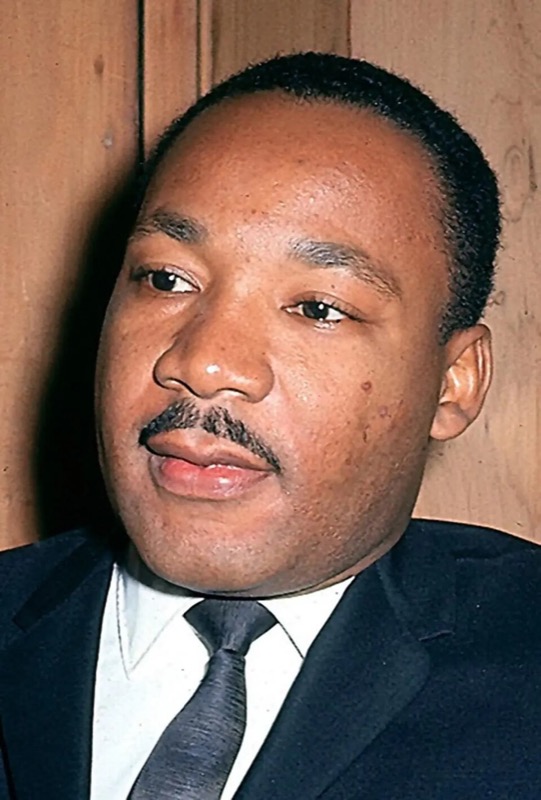
.jpg)
Summary
Sermons and Letter from Birmingham Jail brings together Martin Luther King Jr.'s public theology and civil-rights argument at their most concentrated. The sermon tradition behind King includes the Black church, biblical prophecy, social gospel, liberal theology, and the cadences of African American sacred speech. His sermons call hearers toward beloved community, nonviolence, courage, love of enemies, moral discipline, and hope under threat. Letter from Birmingham Jail, written in April 1963 after King's arrest during the Birmingham campaign, answers white clergymen who criticized demonstrations as untimely and extreme. King defends direct action, distinguishes just from unjust laws, explains the pain of waiting, and places civil disobedience within Christian and democratic traditions. The letter is not simply an argument; it is pastoral, legal, historical, and autobiographical testimony from confinement. Together the sermons and letter show King's genius for joining spiritual formation to political strategy. Nonviolence is not passivity but a disciplined method for exposing injustice and transforming public conscience. The medical lens is high because the texts address trauma, jail, exhaustion, fear, bodily danger, and the psychic burden of racial prejudice. King writes from a movement whose participants endured beatings, bombings, police dogs, fire hoses, imprisonment, and chronic threat. His language of sickness and health often turns segregation into a disease of the body politic, while love becomes a demanding social therapy rather than sentiment. Because these works are copyrighted, no full text or extended quotation belongs here. Historically, the collection sits within the Montgomery bus boycott, Southern Christian Leadership Conference, Birmingham campaign, and the wider Black freedom movement. Read beside Douglass and early Black church sermons, King inherits a tradition of biblical public argument; read beside Mandela and Bonhoeffer, he exemplifies the moral authority of prison writing. His enduring force lies in making hope disciplined, costly, and politically exact. The collection remains a manual for conscience under pressure.
Plot or Argument
- The Black pulpit forms public courage
King's sermons turn biblical language into disciplined nonviolence, beloved community, and moral endurance.
- Birmingham jail becomes a forum
The letter answers moderate criticism from confinement and reframes direct action as necessary democratic witness.
- Waiting is exposed as injury
King explains that delayed justice imposes psychic and bodily harm on Black communities living under segregation.
Lessons
Nonviolence is disciplined pressure
King presents nonviolence as organized courage, not passivity. It creates public tension so injustice can no longer remain hidden.
- Why does King defend tension as necessary?
- How does discipline distinguish nonviolence from mere avoidance?
Moderation can protect injustice
The letter's sharpest critique is aimed not only at open hatred but at delay dressed as prudence. King shows how calls for order can preserve disorder.
- Why is waiting morally charged in the letter?
- Why does King judge the white moderate's counsel of patience so severely?
Hope requires institutions and bodies
King's hope is not mood or optimism. It is built through churches, marches, jail discipline, legal strategy, and bodies willing to face harm.
- How does King connect spiritual hope to organizing?
- What costs does the movement ask people to bear?
Context
The works arise from the Black freedom struggle of the 1950s and early 1960s, especially the movement's use of churches, direct action, legal pressure, and media visibility.
Composition
King's sermons were preached across his ministry; Letter from Birmingham Jail was composed in April 1963 during the Birmingham campaign after criticism from white clergymen.
Reception
The letter became one of the central documents of American civil-rights thought, and King's sermons shaped public memory of the movement's religious and moral vision.
Comparisons
- early-black-church-sermons
King inherits the Black church tradition of biblical public argument and adapts it to televised civil-rights struggle.
- narrative-and-fourth-of-july
Douglass and King both expose the gap between American ideals and Black experience through prophetic civic rhetoric.
- i-am-prepared-to-die
King and Mandela both use courtroom or jail contexts to turn state punishment into an occasion for moral argument against the laws that punished them.
- letters-and-papers-from-prison
Bonhoeffer and King write from confinement with theological urgency, though King's letter is more directly a movement intervention.
Quotes
Frequently cited
“Injustice anywhere is a threat to justice everywhere”
Frequently cited
“Justice too long delayed is justice denied”
For Students
A reading companion for classical Christian high school students. See the student guide.
Reading Guide
Watch for
- The opening of the Letter, where King answers the charge that he is an outsider in Birmingham by comparing himself to the eighth-century prophets and to Paul answering the Macedonian call.
- The four basic steps of a nonviolent campaign that King lays out: collecting the facts, negotiation, self-purification, and direct action. Notice that demonstration comes last, after the others have failed.
- The long sentence on why Black Americans find it difficult to wait, built from clause after clause of concrete experience, including King's struggle to explain to his six-year-old daughter why she cannot go to the amusement park advertised on television.
- The distinction between just and unjust laws, which King grounds in Augustine and Aquinas and illustrates with Shadrach, Meshach, and Abednego.
- King's turn to the white moderate and the white church, and his reversal of the label extremist, in which he lists Amos, Paul, Luther, Bunyan, Lincoln, Jefferson, and Jesus as extremists of different kinds.
Key terms and names
- Direct action
- Public, nonviolent methods such as sit-ins, marches, and boycotts. In the Letter King argues that direct action creates a tension that forces a community that has refused to negotiate to face the issue.
- Just and unjust law
- King's central distinction in the Letter: a just law squares with the moral law of God, and an unjust law does not. He adds that an unjust law is one a majority imposes on a minority but does not bind on itself.
- The white moderate
- The person King addresses with the greatest disappointment, who agrees with the goal of justice but prefers order to justice and urges the movement to wait for a more convenient season.
- The Birmingham campaign
- The 1963 series of demonstrations and boycotts against segregation in Birmingham, Alabama, organized with the Southern Christian Leadership Conference. King was jailed in April for marching in defiance of a court injunction.
- The eight clergymen
- The white Alabama religious leaders whose published statement called the demonstrations unwise and untimely. The Letter is formally addressed to them as fellow clergymen.
- Nonviolence
- In King's sermons and the Letter, not passivity but disciplined resistance that accepts suffering without retaliation in order to awaken the conscience of the opponent.
- Beloved community
- King's phrase for the reconciled society that nonviolence aims at, in which former opponents are joined as friends. It explains why his sermons insist on love even for those who resist the movement.
Seminar Questions
- Comprehension What criticisms had the eight Alabama clergymen made of the Birmingham demonstrations, and which of them does King answer first?
- Comprehension What are the four steps of a nonviolent campaign King describes, and why does he say the movement in Birmingham had reached the last one?
- Comprehension How does King define the difference between a just and an unjust law, and which thinkers does he cite to support it?
- Interpretation King says that the person who breaks an unjust law must do it openly, lovingly, and with willingness to accept the penalty. Why do these conditions matter to his argument that he respects the law?
- Interpretation Why does King reserve his deepest disappointment for the white moderate and the white church rather than for open segregationists?
- Interpretation King first rejects the label of extremist and then accepts it in a new sense. How does this reversal work, and is it persuasive?
- Big Question When a Christian believes a law is unjust, is it right to break it openly and accept the penalty, or must he obey while working to change it?
- Big Question Is it ever wrong to tell those who suffer injustice to wait?
Faith Connections
- Amos 5:24 (Scripture)
Amos calls for justice to roll down like waters and righteousness like a mighty stream. King names Amos among the extremists for justice in the Letter, and the prophet's attack on worship without justice stands behind King's challenge to the white church.
- Acts 16:9-10 (Scripture)
Paul sees a man of Macedonia begging him to come over and help. King cites Paul's response to the Macedonian call to answer the charge that he is an outsider, presenting himself as carrying the gospel of freedom beyond his own town.
- Daniel 3 (Scripture)
Shadrach, Meshach, and Abednego refuse Nebuchadnezzar's command to worship the golden image and accept the furnace. King cites them as an example of civil disobedience undertaken openly, on grounds of a higher moral law, and with willingness to suffer the penalty.
- Augustine, On Free Choice of the Will, Book I; Thomas Aquinas, Summa Theologiae I-II, q. 96 (Church Fathers)
Augustine wrote that an unjust law seems to be no law at all, and Aquinas taught that a human law contrary to the eternal and natural law has the nature of violence rather than law. King cites both to show that his distinction between just and unjust laws comes from the heart of the Christian tradition, not from modern radicalism.
Logic and Rhetoric
Central argument: A just law squares with the moral law of God, while an unjust law degrades human personality and is imposed by a majority on a minority. Segregation laws are unjust by both measures. Christians have a moral duty to obey just laws and to disobey unjust ones, provided they do so openly, lovingly, and with willingness to accept the penalty. Negotiation in Birmingham had failed, and waiting has meant a long denial of justice. Therefore nonviolent direct action in Birmingham is neither untimely nor extreme, but a faithful and lawful-minded response to injustice.
Rhetorical device: anaphora within a periodic sentence. In the passage on waiting, King builds one enormous sentence from a series of clauses that each begin the same way, piling up lynchings, police brutality, poverty, and his daughter's disappointment over the closed amusement park, and only reaches the main clause at the end, so that the reader feels the length of the waiting in the length of the sentence.
Debate: Resolved: King was justified in marching in Birmingham in defiance of a court injunction.
Writing Prompts
Essay: King insists that he has the highest respect for law even as he breaks one. Using his distinction between just and unjust laws, his appeal to Augustine and Aquinas, and his example of Shadrach, Meshach, and Abednego, explain how King reconciles civil disobedience with respect for law, and evaluate whether his position is coherent.
Comparison with Letters and Papers from Prison: King in the Birmingham jail and Dietrich Bonhoeffer in a Nazi prison both wrote as Christian pastors who had defied the authorities of their nation. Compare how each understands the Christian's responsibility to act against injustice, and argue what their imprisonment adds to the authority of their words.
Medical Lens
King's texts matter medically through racial trauma, jail stress, bodily risk in protest, and the language of social sickness. Readings should avoid turning political coercion into only individual pathology.
- Letter from Birmingham Jail, discussion of waiting
King describes the psychic and bodily burden imposed by delayed justice and segregation.
- Sermons on love and beloved community
Love is framed as a social discipline capable of healing public hatred without denying danger.
Creative Prompts
- Essay
Read King's language of social sickness as public health metaphor and political theology.
- Dialogue
Stage a conversation between King and a trauma psychiatrist about waiting, dignity, and collective injury.
Further Reading
Verification notes
Dates, Birmingham context, major themes, and civil-rights comparisons are secure. Copyrighted texts are summarized without quotation.
- If any short quotations are later used, verify copyright permissions and keep to at most two brief excerpts.