Work record
I Am Prepared to Die
1964 · Postwar Contemporary · Political Theory · English

Summary
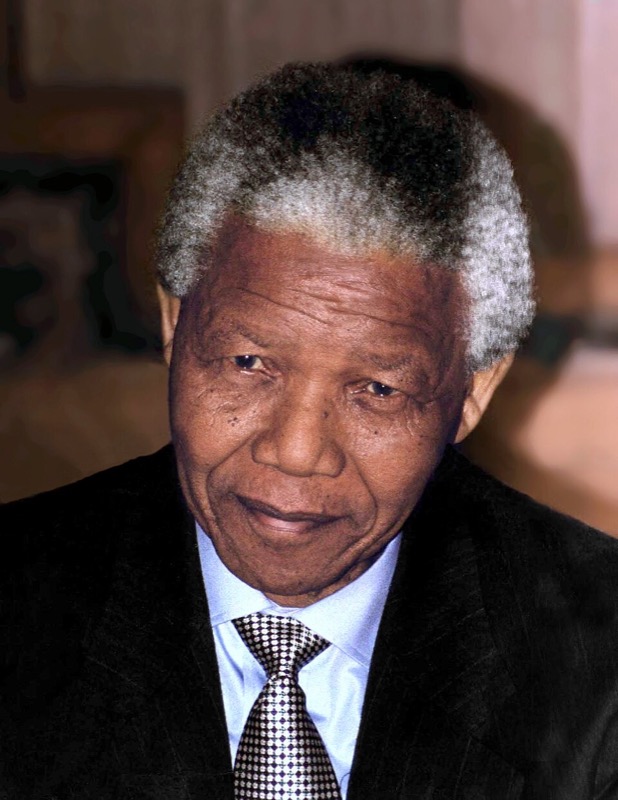
I Am Prepared to Die is Nelson Mandela's statement from the dock during the Rivonia Trial in 1964. Facing charges that could lead to death, Mandela uses the courtroom not primarily to plead for mercy but to explain the political history and moral logic of resistance to apartheid. He describes the African National Congress, the turn from nonviolent protest toward sabotage after escalating state repression, the distinction between sabotage and terrorism, and the goal of a democratic South Africa in which all people live with equal political rights. The speech is careful, legal, autobiographical, and prophetic. Mandela presents himself neither as reckless revolutionary nor as passive victim, but as a leader who has weighed strategy under conditions of systematic exclusion. Its power comes from turning a defendant's statement into a reasoned case against the apartheid laws under which he was being tried. The medical lens is significant because the speech stands at the threshold of long imprisonment, bodily hardship, and the psychological demands of captivity. Mandela would spend decades in prison, including Robben Island, where labor, isolation, surveillance, and health risks shaped political endurance. The speech also belongs to a life formed partly through mission education and church-linked institutions, even though Mandela's politics are not reducible to Christian preaching. Historically, the Rivonia Trial followed the Sharpeville massacre, banning of the ANC, underground activity, and formation of Umkhonto we Sizwe. Because the speech is copyrighted, no full text or extended quotation should be included here. Read beside King, Douglass, Bonhoeffer, Gandhi, and the founding documents, Mandela's dock statement shows how public argument can survive state coercion. Its central achievement is disciplined moral clarity under threat: it explains why a person might accept death rather than accept a political order built on permanent humiliation. The courtroom becomes a stage for democratic imagination before democracy exists. Its restraint makes the defiance more durable.
Plot or Argument
- The accused becomes historian
Mandela explains the political background of apartheid, ANC resistance, and escalating repression.
- Sabotage is morally distinguished
The speech defends sabotage as a constrained strategic turn after nonviolent avenues were blocked.
- Democratic equality is placed before death
Mandela closes by presenting a nonracial democratic ideal as worth living for and, if necessary, dying for.
Lessons
A trial can become testimony
Mandela uses the dock to reverse the moral direction of judgment. The state prosecutes him, but his speech puts apartheid itself on trial.
- How does Mandela transform the courtroom audience?
- What risks come with refusing a purely defensive posture?
Strategy must answer conditions
The speech argues that resistance methods changed because political conditions changed. Mandela asks readers to judge tactics within a structure of closed lawful avenues.
- How does Mandela justify sabotage?
- Where are the limits of strategic necessity?
Moral clarity can be disciplined
The speech is passionate but controlled. Its force comes from careful explanation as much as from courage.
- Why does Mandela avoid mere anger?
- How does discipline strengthen defiance?
Context
The Rivonia Trial occurred under apartheid after Sharpeville, ANC banning, underground organizing, and state repression against anti-apartheid leaders.
Composition
Mandela delivered the statement from the dock in April 1964 during the trial of ANC and allied leaders accused of sabotage.
Reception
The speech became a defining document of anti-apartheid resistance and helped shape Mandela's international image during imprisonment.
Comparisons
- sermons-and-letter-from-birmingham-jail
King and Mandela both turn confinement or prosecution into public moral argument against racial domination.
- letters-and-papers-from-prison
Bonhoeffer and Mandela both write or speak under state punishment, joining personal risk to political responsibility.
- narrative-and-fourth-of-july
Douglass and Mandela both argue that laws upholding slavery or apartheid have no moral claim on the people they bind.
Quotes
For Students
A reading companion for classical Christian high school students. See the student guide.
Reading Guide
Watch for
- Mandela's choice to make a statement from the dock instead of testifying from the witness box, which meant he could not be cross-examined but also that his words carried less legal weight. Notice how he uses that freedom.
- The early admission that he helped plan sabotage. Watch how he concedes the fact the state wanted to prove and then argues about what it meant.
- His account of the turning point after Sharpeville in 1960 and the banning of the ANC, when he says lawful avenues of protest had been closed and Umkhonto we Sizwe was formed in 1961.
- The distinction he draws between four forms of violence, sabotage, guerrilla warfare, terrorism and open revolution, and why he says sabotage was chosen because it did not require loss of life.
- His answer to the charge of communism, in which he describes his admiration for the British Parliament, the American separation of powers and the independence of the judiciary.
Key terms and names
- Rivonia Trial
- The 1963-1964 trial in Pretoria of Mandela and other ANC leaders, named for the farm at Rivonia where many were arrested. The sabotage charges could carry the death penalty.
- Statement from the dock
- A defendant's unsworn statement to the court, not subject to cross-examination. Mandela used it in April 1964 to explain his actions and the history behind them.
- African National Congress
- The political organization, founded in 1912, that Mandela helped lead. It pursued nonviolent protest for decades before it was banned in 1960.
- Umkhonto we Sizwe
- Spear of the Nation, the armed wing formed in 1961, which Mandela helped found. He describes its original policy as sabotage against installations rather than attacks on people.
- Sharpeville
- The township where police killed sixty-nine people at a demonstration against the pass laws in March 1960. Mandela treats it as a turning point.
- Pass laws
- Laws requiring Black South Africans to carry documents controlling where they could live and work. They were a main target of ANC campaigns and of the Sharpeville protest.
- Apartheid
- The system of laws, begun after 1948, separating South Africans by race in residence, education, work and political rights. Mandela's statement describes its daily effects on African life.
Seminar Questions
- Comprehension What does Mandela admit to the court near the start of his statement, and what does he deny?
- Comprehension What four forms of violence does Mandela distinguish, and why does he say the ANC leaders chose sabotage?
- Comprehension What events after 1960 does Mandela give as the reasons the ANC abandoned its long policy of nonviolence?
- Interpretation Mandela was on trial for his life, yet he spends much of his statement explaining South African history and the daily conditions of African life. Why does he think this history is the real answer to the charges?
- Interpretation How does Mandela answer the accusation that he is a communist, and why does he praise British and American institutions in a South African court?
- Interpretation Mandela chose to speak from the dock rather than testify under oath. What did he gain and what did he give up by that choice?
- Big Question Mandela argues that when every lawful means of protest has been closed, limited force against property becomes justified. When, if ever, may a citizen use force against the laws of his own government?
Faith Connections
- Daniel 3:16-18 (Scripture)
Shadrach, Meshach and Abednego tell Nebuchadnezzar that God can deliver them, but even if he does not, they will not obey. Mandela's closing declaration that he is prepared to die belongs to this long tradition of refusing to yield before a ruler who holds the power of death.
- Romans 13:1-7 (Scripture)
Paul teaches that governing authorities are instituted by God and bear the sword to punish wrongdoers. Any Christian reading of Mandela has to bring this passage into the conversation alongside his argument that the laws he broke were unjust.
- Augustine, On Free Choice of the Will I.5 (Church Fathers)
Augustine's speaker says that a law which is not just does not seem to be a law at all. Mandela's argument that apartheid's laws had no moral claim on those they governed stands in this line of thought.
- Thomas Aquinas, Summa Theologiae II-II, q. 42, a. 2 (Great Conversation)
Aquinas argues that a tyrannical government is not just, and that overthrowing it is not sedition unless the upheaval causes greater harm than the tyranny. Mandela's careful choice of sabotage over terrorism weighs the same question of proportion.
Logic and Rhetoric
Central argument: For fifty years the ANC protested by lawful and nonviolent means, and each protest was met with harsher laws, until in 1960 the organization itself was banned and peaceful protest made illegal. When a government closes every lawful avenue to people who have no vote, those people must either submit permanently or resist by other means. Therefore the leaders chose the most limited form of force available, sabotage directed against property and not against life, and Mandela, who planned it, accepts the risk of death for the ideal of a democratic society in which all live in equality.
Rhetorical device: procatalepsis (anticipating the objection). Mandela anticipates the prosecution's two strongest charges, that the ANC was a communist front and that it aimed at terrorism, and answers each before the court can press it, explaining his own political influences and setting out the distinctions between forms of violence.
Debate: Resolved: Mandela's turn to sabotage was justified once lawful protest had been banned.
Writing Prompts
Essay: Mandela admits the central facts the state charged against him and still argues that he should not be judged guilty in any moral sense. Using his account of Sharpeville and the ANC banning, his four forms of violence, and his closing ideal, argue whether his justification of sabotage succeeds.
Comparison with Sermons and Letter from Birmingham Jail: King writes from a jail cell in 1963 defending nonviolent direct action; Mandela speaks from the dock in 1964 defending sabotage. Compare how each man argues that the laws he broke had no moral claim on him, and argue why one chose nonviolence and the other did not.
Medical Lens
The speech anticipates decades of imprisonment and the health burdens of political captivity. It matters for the psychology of endurance, state violence, and bodily risk under apartheid.
- Dock statement, autobiographical and strategic sections
Mandela frames resistance under conditions of surveillance, repression, and danger.
- Closing democratic ideal
The willingness to face death is presented as disciplined commitment rather than despair.
Creative Prompts
- Essay
Analyze Mandela's dock statement as courtroom rhetoric that converts prosecution into testimony.
- Dialogue
Let Mandela and King compare nonviolence, sabotage, and the bodily costs of racial rule.
Further Reading
Verification notes
The Rivonia setting, strategic argument, and anti-apartheid context are secure. Copyrighted speech is summarized without quotation.
- Before adding any brief quote, verify source and copyright permissions.