Work record
Testament of Youth
1933 · Early 20th Century · Memoir · English

Summary
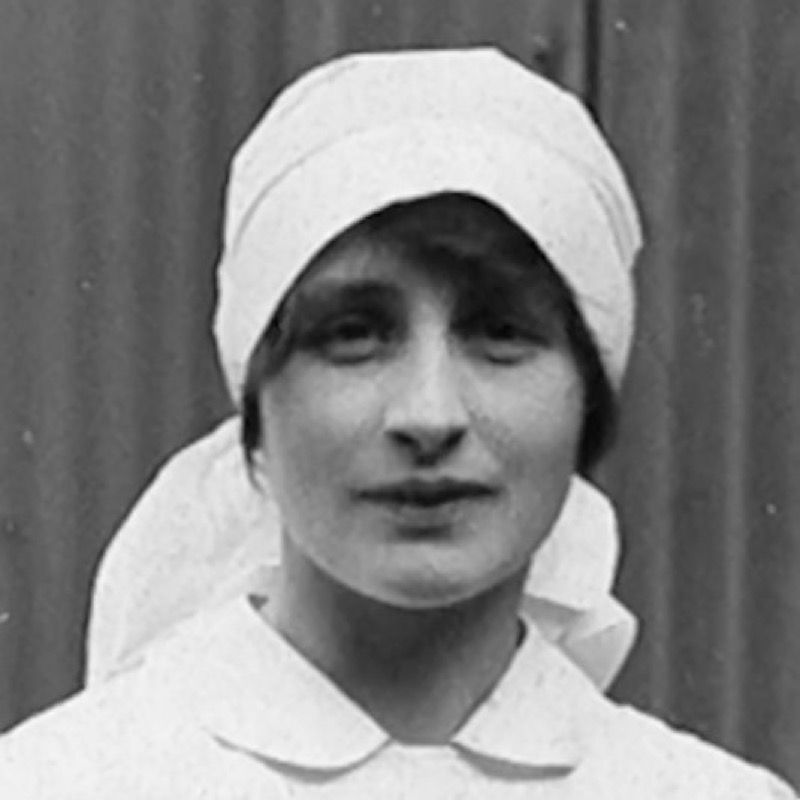
Testament of Youth is Vera Brittain's memoir of the years 1900 to 1925, centred on the First World War, written to show what the war meant to a generation of women. It begins with her provincial girlhood in Buxton, where she chafes against the expectations placed on a middle-class daughter, educates herself, and fights to be allowed to sit the entrance examination for Oxford. She wins a place at Somerville just as war breaks out in 1914. Through her younger brother Edward she meets his school friend Roland Leighton, a brilliant, ambitious young poet, and they fall in love, conducting much of their courtship by letter after he enlists. Brittain leaves Oxford in 1915 to become a VAD nurse, first in a Buxton hospital and then at the First London General Hospital in Camberwell, so as to share something of the danger and hardship of the men she loves. Roland is fatally wounded in France in December 1915; she learns of his death on the day after Christmas, while expecting him home on leave. She then serves in Malta, where she falls ill, and later in France at Étaples, close to the front, where she nurses German prisoners and, during the German spring offensive of 1918, gassed and grievously wounded British soldiers. Meanwhile the two other friends of the group of four young men she calls her circle die: Geoffrey Thurlow is killed at Arras, and Victor Richardson is blinded and dies of his wounds in 1917. Called home in 1918 to care for her parents, she learns in June that Edward has been killed in action on the Italian front. Part Three describes the bleak aftermath. Brittain returns to Oxford to read history, feeling herself a ghost among younger students who know nothing of the war, and suffering what she later understood as a nervous breakdown. Her recovery begins with her friendship with the writer Winifred Holtby, with whom she shares lodgings in London, journalism and lecturing for the League of Nations Union. The memoir ends with her marriage in 1925 to the political scientist George Catlin, identified only as G. The book combines extensive quotation from letters and diaries, which she includes to show how young people actually felt at the time, with retrospective analysis, and it moves from patriotic idealism to grief and finally to a feminist and pacifist commitment born of loss.
Plot or Argument
- Part I: Girlhood and Oxford (to 1915)
Brittain's provincial upbringing, her struggle for education, entry to Somerville, the outbreak of war, and her love for Roland Leighton.
- Part II: Nursing and loss (1915–1918)
VAD service in Buxton, London, Malta and France; the deaths of Roland, Geoffrey Thurlow, Victor Richardson and finally Edward.
- Part III: Aftermath (1919–1925)
Return to Oxford, breakdown and isolation, friendship with Winifred Holtby, work for peace, and marriage.
Characters
- Vera Brittain, author and narrator
Ambitious young woman who leaves Oxford to nurse and becomes a pacifist after losing everyone she loved.
- Roland Leighton, fiancé
Gifted young poet and soldier, killed in December 1915.
- Edward Brittain, brother
Vera's younger brother, a decorated officer killed in Italy in June 1918.
- Victor Richardson, friend
One of Edward's friends, blinded at Arras, who died of his wounds in 1917.
- Geoffrey Thurlow, friend
Gentle young officer of the circle, killed in 1917.
- Winifred Holtby, friend
Novelist and fellow Somerville student whose friendship helps Brittain recover.
- G. (George Catlin), husband
Political scientist whom Brittain marries at the end of the book.
Lessons
War from the home front and the hospital
Brittain shows a war experienced through letters, telegrams and hospital wards. Her memoir widened the canon of war writing beyond the soldier's trench narrative.
- How does the nurse's view of war differ from the soldier's?
- Why does Brittain include so many letters and diary entries?
Grief that changes a life's direction
Successive losses lead Brittain from patriotic sacrifice to pacifism and feminist activism. The book shows how private grief can become public purpose.
- At what point does Brittain's view of the war change?
- Is her pacifism a reasoned conclusion, an emotional one, or both?
The lost generation of women
Brittain insists that women too were a war generation, deprived of partners and futures. Her account of postwar Oxford reveals the isolation of the survivor.
- How does Brittain feel among undergraduates who did not serve?
- What role does Winifred Holtby play in her recovery?
- What did women gain and lose from the war?
Context
The memoir belongs to the wave of First World War memoirs published around 1928–1933, alongside Robert Graves's Good-Bye to All That and Siegfried Sassoon's Memoirs of an Infantry Officer, and appeared as the League of Nations was failing and rearmament began.
Composition
Brittain tried for years to write about the war as fiction before turning to autobiography. Published by Victor Gollancz in 1933 with the subtitle 'An Autobiographical Study of the Years 1900–1925'. Sequels were Testament of Friendship (1940), about Holtby, and Testament of Experience (1957).
Reception
An immediate bestseller, praised for its honesty and emotional force. It was adapted for BBC television in 1979 and as a feature film in 2014, and remains a key text of women's war writing and pacifism.
Comparisons
- the-iliad
Both mourn young men destroyed by war; Homer's laments of Andromache and Hecuba are the ancestors of Brittain's women's-eye view of slaughter.
- the-waves
Woolf's elegy for her brother Thoby and the absent Percival echoes the lost young men of Brittain's circle; both are women's meditations on a generation's deaths.
- heart-of-darkness
Both books show idealistic language collapsing under the realities it was meant to justify, the 'civilizing mission' in one and the 'glorious sacrifice' in the other.
- whitman-complete-poems
Whitman's Civil War hospital poems in Drum-Taps, especially 'The Wound-Dresser', are the closest literary precedent for Brittain's nursing chapters.
- Good-Bye to All That (Robert Graves)
A contemporary soldier's war memoir; reading them together contrasts trench and hospital perspectives.
Quotes
For Students
A reading companion for classical Christian high school students. See the student guide.
Reading Guide
Watch for
- Brittain's fight in Part I to be allowed to sit the Oxford entrance examination from Buxton, and how quickly the place at Somerville she won with such effort loses its importance once the war begins.
- The letters between Vera and Roland Leighton, quoted at length. Notice how their language changes as Roland moves from training camp to the trenches.
- December 1915: Brittain waiting for Roland's Christmas leave, and the news that reaches her instead. Pay attention to how she shapes this scene, knowing what her younger self did not.
- Her nursing of German prisoners at Étaples and of gassed British soldiers during the spring offensive of 1918. Watch how the hospital changes her view of the enemy and of the war's purpose.
- Part III, where she returns to Oxford feeling like a ghost among students who did not serve, and where her friendship with Winifred Holtby begins her recovery.
Key terms and names
- VAD
- The Voluntary Aid Detachment, a corps of volunteer nurses who worked under trained nursing sisters. Brittain leaves Somerville in 1915 to serve as a VAD in Buxton, London, Malta, and France.
- Somerville
- The Oxford women's college Brittain enters in 1914 after a hard struggle with her family and with her own schooling. She returns there after the war to read history, a changed person among students who had not served.
- Roland Leighton
- Edward's school friend, a gifted young poet, to whom Vera becomes engaged. His death in France in December 1915, just before an expected leave, is the first great loss of the book.
- Étaples
- The vast British base camp and hospital area on the French coast where Brittain nursed, including German prisoners, during 1917 and the crisis of the 1918 offensive.
- Edward Brittain
- Vera's younger brother, a decorated officer and the link to her whole circle of friends. His death on the Italian front in June 1918 leaves her the only survivor of the group.
- Winifred Holtby
- A younger Somerville student and future novelist whose friendship in Part III draws Brittain out of isolation into shared lodgings, writing, and lecturing in London.
- League of Nations Union
- The British organization that promoted the League of Nations and international peace. Brittain's lecturing for it in Part III shows her turning grief into public work for peace.
Seminar Questions
- Comprehension What obstacles does Brittain face in Part I before she reaches Oxford, and why does she leave Somerville in 1915?
- Comprehension List the four young men of Brittain's circle and say how and where each of them died.
- Comprehension Where did Brittain serve as a nurse, and what kinds of patients did she care for at Étaples?
- Interpretation Brittain fills the book with letters and diary entries written at the time and then comments on them from 1933. Why does she let her younger self speak in her own words instead of simply summarizing what she felt?
- Interpretation How does nursing German prisoners at Étaples change Brittain's understanding of who the enemy is?
- Interpretation In Part III Brittain feels like a ghost at Oxford. What has the war taken from her that her new classmates cannot see, and how does Winifred Holtby help her recover it?
- Interpretation Brittain begins the war proud of the young men who enlist and ends it committed to working for peace. Is her change a rejection of their sacrifice or a way of honoring it?
- Big Question Can a war be just and still be grieved without limit, and what do the survivors of a war owe to those who died in it?
Faith Connections
- 2 Samuel 1:17-27 (Scripture)
David's lament for Saul and Jonathan mourns the fall of the mighty in battle and grieves for a friend whose love was wonderful. Brittain's grief for Roland, Victor, Geoffrey, and Edward belongs to this oldest kind of writing: the survivor's lament for the young men lost in war.
- Jeremiah 31:15-17 (Scripture)
Rachel weeps for her children and refuses to be comforted, yet the Lord answers with a promise of hope. Brittain spends much of Part III unable to be comforted; reading the passage alongside her breakdown raises the question of where, in her story, hope for the future begins to return.
- Augustine, City of God XIX.7 (Church Fathers)
Augustine argues that even a wise man waging a just war will lament the necessity that compels him, and that anyone who can think of such evils without grief has lost human feeling. Brittain's movement from patriotic idealism to grief tests whether a person can hold both convictions that Augustine joins.
Logic and Rhetoric
Central argument: The young men and women of 1914 went to war believing in sacrifice and glory. Brittain's letters and diaries show what that belief looked like from inside, and her hospital years show what the war actually did to the bodies and minds of those who fought it. Since every member of her circle died, and since she found the enemy's wounded as human as her own, the language of glorious sacrifice could not survive the experience. Therefore, Brittain concludes, the survivors' duty is not to forget but to tell the truth about the war and to work so that the next generation is not lost in the same way.
Rhetorical device: dramatic irony through retrospective narration. In Part II Brittain reproduces her own hopeful plans and letters from the days before Roland's expected Christmas leave in 1915. Writing in 1933, she knows that he is already dying, and the reader soon learns it too, so the cheerful anticipation of her younger self becomes almost unbearable.
Debate: Resolved: Vera Brittain was right to leave Oxford in 1915 to serve as a nurse.
Writing Prompts
Essay: Testament of Youth moves from Brittain's struggle to reach Oxford, through the deaths of Roland and Edward, to her return to Oxford as a changed woman. Argue what the war took from her and what, if anything, it gave her, using her nursing in France and her friendship with Winifred Holtby as evidence.
Comparison with The Complete Poems: Whitman's Civil War hospital poems in Drum-Taps and Brittain's nursing chapters both come from someone who tended the wounded rather than fighting. Compare how each writer uses the experience of caring for soldiers to judge the war itself, and argue which finds more meaning in the suffering witnessed.
Medical Lens
Testament of Youth is a major primary source for the history of military nursing and of women's war trauma. Brittain describes VAD training and the hierarchy between volunteers and professional nursing sisters, the dressing of septic and gas-gangrenous wounds, the care of mustard-gas cases, amputees and dying men, and the conditions of base hospitals in Malta and Étaples. She records her own illness in Malta. Her postwar account of isolation, numbness, intrusive memories and a period in which she was convinced her face was changing in the mirror is often read as a description of post-traumatic disturbance, though she used the vocabulary of 'nerves' and breakdown available in the 1920s; present clinical readings as interpretations. The deaths of her circle also trace the medical fates of the war: wounds in the abdomen, blinding, and death in casualty clearing stations.
- Part II (Camberwell)
First experiences as a VAD at the First London General Hospital, learning to dress wounds and confronting the realities of injury.
- Part II (Roland's death)
Brittain learns that Roland has died of wounds, and later receives his returned kit, still muddy and bloodstained.
- Part II (Malta)
Nursing in Malta, including her own illness during service there.
- Part II (Étaples)
Nursing German prisoners and, in spring 1918, gassed and badly wounded British soldiers in overwhelmed wards.
- Part II (Victor Richardson)
Victor, blinded by a wound to the head, is visited in a London hospital before dying of his injuries.
- Part III
Postwar Oxford: estrangement, numbness, nightmares and a period of distressing perceptions about her own face, followed by gradual recovery.
Creative Prompts
- Essay
Compare Brittain's account of nursing gassed soldiers with a modern account of ICU nursing during a pandemic surge.
- Fiction
Write a letter Roland Leighton might have sent in reply to one of Vera's descriptions of her ward.
- Classroom
Read a selection of First World War poems alongside Brittain's hospital chapters and discuss what each form can and cannot convey.
Further Reading
- Testament of Friendship, Vera Brittain
Brittain's memoir of Winifred Holtby.
- Letters from a Lost Generation, Alan Bishop and Mark Bostridge (eds.)
The wartime letters of Brittain and her four men.
- Vera Brittain: A Life, Paul Berry and Mark Bostridge
- The Great War and Modern Memory, Paul Fussell
- Regeneration, Pat Barker
Novel on shell shock at Craiglockhart.
Verification notes
The life events, deaths and nursing postings are well documented. Part divisions are given coarsely. No quotations are included because the work is in copyright. The episode in which Brittain believed her face was changing is recalled from the memoir and should be checked.
- Exact dates: Roland's death (recalled as 23 December 1915), Edward's death (15 June 1918).
- The chapter describing Brittain's postwar conviction that her face was changing in the mirror.
- Names of hospitals in Malta (recalled as St George's) and France (24 General Hospital, Étaples).
- Whether Geoffrey Thurlow was killed at Monchy-le-Preux near Arras in April 1917.