Work record
Black Beauty
1877 · 19th Century · Novel · English

Summary
Black Beauty: His Grooms and Companions, subtitled 'The Autobiography of a Horse', is narrated by a handsome black horse with a white star and one white foot. He grows up in a pleasant meadow under a kind master, Farmer Grey, and his mother Duchess teaches him to be gentle and good and to work willingly. Broken in kindly, he is sold to Squire Gordon of Birtwick Park, where he is well cared for by the coachman John Manly and the boy James Howard, and befriends the bitter chestnut mare Ginger, whose temper was ruined by harsh handling, and the pony Merrylegs. At Birtwick Beauty saves his master by refusing to cross a broken bridge in a storm, survives a stable fire, and gallops through the night with John to fetch Dr White for the gravely ill mistress. Afterward, the inexperienced stable-boy Joe Green gives him cold water while he is overheated and he falls dangerously ill. When the mistress's health requires the family to move abroad, Beauty and Ginger are sold to the Earl of W—, at Earlshall, where Lady W— insists on the fashionable bearing rein, a strap that holds a horse's head painfully high. Ginger rebels and is injured; Beauty is worn down. A drunken groom, Reuben Smith, rides Beauty with a loose shoe on a stony road; Beauty falls, his knees are broken and scarred, and Smith is killed. Blemished and less valuable, Beauty descends through a series of owners: a livery stable whose customers ride him badly, a well-meaning but ignorant owner whose groom steals his oats, and then the London cab trade. There he is fortunate in Jerry Barker, a decent cabman who keeps the Sabbath and refuses to overdrive his horses, and meets a worn-out Ginger again, later seeing her body carried away on a cart. When Jerry falls ill with bronchitis and must leave the cab trade, Beauty is sold to harder masters, hauls heavy loads, and collapses. Nursed back to partial health by a farmer and his kind grandson Willie, he is sold to three ladies in the country. There the groom turns out to be Joe Green, now grown, who recognises him. Beauty ends his days in comfort, remembering his old meadow.
Plot or Argument
- Part I: Birtwick Park
Beauty's foaling and training, the kind household of Squire Gordon, Ginger's story of ill-treatment, the bridge, the fire and the ride for the doctor.
- Part II: Earlshall and the fall
The bearing rein at Earlshall; Ginger's breakdown; Reuben Smith's drunken ride and the fall that scars Beauty's knees.
- Part III: Livery and hire
Beauty is sold down through careless and dishonest hands, suffering from bad riding and stolen feed.
- Part IV: The London cab
Life with Jerry Barker in the cab trade; poverty of cabmen; Ginger's death; Jerry's illness.
- Final chapters: decline and rescue
Overwork with a cornmerchant and a cab-owner leads to collapse; rest at a farm and a last happy home with Joe Green.
Characters
- Black Beauty, narrator
Good-natured, intelligent horse whose life passes through many owners.
- Ginger, chestnut mare
Spirited horse embittered by cruel handling; her decline is a central warning.
- Merrylegs, pony
Cheerful pony at Birtwick who carries the children.
- John Manly, coachman
Wise, kindly coachman at Birtwick who trains James and Joe.
- Squire Gordon, Beauty's owner
Humane gentleman who must sell his horses when his wife's health fails.
- Joe Green, stable boy
Well-meaning boy whose mistake nearly kills Beauty and who later rescues him.
- Reuben Smith, groom at Earlshall
Capable groom ruined by drink, killed in the fall that scars Beauty.
- Jerry Barker, London cabman
Honest, devout cab driver who treats horses well.
Lessons
Kindness is a form of competence
The best handlers in the book are also the most skilful, and cruelty often springs from ignorance or fashion. Sewell argues that knowledge and sympathy together prevent suffering.
- How many of Beauty's injuries come from malice, and how many from ignorance?
- What does John Manly teach Joe Green?
Fashion can be cruel
The bearing rein is used because it looks elegant, not because it helps the horse. The book shows how social display can require hidden pain.
- What modern practices resemble the bearing rein?
- Why does Lady W— insist on it despite the coachman's warnings?
Seeing through another's eyes
By giving a horse the narrative voice, Sewell makes readers feel what working animals endure. The book is an early demonstration of fiction as a tool for empathy and reform.
- Is the horse's voice convincing? What does it make visible?
- Does the book also speak about human workers such as cabmen?
- Can a novel change laws or behaviour?
Context
Horses powered Victorian transport, and their treatment was a public issue; the Society for the Prevention of Cruelty to Animals had been founded in 1824 and became Royal in 1840. The bearing rein, cab-horse overwork and the economic plight of London cabmen were live concerns. The book also reflects Sewell's evangelical and temperance sympathies.
Composition
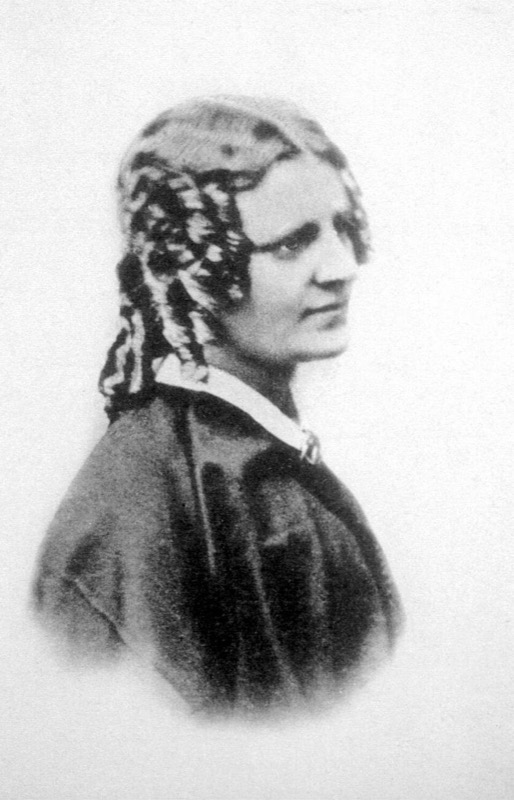
Sewell worked on the book from about 1871 while confined by illness, writing in pencil or dictating to her mother. It was published by Jarrold and Sons of Norwich in November 1877; she died in April 1878.
Reception
The book became one of the best-selling English novels of the century. In the United States, the humane campaigner George Angell distributed huge numbers of cheap copies to promote animal welfare. It is credited with helping turn opinion against the bearing rein and has been adapted many times for film and television.
Comparisons
- gullivers-travels
Swift's rational horses, the Houyhnhnms, judge humans as brutes; Sewell's horse narrator likewise exposes human cruelty, though with sympathy rather than misanthropy.
- the-secret-garden
Both children's classics link care, fresh air and kindness to recovery from illness.
- a-christmas-carol
Both are reforming Victorian books that use a single emotional story to argue for compassion toward the vulnerable and working poor.
- twelve-years-a-slave
Both narrate the experience of being bought and sold among good and cruel owners; readers can discuss the limits and uses of the comparison.
Quotes
“The first place that I can well remember was a large pleasant meadow with a pond of clear water in it”
“I hope you will grow up gentle and good, and never learn bad ways; do your work with a good will, lift up your feet when you trot, and never bite or kick even in play.”
For Students
A reading companion for classical Christian high school students. See the student guide.
Reading Guide
Watch for
- Duchess's advice to her colt in the first chapter, and how Beauty tries to keep it through every later home, kind or cruel.
- Ginger's story of her harsh breaking-in, told to Beauty at Birtwick, and how it explains her temper. Watch how her life and Beauty's diverge after Earlshall.
- The bearing rein at Earlshall, imposed because Lady W— wants her horses' heads held high for fashion, and what it does to Ginger and Beauty.
- Reuben Smith's drunken ride on a loose shoe and the fall that scars Beauty's knees. Notice how a single blemish lowers his price and sends him down from owner to owner.
- Jerry Barker's cab in London, his refusal to work on Sundays or to overdrive his horses, and the brief, sad reunion with the worn-out Ginger.
Key terms and names
- Bearing rein
- A strap that holds a horse's head unnaturally high for appearance. At Earlshall it causes Ginger to rebel and wears Beauty down, and Sewell uses it as her chief example of cruelty done for fashion.
- Birtwick Park
- Squire Gordon's estate, Beauty's first working home, where John Manly and James Howard care for the horses well. It sets the standard against which every later home is measured.
- Broken knees
- The scars left on Beauty's knees after Reuben Smith's fall. In the horse trade such marks made a horse look unsafe and cheap, so the injury drives Beauty down into harder and harder work.
- Cab trade
- The London business of horse-drawn hired cabs, where drivers paid heavy fees and worked long hours. Jerry Barker shows how a cabman can still be honest and humane; other drivers push their horses to death.
- Ignorance and cruelty
- A distinction the book keeps drawing: Joe Green nearly kills Beauty through ignorance, not malice, while others hurt horses through drink, fashion, or greed. John Manly insists that ignorance can do as much harm as wickedness.
- Ginger
- The chestnut mare whose temper was ruined by harsh handling before she came to Birtwick. Her decline into a worn-out cab horse and her body on a cart show the end Beauty escapes.
Seminar Questions
- Comprehension What does Beauty's mother, Duchess, teach him in the first chapter, and what kind of master is Farmer Grey?
- Comprehension How does Beauty save Squire Gordon's life at the broken bridge, and how does Joe Green nearly kill Beauty after the night ride for Dr White?
- Comprehension Why are Beauty and Ginger harmed at Earlshall, and how does Reuben Smith's drunken ride change the rest of Beauty's life?
- Interpretation Why does Sewell tell the whole story through Beauty's own voice? What can a horse narrator show about human character that a human narrator could not?
- Interpretation Ginger and Beauty respond to mistreatment very differently. Is the difference in their natures, in their early training, or in the masters they meet?
- Interpretation Joe Green harms Beauty through ignorance and later rescues him. Why does Sewell bring Joe back at the end, and what does his return say about the difference between ignorance and cruelty?
- Big Question Is the way a person treats animals in his care a true measure of his character? What do Jerry Barker, Reuben Smith, and Lady W— suggest?
Faith Connections
- Proverbs 12:10 (Scripture)
A righteous man regards the life of his beast, but the tender mercies of the wicked are cruel. The book could be read as an extended narrative of this proverb, setting John Manly and Jerry Barker against the masters who use horses only for money or show.
- Exodus 20:8-10 (Scripture)
The fourth commandment gives Sabbath rest to servants and cattle as well as to the householder. Jerry Barker's refusal to take Sunday fares in the London chapters puts this command into practice for himself and his horses.
- John Wesley, Sermon 60, The General Deliverance (Great Conversation)
Preaching on Romans 8:19-22, Wesley argued that the animal creation suffers under the curse of the Fall and will share in the final restoration of all things. Sewell's evangelical world shared this seriousness about animal suffering, and Wesley's sermon gives it a theological foundation.
Logic and Rhetoric
Central argument: Horses feel pain, fear, and affection, and they depend wholly on the people who own them. Much of their suffering comes not from necessity but from fashion, as with the bearing rein, from drink, as with Reuben Smith, from greed, as in the cab trade, or from ignorance, as with Joe Green. Since this suffering can be prevented by knowledge and kindness without loss to the owner, those who keep horses have a duty to understand and treat them well, and readers who hear a horse's own story should see that duty clearly.
Rhetorical device: prosopopoeia (first-person animal narration). From the first sentence of Part I, Ch. 1, where Beauty recalls a large pleasant meadow with a pond of clear water, the horse himself speaks. Because he describes the bearing rein and the overloaded cart from inside his own body, the reader feels the cruelty instead of being told about it.
Debate: Resolved: Cruelty from ignorance is as blameworthy as cruelty from malice.
Memory Work
The first place that I can well remember was a large pleasant meadow with a pond of clear water in it
Writing Prompts
Essay: Black Beauty passes through many owners, from Squire Gordon to the Earl of W— to Jerry Barker to the hard cab-masters. Choose three owners and argue what Sewell thinks makes a good master, using specific episodes such as the bridge, the bearing rein, and Jerry's Sunday rest.
Comparison with Gulliver's Travels: In Book IV of Gulliver's Travels Swift imagines horses, the Houyhnhnms, as rational masters who judge human beings, while Sewell imagines a horse who serves humans and quietly judges them by their kindness. Compare what each book reveals about human nature by looking at it from a horse's point of view, and argue which offers the more truthful picture.
Medical Lens
Though a book about horses, it carries a good deal of Victorian medical and social-medical content. The night ride for Dr White shows the dependence of rural medicine on horse transport. Beauty's chill after Joe Green's error, and his treatment by a horse doctor, show period veterinary practice, which included bleeding. Reuben Smith's drunkenness and death reflect the temperance message, and the book repeatedly connects drink to cruelty and accident. Pain is a central subject: the bearing rein, broken knees and overwork are described from the sufferer's point of view, which makes the book useful in discussions of how pain is witnessed and believed. Sewell's own chronic disability and dependence on carriages frame the story.
- Part I (Birtwick chapters)
Beauty and John ride through the night to fetch Dr White for the gravely ill mistress.
- Part I (Birtwick chapters)
Joe Green gives the overheated Beauty cold water and no blanket; Beauty falls seriously ill and is treated by the horse doctor and nursed by John.
- Part II (Earlshall)
The bearing rein's effect on Beauty and Ginger: pain in mouth, neck and windpipe.
- Part II
Reuben Smith rides drunk, Beauty falls and breaks his knees, Smith is killed; Beauty is left scarred and devalued.
- Part IV (London)
Jerry Barker falls ill with bronchitis from exposure and must give up cab work.
Creative Prompts
- Fiction
Write a chapter of a modern 'autobiography' of a working animal: a police horse, a guide dog or a lab animal.
- Essay
Examine how Black Beauty links alcohol to cruelty. How typical was this of Victorian temperance fiction?
- Classroom
Chart each of Beauty's owners and rate them on knowledge and kindness. What pattern emerges?
Further Reading
- Gulliver's Travels, Jonathan Swift
Part IV for the Houyhnhnms.
Verification notes
Plot, Sewell's biography and publication facts are well established. The division into four parts is standard in most editions; chapter numbers beyond Ch. 1 are not given because I am not certain of them. The two quotes are from the first chapter and are believed verbatim.
- Whether the horse doctor bleeds Beauty during his illness at Birtwick.
- Wording of the often-quoted line that whoever sees cruelty and does nothing becomes a sharer in the guilt; omitted.
- A reliable modern biography of Anna Sewell for furtherReading (none listed because unsure of titles).
- Chapter numbers for the bridge, fire, doctor ride and Reuben Smith episodes.