Work record
Characters
c. 319 BCE · Ancient · Essays · Greek
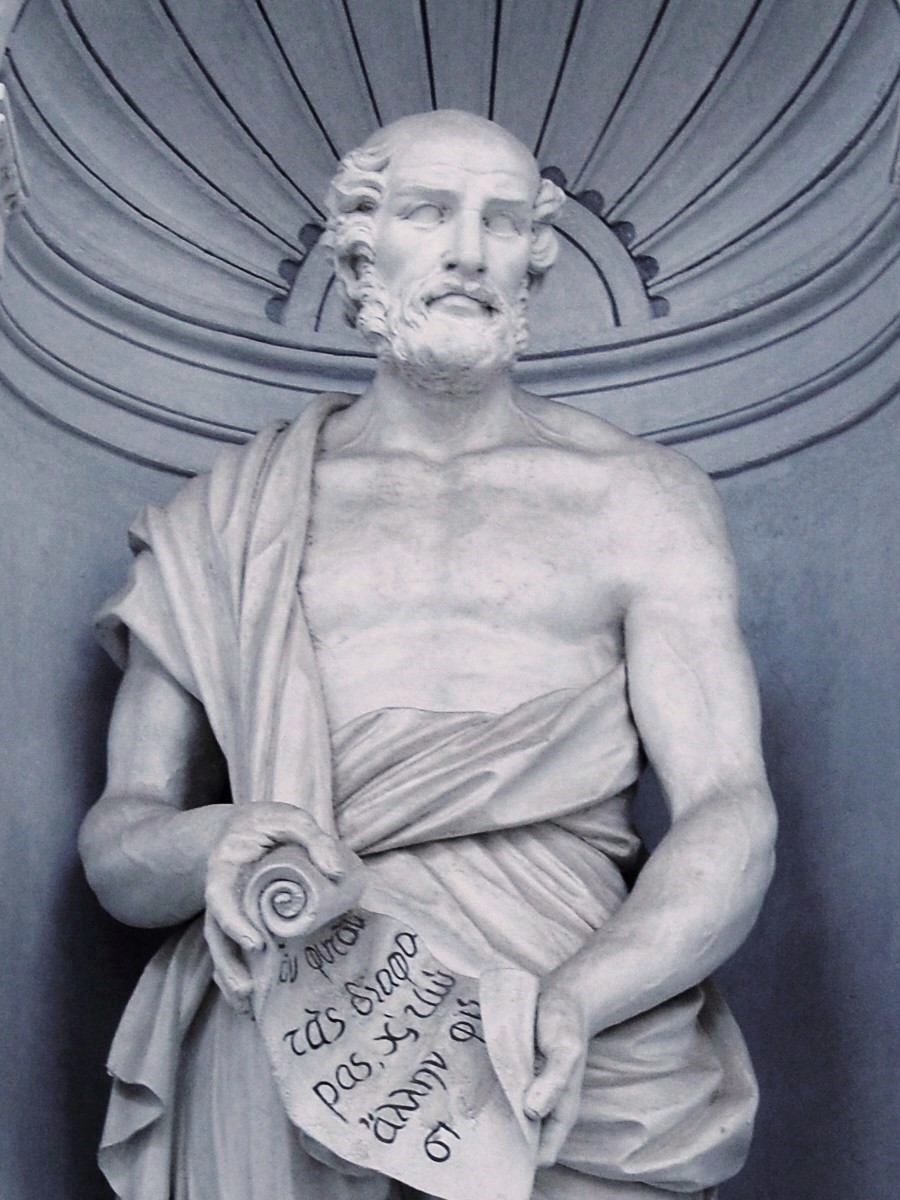

Summary
Characters is a collection of brief sketches of recognizable social types: the dissembler, flatterer, chatterer, boor, complaisant man, reckless man, tactless man, mean man, show-off, coward, oligarchic sympathizer, late learner, slanderer and many others. Each sketch begins with a definition and then offers small scenes in which the type reveals himself through repeated behavior. The humor lies in exactness. Theophrastus notices how a person borrows money, interrupts conversation, performs piety, abuses servants, attends a dinner, complains in public or displays petty status anxiety. Unlike a modern novel, the sketches do not develop inner biography. Unlike systematic ethics, they do not argue at length about virtue. They isolate habits of speech and gesture until a whole personality becomes visible. The work is often read as a descendant of Aristotelian ethical observation and an ancestor of character writing, satire and comedy of manners. It also preserves the social texture of late classical Athens: markets, courts, symposia, barbers, sacrifices, schools, gymnasia and households. Its medical relevance is modest but real for the history of personality description. Theophrastus does not diagnose; he typologizes. Yet many sketches resemble proto-clinical observations of anxiety, suspicion, compulsive speech, shamelessness, miserliness or boastfulness. The book reminds modern readers that before psychiatry made personality a medical category, moralists, comedians and philosophers were already collecting patterns of conduct. Its brilliance is that it makes small habits durable enough to recognize across centuries while leaving room to laugh at ourselves. Its brevity is part of its method. The sketches do not explain where a vice came from or how it might be cured; they show how quickly a community recognizes behavior that violates shared expectations. Readers supply the embarrassment. That makes the work both ancient and familiar, a mirror of ordinary social perception rather than a theory of the soul. That last fact is part of its charm.
Plot or Argument
- Definition
Each character starts with a compressed definition of a vice, habit or social defect.
- Repeated scenes
The sketch then piles up small actions in streets, houses, assemblies, shops, sacrifices and dinners.
- Social recognition
The reader recognizes the type through public behavior rather than private confession.
- Moral comedy
The collection exposes vice at the scale of manners, making ethics concrete and comic.
Characters
- The Flatterer, social type
Wins favor through servile praise and opportunistic agreement.
- The Chatterer, social type
Cannot restrain speech and exhausts others with indiscriminate talk.
- The Coward, social type
Converts ordinary dangers into occasions for panic and excuse.
- The Mean Man, social type
Shows pettiness around money, hospitality and public obligations.
Lessons
Character appears in small habits
Theophrastus shows that repeated gestures reveal moral pattern. Ethical life is visible in how people tip, talk, borrow, boast and evade.
- Which small behavior best reveals a person?
- Are the sketches fair or cruel?
Typology clarifies and distorts
Naming a type helps readers recognize patterns, but it can flatten motives and context. The book teaches both the power and danger of labels.
- When does a type become a stereotype?
- How do modern diagnostic labels compare?
Comedy is social knowledge
The sketches make laughter a tool of observation. Ridicule can discipline manners, but it also exposes the observer’s own standards.
- What does the collection assume about normal behavior?
- Which type feels most contemporary?
Context
Characters belongs to the Peripatetic world after Aristotle and reflects an urban Greek society alert to manners, status and civic performance.
Composition
Probably composed or compiled around the late fourth or early third century BCE, though the text’s original form and later additions are debated.
Reception
The work shaped later character writing, including La Bruyère and English moral essays, and remains a landmark of social typology.
Comparisons
- plutarch-essays
Both works turn moral philosophy toward ordinary conduct, though Plutarch is more discursive and therapeutic.
- gullivers-travels
Swift’s satire magnifies social types into entire peoples and institutions, while Theophrastus works by miniature.
- the-satires-of-horace-and-persius
Roman satire inherits the pleasure of identifying recognizable vices in social performance.
Quotes
For Students
A reading companion for classical Christian high school students. See the student guide.
Reading Guide
Watch for
- The shape of each sketch: a one-sentence definition of the vice, then a rapid list of things the man does. Notice how much the definitions, such as superstition as a cowardly fear of unseen powers or suspicion as the belief that everyone is dishonest, tell you before a single example appears.
- The Coward at war, who hides his sword under his pillow, stays in the tent to tend a wounded comrade, and then smears himself with the man's blood to claim he rescued him. Watch how a seeming act of kindness becomes the vice's best disguise.
- The Superstitious Man, who will not walk on after a weasel crosses his path until he has thrown three stones, and who consults the seer when a mouse gnaws his flour bag. The sketch is a portrait of religion turned into anxiety.
- The settings of ordinary Athenian life that run through every sketch: the Assembly, the law courts, the agora, the gymnasium, the theatre, the sacrifice, the dinner party, the ship at sea.
- The prefatory letter to Polycles, which claims Theophrastus is ninety-nine and writing so that children can learn from patterns of good and bad men. Many scholars think it was added later, and the book contains no portraits of good men.
Key terms and names
- Character (charakter)
- In Greek, a stamp or engraved mark, such as the impression on a coin. Theophrastus's title suggests that a vice repeated often enough stamps itself on a man until he can be recognized at a glance.
- Eironeia (dissembling)
- The vice of the first sketch, making things seem other than they are. The Dissembler praises to their faces men he slanders behind their backs and pleads illness to avoid a visitor.
- Deisidaimonia (superstition)
- Literally fear of divine powers. Theophrastus shows it as a life ruled by omens, purifications, and seers, in which every owl's hoot is a threat.
- Mikrophilotimia (petty ambition)
- Love of honor in small things, the vice of the sketch called the Exquisite in this translation. He buys his pet jackdaw a little ladder and shield and erects a monument with an inscription for his dead Maltese dog.
- The Oligarch
- A political type who despises the democratic Assembly, knows only one line of Homer praising rule by one man, and blames Theseus for gathering the people into one city.
- Peripatetic school
- The school Aristotle founded at the Lyceum in Athens, which Theophrastus led after Aristotle's death. The Characters draws on the school's habit of careful observation and its ethical interest in habits of conduct.
Seminar Questions
- Comprehension How does a typical sketch begin, and what kinds of evidence does Theophrastus offer after the definition? Use the Suspicious Man, who checks the locks at night and sends one servant to spy on another, as your example.
- Comprehension What does the Coward do on board ship and on campaign, and how does he try to win credit for courage he never showed?
- Comprehension What does the Late Learner attempt at sixty, and what goes wrong for him?
- Interpretation Theophrastus never tells us what any of his men think or feel, only what they do and say. Does this method reveal character more truly than a description of inner thoughts would, or does it leave out something essential?
- Interpretation The Exquisite nails the head of his sacrificed ox over his door so visitors will see it. What does this sketch suggest about the difference between doing a good or pious act and wanting to be seen doing it?
- Interpretation The prefatory letter promises patterns of both good and bad men, but the book contains only vices. Why might a moralist find vices easier to portray than virtues, and what does a reader learn from portraits of what not to be?
- Big Question Theophrastus suggests that a vice repeated becomes a stamp on the person. Are we formed by our small daily habits more than by our large decisions?
Faith Connections
- Proverbs 26:13-16 (Scripture)
Proverbs sketches the sluggard who says there is a lion in the road, turns on his bed like a door on its hinges, and is too lazy to lift his hand to his mouth. Like Theophrastus, the wisdom writer teaches by making a type instantly recognizable through a few exact and comic actions.
- Matthew 6:1-6 (Scripture)
Jesus warns against giving alms or praying in order to be seen by others. The Exquisite, who displays his sacrifice at his door and stands up to announce the offering to the Assembly, is the type Jesus describes, though Theophrastus mocks the vanity without naming its cure.
- James 3:1-12 (Scripture)
James calls the tongue a small fire that can set a whole forest ablaze. The Garrulous Man, the Newsmonger, and the Backbiter are three studies in how speech, unchecked, damages a community.
- Aristotle, Nicomachean Ethics II and IV (Great Conversation)
Aristotle, Theophrastus's teacher, defines virtue as a settled state formed by repeated action and lies between excess and deficiency, and in Book IV he names the flatterer, the boaster, and the mock-modest man. The Characters can be read as vivid illustrations of the vices Aristotle defined in the abstract.
Logic and Rhetoric
Central argument: A man's character is shown in what he habitually does and says in public; each vice has a recognizable pattern of small actions that follows from its definition; therefore by setting out the definition and the pattern, a writer enables readers to recognize the vice in others and, more uncomfortably, in themselves.
Rhetorical device: accumulation (congeries). Each sketch piles one small action on another with almost no commentary, as in the Superstitious Man, who sprinkles himself with holy water, keeps laurel in his mouth, throws stones after a weasel, pours oil on roadside stones, and purifies his house. The heaping up of instances, not any argument, convicts him.
Debate: Resolved: Describing a person by outward behavior alone, as Theophrastus does, gives a truer picture of character than describing his thoughts and motives.
Writing Prompts
Essay: Choose three of Theophrastus's sketches, such as the Flatterer, the Coward, and the Exquisite, and argue what they share. Is there a single root disorder, such as a wrong relation to other people's opinions, beneath many of the vices he describes?
Comparison with The Bible: The Book of Proverbs, like the Characters, teaches through short portraits of types such as the sluggard, the fool, the scoffer, and the gossip. Compare Proverbs 6 and 26 with three sketches by Theophrastus and argue how the purpose of each collection shapes the way it portrays vice.
Medical Lens
Characters is not medical, but it is relevant to the prehistory of personality description. Several types resemble anxious, suspicious, compulsive or socially disinhibited patterns, though they should be treated as moral-satirical sketches, not diagnoses. The collection is useful for explaining how personality typologies existed long before modern psychiatry and how labels can both illuminate and caricature.
- The Chatterer
Compulsive, poorly bounded speech becomes a recognizable social burden.
- The Superstitious Man
Ritual fear and omen-reading govern daily behavior in ways that resemble anxiety without being clinical diagnosis.
- The Coward
Everyday danger is exaggerated into avoidance, excuses and panic.
- The Late Learner and related sketches
Socially awkward self-fashioning shows personality as public performance.
Creative Prompts
- Fiction
Write a modern “character” in Theophrastus’ style using only observable behavior in a clinic waiting room.
- Classroom
Ask students to create a sketch of a digital-age vice without using diagnostic language.
Further Reading
- Characters, Theophrastus
- The Characters of Theophrastus, R. C. Jebb
- Theophrastus of Eresus: Sources for His Life, Writings, Thought and Influence, William W. Fortenbaugh et al. (eds.)
Verification notes
Sketch titles vary by translation. Medical links are intentionally framed as pre-diagnostic typology.
- Add verified quotations only after checking the named public-domain translation.
- Confirm line, book or chapter locators against the intended reference or public-domain edition.