
Locke says in the Epistle to the Reader that the Essay began when five or six friends meeting in his rooms found themselves at a standstill over questions of morality and revealed religion, and he proposed that they first examine what objects human understanding is fitted to deal with. Nearly twenty years later the result was a long, patient survey of where ideas come from, how they combine, how words signify them and how far knowledge and probable belief can reach.
Author
John Locke
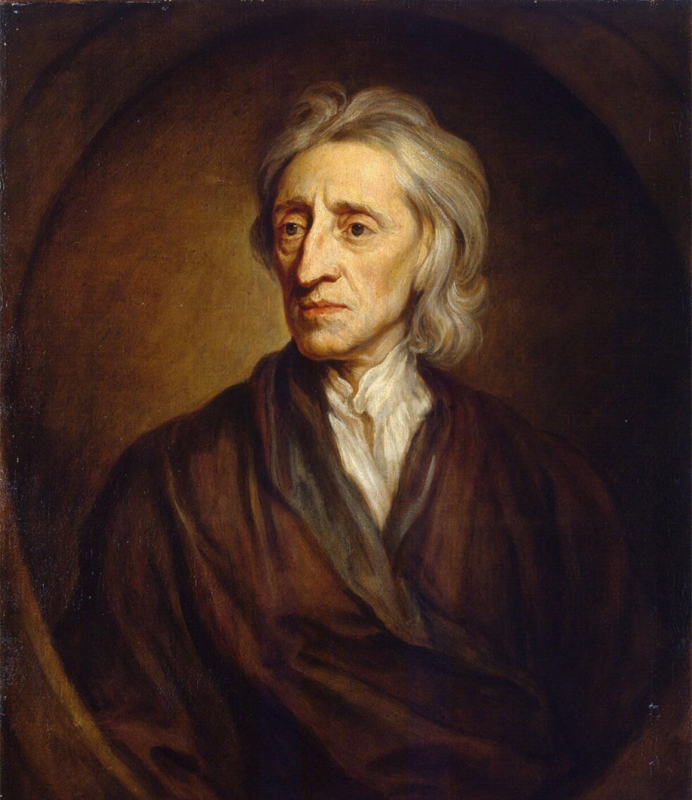
Frequently Cited
“it is ambition enough to be employed as an under-labourer in clearing the ground a little, and removing some of the rubbish that lies in the way to knowledge”
“Let us then suppose the mind to be, as we say, white paper, void of all characters, without any ideas:—How comes it to be furnished”
“yet every man has a property in his own person: this no body has any right to but himself”
“where there is no law, there is no freedom: for liberty is, to be free from restraint and violence from others; which cannot be, where there is no law”
“Where-ever law ends, tyranny begins, if the law be transgressed to another’s harm”
The Second Treatise, subtitled 'An Essay Concerning the True Original, Extent, and End of Civil Government', is the constructive half of Locke's Two Treatises. The First Treatise demolishes Sir Robert Filmer's Patriarcha, which derived the absolute power of kings from Adam's fatherly dominion.