Work record
Selected Sermons
1549-1564 · Renaissance Early Modern · Sermons · French and Latin
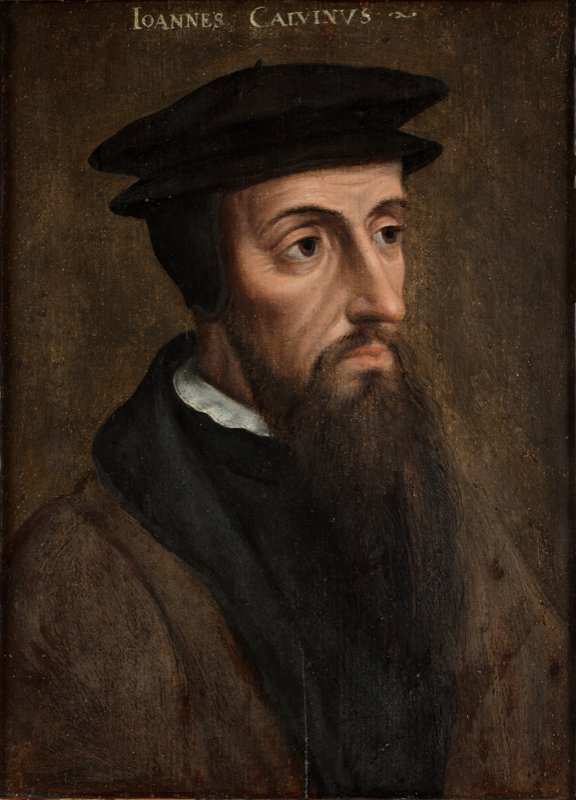

Summary
Calvin's Selected Sermons present the Reformation as disciplined exposition rather than only protest. Preaching in Geneva, Calvin moved sequentially through biblical books, applying Scripture to doctrine, worship, civic life, household conduct, suffering, and church reform. The sermons are less flamboyant than Luther's and often more juridical, but they are not cold. Calvin addresses fear, presumption, grief, poverty, persecution, bodily weakness, and the need for communal discipline. His constant aim is to bring hearers under the authority of God's word so that belief and conduct are reformed together. The selection usually reveals several Calvinian traits: close attention to text, insistence on divine sovereignty, suspicion of idolatry, emphasis on providence, and concern that faith produce obedience. Predestination may dominate popular memory of Calvin, but the sermons show a working pastor trying to form a community. Geneva was a city of refugees, discipline, schools, poor relief, moral regulation, and political tension; Calvin's pulpit belonged to that civic experiment. The medical lens appears where he treats affliction as spiritual testing, where pastoral comfort addresses grief and fear, and where the Reformed community negotiates care for bodies and souls. His theology can console by locating suffering within providence, but it can also trouble modern readers who worry about severity, surveillance, and moral control. Historically, the sermons helped make Reformed Protestantism a culture of hearing: the regular exposition of Scripture became a technology of communal formation. Calvin's preaching does not ask hearers to chase ecstasy. It asks them to submit attention, habits, and institutions to a demanding pattern of interpretation. Read beside Luther, Calvin looks less like the volcanic founder and more like the architect of durable reform. His sermons show what happens when revolution becomes routine: the pulpit becomes school, court, hospital, and civic workshop. Their discipline is precisely what made them travel beyond Geneva.
Plot or Argument
- Sequential exposition forms a people
Calvin typically preaches through biblical books, letting the order of Scripture discipline the congregation's attention.
- Providence interprets affliction
Suffering, fear, persecution, and loss are placed within divine governance rather than treated as meaningless accidents.
- Doctrine presses toward order
The sermons connect belief with worship, moral discipline, neighborly duty, and Geneva's reforming institutions.
Lessons
Routine can carry reform
Calvin's sermons show that a movement survives through repeated exposition and discipline. The spectacular break matters less than the habits that follow it.
- How does regular preaching create a community?
- What does Calvin gain by sequential exposition?
Consolation can sound severe
Calvin's providence offers meaning in suffering, but it also demands submission. The same doctrine can steady one hearer and burden another.
- When is providence comforting?
- When might it become pastorally dangerous?
Interpretation builds institutions
The sermons show biblical reading shaping schools, discipline, poor relief, worship, and civic conduct. Interpretation is never merely private when it governs shared life.
- How does Calvin connect text and city?
- What safeguards are needed when preaching shapes public order?
Context
Calvin preached in sixteenth-century Geneva, a Reformed city shaped by refugees, political contention, ecclesiastical discipline, and educational reform.
Composition
Many sermons were delivered in French and taken down by listeners or scribes. They belong to Calvin's mature ministry after his return to Geneva in 1541.
Reception
Calvin's sermons circulated through Reformed Europe and helped establish expository preaching as a mark of Protestant church life.
Comparisons
- luther-selected-sermons-and-treatises
Luther's preaching often erupts from conscience and controversy; Calvin's more regular exposition turns reform into durable order.
- the-social-contract
Rousseau and Calvin are very different Genevan figures, but both make moral formation a public problem of community and discipline.
- lectures-on-revivals-of-religion
Finney emphasizes revival measures and conversion technique, whereas Calvin emphasizes ordinary exposition and divine sovereignty.
Quotes
For Students
A reading companion for classical Christian high school students. See the student guide.
Reading Guide
Watch for
- The biblical text printed at the head of every sermon. All fourteen sermons in this selection preach on Paul's letters to Timothy and Titus, so notice how closely each one stays with a verse or two and how rarely Calvin wanders from it.
- The opening of Sermon VI on 2 Timothy 2:19, where Calvin refers back to what the congregation heard that morning. The sermons were preached in a running series, and this is one of the places where the series shows through.
- How Calvin handles 1 Timothy 2:4 in Sermon VII. He reads God's will that all be saved as all sorts and nations of people, and then turns the verse into a command that his hearers pray for and seek the salvation of unbelievers.
- The move in Sermons II and III from being unashamed of a prisoner's gospel in 2 Timothy 1:8 to God's calling according to his own purpose before the world began in 1:9. Watch how Calvin uses election to steady people facing persecution rather than to satisfy curiosity.
- The church-order sermons on Titus 1, Sermons XI and XII, where the qualifications of a bishop and the danger of deceivers who overturn whole households become instructions for Geneva's own ministers.
Key terms and names
- Lectio continua
- The practice of preaching straight through a book of the Bible, passage by passage. This selection comes from Calvin's series on the Pastoral Epistles, and it explains why each sermon picks up exactly where Paul's text leads next.
- Pastoral Epistles
- Paul's two letters to Timothy and his letter to Titus, written to younger ministers about doctrine, worship, and church leadership. Calvin preached them to a city that was rebuilding its whole church order.
- Election
- God's choosing of his people according to his own purpose and grace before the world began, as Calvin expounds 2 Timothy 1:9 in Sermon III. In these sermons it is offered as an anchor for believers under trial, not as a puzzle to be solved.
- Providence
- God's governance of all events, including affliction and persecution. Calvin's hearers included refugees from France, and he repeatedly places their losses inside God's purpose.
- Consistory
- The body of Geneva's ministers and lay elders that oversaw church discipline. The concern in the Titus sermons for blameless ministers and for stopping the mouths of deceivers reflects the discipline this body enforced.
- Mystery of godliness
- Paul's phrase in 1 Timothy 3:16, the text of Sermon I, for the gospel of God manifest in the flesh. Calvin uses it to insist that true religion rests on Christ revealed, not on human speculation.
Seminar Questions
- Comprehension Which books of the Bible do these fourteen sermons preach on, and what does each sermon announce at its head before Calvin says a word of his own?
- Comprehension In Sermon VII, how does Calvin explain Paul's statement that God will have all men to be saved, and what practical duty does he draw from it for the congregation?
- Comprehension What does Calvin say a minister must be and must not be in Sermon XI on Titus 1:7-9, and why does he think these qualities matter for the whole church and not only the minister?
- Interpretation Sermons II and III move from Paul's call not to be ashamed of the gospel to God's eternal purpose of grace. Why would a congregation of refugees and persecuted Protestants hear election as comfort rather than as a threat?
- Interpretation In Sermon X Paul compares the church to a great house holding vessels of gold and silver and also of wood and earth. How does Calvin use this image to explain why false teachers and unworthy members appear inside the church at all?
- Interpretation Sermon IX expounds 2 Timothy 3:16-17, on Scripture as profitable for doctrine, reproof, correction, and instruction. How does that verse explain Calvin's whole method of preaching verse by verse?
- Big Question Calvin believed that a city could be reformed by hearing Scripture expounded day after day. Can ordinary, repeated teaching form a people more deeply than dramatic moments of conversion or protest?
Faith Connections
- 2 Timothy 3:16-17 (Scripture)
This is the text of Sermon IX and the charter of Calvin's preaching. If all Scripture is profitable for teaching and correction, then the preacher's task is to explain the whole of it in order, not to choose favorite passages.
- Nehemiah 8:1-8 (Scripture)
Ezra reads the law to the gathered people from morning to midday while the Levites give the sense so that the people understand. Calvin's Geneva, rebuilding its common life after upheaval, practiced the same pairing of public reading and explanation.
- John Chrysostom, Homilies on 1 and 2 Timothy (Church Fathers)
Chrysostom preached through these same letters at Antioch or Constantinople in the late fourth century. Calvin admired Chrysostom's attention to the plain sense of Scripture, and reading a homily of each on the same verse shows a shared method across eleven centuries.
- Augustine, On Christian Teaching (De doctrina christiana) IV (Great Conversation)
Augustine's fourth book asks how the Christian teacher should speak so as to teach, delight, and move. Calvin's plain, sustained exposition can be measured against Augustine's argument that eloquence must serve understanding of the text.
Logic and Rhetoric
Central argument: All Scripture is given by God and profitable for teaching and correction; God governs all things, including the afflictions of his people, and has called them by his own purpose before the world began; therefore believers should neither be ashamed of the gospel nor despair under persecution, and the church should order its ministers, its prayers, and its common life by the patient exposition of God's word.
Rhetorical device: application (usus). Each sermon follows a pattern of explaining Paul's words and then turning them directly on the hearers, as in Sermon VII, where the doctrine that God wills the salvation of all sorts of people becomes the command to pray for unbelievers and to seek those who seem shut out of the kingdom.
Debate: Resolved: Preaching through whole books of the Bible in order serves a congregation better than preaching on topics chosen by the pastor.
Writing Prompts
Essay: Calvin speaks to persecuted and displaced believers in Sermons II, III, and VI, where he expounds Paul's chains, God's eternal purpose, and the sure foundation of 2 Timothy 2:19. Argue how Calvin uses the doctrine of God's sovereignty to strengthen courage, using at least two of these sermons.
Comparison with Selected Sermons and Reformation Treatises: Luther's writings often arise from crisis and controversy, while Calvin's sermons on Timothy and Titus belong to a steady weekly series. Compare how each reformer understands the authority of Scripture and the task of the preacher, and argue which approach better explains why the Reformation lasted.
Medical Lens
Calvin's sermons matter for pastoral medicine of the soul: fear, grief, bodily frailty, and persecution are interpreted through providence and discipline. This entry distinguishes historical spiritual care from clinical treatment.
- Sermons on affliction and providence
Calvin frames suffering as a field for trust, correction, endurance, and communal support.
- Sermons addressing fear and persecution
The pulpit offers anxious refugees and citizens a theological structure for danger.
Creative Prompts
- Essay
Compare Calvin's providence with modern attempts to find meaning in illness without blaming the sufferer.
- Dialogue
Let Calvin and a hospital chaplain debate consolation that is strong without becoming severe.
Further Reading
Verification notes
The Genevan setting, expository method, and Reformed themes are secure. No quotations are included without a chosen public-domain translation.
- Verify sermon titles and translations before adding direct excerpts.