
The Discourse on the Method of Rightly Conducting One's Reason and Seeking Truth in the Sciences was published anonymously in Leiden in 1637 as a preface to three scientific essays, the Dioptrics, the Meteors and the Geometry. Descartes wrote it in French rather than Latin so that readers using their natural reason, including women, could judge it without scholastic training, and he presented it not as a treatise but as a history or fable of his own mind.
Author
Rene Descartes
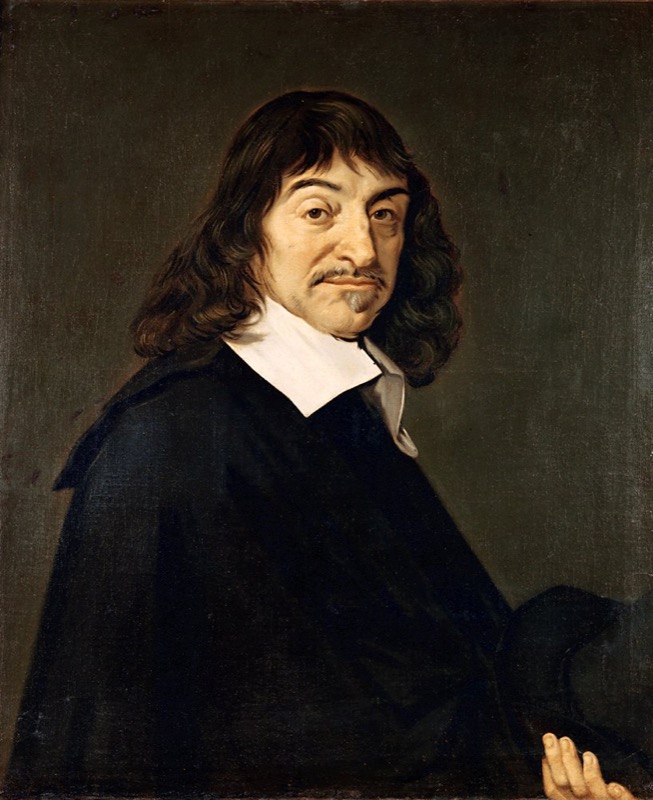
Frequently Cited
“The first was never to accept anything for true which I did not clearly know to be such”
“I think, therefore I am (COGITO ERGO SUM”
Meditationes de prima philosophia, published in Paris in 1641, compresses Descartes's metaphysics into six meditations, each imagined as a day's reflection by a solitary thinker seated by the fire in a dressing gown. The book was issued with six sets of Objections from learned readers (Caterus, Mersenne's circle, Hobbes, Arnauld, Gassendi and others) and Descartes's Replies, which are longer than the Meditations themselves; a second edition (Amsterdam, 1642) added the Jesuit Bourdin's Seventh Objections.
Les Passions de l'âme, published in Amsterdam and Paris in November 1649, was Descartes's last book and his fullest account of how mind and body interact in emotional life. It grew out of his correspondence with Princess Elisabeth of Bohemia, who in 1643 had asked him how an immaterial thinking soul could move a body, and who later pressed him on the regulation of grief and the good life.